Showing posts with label Amanda Seyfried. Show all posts

Monday, 20 July 2026

The Housemaid (4 Stars)


Before it was even released, "The Housemaid" had all the ingredients of a guilty pleasure thriller. A bestselling novel, an attractive cast and a premise built around secrets, lies and shifting loyalties promised something in the vein of "Gone Girl". The result is an entertaining psychological thriller that delivers plenty of tension, even if it doesn't quite reach the heights it could have.

Amanda Seyfried gives the film its strongest performance. She walks a fine line between elegance, vulnerability and menace, constantly making you question her true intentions. It's a layered performance that keeps the audience guessing from beginning to end. Sydney Sweeney is equally compelling as Millie, bringing warmth and determination to a character who could easily have been reduced to a typical thriller heroine. Her chemistry with Seyfried gives the film much of its dramatic power.

Where "The Housemaid" falls short is in its screenplay. Some of the twists are telegraphed too early, while others arrive so quickly that they don't have enough time to breathe. The final act is exciting, but a little more restraint and psychological ambiguity would have made the revelations more satisfying. The supporting characters are also somewhat underdeveloped, making them feel more like plot devices than fully realised people. Would the film have lost anything without the gardener Enzo?

Even so, the film remains an absorbing watch. The stylish direction, strong atmosphere and committed performances ensure that the suspense rarely fades. It may not become a classic of the genre, but thanks to Amanda Seyfried and Sydney Sweeney, "The Housemaid" is a polished, entertaining thriller that keeps you invested until its final twist.

Success Rate:  + 9.4

Wednesday, 18 March 2026

The Testament Of Ann Lee (3 Stars)


I saw trailers for this film when I went to the cinema in the last few weeks. It looked good, so I went to see it today, on opening day. I felt confused, not knowing what the director was trying to say. It was only at the end, when the final credits rolled, that I realised it was a true story. I wish I'd known from the start, because I would have got more from it.

Ann Lee is a woman who was born on 29th February 1736 in Manchester, England. She came from a poor family, and she became a child labourer at the age of 10. She felt religious, so she visited different religious groups. Eventually she remained with the Wardley Group, also known as the Shakers. They were a religious group that had split from the Quakers. The leaders preached that Jesus would return as a woman. Ann had visions that revealed to her that she was the new Messiah.

Ann got married and four children. One died in childbirth, the other three died before they reached the age of one. Her visions told her that sexual intercourse is a sin, and even married couples should refrain. The Shakers became celibate.

In 1774 Ann emigrated to America with her followers. In 1784 she died, and the world didn't end.

Despite my low rating, I need to watch the film again. Knowing the background will help me enjoy it more.

Monday, 26 January 2026

The Housemaid (4½ Stars)


Millie Calloway is a young woman who's been released on parole after being in prison for murder. It was a crime of passion, as we later discover. She's desperate for a new life, so she fakes her CV in order to get a job as a live-in maid with a wealthy family. She soon realises that the woman in the house is neurotic, frequently forgetting the instructions she gave Millie an hour earlier, but she desperately needs somewhere to live and puts up with everything. The longer she stays, the more hidden secrets she discovers.

This is a fascinating film with brilliant performances by Amanda Seyfried and Sydney Sweeney. You'll be sitting on the edge of your seat as the mysteries unravel.

At the end there's a hook for a sequel. It's possible that it could become a franchise. I just hope that the sequels are different enough to be worth watching.

Friday, 28 March 2025

Chloe (4 Stars)


As I've already stated, it's currently difficult for me to watch films at home. Writing about them is just as difficult. It took me almost three days to get through the film.

Despite lukewarm reviews from critics, I like it a lot. It's not even the acting performances that attract me. It's slow paced, but fascinating from beginning to end.

I strongly recommend watching the alternative endings (plural) on the disc.

Success Rate:  - 0.9

Order from Amazon.co.uk
Order from Amazon.de

Wednesday, 16 October 2024

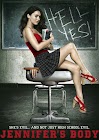
Jennifer's Body (3 Stars)


"Jennifer's Body" was shown as the feature for this month's Weird Wednesday. After some hesitation I decided to go to the cinema. I already have it on DVD, but the last time I watched it, 12 years ago, I didn't give it a very good review. Maybe I've changed my mind over the years.


The film is neither sexy nor scary. Gratuitous nudity would have improved the film. A few jump scares would also have helped. That wouldn't have made it a great film, but it would have made it worth watching. It's forgettable.


After the film a woman wearing a beautiful T-shirt stood up to talk about the film's feminist message. Unfortunately I only heard the first 20 minutes, because I had to leave to catch my last bus. She started by asking the audience if "Jennifer's Body" passed the Bechdel Test. The answer was Yes, but the test isn't decisive in proving that a film has a feminist message. She put too much value in the test results.

In case any of my readers don't know the Bechdel Test: Does a film contain a conversation between two named women which isn't about a man?

The woman in the Scum T-Shirt continued by talking about revenge. She said that a woman is empowered when she carries out revenge. That's a good point. This is the only feminist element that I can see in the film.

At this point I had to leave. I wish I'd heard the woman's name. She's someone I'd like to talk to. She sounded like an intelligent woman.

But I still don't enjoy the film. Feminist or not.

Success Rate:  + 0.0

Order from Amazon.com
Order from Amazon.co.uk
Order from Amazon.de

Monday, 28 February 2022

Lovelace (4 Stars)


Name: Linda Lovelace
Lived: 10 January 1949 – 22 April 2002
Film dates: 1970 to 1980
Film made in 2013

Ten years ago the actress Julie K. Smith was active on Facebook. I often spoke with her. She read my blog, and she commented on my reviews of her films. She recommended the film "Lovelace" to me. She said that it had Oscar written all over it. I'd missed the film in the cinema, but I bought it on DVD as soon as possible, based on Julie's recommendation. No, it didn't win any Academy Awards, and it wasn't even nominated. To be honest, I didn't expect it to win any awards. It's not the sort of film that finds recognition.

The film is based on Linda's autobiography, written in 1980, but many of the people mentioned in the book claims that she's lying. Her publisher asked her to take a lie detector test. She passed, but there are ways of beating the machine. When I was at university one of my professors, an ardent opponent of lie detectors, gave his class instructions on how to beat the machine. I still remember everything, just in case I ever have to take a test.

The film is shown in two halves. In the first half we see Linda as the world saw her. It was a glamorous  life, and she was envied by all. In the second half her story begins again, and we're shown what really happened behind closed doors.

Linda Boreman was born in New York in 1949. After an unwanted pregnancy her family moved to Florida to get her away from temptation. She married a man called Chuck Traynor. In his own words, he owned a restaurant which sold good food and had beautiful waitresses. That was a euphemism for a titty bar. Linda didn't approve, so she stayed away from the restaurant and never asked Chuck about it.

Chuck was always in debt. He had connections in the pornography industry, so he got her a role in a film. He didn't even tell her what she was auditioning for. She thought it was a serious film, but it was actually the infamous movie "Deep Throat". This made her famous, bringing her together with film stars and other celebrities. She even became friends with Hugh Hefner, who's played by James Franco in this film.


That's a handsome young Hef. Did he really look so good?

In the second half of the film we see what the first half omitted. Linda was never happy with her husband. Chuck raped her on her wedding night. Is that at all possible? Evidently, yes. He had sex with her in a way that hurt her, and he didn't listen when she repeatedly told him to stop. Adding insult to injury, the next morning he was enthusiastic about how good it was. In the following months and years he often beat her.

The casting for "Deep Throat" was more than just reading lines. Chuck told her she had to sleep with four men from the film studio. When she refused, he held a gun to her head and threatened to kill her if she didn't go through with it.

Linda made the film, doing everything that was expected of her. When it was finished, she was credited as Linda Lovelace. She never picked the name for herself. It was given to her by the film producers, and they didn't even consult her.

Linda was ripped off. The film made over $30 million at the box office, and another $500 million in video sales. She was paid $1250, and she didn't even receive that, because Chuck took it to pay off his debts. She was asked to film a sequel, but she refused. "Deep Throat" was the beginning and end of her film career.

If you check IMDB, you'll see that she made another two films, "Deep Throat 2" and "Linda Lovelace for President". That's where different stories are told. Linda claims that these two films were patched together from unused footage for "Deep Throat". The film producers contradict this. 40 years later it's impossible to be certain, but my gut feeling tells me to believe Linda's words.


While watching the first half of the film I thought to myself that I ought to watch "Deep Throat". It's a gap in the education of a serious film fan. After watching the second half I said No on principle. I don't want to watch any film that a woman is forced into against her will.

Today Linda Lovelace is still considered to be the most famous porn star of all time. That's remarkable, considering she was only a porn star for 17 days.

Success Rate:  - 4.4

Order from Amazon.com
Order from Amazon.co.uk
Order from Amazon.de

Tuesday, 17 November 2020

Chloe (4 Stars)


This isn't necessarily one of my favourite films, but it's a film I keep returning to. I've watched it more often than films I rate higher. I have to ask myself if four stars is too high, because it has a cheap feeling to it, like a television movie, but it still fascinates me. It's a good story with great acting, but something about the cinematography lets it down. It's difficult for me to describe exactly what it is.

Catherine Stewart suspects her husband of having an affair, and maybe he's even had several affairs. I'll give away a spoiler: it's not true. He's been faithful all the years they were married. He flirts with other women, but it never goes past words. I can relate to that, because I see myself in him. I've always been flirtatious, even while I was married, but I still remained faithful.

Catherine hires Chloe, a beautiful young call girl, to test her husband. She asks Chloe to meet her husband and seduce him. That's a dangerous game. Chloe is being paid to succeed, so she'll do anything within her power to get him into bed. Could any man resist temptation like that, especially when the girl is as sexy as Amanda Seyfried?

Here's a small anecdote. In the 1980's the British army hired three girls to test the security at military bases, in Britain and Germany. The idea was that they should try to seduce the security guard to leave his post. Any guard who failed the test would be court-martialled. What the army didn't reckon with is that the girls treated it as a competition. They kept in contact with one another, comparing their results. The girl who won the competition had a 100% success rate. Was it a fair test? No, the guards were set up to fail, but it could just as well have been Russian spies trying to break into a base.

Back to the film: what Catherine didn't expect is that Chloe has her own agenda. She's not satisfied with just doing her job; she also seduces Catherine herself and Catherine's teenage son. She takes over the family.


This film is included with Amazon Prime, but I strongly recommend that you watch it on DVD or Blu-ray. The discs include two alternative endings. They're both better than the ending in the film. They're not really alternatives. To understand the film's message you have to watch both of them. I can imagine what happened. The director filmed both endings, and he couldn't decide which one to use, so he used neither. They should both have been used, even if it meant restructuring the film. One of the endings could have been slightly refilmed and put into a mid-credits sequence. There has to be a way this could have been done better. As it is, you need to watch both alternative endings after watching the film. If you don't do that, you'll miss out.

Success Rate:  - 0.9

Order from Amazon.com
Order from Amazon.co.uk
Order from Amazon.de

Sadly, this film has only been released on DVD in the UK. If you want to watch it on Blu-ray, buy the German release.

Saturday, 20 July 2019

Letters to Juliet (3 Stars)


This film is based on a tradition in the Italian city of Verona. It's devastating to me that people go along with it. It's a religious con without the religion.

In Verrona there's a house called Casa di Giulietta, Juliet's House, named after Juliet Capulet in Shakespeare's play "Romeo and Juliet". Women who have relationship problems write letters to Juliet asking for advice, and stick the letters to a wall outside the house, called Juliet's Wall. It's not just the women of Verona who do this, there are women who visit the house from all over the world.

This is similar to the Roman Catholic practise of praying to saints. Some people believe in saints, I don't, but I won't argue about it here. What's different about Juliet is that she isn't a divine representative of any religion, and she never even existed. She's just a fictional character invented by an English playwright, so what's the point in asking her for help?

But guess what? Any woman who leaves her name and address on her letter to Juliet receives a reply. Is that a divine miracle? Not quite. As the film shows, there's an organisation run by the tourist centre of Verona called the Secretaries of Juliet. The letters are collected every evening, and a group of women sit writing answers. When the reply arrives a few days later the heartbroken woman can shout, "Hallelujah! Praise Shakespeare!"

There's also something for the men. There's a statue of Juliet outside the house. Any man who touches the statue's breast will be lucky in love. That sounds somehow creepy, since Juliet in Shakespeare's play was only 13. If I want to be lucky in love I'd rather go speed dating.


All that is true, as ridiculous as it might sound. You can travel to Verona yourself to check it out, if you don't believe me. Now for the fictional part of the story.

Sophie Hall is a junior reporter from New York. She's on holiday in Verona with her fiance Victor, who's looking for exclusive items to serve in his restaurant. Sophie discovers Juliet's House by accident, after which she visits the Secretaries of Juliet to ask what it's all about. On the next day she finds a letter behind a loose stone that was written in 1957, more than 50 years ago, by a young English woman who was too scared to run away with her Italian lover Lorenzo. Sophie replies to the letter herself, telling the woman that it's never too late to go to the one you love. She signs the letter Juliet. Of course.

A few days later Claire Smith arrives in Verona with her grandson Charlie. He thinks it's all romantic nonsense, but his grandmother is now a widow and wants to look for Lorenzo. She also wants to meet Juliet. Together they go on a journey, meeting all the men in the vicinity called Lorenzo Bartolini. There are 74 listed in the phonebook, but it's possible to whittle the number down by eliminating the younger men.

Is it a spoiler to say that Claire finds her Lorenzo, who's also a widower? Not really. The viewer knows from the beginning that she'll be successful. They get married and live happily ever after.

What's worth mentioning is that Claire and Lorenzo are played by Vanessa Redgrave and Franco Nero, who are married in real life. It must have been a wonderfully romantic experience for them to get married again in the film.

There's also a romantic comedy subplot, which I won't go into, because that really would be a spoiler.

I greatly admire Amanda Seyfried as an actress, but I don't enjoy this film, despite the beautiful Italian scenery. It's not even the film's premise that disturbs me. Something about it is too light. The script could have been better, but don't ask me how. Something is missing that would turn this average film into a great film.

Success Rate:  + 0.7

Order from Amazon.com
Order from Amazon.co.uk
Order from Amazon.de

Tuesday, 2 July 2019

Mean Girls (4½ Stars)


Merry Christmas to all my readers. To be honest, I don't celebrate Christmas, but if Santa looked anything like this I might change my mind.

I watched "Mean Girls" recently, and I was so fascinated that I had to return to it as quickly as possible. It's just like "Scream", but without the screaming. The narrative style is so effective that it's hyper-realistic, so that you're not sure whether it's parodying a documentary or attempting to be a real documentary. The main character, Cady Heron, directly addresses the audience in her voiceover.


The last two times I reviewed this film I didn't go into the plot. I'll make up for that now.

16-year-old Cady Heron (Lindsay Lohan) grew up in Africa, where her parents worked as zoologists. All this time she was home-schooled. Now they've moved back to America, so she has her first day at school, ten years too late. She's introduced to all the school cliques, from the math nerds to the football jocks. She makes friends with Janis, the school's only goth girl. Janis can't form a clique by herself, so she hangs out with Damian, the school's only gay boy. Actually, he's more than just gay. He seems to think of himself as female. He uses the girls' bathroom, and when the principal orders all the girls to go to the gym he goes with them. He's one of the girls.

Cady is invited to join the Plastics, the school's elite group of fashionable but shallow girls. They offer her friendship, as long as she doesn't challenge the Queen Bee of the Plastics, Regina George (Rachel McAdams). Cady doesn't feel comfortable with them, but Janis recommends that she join the Plastics so that she can spy on Regina George. Janis used to be her best friend in middle school, but now that she's been dumped she's obsessed with her ex-friend.


Isn't Janis too beautiful to be a goth girl? Or maybe I'm biased. I've always liked girls in black, as long as they don't overdo the piercings. As I often say, "There should never be metal in any place that I like to kiss, lick or suck".

Cady's work as an undercover spy for Janis gets confused when she falls in love with Aaron Samuels, Regina's ex-boyfriend. Now we see just how mean Regina can be. She dumped Aaron, but when she finds out that Cady is interested in him she takes him back, just because she can. Maybe she thinks that if Cady dates her ex-boyfriend the other girlswill think that Cady stole him from Regina.


One of the most important things about being a Plastic is regular telephone conferences. Clockwise from bottom left it's Cady Heron, Gretchen Wieners, Karen Smith and Regina George.


I've always had something of a crush on Amanda Seyfried, who plays Karen Smith. Her eyes fascinate me.


Or do I prefer Lizzy Caplan as Janis? It's a tough choice.


No, I have to stick with Amanda Seyfried. Lizzy Caplan only dressed up as a goth for this movie. She looks a lot more conservative in real life. Unfortunately. On the other hand, Amanda Seyfried always has big eyes.


But let's get back to the plot. Cady started out pretending to be one of the Plastics, but the lifestyle corrupts her. She enjoys being a member of her school's elite clique. She takes revenge on Regina for taking Aaron away from her, but the end result is that Cady has become the new Queen Bee.


Cady has to decide what's important. Is it better to be popular or to be loyal to your friends? That might seem like an easy question to answer, but when you're a 16-year-old girl and your best friends are the school's outcasts there's a big difference between knowing what's right and doing what's right.

This is a very good film that I'm sure to watch again soon.

Success Rate:  + 5.6

Order from Amazon.com
Order from Amazon.co.uk
Order from Amazon.de

Saturday, 15 June 2019

Mean Girls (4 Stars)


Gretchen: "Ex-boyfriends are off limits to friends. That's just like the rules of feminism".

Cady: "The limit does not exist!"

Many thanks to my friend Crystal Berry for hosting a watch party, even if she kept me up all night.

It's been eight years since I last watched this. I'd forgotten the plot, and all I could remember was the mean girls in their short skirts. In my last review I hardly wrote anything to remind me what it was about. But yikes! There was a horrible spelling mistake in that review, which I just corrected, so there's no point in looking for it. I'm so ashamed! There was a spelling mistake for EIGHT YEARS and I never knew!

I enjoyed the film today, despite being tired and hardly able to concentrate. I'll have to watch it again soon.

Success Rate:  + 5.6

Order from Amazon.com
Order from Amazon.co.uk
Order from Amazon.de

Monday, 29 April 2019

Gringo (3 Stars)


Families are overrated. I started writing this review two hours ago, as I can see by the time stamp, but apart from inserting the photo I've done nothing. For the last two hours family members have been walking in and out of my room, talking and squawking, not letting me get on with it. Sure, I love my family, but at this time of night I deserve a little peace.

End of rant. Now let's get on with my review.

"Gringo" is a film I wanted to see when it was in German cinemas last year. It features Charlize Theron and Amanda Seyfried, two of my favourite actresses. Add Joel Edgerton and Sharlto Copley, and you can expect a brilliant film.

Unfortunately, a film's quality isn't the sum of its actors. "Gringo" skids out of control with too many subplots weighing down the film. Oops, I'm mixing my metaphors, but I think you know what I mean. I'm sorry to say that Amanda Seyfried is completely superfluous. The film would have been tighter and more enjoyable if she'd been written out.

Harold Soyinka (David Oyelowo) is an employee in an American pharmaceutical company that's about to begin to sell medical marijuana. It's not clear what he actually does in the company, but his boss refers to him as middle management. The vagueness is deliberate. His boss, Richard Rusk (Joel Edgerton), is a personal acquaintance who obviously just wants someone to blame when things go wrong. Harold probably just writes reports that nobody will ever read.

The company is in Chicago, but the production is in Mexico. While waiting for approval for the sale of marijuana pills in America, the company has been selling them to a drug lord in Mexico. Off the books, of course. Now that the official sales have begun, Richard wants to break his connection with the drug lord. That's not as easy as he thinks. The head of the Mexican factory is tortured. During a business trip Harold is mistakenly thought to be the company boss, so the drug lord wants to kidnap him. Richard sends his brother Mitch (Sharlto Copley), an ex-mercenary, to retrieve him. Or kill him. If he dies while on a business trip the insurance will pay the company five million dollars.


If that plot summary were everything, the film would have been much better. Now come all the subplots. Harold's wife is having an affair with Richard. But Richard is also having an affair with his business partner, Elaine Markinson (Charlize Theron). Charlize could also have been written out of the story. Harold isn't just kidnapped in Mexico, he also tries to stage a fake kidnapping to get ransom money from his boss. And then there's Amanda Seyfried as Sunny, an innocent young woman who's talked into going to Mexico to pick up drugs with her boyfriend. There's also an undercover DEA agent. I'm sure I've forgotten other things. Honestly, too much is going on.

Harold is a tragically comic character. He believes the best of everyone. He considers his boss to be his friend, not realising that he would rather kill him than pay ransom money. He doesn't suspect for a moment that his loving wife is having an affair. Harold is naive to the point of stupidity, stumbling from one crisis into another. I didn't know whether to pity him or laugh at him.

It was difficult for me to take the characters played by Joel Edgerton and Charlize Theron at face value. They're both so downright evil that they're like caricatures. Joel plays basketball with his employees after work and ridicules the other team when he wins; he always wins, because they're afraid they'll be fired if they beat him. Charlize is a sexual predator; while sitting in a bar with a potential buyer for the company's pills, she tells him to take his penis out. "If I like the look of it we can go back to my place and have sex. If not, we'll just do business". Do women like that exist in the business world? I've never met anyone who even comes close.

The film's talent is wasted. More effort should have been invested in the screenplay.

Order from Amazon.com
Order from Amazon.co.uk
Order from Amazon.de

Tuesday, 24 July 2018

Mamma Mia: Here we go again (4 Stars)


This is a sequel to "Mamma Mia", which was made in 2008. I have nothing against sequels, but I'm always sceptical of delayed sequels. Usually they're a desperate attempt by film studios to make money when they've run out of new ideas. However, I decided to give it a chance because I love the original so much and all the main members of the original cast have returned for the sequel.

The story takes place a few years after the original film. Sophie's mother Donna has passed away, and since her death Sophie has worked on restoring the hotel, renaming it Hotel Bella Donna. She's planned a big re-opening ceremony, inviting her family and her mother's friends.

The film tells two stories in parallel. In addition to dealing with the ceremony it tells the story of Donna's arrival on the island and the three men in her life. Throughout the film we see two versions of the main characters, as people in their twenties and and in their fifties. Sophie's life mirrors that of her mother, apart from only having one man in her life.

"Mamma Mia: Here we go again" – I really should shorten the name to "Mamma Mia 2" – is a happy feel-good film which most people will enjoy, but it falls short of the original. It tries too hard to be funny. Whereas the humour in the first film was subtle, the sequel relies on slapstick and overt comedy. This humour is effective. There was a lot of laughter in the mainly female cinema audience today. If that's what you're looking for the film is right for you, but I missed the emotional depths that made me cry when I watched the first film.

None of the three actors who play the young versions of Sam, Bill and Harry are competent singers. The only weak singer in the first film was Pierce Brosnan, who unfortunately sings again the second time round.

Most of Abba's big hits were used in the first film. "Mamma Mia 2" repeats a few of these songs, like "Dancing Queen" and "I have a dream", but it relies mostly on lesser known songs. If you're an Abba fan you'll know the songs, but I was never a fan, so I only know the big hits that are played on the radio. The strength of the first film was the familiarity of the songs. That's missing in the second film.

I enjoyed the film today, but I can't imagine that I'll want to watch it again. It's not a bad film, but it's unnecessary. Donna's story doesn't add anything, it just retells what we already knew from her diary in the first film.

I found it interesting that there's an after credits scene. It used to be that after credits scenes were reserved for Marvel films and the Pirates of the Caribbean films, but now they're becoming more popular. Could it be they're just a ploy to keep people in the cinema to listen to the final songs?

Thursday, 19 July 2018

Mamma Mia (5 Stars)


Amanda Seyfried plays Sophie Sheridan, a 20-year-old woman only a few days away from her wedding. She's lived all her life on the small Greek island Kalokairi, where her mother Donna owns a small, unsuccessful hotel. She wants her father to give her away, but there's a problem: her mother has never told her who her father is. He left before she was born. That's all Sophie knows, and it's all her mother wants to tell her.

By chance Sophie finds her mother's diary for the year before her birth. The problem is that she had intimate relationships with three different men within two weeks. Sophie invites all three men to her wedding, sure that she'll recognise her real father when she sees him. All three men accept the invitation, but it's not so easy. All three think she's their daughter when they realise when she was born. All three want to be her father and give her away at the wedding.

Donna, on the other hand, doesn't want to see any of them. She wasn't a slut, however it might seem. There's a saying in England: "Good men are like buses. You wait for ages, then three come at the same time". Sam, Bill and Harry were Donna's three good men, and she's remained single ever since because she's never met anyone else like them.


Colin Firth, Stellan Skarsgard and Pierce Brosnan play the three potential fathers. They're three very different men, all special in their own way, and any of them would be a father for Sophie to be proud of.

The film is best known for including a selection of Abba's hit songs, but that doesn't distract from the fact that this is a beautiful story. "Mamma Mia" made me cry, and I would have been just as moved without the songs. It's a beautiful film in all respects: the music, the acting and the idyllic Greek scenery.

A sequel has recently been made, ten years after the original film. I'm always sceptical about delayed sequels. Usually they suck. I'm going to see it next week. I'll tell you what I think.

Order from Amazon.com
Order from Amazon.co.uk
Order from Amazon.de

Wednesday, 18 July 2018

Boogie Woogie (3 Stars)


This is a film with a world class cast that fails to live up to its promise. It's about the intrigues in the art world in London. (The film was originally meant to be set in New York, but it was relocated to London to save costs).

Alfred Rhinegold (Christopher Lee) is an aged art collector who is facing bankruptcy. He only has one thing of value, a painting by Piet Mondrian valued at £15 million, but he refuses to part with it for sentimental reasons. He bought it from Mondrian personally 50 years ago for £500 cash. His wife Alfreda (Joanna Lumley) conspires with her butler to encourage offers from art collectors to tempt him to sell. In the course of the film the bids rise to £30 million, but he still refuses to sell.

The intrigues aren't just about the art business, they're also sexual. Bob Macclestone (Stellan Skarsgard) and his wife Jean (Gillian Anderson) are happily married, as far as outward appearances go. Bob likes to have sex with younger women, but it's nothing serious. He always goes home to his wife. Jean has always been faithful, but after being seduced by a young artist she decides to get a divorce and move in with him. That was a bad choice. For her it was love, for the artist it was a one-night stand, because he's already having an affair with the art gallery owner Beth Freemantle (Heather Graham).


Bob admires the paintings with his wife.


Paige (Amanda Seyfried) also admires the paintings.


So Bob and Paige go to dinner to talk about what they have in common. He doesn't even suspect his wife wants to leave him.

I haven't even begun to describe all the intrigues in the film. Everyone is involved with everyone else, whether it's business or pleasure.

I would have enjoyed the film more if it had contained more comedy. There are several satirical scenes, especially at the end of the film, but they're all played with deadpan seriousness. Despite featuring several of my favourite actors the film failed to enthral me.

Another problem for me is that I have no understanding for art. I know what I like and what I don't, but I can't put a value on a painting.


This is the Mondrian painting hanging proudly on the wall. I admit that it looks good, and I might pay five pounds for a print, but is it really worth £15 million? Not to me. I wouldn't pay such a large sum even if I were rich enough.


I'd rather look at a beautiful girl. Wouldn't you? That's something I can appreciate.

Order from Amazon.com
Order from Amazon.co.uk
Order from Amazon.de

Saturday, 23 June 2018

The Clapper (3 Stars)


This film has two interwoven plots. It's a love story and a social commentary on the emptiness of television.

Eddie Krumble works in Los Angeles as a contract actor for infomercials. He's paid to sit in the audience and applaud when products are described. He gets a bonus payment if he stands up and asks a question about the product. A scripted question, of course. The whole infomercial industry is built around lies and false promises. In the film's first infomercial the presenter promises that people can buy luxurious homes with an acre of land without a down payment, and Eddie asks his question. Later Eddie sees the presenter outside the studio and asks him if he could really buy a house like that for himself. The presenter gets angry and tells Eddie he's only doing his job, and if Eddie doesn't leave him alone he'll hit him.

The audiences are all hired actors, but Eddie is over-used. A talk show host recognises Eddie's frequent appearances and starts a city-wide hunt to find the mysterious Clapper.


Billboards are posted all over the city calling on people to identify the Clapper so he can be invited on the show. Eddie goes underground. His job as an infomercial audience member is all he has, and he has to remain anonymous. The whole point of his job is to look like a random man off the street.


The love interest in his life is Judy, a girl who works a gas station, saving money so she can move to Mexico and get a job looking after sick animals. I thought people wanted to move in the opposite direction. I hope Donald Trump's wall won't keep her out.


Eddie is a simple man who enjoys simple pleasures. When he takes Judy out on a date they eat a hamburger. Does he really eat that many fries?


The film has some good ideas, but I don't consider it to be well made. The back story about Eddie's wife having died of cancer is unnecessary. It's intended to show that he has suffering in his life that means he's not as shallow as the person he portrays in the audience, but it's an unwelcome distraction.


The film's best feature is the opening credits sequence, in which Eddie is shown walking to work against a cartoon background. He's a real man in a shallow, two-dimensional world. This is very effective. Even before the film itself started I knew what the film's message would be.


Those are beautiful images, aren't they? Unfortunately, the film doesn't live up to its promise. I wasn't able to sympathise with Eddie and his plight. Usually I enjoy Amanda Seyfried as an actress, but her awkwardness as Judy was over-played and unrealistic. Most of all, the film wasn't funny enough. I think it would have been better if the humour had been cut altogether, making it a serious social commentary.