Showing posts with label Daniel Brühl. Show all posts

Thursday, 5 March 2026

John Rabe (5 Stars)


"John Rabe", directed by Florian Gallenberger, dramatises the extraordinary true story of John Rabe, a German businessman who helped save thousands of Chinese civilians during the Nanjing Massacre of 1937. The film follows Rabe, played by Ulrich Tukur, as he reluctantly becomes the head of the Nanking Safety Zone Committee, organising a refuge for civilians while Japanese troops occupy the city.

The film's most striking element is Tukur's restrained performance. He portrays Rabe not as a conventional hero but as a pragmatic administrator who gradually realises the moral weight of his position. This understated approach helps ground the film amid the harrowing historical backdrop. The supporting cast, including Daniel Brühl and Steve Buscemi, add an international dimension that reflects the multinational effort behind the safety zone.

While the film inevitably condenses events and simplifies some political complexities, it succeeds in highlighting a little known chapter of the Second Sino-Japanese War. Its depiction of the violence in Nanjing is disturbing without becoming gratuitous, keeping the focus on the humanitarian struggle rather than spectacle.

Overall, "John Rabe" is a sober historical drama that sheds light on a remarkable figure whose actions saved many lives during one of the darkest episodes of the twentieth century.

Order from Amazon.com
Order from Amazon.co.uk
Order from Amazon.de

Friday, 3 October 2025

Goodbye Lenin (5 Stars)


Today is the German holiday, the Day of German Unity. It celebrates the day that East Germany, the DDR, joined West Germany, the BRD, 3rd October 1990. It wasn't an alliance of equals. East Germany had been ruined by 40 years of being a vassal state of Russia. It joined West Germany in the hope of becoming an economically strong country. 35 years later it still hasn't reached the level of the western parts of Germany. But that's a story for another day.

Made in 2003, 13 years after reunification, "Goodbye Lenin" is a poignant and darkly humorous German film that masterfully blends political satire with heartfelt family drama. Set in Berlin around the fall of the Berlin Wall, it follows Alex, a young man who goes to great lengths to protect his fragile, socialist-idealistic mother from the shock of discovering that East Germany has collapsed while she was in a coma.

The film balances emotion and irony beautifully, capturing the absurdities of both socialist nostalgia and capitalist transformation. Daniel Brühl gives a standout performance as Alex, whose elaborate deception becomes both an act of love and a commentary on truth and illusion in a rapidly changing society.

Visually and tonally, "Goodbye Lenin" is rich with symbolism. Its reconstruction of a vanished world evokes both tenderness and loss. It’s funny, moving, and thought-provoking, offering a human lens on history rather than a purely political one.

I've never understood why 18th January isn't celebrated in Germany. That's the day when Germany was founded, as a coalition between 39 independent states, 18th January 1871. Germany had existed as a geographical area for 2000 years, but it had never been a country. In 2021 it was the 150th anniversary of the founding of Germany, but most people didn't even know.


This is the film's most iconic scene. It's actually anachronistic, because the statue wasn't removed until 1992, two years after the film's events. I'll forgive the director, because the scene is necessary for the film. The statue was buried – good riddance! – but it was dug up in 2015 and put in a museum.

In my first review of "Goodbye Lenin" I gave a summary of the events that happened in the eight months while Alex's mother is in a coma. I'll repeat them here.


October 7th 1989: The 40th anniversary of the German Democratic Republic (DDR) is celebrated in East Berlin with a traditional military parade. After the parade Gorbachev says in an interview that reforms are necessary. In the evening there are demonstrations in many cities that are brutally broken up by the police. More than 1000 people are arrested,

October 9th: There are many protests in German cities, and the largest is in Leipzig. More than 70,000 people demonstrate for a democratic renewal of the DDR chanting "Wir sind das Volk" ("We are the people"). The police do nothing to break up the demonstrations.

October 16th: More than 120,000 people demonstrate in Leipzig.

October 18th: The DDR leader Erich Honecker resigns due to ill health. He is replaced by Egon Krenz, who is very unpopular in the DDR.

October 23rd: On the evening before the formal election of Egon Krenz 300,000 people demonstrate in Berlin against the government.

November 3rd: DDR citizens are allowed to leave the country by crossing into Czechoslovakia. Thousands use the opportunity to flee to the West.

November 4th: More than a million people demonstrate in East Berlin for freedom and democracy in the DDR. The television broadcasts the demonstration live.

November 6th: In Leipzig there are large demonstrations demanding free travel and free elections.

November 7th: The complete DDR government resigns.

November 8th: The government is re-elected by the political office and Egon Krenz becomes General Secretary.

November 9th: In a press conference broadcast live in television, private journeys into West Germany are unconditionally allowed. On the same evening thousands of people from East Berlin queue at the border posts to enter West Berlin. The border patrols are overwhelmed and open the gates for people to cross without checks.

November 19th: Millions of East Germans cross the border into West Germany. Many do not return.

November 27th: The new DDR Minister President Hans Modrow announces widesweeping reforms in the DDR, but categorically denies that reunification is possible.

November 28th: West German Chancellor Helmut Kohl presents a 10 point plan for the two German states which will lead to reunification.

December 1st: The DDR parliament removes the requirement for a one party state from the constitution, allowing the creation of other political parties.

December 2nd: A parliamentary committee publishes a report about corruption and abuse of power in the leadership of the socialist party.

December 3rd: The leadership of the socialist party resigns. The public prosecutor calls for the arrest of many politicians, including Erich Honecker.

December 6th: Egon Krenz resigns.

December 7th: The DDR parliament dissolves the secret police.

December 11th: At a demonstration in Leipzig there are calls for reunification.

December 19th: Helmut Kohl meets Hans Modrow in Dresden for talks about cooperation between the two countries. Modrow refuses to accept reunification.

December 22nd: Berlin's Brandenburg Gate is opened for pedestrians to walk through unhindered.

December 31st: The New Year is celebrated with a giant fireworks display at the Brandenburg Gate by both East and West Berliners.

January 15th 1990: More than 2000 demonstrators storm the offices of the secret police and trash the building.

February 1st: Minister President Modrow presents a plan for German reunification to parliament.

February 5th: The DDR parliament allows freedom of the press.

February 7th: The DDR opposition groups unite to create the political party Bündnis 90 (Alliance 1990).

February 10th: Michail Gorbachev promises Helmut Kohl that the Soviet Union will not oppose German reunification.

March 7th: The DDR parliament allows the creation of private companies.

March 18th: The first free elections take place in the DDR. The Christian Democratic Union wins 48% of the votes, the Socialist Party 21%, the Communist Party 16%, the Liberals 5%. Unexpectedly, Bündnis 90 only gets 3% of the votes.

April 12th: Lothar de Maziere becomes the DDR's Minister President. The government wants to join West Germany as soon as possible. (Note the language: the talk was no longer of a reunification of equals, but of the DDR applying for membership of West Germany).

April 27th: Negotiations begin in East Berlin about the economic, political and social union of the two countries.

May 2nd: It is decided to abolish the DDR currency and adopt the West German Mark.

June 6th: The West German terrorist Susanne Albrecht is arrested in the DDR. A series of other ex-terrorists are found who have been given new identities by the DDR secret police.

June 8th: The football World Cup begins. Germany has a united team made up of players from both countries.

June 13th: The demolition of the Berlin Wall begins.

June 21st: The parliaments of both German countries agree on a contract to lead to unity. The Green Party in West Germany and Bündnis 90 in the DDR challenge the contract because it does not treat the two German states as equals.

July 1st: The West German Mark becomes the official currency of the DDR.

July 8th: The united German football team wins the World Cup.

August 23rd: The DDR parliament votes to join West Germany on October 3rd.

September 12th: A peace treaty is finally signed between Germany and the allied powers (America, Russia, England, France). No treaty was signed in 1945. The allied powers agree to start withdrawing their occupation troops from Germany on October 3rd.

October 3rd: Germany becomes reunited.

Success Rate:  + 10.2

Order from Amazon.com
Order from Amazon.co.uk
Order from Amazon.de

Thursday, 14 December 2023

All Quiet on the Western Front (3 Stars)


The film is based on a book with the same name written in 1929. It was made in 2022, and it's the third adaptation of the book. The previous versions were made in 1930 and 1979. The1930 version was banned in Nazi Germany. It's not overtly an anti-war film, but it depicts the combat between Germany and France in the ugliest possible way. Soldiers were dying en masse on both sides, and for what?

The film follows the army career of Paul Bäumer, a 17-year-old boy who enthusiastically enlists in the German army in 1917. The new recruits are greeted by rousing speeches that tell them they'll march into Paris in two weeks. Were the speakers lying or deluded? 18 months later Paul's unit has hardly moved from its position in eastern France. They advance a hundred meters, then they're driven back a hundred meters, then they advance again.

Paul is by all accounts a good soldier. He does what's expected of him. He kills more than his fair share of French soldiers, many of them in hand-to-hand combat. But his eyes show the emotions that he's struggling to keep hidden. His friends die one by one before his eyes.


It's a bizarre world full of craters and mud. Would Paul have gone to war if he'd known what awaited him? Would Paul have gone to war if he'd known his side would lose? Three million soldiers died in the battle on the western front. Three million lives were wasted for nothing.

I prefer the original German title of the book and film: "Im Westen Nichts Neues", i.e. "Nothing new in the West". The western front was never quiet. There was always the sound of gunfire and screaming. But there was never anything new. The same battles were being fought every day, with new soldiers arriving regularly to replace the ones who had died.

"All quiet on the western front" was nominated for nine Oscars, of which it won four. It's doubtlessly a good film, but I can't bear to watch it again.

Order from Amazon.com
Order from Amazon.co.uk
Order from Amazon.de

Saturday, 12 November 2022

Inglourious Basterds (5 Stars)


I warned you that I'd be watching Netflix more often while I'm on holiday. That includes films like "Inglourious Basterds", which I have on Blu-ray at home.

In a recent interview Quentin Tarantino named six films which he considers to be perfect. The films, in the order he named them, are:


That's an interesting list. I've seen all the films except for "Annie Hall", but I've only reviewed "Jaws" and "Young Frankenstein" in my blog. I ought to watch all of the films in a row to see what he means. He claims the films are technically perfect, regardless of a person's personal tastes. That's difficult for me. My reviews are subjective, and I don't think I'm able to make an objective decision whether a film is perfect. I'll do my best.

Quentin should have added one more film to the list: "Inglourious Basterds". Maybe he was too modest to name one of his own films. The film's chapters are a series of vignettes, each of which can be judged on its own merits. Each vignette is perfect. If anything is imperfect, I'd like to hear Quentin himself tell me what's wrong with it.

Success Rate:  + 2.6

Order from Amazon.com
Order from Amazon.co.uk
Order from Amazon.de

Wednesday, 29 June 2022

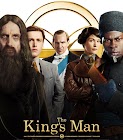
The King's Man (5 Stars)


This is a prequel to the 2015 film "Kingsman", sometimes known as "Kingsman: The Secret Service". It shows how the Kingsman spy organisation came about at the beginning of the 20th Century.

The film's main character is Ralph Fiennes as Orlando Oxford, the Duke of Oxford. He was a war hero in the Boer War, but he became a pacifist after being disgusted by what his country was doing. When the First World War breaks out, his son Conrad is determined to join the army, but he refuses to give him permission while he's underage. In 1916 Conrad turns 18, so he's able to sign up for the army without his father's permission. Orlando is a friend of King George, so he asks the king to keep him away from the fighting. Conrad realises what's happening, so when he's posted to a position in London he exchanges identities with a young Scottish soldier. Conrad volunteers for a dangerous mission on the front line, and he's awarded a Victoria Cross. Posthumously.


The First World War was a family affair. King George of England, Kaiser Wilhelm of Germany and Tsar Nicholas of Russia were cousins. This didn't stop them sending armies against one another. Orlando tried diplomacy to make the three cousins stop fighting and be friends, but it wasn't possible.

Britain and Russia were allies against Germany. A shadowy Scottish figure who calls himself the Shepherd wants Germany to win the war, so he uses the monk Rasputin to persuade Nicholas to withdraw his troops. This puts Orlando in a difficult position. He wants the war to end, but not with Germany as victor, so he has to stop Rasputin.

The Kingsman spy agency isn't formed until 1919 when the war is over.Orlando has learnt lessons from the conflict. There has to be a secret society that isn't controlled by any government, a society which is able to work for peace.


Gemma Arterton plays Polly, a maid who becomes one of Kingsman's founders. A maid? The film is anachronistic in its portrayal of women. In those dark days of male chauvinism women didn't have equal rights, but the Duke of Oxford treats her as his equal. She may work for him, as far as the outside world is concerned, but she's his closest companion and trusted advisor.

"The King's Man" has less humour than the two Kingsman films set in the present day. I can't say whether that's good or bad in itself, but it gives the film a different style to the others.

The film is available for streaming on Disney Plus only five months after it was in the cinema. I'm glad, for purely selfish reasons, but that's a sign that the film wasn't successful at the box office. That's unfortunate. Adolf Hitler is introduced in a mid credits scene, so I was hoping for a sequel to be made soon. There's still hope.

Hitler is played by the young German actor David Kross. In Germany playing Hitler is a right of passage. It happens to every actor at some point in his career, even if he doesn't have a physical resemblance. Am I exaggerating? When I have time I'll make a list of all the German actors who've played Hitler.

A film that's found its way to streaming even faster is "Doctor Strange in the Multiverse of Madness". It's streaming less than two months after it was released, and only three weeks after I saw it in the cinema.

Success Rate:  - 0.7

Order from Amazon.com
Order from Amazon.co.uk
Order from Amazon.de

Monday, 21 February 2022

John Rabe (5 Stars)


Name: John Rabe
Lived: 23 November 1882 – 5 January 1950
Film dates: November to December 1937
Film made in 2009

John Rabe was one of the greatest heroes of the 20th Century, but his name is hardly known outside of China. In his home country he never found recognition for what he'd done. When he returned home to Germany in 1938 he was considered a traitor, because he spoke out against Germany's ally Japan. After the Second World War the allied forces considered him to be a Nazi, so he wasn't able to work and lived in poverty.

John Rabe was the head of Siemens in Nanking. The film says nothing about his life prior to November 1937, so I'll have to fill it in. He was sent to China in 1910, so he missed the horrors of the First World War. As a patriotic German he supported Adolf Hitler when he came into power. He was naive. He thought Hitler was a good man. As a German living so far from home in a pre-Internet age I would probably have thought the same.

He didn't just love Germany, he loved his new country. He cared for his Chinese workers. It wasn't just about them doing their work. He taught them other things, such as the Nazi salute. He wanted to make good Germans out of them.

Then Japan invaded China. The conquest didn't happen overnight. It takes months to overpower a large country. When the attacks on Nanking began, John Rabe saw it as his responsibility to protect the Chinese. First he protected his workers, and then he allowed people from the city to take refuge within the Siemens compound.


When the Japanese attacked, John Rabe called his workers to hide beneath a German flag. As soon as they saw the swastika, the Japanese aircraft turned away. It may seem strange to us looking back, but the Chinese saw the swastika as the symbol of hope.


The atrocities of the Japanese occupying forces were horrific, but what's worst is that they considered their actions noble. The Japanese army didn't keep prisoners, they killed any Chinese soldiers that they captured. Japanese officers who were descended from samurai showed off the enemies they'd decapitated, and the photos were published in Japanese newspapers. The Germans also carried out atrocities, but at least they didn't boast about them.


Valerie Dupres was the headmistress of the International Girls College in Nanking.


Robert Wilson was an American doctor struggling to save lives, a difficult task when he had to perform operations with anaesthetics.

With the help of Valerie Dupres, Dr. Wilson and a few others, John Rabe created a safety zone that was (mostly) off limits to Japanese soldiers. It offered protection to 200,000 Chinese civilians.

Over the last 70 years it's become customary to talk about war crimes. It's expected that wars are carried out in a civil matter. The Geneva Convention is older, predating both world wars, but not every country adhered to it. Japan definitely didn't. At the risk of sounding cynical, it's my belief that wars can't be fought fairly. The main priority of a war is to win, not to minimise the casualties of the other side. That's something Vladimir Putin understands. He doesn't care about collateral damage, as long as Russia wins. When Russian forces are marching across Europe slaughtering men, women and children, it will be a mistake to retaliate fairly. The only thing a despot like Putin understands is force. If we don't fight back hard, he'll never stop.

Order from Amazon.com
Order from Amazon.co.uk
Order from Amazon.de

Saturday, 15 January 2022

The Zookeeper's Wife (4 Stars)


Name: Antonina Zabinska
Lived:18 July 1908 – 19 March 1971
Film dates: 1939 to 1946
Film made in 2017

It's amazing that after all these years it's still possible to make new films about the heroism of people who risked their lives to protect Jews from the Nazis. They're stories that never cease to fascinate modern audiences. Each story has its own variations.

What's even more amazing is that there are still people who deny that Hitler killed millions of Jews. They claim that the Holocaust is Jewish propaganda. I had a personal friend in Birmingham who used to post videos on Facebook about scholars who have found new evidence that the Holocaust never happened. Maybe she still does. I don't know, because I unfriended her. She's the only person I've ever unfriended. I have a principle that I don't unfriend people for disagreements on politics, but she pushed me too far. One person in 12 years of using Facebook. That's not too bad.

Anti-Semitism is currently at its strongest since the end of World War Two, especially among left-wing thinkers. The modern way to excuse anti-Semitism is to say "I'm not anti-Semitic, I'm anti-Zionist". It's a subtle difference. Being anti-Semitic means you want to kill (or otherwise harm) Jews. Being anti-Zionist means you support those who want to kill the Jews who live in Israel. Britain recently had a leader of the opposition party who attended meetings with Jew-killers. If he'd been voted into power, it would have started a new Dark Age in Britain.


Now let me say a few words about the film itself. Not many people know Antonina Zabinska, apart from those who've seen this film. She was the wife of Jan Zabinska, the owner of the Warsaw Zoo from 1929 to 1939. When Germany invaded in 1939 they were ordered to close the zoo. All the animals should have been slaughtered for food, but a senior SS officer in Warsaw, Lutz Heck, was the director of the Berlin Zoo. He offered to take some of the animals to be kept in the Berlin Zoo until the Warsaw Zoo re-opened.

Jan and Antonina wanted to hold on to the zoo by any means possible. They offered to turn the zoo grounds into a pig farm to supply meat for the German soldiers. Lutz agreed to this, as long as he could also use the former zoo for a personal project. He wanted to breed aurochs. Have you ever seen an aurochs? Of course not. They're a European form of bison that's been extinct since the 17th Century. Lutz thought that through selective breeding he could bring them back to life.

What was most important to Jan and Antonina was to save their Jewish friends. Jan was allowed to enter the Warsaw Ghetto to collect scraps to feed the pigs. He smuggled Jews out of the Ghetto, mostly children, but also a few adults. His pig farm was used as a halfway house. Most of the Jews were kept in the underground animal rooms for a few days, until they received fake passports and were able to travel. Some of them preferred to stay.

In 1944 Jan was shot while participating in an armed uprising against the Germans. He was considered dead, so no more Jews could be rescued. Antonina continued to take care of the Jews remaining in the pig farm. There's a certain irony in pigs, an unclean animal for Jews, to be used to save them. Jan surprised everyone by returning home in 1946. The zoo was rebuilt. He continued as the zoo director until 1951. The Warsaw Zoo is still open today.


In the film we see Antonina with her two children, Teresa and Rys.


They're still alive today. It must have been emotional to see their early life being filmed.


Arguably, the film's main hero is Jan Zabinska. He's the one who drives in and out of the ghetto, smuggling Jews in his truck, while his wife sits at home waiting. I see them as a team. They both did their part. The only problems they had were with Antonina's relationship with Lutz Heck. She flirted with him to distract him from suspicious noises in her house. She even kissed him. Jan didn't understand this. He was jealous. Men are like that. Jan didn't understand that Antonina had no interest in Lutz. She was making sacrifices to save Jews.

Success Rate:  - 0.7

Order from Amazon.com
Order from Amazon.co.uk
Order from Amazon.de

Wednesday, 5 January 2022

The King's Man (5 Stars)


This film is a prequel to the other two Kingsman films. They take place in the present day, whereas "The King's Man" takes place in the early 20th Century.

The film's story is fictional, but it's wrapped around historical events. These events determine the film's pacing, giving it a stop and start rhythm. A mysterious Scottish figure, whose identity isn't revealed until the end of the film, is steering European events. He wants to start a large war which will destroy England and free the Scottish people. He sends an agent to assassinate Franz Ferdinand, which is the beginning of World War One. The two sides are evenly balanced, so first he incites a revolution in Russia to make Russia abandon the war. Then he undertakes plans to stop America joining the war on England's side.

I shan't give any more details about the plot. Spoilers! All I'll say is that "The King's Man" is a magnificent film. If I'd seen it on its original release date in mid December it would have been the best film of 2021. The releases date was pushed back to January, so I'll have to wait to see its competition later this year. It's a film that has it all: military action, spies and international intrigue.

A mid credits scene gives a hook leading to a possible sequel, also taking place before the two first films. I'm looking forward to it.

Wednesday, 30 June 2021

Inglourious Basterds (5 Stars)


This film should be called "How the War should have been won". It's the first film in which Quentin Tarantino rewrote history. It's a fictional film, but it features authentic historical characters, such as Adolf Hitler. The film shows Hitler dying in France in 1944, a year before his real world death. Tarantino's most recent film, "Once upon a time in Hollywood", also rewrites history by showing Sharon Tate survive the attack by the Manson Family.

So who kills Hitler? It's a joint effort. There are two plots running in parallel. One is the fighting group called the Bastards, eight Jewish soldiers led by Aldo the Apache (Brad Pitt). It's Aldo's right hand man Donny Donowitz (Eli Roth) who fires the bullets that kill Hitler. When you look at his face it seems like he isn't just acting, he's really enjoying killing Hitler. But Hitler wouldn't have survived anyway. He's locked in a cinema that's being burnt down by Emmanuelle Mimieux, the cinema's owner who's secretly Jewish. Aldo's Bastards and Emmanuelle don't meet, and they aren't even aware of one another's existence.


As I've mentioned many times before, I consider the opening scene in a French farmhouse to be the best scene ever filmed. It's perfect. It's slow and intense with seemingly harmless conversation between the French dairy farmer and the SS officer Hans Landa. In fact, the whole film moves slowly, and there are only occasional short bursts of action.

This is a film I can watch again and again and never get bored. The same is true of all of Quentin Tarantino's films. If you haven't watched it yet, what are you waiting for? Please don't shy away from it with excuses like "I don't like war films". This isn't a normal war film, which should be obvious as soon as the background music begins. The music sounds like it comes directly from a spaghetti western.

Success Rate:  + 2.6

Order from Amazon.com
Order from Amazon.co.uk
Order from Amazon.de

Sunday, 28 February 2021

John Rabe (5 Stars)


I always say that you should be careful judging people by their religious or political affiliations. That's something I have to say to myself. For instance, if I meet someone who says that he voted for Donald Trump in the 2020 election I immediately have a stereotyped picture of the person in my head. Based on this one piece of information I think that I know what the person is about. That's wrong. I should take time to talk to the person and get to know him better. That might modify my opinion about him.

John Rabe, who was the head of Siemens in Nanking in the 1930's, was a Nazi. Nazis are bad, aren't they? "Well", you might say, "some people were just party members without subscribing to Nazi policies". That didn't apply to John Rabe. He was head of the local Nazi Party in Nanjing, which was made up mostly of Siemens employees.

So he must have been a bad man? Wait! There's one more thing you need to know about him. He loved China and he loved the Chinese. That put him in a conflict of interests with the German government, which was Japan's ally at the time. When Japan attacked the city of Nanjing, committing countless terrible atrocities,  John Rabe wrote to Adolf Hitler personally, asking him to intervene. He received no reply to his letter, but when he returned to Germany in early 1938, he was arrested as a traitor.

What did he do in China that made him a traitor? He set up an International Safety Zone in Nanking, which saved the lives of more than 200,000 Chinese. Nevertheless, the Japanese still killed 300,000 civilians in Nanking, most of them within a single week in December 1937. After the war the generals responsible were executed as war criminals, but Japan is still in a state of denial. In the 1980's the generals were posthumously pardoned. Japanese historians now claim that no more than 200 civilians were killed. They ignore the proof shown in photos smuggled out of Nanjing.

The Japanese occupying forces acted with impunity. Captured Chinese soldiers were executed. Women were raped. There were competitions among the officers about who could behead the most prisoners with a sword. There were reports of these competitions in Japanese newspapers at the time, which must be an embarrassment for modern Japanese historians.


John Rabe was a hero. In Germany he's a forgotten hero. It's not usual to sing the praises of Nazis. In China he's still remembered, and children learn about him in school. He was the Good Nazi of Nanjing.

The film has been made with documentary precision. There's an international cast of German, Chinese, Japanese and American actors. I greatly praise the German director Florian Gallenberger for casting actors of the correct nationalities, so there's no mix up of the accents. Unfortunately, the film's original version with everyone speaking their own languages is only available on the German Blu-ray. All international versions are dubbed. Even the German DVD release has the Chinese and Japanese dialogue dubbed into German. I'm listing the different versions in the box below, but I can only recommend the German Blu-ray, even if you're an English speaker. It has English subtitles as well, so it's worth buying it as an import.

Order from Amazon.com
Order from Amazon.co.uk
Order from Amazon.de

Sunday, 30 August 2020

Captain America: Civil War (5 Stars)


As most of my readers know, Chadwick Boseman died of cancer two days ago, aged 43. It was a shock to everyone, because he kept his illness secret for years. When I saw it reported on the BBC website yesterday morning, my first reaction was disbelief. I even suspected it of being a hoax. How can someone so young and (seemingly) so fit die so suddenly?

Since he's best known for his role as the Black Panther in four of the MCU films, I've decided to watch at least two of them to remember him, maybe all four. I haven't decided yet.

The Black Panther is a character who was first invented by Stan Lee and Jack Kirby, appearing in Fantastic Four #52 in July 1966. He became a member of the Avengers in Avengers #52 (May 1968), while Roy Thomas was the regular writer, but it wasn't until September 1973 that he was presented as a true African super-hero. The unknown young writer Don McGregor started to write solo adventures of the Black Panther in Jungle Action #6 which took place in his homeland of Wakanda, not in America. Readers consider the 13-part Panther's Rage story (Jungle Action #6 to #18) to be one of the best stories ever published by Marvel.


Chadwick Boseman is the living representation of the Black Panther as we see him in the Panther's Rage story. He's strong, he's noble, but above all else he's African. This is most obvious in his solo film, "Black Panther", that I'll be watching tomorrow. "Civil War" is an outstanding action film, but "Black Panther" is an African film.

Chadwick Boseman
November 29, 1976 – August 28, 2020

Success Rate:  + 2.6

Order from Amazon.com
Order from Amazon.co.uk
Order from Amazon.de

Wednesday, 10 June 2020

Goodbye Lenin (5 Stars)


This is a brilliant film, one of the best German films ever made. I bought it in England as one of my first DVDs, but I now have the German Blu-ray release. Judging by the high prices at Amazon in both England and America, it looks like the stocks are running out and it will soon no longer be available. That's sad. This film is an important historical document, and the German release doesn't have English subtitles to make it more accessible internationally.

"Goodbye Lenin" is a comedy – yes, Germans do know how to be funny – but in this case the humour is difficult to understand for anyone not familiar with German culture before and after the reunification in 1990. I'm fortunate enough to have been living in Germany in 1990. The events in Berlin were on the news every day, but for me they were confusing. It all seemed too good to be true. Whenever something good happened I sat waiting for a catastrophe to undo it. Fortunately, the catastrophe never came. Mikhail Gorbachev was the Russian President in 1990. If Vladimir Putin had been president , Russian troops would have been sent to Berlin, and the bodies would be lying waist deep in the street.


The film begins on 7th October 1989, the 40th anniversary of the founding of East Germany, officially called the German Democratic Republic (DDR). There's an irony in the name, because the country was everything except democratic, but that's a subject for another day. Alexander Kerner is a 17-year-old teenager living in East Berlin. This is the day when protests against the DDR escalated into open demonstrations on the street, which were brutally repressed. This is also the day on which Alexander's mother, a loyal Communist, had a heart attack and fell into a coma.

Christiane Kerner lies unconscious for eight months, until 22nd June 1990. During this time there were political upheavals, including the demolition of the Berlin Wall on 13th June 1990. When she wakes up, Alexander is warned that his mother's state is still critical, so she shouldn't be subjected to any shocks.

Alexander thinks that the decline of the DDR might be a shock which could kill his mother, so he does whatever he can to hide the truth from her. Alexander and his friends wear their old DDR clothing. When Christiane returns home she can't leave her bed and she wants to watch television, so he collects videotapes of old news broadcasts. When they run out, Alexander gets help from a work colleague who's an amateur film maker. Together they film new news broadcasts to convince Christiane that nothing changed while she was in a coma.

As time passes, Christiane begins to look out of her bedroom window, and she sees things that make her suspicious. Alexander's news reports help to explain, but everything escalates out of control. The news reports rewrite history, presenting the fall of the Berlin Wall as a victory for Communism, with westerners desperate to flee into the East.


As we see, Alexander isn't just creating an alternative universe for his mother, he's doing it for himself. East Germans wanted reunification, but after it happened many of them were unhappy with the way it turned out. Maybe things could have been done better, but everyone knew that if Germany didn't act fast there might be a new Russian President who would block everything. Speed was essential.

The fear was that East Germans, disparagingly called Ossis, would become second class citizens. Even today, 30 years later, there's still no equality. That's to say, there's equality for individuals, but not for society. If an Ossi is intelligent or talented, he can move to the West. Anyone who stays in the East, out of choice or because he isn't good enough, will be at a disadvantage. The unemployment rate is higher in the East, and wages are lower. Some of the East German states are so desperate to attract rich westerners that they're offering apartments rent-free.

I want to recommend this film to my friends, but will you understand it? The only way for a foreigner to watch it is to sit and watch it with a German, preferably someone over 50. Or sit and watch it with me.

Success Rate:  + 10.2

Order from Amazon.com
Order from Amazon.co.uk
Order from Amazon.de

Thursday, 14 May 2020

In Tranzit (3 Stars)


A few days ago I watched "The Brylcreem Boys", a film about an unusual POW camp in Ireland. "In Tranzit" (sic) is about an equally unusual POW camp in Russia. Before you ask me, the answer is No; I don't know the reason for the strange spelling in the title. The film is based on a true story, and from what I understand it's close to the true events, even though the names have been changed.

In 1946 a Russian women's prison is about to close down. The reason isn't stated, but judging by the ruined buildings I assume that it was damaged in the war. All we see is that the prisoners are all transferred to other prisons. Before the staff can be transferred elsewhere a new purpose is found for the prison. 53 German prisoners of war are sent to the prison, of whom two are dead on arrival and are dumped in the courtyard. This leads to the extraordinary situation that all the prisoners are men, but the camp's commander, the guards and all the other staff are women.


At first the men think they can take advantage of the women, but an example is made in the first few minutes. When a German prisoner breaks rank to take the jacket from a dead soldier he's shot dead, and his body is hung upside down in the courtyard as a warning to the others.

The Russian Colonel Pavlov, portrayed splendidly by John Malkovich, visits the camp occasionally to check on the prisoners. He tells the guards that there are SS officers hiding among the normal soldiers with false names. Two are uncovered within a few days and taken to nearby Leningrad to be hanged in the street, but he suspects there are others. The men should be persuaded to betray one another.


A subject matter like this offers a lot of possibilities for kinks, but it's kept to a minimum. One exception is a scene where the men are forced to strip naked in the snow covered courtyard.


The men are herded into a shed where they're sprayed with cold water and told to wash themselves. The guards think it's funny. Girls just wanna have fun.


The camp guards hate Germans and are cruel to the prisoners from the start. The only person who treats the POW's with dignity is the camp doctor Natalia, played by Vera Farmiga. She's taking care of her husband Andrei, who is suffering mental damage after his head was injured by shrapnel. He's the only Russian man in the camp, but he's a mental wreck. Natalia begins to feel attracted to one of the prisoners.

As the film progresses, the sexual tensions between the Russian women and the German men bubble to the surface. The cook gets pregnant, and she's ordered to have an abortion to avoid a scandal. Other Russian women who live nearby have affairs with the men when they leave the camp to work. That seems difficult to believe. Russia (the Leningrad area) is presented as a place where there are hardly any men. The Germans have killed them all. What feelings would be stronger, the hatred for the killers or the desire for replacement men? I would have thought the former.

This isn't an easy film to watch. It's slow moving, gloomy and depressing. There are no good guys in the film, everyone is bad, the Russians and the Germans. It's just a matter of who is less bad than the others. It's an evil story that takes place in an evil world. The film is interesting, but it's not something I can watch more than once.

Order from Amazon.com
Order from Amazon.co.uk
Order from Amazon.de

Tuesday, 10 September 2019

Inglourious Basterds (5 Stars)


The world according to Quentin Tarantino is better than the real world. In Tarantino's world the last thing Hitler saw was the face of a laughing Jewish woman. In the real world he died in or just outside a cold bunker. Tarantino gave him a sexier death. I'd like the last thing I see to be a laughing woman, Jewish or not.

It's a fairy tale, not meant to represent the truth. It opens with the words "Once upon a time in Nazi-occupied France". Fairy tales have happy endings. The big bad monster dies, and they don't come bigger or badder than Adolf Hitler.

The film shows two unconnected plots to kill Hitler. The one is a big operation ordered by Winston Churchill, carried out by the Jewish American squadron called the Basterds. The other is a solo effort by a Jewess who wants revenge for the death of her family. I know that Hitler killed six million Jews, but that's just a number. A number on a piece of paper is abstract, it means nothing. What makes it personal is if Hitler and his followers kill just one person that you know, a family member or a friend. That's what spurs revenge. That's what makes Shosanna Dreyfus aka Emanuelle Mimieux laugh.


Hitler's death takes place in a cinema. This is no coincidence. For Quentin Tarantino films are important, and cinemas are important as the place where films are shown. He loves films, and he openly displays his nostalgia for old films.


This was the film that helped Daniel Brühl make his breakthrough into Hollywood. He'd already been a successful German actor for ten years, but this is the film that made him well known internationally.


Martin Wuttke was primarily a stage actor in Germany, but since appearing as Adolf Hitler in "Inglourious Basterds" he's been cast in a string of American films.


Brad Pitt is the film's anti-hero. He's one of the good guys, but he's so mean in carrying out justice that he makes the audience shudder. His aim isn't primarily to win the war, it's to kill Nazis. For him, anybody wearing a German uniform isn't a human being, he's a Nazi, and he has to die. Obviously, this attitude is completely wrong. The vast majority of the German soldiers didn't put on uniforms because they were Nazis, they put on uniforms because they were conscripted. But it's just a film. The characters aren't meant to be perfect.


Christoph Waltz won an Academy Award as Best Supporting Actor, but anyone who's seen the film knows that he was really the Leading Actor. Despite having less screen time, Brad Pitt was named as the Leading Actor for two reasons:

1. He's more famous than Christoph Waltz.

2. Bad guys aren't usually the Leading Actor.

But look... isn't that a foot rising up Christoph Waltz's jacket towards his medals?


Yes, it's Diane Kruger's foot. I promised you that I would point out the bare feet in Quentin Tarantino's films.


Christoph Waltz gets to put a shoe on Diane Kruger's foot. Most actors work for 50 years and never get a chance like that.


Here are both of her feet, one of them in a plaster cast.


Before anyone accuses me of having a foot fetish, no, it isn't true. All I'm doing is acknowledging Quentin Tarantino's foot fetish. I have many fetishes, too many to list, but a foot fetish isn't one of them. I would rather look at Diane Kruger's face than her feet. She's beautiful, isn't she?


I definitely have a Sitting-In-The-Cinema-Watching-A-Laughing-Woman-Telling-Me-I'm-Going-To-Die fetish. That's a good idea for my blog. I should have a Fetish Of The Day feature. All year long!

This is probably Quentin Tarantino's best film. It's difficult to say. Every time I watch it I'm stunned, like I'm watching it for the first time. My definition of a good film is that I want to watch it at least three times. Today I watched "Inglourious Basterds" for the seventh time, and I still want to watch it again. That makes it better than good.

Success Rate:  + 2.6

Order from Amazon.com
Order from Amazon.co.uk
Order from Amazon.de