Wednesday, 10 December 2025

Barb Wire (5 Stars)


Barb Wire is often dismissed as a relic of 90's comic-book excess, yet it works surprisingly well as a pulpy celebration of girl power. Pamela Anderson's Barb stands at the centre of the chaos with a kind of swagger that leaves every man in the film looking slow, confused or hopelessly outmatched. The plot may swim in dystopian tropes, yet the film's energy comes from watching Barb outthink and outfight a line of men who underestimate her every step of the way.

Barb runs her nightclub, negotiates with corrupt officials and takes on mercenaries without waiting for help from anyone. The men around her posture and threaten, yet Barb treats them like minor obstacles. The film sets up a world in which men try to impose rules while Barb survives by ignoring those rules and doing things her own way. Every time a man tries to dominate the scene she shuts him down with either a sharp remark or a well-aimed shot. She never loses control.

The romance subplot exists only to underline her independence. Her former lover Axel believes he understands her, yet she consistently proves she does not need rescue or guidance. Their shared history matters only because it gives her another chance to demonstrate that she sees through the emotional games that slow everyone else down. Instead of melting into nostalgia she keeps her priorities clear and shows that strength can be both emotional and physical.

The action sequences reinforce this theme. Barb moves with confidence while her opponents stumble. The film delights in showing her as the most competent person in any room. Whether she is trading blows with hired muscle or navigating back-alley deals, she always comes out ahead. The men react to events while she shapes them.

As a film Barb Wire is messy at times, yet its core is a straightforward celebration of a woman who refuses limitations. It offers a heroine who is tougher, smarter and more decisive than every male character around her. For viewers who want stylised grit with a loud shot of girl power it still delivers.

Success Rate:  - 2.4

Order from Amazon.com
Order from Amazon.co.uk
Order from Amazon.de

Tuesday, 9 December 2025

Love and Other Cults (3 Stars)


The story follows Ai, a young girl passed from one unstable environment to another. When she is very small her mother leaves her with a religious cult that treats her as a kind of chosen child. Police eventually raid the compound and Ai is moved into a series of foster homes, each one shaping her in different and often damaging ways. She grows into a teenager who never feels at home anywhere. Every new group sees her as something to be owned or redefined. Ai responds by drifting, joining delinquents, petty criminals and sleazy adults who offer affection with conditions attached. The film cross-cuts with Ryota, a gentle boy who keeps falling orbit around her. Ryota wants to help but he never quite reaches her because Ai keeps slipping into the next situation that promises belonging.

The plot moves through a chain of subcultures: religious communes, street gangs, hostess bars, pseudo self-help groups. In each space Ai tries to become whatever the people around her expect. The result is a life assembled from borrowed identities rather than a stable sense of self. The film follows her attempts to escape this cycle while Ryota tries to anchor her, hoping she might return to him in a world that keeps swallowing her up.

Director Eiji Uchida uses Ai’s journey to argue that cults are not limited to religious sects; any group that demands absolute loyalty or reshapes a vulnerable person can function like one. He suggests that society creates these cult-like pockets by offering young people very few places where they feel valued without conditions. Ai is not drawn in by doctrine; she's drawn in by the simple desire to be seen. Uchida also critiques how institutions that claim to protect children often repeat the same mistakes as the fringe groups they condemn; they fail to give real emotional stability. Through Ryota he offers a counterpoint: genuine care is slow, patient and sometimes powerless, but it's the only thing that isn't manipulative.

The final message is bittersweet: identity is fragile when every community you meet tries to remake you, yet there's still hope in small acts of sincerity from people who refuse to control you.

Monday, 8 December 2025

Jack-O (3 Stars)


Jack-O (1995) is one of those Halloween-season curiosities that lives on through late-night TV, bargain DVD packs and sheer oddball charm. It's a micro-budget horror film that never hides its limitations; instead it leans into them with earnest performances, homemade effects and a simple folklore-driven plot.

The killer is Jack-O, a supernatural scarecrow-like creature with a pumpkin head who carries a scythe. He's not a random monster; he's the resurrected servant of an old warlock named Walter Machen. The film explains that Machen was executed generations earlier after a feud with the Kelly family. In his dying moments he placed a curse on the Kelly bloodline and commanded Jack-O to rise whenever the opportunity came. His motivation for killing is entirely tied to that grudge; Jack-O hunts descendants of the Kelly family to fulfil the warlock's revenge and to complete the curse Machen left behind.

The narrative itself is straightforward. A young boy in the present-day Kelly family becomes the focus of the curse once Jack-O returns from the grave. What follows is a series of atmospheric night scenes, fog-heavy backyards and low-lit suburban streets where Jack-O cuts down victims who cross his path. The kills are often staged with a sense of old-school monster-movie enthusiasm, even when the effects struggle.

What makes Jack-O interesting is not polished filmmaking; it's the film's sincerity and its devotion to regional horror traditions. It feels like something crafted by fans who wanted to build a campfire legend of their own. The pumpkin-headed killer is memorable and the folklore framing gives the story a little more weight than a simple slasher setup.

As a whole, Jack-O is best appreciated by viewers who enjoy do-it-yourself horror cinema, cult oddities and Halloween atmosphere above narrative complexity. It never raises its ambitions beyond that, but within those limits it delivers exactly what it promises: a brisk creature feature built around a vengeful supernatural killer with a clear motive rooted in an old family curse.

Sunday, 7 December 2025

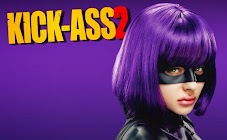
Kick-Ass 2 (4½ Stars)


How does the sequel compare with the original film?

Kick-Ass 2 is a sequel that tries to punch harder, shout louder and shock faster than the first film; the results are mixed but often fascinating. It retains the scrappy energy that made the original a cult favourite, yet it shifts the tone in ways that highlight both its ambition and its limits.

What is better

The sequel expands the world in a way that feels genuinely fun. The first film revolved mostly around Kick-Ass, Big Daddy and Hit Girl, but Kick-Ass 2 fills the city with amateur heroes whose costumes look like they were bought at a garage sale. This broader roster gives the film a looser, almost comic book sprawl. Justice Forever is packed with oddballs, and their presence adds texture that the first film never tried to offer.

Chloë Grace Moretz remains the standout. Her development is deeper here; Hit-Girl wrestles with adolescence, identity and the idea of normal life. The first film leaned heavily on the shock value of a small girl dropping bodies. The sequel gives her emotional stakes that feel credible. Her arc is the most grounded and the most compelling.

There is also a sharper focus on consequences. The violence still borders on cartoonish, yet the film at least acknowledges that vigilantism has fallout. That moral shading gives the sequel a slightly more mature edge.

What is worse

The tonal balance is far less steady. The first film had a cheeky sincerity that blended parody with heartfelt origin story. Kick-Ass 2 often stumbles between dark brutality and goofy slapstick. Scenes that aim for grim realism sit beside jokes that feel imported from a different movie. The lack of control makes the emotional beats less effective.

The villain upgrade does not fully land either. Christopher Mintz-Plasse throws himself into the role, yet the Motherfucker feels more like a running gag than a genuine threat. The film tries to push him toward menace but never quite finds the tone that would make him memorable.

The action is bigger but not always better. Some set pieces are entertaining, but the kinetic style of the first film is missing. Matthew Vaughn’s original direction had a clean rhythm. Jeff Wadlow goes for scale over precision.

Verdict

Kick-Ass 2 is rougher, broader and more uneven than the first film. It offers a richer world and a stronger emotional arc for Hit-Girl, yet it loses some of the tightness and tonal clarity that made the original work. It is a sequel with personality and moments of charm; it just punches in too many directions at once.

Success Rate:  + 0.2

Order from Amazon.com
Order from Amazon.co.uk
Order from Amazon.de

Saturday, 6 December 2025

Joker Folie à Deux (5 Stars)


Why it surpasses the first film

Joker (2019) was a character study built on grit, alienation and a slow descent into madness. Joker: Folie à Deux keeps that foundation yet pushes the concept into stranger bolder territory. This shift is exactly what makes it a stronger film. Where the first film offered a grim portrait of a man collapsing under the weight of society, the sequel becomes a fever dream shared between two unstable souls. It is more daring, more self aware and far more playful with the idea of cinematic reality.

The most obvious difference is the musical structure. Instead of repeating the grounded aesthetic of the first film, Folie à Deux uses musical sequences as windows into Arthur and Harley’s shared delusion. These scenes are not simple gimmicks; they become expressions of their mental state. The first film showed Arthur imagining an audience that never applauded him; the sequel lets him build entire worlds in song. The musical moments allow the film to explore fantasy, desire and dependency in ways the original could not. This added layer of surrealism gives the sequel more emotional range.

The chemistry between Joaquin Phoenix and Lady Gaga also strengthens the narrative. Phoenix retains his uneasy unpredictability, yet Gaga brings a chaotic vulnerability that reshapes Arthur’s story. She does not imitate past versions of Harley; she invents her own that fits this universe. The dynamic between them has more energy than anything in the first film. It creates tension, tenderness and danger. Their relationship becomes the engine of the plot rather than a simple consequence of Arthur’s actions.

The sequel also feels less burdened by the need to justify itself as a “serious” comic book movie. It allows moments of humour to seep through, then happily undercuts them with dread. The result is more confident and more artistically free. Where the first film sometimes felt restrained by its insistence on realism, Folie à Deux embraces the subjective chaos of its characters. The film shifts tone with purpose; suddenly a scene is menacing, then it becomes operatic, then intimate. This variety makes it richer and more memorable.

Visually the sequel is more expressive. The colour palette is bolder and the cinematography leans into the idea of unreliable perception. Gotham still feels oppressive, yet it also becomes theatrical, almost like a stage for Arthur and Harley’s fantasies. This blend of harshness and fantasy gives the film an identity distinctly separate from the first.

Most importantly the sequel expands the themes. Instead of focusing mainly on systemic neglect it explores shared delusion, co-dependency and the longing to be seen. Arthur’s story becomes larger than a lonely man’s breakdown; it becomes an unsettling duet about two people who find comfort in each other’s madness. It is disturbing, sometimes touching and always compelling.

Joker: Folie à Deux improves on the first film by refusing to repeat it. It is weirder, more emotional and more ambitious. Instead of explaining Arthur Fleck it lets us get lost in the world he creates with Harley. In doing so it becomes a sequel that dares to be different and ends up being more satisfying.

Success Rate:  - 0.9

Order from Amazon.com
Order from Amazon.co.uk
Order from Amazon.de

Friday, 5 December 2025

New Fist Of Fury (4 Stars)


New Fist of Fury as Bruceploitation

New Fist of Fury arrived in 1976 as one of the earliest attempts to reshape Jackie Chan into the next Bruce Lee. The film is a curious mix of martial arts melodrama and industry calculation; it sits at the intersection of tribute and imitation, and it shows how the Hong Kong studios tried to fill the void left by Lee’s sudden death. In retrospect this phenomenon has been called Brucesploitation.

This refers to the wave of films made after Bruce Lee died in 1973. These films used actors who resembled him, behaved like him and fought like him; they were sometimes given names designed to trick audiences. Posters featured lookalike poses, yellow tracksuits and snarling facial expressions. Many films claimed to continue Lee’s legacy, or pretended to reveal secret chapters of his life. The goal was simple: ride the momentum of a superstar whose fame had grown even larger after his passing.

Brucesploitation could be cheap and cynical, but it was also a revealing snapshot of a film industry that had lost its brightest star and had no clear idea how to replace him.

How New Fist of Fury uses Jackie Chan in this framework

Golden Harvest had not yet found the comic persona that made Jackie Chan famous. In New Fist of Fury, the studio tried to shape him into a tough, brooding successor to Bruce Lee. The original Fist of Fury had made Lee a household name, so reviving that title was the clearest signal possible.

Chan’s performance fits the bruceploitation mould in several ways:

1. The grim persona

Chan is asked to suppress his natural charm. He scowls, postures, and delivers his lines with forced intensity. This mimics the stoic fury that defined Lee’s screen presence, although it never feels natural for Chan.

2. The righteous avenger template

Chan plays a street thief who becomes a disciplined martial artist. The journey mirrors the narrative arc that bruceploitation films loved; a downtrodden hero discovers inner strength, then retaliates with righteous force against oppressors.

3. The choreographic echoes

While Chan had not yet developed his playful, acrobatic style, the fights push him toward Lee’s sharp explosive movements. His screams copy Lee’s distinctive kiai patterns, and several shots linger on his face as if trying to capture the same raw intensity that Lee had carried effortlessly.

4. The legacy branding

The film uses the Fist of Fury title to wrap itself in Lee’s aura. Chan is not playing Bruce Lee, but the narrative positions him as a symbolic heir who must restore pride to the oppressed Chinese fighters. This is classic bruceploitation; a new protagonist inherits Lee’s mission and fights in his spirit.

How well it works

The film is historically interesting but dramatically uneven. Chan is earnest, but he feels misplaced. He fights well, but without the self-aware sparkle that later made him unique. Instead of showcasing his gifts, the film tries to hammer him into a mould that never fits.
The production has some strong choreography and a sincere sense of national struggle. However, the pacing is uneven and the dramatic scenes are heavy. The attempt to recreate the tone of the original Fist of Fury gives the film a stiff solemnity that contrasts with Chan’s natural energy.

Final thoughts

New Fist of Fury is a transitional film. It shows a studio searching for another Bruce Lee, and an actor waiting to become Jackie Chan. As bruceploitation, it is a clear example of how the industry tried to borrow Lee’s power rather than build something new. Today, it is most interesting as a record of what Chan was never meant to be, and as an early chapter in the long period before he found his true screen identity.

Order from Amazon.com
Order from Amazon.co.uk

Thursday, 4 December 2025

Invisible Centerfolds (5 Stars)


Introduction

"Invisible Centerfolds" is a soft-core sci-fi comedy that mixes fantasy with light eroticism. The premise is simple; Kay, played by Christine Nguyen, is a model trying to pay her way through dental hygienist school. A scientist offers her money to test his invisibility formula, and her new condition leads to comic mishaps, mild intrigue and the usual late-night cable antics.

Christine Nguyen: the film’s strongest element

Christine Nguyen carries the film with a blend of charm and playful confidence. The role asks for a mix of sensuality and breezy comic timing, and Nguyen delivers both with ease. She treats the material with a light touch that fits the tone; even when the plot drifts into pure camp, she stays lively and engaged. Her presence gives the film a sense of fun it would not otherwise have.

Nguyen also brings a grounded appeal to Kay. The character is written in a simplistic way; her motivations are clear but shallow. Even so, Nguyen manages to create moments of warmth and personality. She leans into the absurdity of invisibility scenes with enthusiasm; her reactions and gestures help sell gags that would feel flat in less capable hands.

Limits of the film and the role

The movie gives Nguyen very little emotional depth to explore, and the script treats Kay as an object of desire more often than a fully drawn character. The production is modest; the invisibility effects are basic and the storytelling meanders. These limitations keep Nguyen from elevating the film beyond its narrow aims.

Still, within those boundaries, she does more than expected. Her energy prevents the film from becoming dull. When she is off screen, the momentum drops; when she returns, the tone perks up immediately.

Final assessment

Christine Nguyen is the reason "Invisible Centerfolds" works as entertainment. The film remains a light, exploitative fantasy that rarely aims higher, but her performance gives it charm and playfulness. She understands exactly what kind of movie she is in and performs with confidence that makes the camp feel intentional rather than accidental.

If the film has any staying power, it is because Nguyen brings life to a role that could have been forgettable. Her charisma turns a flimsy sci-fi gimmick into an enjoyable little diversion.

Wednesday, 3 December 2025

Housewives From Another World (4½ Stars)


I'm happy to say that Fred Olen Ray has re-released another two erotic films on Blu-ray. "Housewives From Another World" is part of the Medina Collection, and "Invisible Centerfolds" is from the McKendrick Collection. I've chatted to him a few times on Facebook, and he's never differentiated between the two collections. He refers to them collectively as his Bikini Films.

It's a long time since I've watched "Housewives From Another World", so I can't make a direct comparison between the films, but I can compare the screenshots with my last review.


This is Ted Newsom on DVD


This is Ted Newsom on Blu-ray. He's never looked so awesome.


This is Christine Nguyen and Rebecca Love on DVD.


This is Christine Nguyen and Rebecca Love on Blu-ray. They've never looked so sexy.


Except when they're naked.

Here's an updated summary of the Retromedia films so far, with the Blu-ray releases marked.

The Medina Collection

1. Thirteen Erotic Ghosts (2002)
2. (BR) Bikini Airways (2003)
3. (BR) Haunting Desires (2003)
4. Curse of the Erotic Tiki (2003)
5. Bikini Carwash Academy (2004)
6. Erotic Dreams of Jeannie (2004)
7. Teenage Cavegirl (2004)
8. The Good, the Bad and the Beautiful (2005)
9. Bikini Chain Gang (2005)
10. Ghost in a Teeny Bikini (2006)
11. Bikini Girls from the Lost Planet (2006)
12. Harlots of the Caribbean (2006)
13. Girl with the Sex-Ray Eyes (2006)
14. (BR) Bewitched Housewives (2006)
15. The Girl from BIKINI (2006)
16. (BR) Super Ninja Doll (2007)
17. (BR) Tarzeena (2007)
18. Voodoo Dollz (2008)
19. Bikini Royale (2008)
20. (BR) Bikini Frankenstein (2009)
21. (BR) Twilight Vamps (2009)
22. Bikini Royale 2 (2009)
23. (BR) Bikini Jones and the Temple of Eros (2009)
24. (BR) Housewives from Another World (2010)
25. Lady Chatterley's Ghost (2010)
26. Bikini Time Machine (2010)
27. (BR) Sexual Witchcraft (2010)
28. Bikini Warriors (2010)
29. The Teenie Weenie Bikini Squad (2011)
30. Dirty Blondes from Beyond (2012)
31. Busty Housewives of Beverly Hills (2012)
32. (BR) Baby Dolls Behind Bars (2012)

The McKendrick Collection

1. Strippers from another world (2013)
2. Big Bust Theory (2013)
3. Intergalactic Swingers (2013)
4. (BR) All Babe Network (2013)
5. Great Bikini Bowling Bash (2014)
6. Stacked Racks from Mars (2014)
7. Atomic Hotel Erotica (2014)
8. Lolita from Interstellar Space (2014)
9. Sexy Warriors (2014)
10. Bikini Avengers (2015)
11. (BR) College Coeds vs Zombie Housewives (2015)
12. Lust in Space (2015)
13. Erotic Vampires of Beverly Hills (2015)
14. (BR) Invisible Centerfolds (2015)
15. (BR) Cinderella's Hot Night (2017)
16. (BR) Sleeping Beauties (2017)

The Apocrypha

1. (BR) Bad Girls Behind Bars (2016)
2. Vixens From Venus (2016)
3. Cyborg Hookers (2016)
4. Cosmic Calendar Girls (2016)
5. Escape From Pleasure Planet (2016)
6. (BR) Paranormal Sexperiments (2016)

The Medina Collection consists of films directed by Fred Olen Ray using the pseudonym Juan Medina. The McKendrick Collection consists of films directed by Dean McKendrick. The Apocrypha consists of films directed for Retromedia by other directors.

Notes:
(1) "Bikini Carwash Academy" (Medina 5) was re-released with a different opening credits sequence, listing the director as Sherman Scott.
(2) "Tomb of the Werewolf" (not listed above) was directed by Fred Olen Ray using his own name, but it's in the Medina style. It has almost the same cast as "Haunting Desires".
(3) Dean McKendrick made seven erotic thrillers for Retromedia, not listed above.
(4) Apocrypha? If you have a better name for these films, let me know.

That's 18 out of 54 films released on Blu-ray so far. Let's hope the others will follow soon.

Sunday, 30 November 2025

Captain Phillips (5 Stars)


"Captain Phillips" follows Tom Hanks as the most stressed man on the Indian Ocean. He is just trying to deliver some cargo, drink bad coffee and fill out paperwork when a group of Somali pirates shows up in a tiny skiff that looks like it should capsize if someone sneezes.

The pirates board the ship with enthusiasm that suggests they skipped every team-building seminar known to man. Their leader, Muse, announces “I am the captain now” which instantly becomes the world’s most quoted line. Phillips tries to reason with them using the universal language of middle-aged managerial concern.

Eventually the pirates kidnap him in a lifeboat that resembles a bright orange coffin. Tom Hanks spends the rest of the film sweating, negotiating and looking like he would give anything for a nap. The US Navy arrives with enough firepower to vaporise a small moon, which makes the pirates realise this was not the best career move.

The film ends with a famous scene in which Hanks delivers the most convincing performance of a man who has absolutely had enough. It is tense, gripping and unexpectedly funny if you enjoy watching sophisticated global shipping operations undone by four men in a boat that probably needs an oil change.

Success Rate:  + 2.0

Order from Amazon.com
Order from Amazon.co.uk
Order from Amazon.de

Thursday, 27 November 2025

Not One Less (5 Stars)


"Not One Less" is the ninth film made by Zhang Yimou, and it's different to any of his earlier films. It abandons the heightened visuals of his period pieces in favour of an unvarnished look at life in rural China. What makes the film so compelling is the way its candid scenes anchor the story. Zhang works with non-professional actors, real locations and situations that unfold with the loose rhythm of daily life. The result is a drama that feels lived rather than staged. The actors who have speaking roles all use their real-life names and careers, so they're playing themselves, and the film has the style of a documentary.


The early village scenes establish this tone immediately. The school is a crumbling building where chalk is rationed and chairs are mismatched. Children wander in and out with the relaxed confidence of pupils who know that no one has the authority to discipline them. These moments are shot with patience; the camera sits back, letting kids quarrel, run errands or drift into boredom. Nothing feels arranged. Wei Minzhi enters this world as a shy substitute teacher who is barely older than her students; her hesitations and stubbornness blend seamlessly with the environment. When she struggles to keep order or negotiate for chalk, the interactions feel as if they were captured rather than directed.

The film becomes even more striking once the story moves to the city. The candid approach continues but the mood changes sharply. In Beijing the camera records crowds, noise and pace; Wei is swallowed by traffic and anonymous streets. Her attempts to ask for help are met with indifference, and Zhang lets these moments play out with minimal interference. Passers-by glance at the camera or ignore it; the film absorbs the energy of the city without smoothing it into neat drama. The gap between the quiet village and the disorienting urban landscape becomes the emotional centre of the film. Wei's determination grows in direct response to the chaos around her.

The television station sequence is particularly effective because it fuses the candid approach with a controlled setting. Wei appears tiny in imposing hallways; she stands silently while adults hurry past her. When she finally delivers her appeal on camera, the moment works not through sentiment but through sincerity. The unpolished performance fits the film's style; it feels like the culmination of her journey rather than a manufactured climax.


By using real people and authentic spaces, Zhang crafts a social drama that avoids melodrama. The candid scenes in the village and the city do more than provide texture; they reveal the structural inequalities that shape the characters' lives. A single piece of chalk becomes a symbol of scarcity. A bus fare becomes a barrier that might end a child's education. None of this is stated directly; it emerges naturally from what the camera observes.

"Not One Less" succeeds because it trusts ordinary moments. The film's humanity comes from watching how people actually behave in cramped classrooms, dusty streets or crowded stations. Through these candid scenes, Zhang delivers a story about responsibility and persistence that feels honest and quietly powerful.

Wednesday, 26 November 2025

Captain America: Brave New World (3 Stars)


"Captain America: Brave New World" arrives with the weight of a legacy. The earlier entries in the series built a reputation for tight storytelling, grounded stakes, and a sharp blend of political tension and character-driven drama. This new chapter tries to continue that tradition; however, it never reaches the clarity or emotional power of its predecessors.

The story sets up promising themes about leadership and responsibility, yet it rarely develops them with the sharp focus seen in "The Winter Soldier" or the ideological heft of "Civil War". Those films thrived on conflict that felt urgent and personal. Here, the central conflict feels scattered; the narrative moves between subplots that compete for attention instead of supporting each other. The result is a film that feels busy rather than purposeful.

Anthony Mackie carries the shield with conviction. His performance is sincere and committed; his scenes that deal with the burden of legacy are among the film’s strongest. Yet the script never gives him the same depth or arc that Chris Evans enjoyed. Sam Wilson’s internal struggle feels stated rather than explored. The earlier films balanced action with intimate moments that defined Steve Rogers as a character; this entry misses that balance and leans heavily on exposition.

Action has always been a hallmark of the series; however, the set pieces here lack the precision that made sequences like the elevator fight in "The Winter Soldier" or the highway battle unforgettable. The choreography feels looser. The editing cuts too quickly to create impact. Instead of tension building through physical stakes, the film often relies on CGI that softens the grit that once set the franchise apart.

The supporting cast is solid, yet many characters feel underused. Motivations are introduced then set aside. Relationships that could deepen the emotional core remain at the surface. Earlier films used their ensembles to shape the story’s moral and political dimensions; this time the ensemble drifts around the edges.

Tonally, the film struggles to find its identity. It gestures toward political commentary yet rarely commits to a viewpoint. It hints at espionage yet never creates the paranoia that defined the franchise’s strongest moments. The film moves quickly, yet without the thematic weight that once made Captain America stories stand out in the broader MCU.

In the end, "Captain America: Brave New World" is serviceable entertainment with a committed lead performance and flashes of inspiration. It simply lacks the tight structure, grounded action and emotional clarity that made the earlier films some of Marvel’s best. The shield still shines; the story beneath it does not.

Success Rate:  + 0.3

Order from Amazon.com
Order from Amazon.co.uk
Order from Amazon.de

Tuesday, 25 November 2025

Barb Wire (5 Stars)


Barb Wire arrived in 1996 as a glossy, chaotic mix of cyber-noir, comic book grit and B-movie bravado; over time it has settled into the kind of film that finds its audience late at night, often with a grin. Its reputation as a cult film rests on two pillars: its shamelessly pulpy style and the strange balance between sincerity and camp that runs through every scene. The tone wavers between self-aware parody and straight-faced action. That unevenness has helped the film survive long after the initial critical backlash. People return to it because it is bold, messy and entirely itself.

Pamela Anderson carries the film with a combination of deadpan toughness and deliberate glamour. Yet the real anchor of the story is Udo Kier as Curly. His performance is a master class in the art of supporting presence; he never tries to overshadow Anderson, but he shapes the emotional rhythm of every scene he enters. Kier has a gift for playing characters who seem to know more than they reveal. As Curly, he offers quiet loyalty mixed with wry resignation. He treats the absurdity around him with total seriousness. This gives the film a strange kind of credibility; when Kier looks worried, the stakes feel higher, even when the plot borders on cartoon logic.

Kier also provides the film with its most grounded emotional thread. Curly cares for Barb in a way that never slips into cliché. Instead, his loyalty feels like something built on years of shared struggle. The scenes between them play smoother and more natural than the larger political storyline; they give the film its heart. Kier communicates entire histories with small gestures and micro-expressions. In a film driven by spectacle, this subtlety stands out.

As a cult film, Barb Wire thrives on its contradictions. It is a loose reworking of Casablanca, yet it hides that influence behind neon lights, leather and explosions. It aims for sleek futurism, yet it feels like a time capsule of nineties aesthetics. It wants to be serious, yet it is most memorable when it leans into excess. These tensions create a viewing experience that rewards audiences who enjoy cinema that refuses to behave.

Over the years, midnight screenings and fan discussions have reframed the film as an example of accidental brilliance; its mixture of sincerity and camp makes it endlessly rewatchable. The costumes, the overheated dialogue, the pulpy action and the bold production design all contribute to the sense of a film that invites both laughter and admiration. At the centre of this strange world stands Udo Kier, giving a performance that elevates the entire project.

Originally labelled as a flawed blockbuster, Barb Wire's standing as a cult film has grown over the years. It showcases the power of character actors who treat even the wildest material with full commitment; it proves that audacity and personality can keep a film alive long after its initial release.


Success Rate:  - 2.4

Order from Amazon.com
Order from Amazon.co.uk
Order from Amazon.de

Iron Sky: The Coming Race (2½ Stars)


When I saw this film in the cinema five years ago I said that a lot was happening, and I needed to watch it again to figure it all out. Finally, after five years, I've watched it again. Too much is happening in the film, way too much. The first film was a fairly simple story: at the end of World War Two the Nazi elite fled to the Moon to create a new kingdom, waiting for the right moment to return to Earth and conquer the world. The second film adds a fanatical cult, aliens who guided mankind for thousands of years, and dinosaurs who live at the centre of the world. Any one of those ideas would have made a fascinating film, but adding them all at once just clogs it down.

Udo Kier is dead. He passed away on Sunday, but it was only reported today. He was a magnificent actor, excelling in every role he played. He was also modest. A few years ago he said, "I've made 200 films. 100 of them are bad. 50 can only be enjoyed with a glass of wine. The other 50 are great". I wonder how he would rate "The Coming Race". I expect he would call it a bad film. All I can say is that no film was ever bad because of Udo. He was good in every role he played. The problem is the overall quality of the film, from the screenwriting to the directing. Udo Kier is an actor whose work I have always enjoyed, and he'll be sadly missed.

Success Rate:  - 49.2

Order from Amazon.com
Order from Amazon.co.uk
Order from Amazon.de

Monday, 24 November 2025

Black Creek (4 Stars)


When a ruthless gang slaughters a sheriff and his family, his sister Rose (Cynthia Rothrock) rides into Black Creek seeking vengeance. Her journey becomes a chain of violent confrontations; each fight exposes another layer of the gang’s cruelty. She brawls her way through saloons and abandoned outposts where close-quarters combat dominates and weapons are used more for brutality than precision. The film highlights raw fistfights, frantic shootouts and brutal knife work. Every clash is staged with a gritty sense of weight and exhaustion; each victory feels earned rather than stylish. Her final showdown with the gang’s leader is a long, punishing battle that tests her resolve and brings the story to its violent conclusion.

Saturday, 22 November 2025

The Shadow's Edge (4 Stars)


This is the ninth film in the Stuttgart Weird Weekender Festival.

"The Shadow's Edge" is a high tech crime thriller. A gang breaks into a bank, but they don't steal any money. It's just a diversion to hide their real aim, stealing a notebook which contains a businessman's access codes for his crypto currency account. I admit that I was confused in the early scenes. I couln't understand what the gang was doing. It all happened too fast. What I did understand is that the gang's leader is a man known only as the Shadow. He's led many operations over the years, but his identity is still unknown.

The police call Wong Tak-chung (Jackie Chan) out of retirement, the only officer that they consider able to track down the Shadow. Wong and the Shadow respect one another, playing a high stakes cat and mouse game.

Friday, 21 November 2025

Fucktoys (2 Stars)


This is the fifth film in the Stuttgart Weird Weekender Festival.

Annapurna Sriram wrote, directed and played the lead role in this film. She plays a sex worker called AP. She's told by a psychic that there's a curse on her, and the curse can only be lifted if she sacrifices a young lamb. The ceremony will cost $1000. She's told that she has to perform the ceremony as soon as possible to prevent her death. She doesn't have the money, so she frantically tries to earn it by working as a dominatrix and being an escort at exclusive parties.

The description probably sounds like the sort of film I would enjoy, but it's not for me. There's a lot of sexuality, some nudity and repeated BDSM scenes, but the sex is unattractive and not at all arousing. Maybe it's accurate. Maybe this is the seedy side of the sex industry. I didn't enjoy the film.

Cielo (4 Stars)


This is the fourth film in the Stuttgart Weird Weekender Festival.

Santa is an eight-year-old Bolivian girl who can work miracles. She's empowered by a fish that lives in her stomach. She sets out on a journey to Heaven, which she considers to be located in the Atlantic Ocean off the coast of Brazil. Before she leaves she kills her mother, confident that she can resurrect her when she reaches her goal. On the way she's taken in by a travelling troupe of female wrestlers.

The film is intended to be spiritual, but there was a lot of laughter in the audience. Some of the scenes were too ridiculous to be taken seriously. The story isn't wrapped up at the end. There are unanswered questions that the viewer has to figure out for himself. The film's cinematography is breath-taking.

I fell in love with a Z-Grade Director in Brooklyn (4½ Stars)


This is the third film in the Stuttgart Weird Weekender Festival.
 
Shina is a highly successful actress in Japan who's going through a crisis. She doesn't enjoy her work any more. She thinks her roles are shallow and meaningless. To get away from it all, she goes on an extended holiday to America with her boyfriend. After an argument he dumps her, leaving her alone in New York without money and without her phone. Worse still, she can't speak a word of English.

She's taken in by Jack, a young man who's just been given a $1000 budget to make his first film. It's "Death vs Love", the story of a serial killer who's being haunted by his ex-girlfriend. Jack offers to let Shina stay with him, as long as she appears in his film. The ghost is the leading actress, but it's also a non-speaking role. Perfect for Shina!

The film follows the rules of romantic comedies. It's a wonderful film.

Thursday, 20 November 2025

The Last Viking (4 Stars)


This is the first film in the Stuttgart Weird Weekender Festival.

Anker and Manfred grow up together after their mother dies and their father unexpectedly disappears. Manfred suffers from dissociative personality disorder. He thinks he's a Viking, and even dresses as a Viking when he goes to school. Anker looks after him to stop him being bullied.

As an adult, Anker takes part in a bank robbery. He knows that the police will catch him, so he entrusts his share of the money (two million dollars) to his brother. 15 years later he's released from prison, and Manfred's mental state has deteriorated further. He now thinks he's John Lennon, and he can no longer remember where he buried the cash, because he's become a different person. Anker is advised that the only way to cure Manfred is to convince him he really is John Lennon. There's another mental patient who believes he's Ringo Starr, and a third mental patient who believes he's Paul McCartney and George Harrison in one person, so Anker brings them together to reunite the Beatles.

The comedy in "The Last Viking" is ridiculous, but it works. It's a very good film.

Wednesday, 19 November 2025

Kick-Ass (5 Stars)


Kick-Ass – A Bloody Love Letter to Comic-Book Culture

Tone, Premise, and Subversion

Kick-Ass, directed by Matthew Vaughn and written by Vaughn and Jane Goldman, adapts the Mark Millar / John Romita Jr. comic in a way that both celebrates and satirizes superhero tropes. Rather than giving us gods or mutants, we get Dave Lizewski, an ordinary teenager obsessed with comics who decides, “Why don’t I become a real-life superhero?” That childlike, fanboy impulse is the film’s emotional core; Dave isn’t doing this because of a tragedy or responsibility, but because he’s enamoured with the fantasy.

This setup allows Vaughn to play both ways: he delivers gloriously over-the-top violence, but also underlines how absurd and dangerous it would actually be for a normal person to try to live in a comic book world. Critics have noted that the film doesn’t simply lift comic book characters into reality; it “rips out comic-book pages and pushes the real world inside the gleeful chaos” of pop-violence. 

Characters and Performances

Dave / Kick-Ass (Aaron Johnson): He’s likable, naïve and badly out of his depth, but Johnson gives him enough sincerity that we root for him. Vaughn and Goldman don’t make him a parody; he’s a genuine wish-fulfilment figure, but one who pays a heavy price for his idealism. 

Hit-Girl / Mindy (Chloe Grace Moretz): Arguably the show-stealer. Despite being an 11-year-old child, she’s a trained, ruthless killer, spouting profanity and executing her targets with lethal precision. Her performance is shocking, morally dissonant and deeply rooted in comic-book fantasy. She’s what happens when the pages come alive, but without editorial restraint.

Big Daddy (Nicolas Cage): A vigilante father with a clearly twisted philosophy, he’s reminiscent of Batman-ish figures, but not without his own emotional baggage. 

Frank D’Amico (Mark Strong) & Red Mist (Christopher Mintz-Plasse): They provide the criminal opposition, with Red Mist’s turn especially resonating in the film’s blending of comic-style melodrama and real-world danger. 

Violence, Ethics and the “Comic-Book Fantasy”

One of Kick-Ass’s most provocative aspects is its use of violence. It’s graphic, gleeful and unapologetically cartoonish, but it’s also grounded in a world that, for the main characters, is very real. While the violence feels stylized, the characters’ emotional stakes remain believable. 

This tension between fantasy and realism is central to the film’s commentary on comic book culture. On one hand, it’s a cathartic expression of fan-power fantasy: costumes, vigilante justice, “saving the innocent.” On the other hand, it doesn’t shy away from the darker side: what if real people got hurt, or worse? Kick-Ass scratches the itch that a lot of comic fans have – the dream of being a hero – but it also warns that the dream comes with real risk.

The film also taps into the modern, Internet-inflected superhero culture. Dave’s early vigilante efforts go viral, and his fame spreads online. This reflects how, in the real world, superhero fantasies and cosplay are deeply intertwined with social media and celebrity.

Impact and Legacy

Kick-Ass hasn’t just remained a cult favourite; it also helped pave the way for more irreverent, R-rated takes on the superhero genre. Its willingness to lean into adolescent boredom, fanaticism and violence resonates with fans who grew up loving comics but also craving a more adult, subversive spin.

In some ways, Kick-Ass is a paradox: it’s a celebration of the fun of comic books, but also a critique of their fantasy escapism. By putting “real people” into these absurd situations, it highlights both the joy and the danger of wanting to be more than human.

Importance of Comic-Book Culture in Kick-Ass

1. Inspiration vs. Reality: Dave’s journey begins because of his love for comics. This is not just surface-level, it’s his framework for understanding heroism. The film explores what happens when “comic-book logic” is applied to the real world.

2. Satire and Celebration: The film simultaneously pays homage to superhero violence and mocks it. It leans into gore, exaggerated fights and “superhero theatrics,” but never loses sight that these are real stakes for real (non-superpowered) people.

3. Vigilantism and Fan Fantasy: Kick-Ass taps into the fantasy many comic-book fans harbour: putting on a costume, righting wrongs, being a hero. But it also raises ethical questions about vigilantism: what is gained, and what is lost.

4. Internet & Meme Culture: By making Dave’s exploits go viral, the film mirrors how modern “heroes” might arise not from secret lairs but from YouTube, social media and viral videos. It’s a reflection on how comic-book culture intersects with 21st-century pop culture.

5. Subverting Traditional Superhero Morality: Unlike classic superheroes who often have strict “no killing” codes, Kick-Ass’s protagonists do kill. Hit-Girl especially embodies a darker, more pragmatic (or nihilistic) interpretation of superhero justice. Despite her young age, she's the most deadly character in the movie; she kills 42 men, more than the kill count of Kick-Ass (4 kills) and Big Daddy (23 kills) combined. This subversion is part of what makes the film feel more “for grown-up comic fans.”

Conclusion

Kick-Ass is a bold, audacious film that wears its comic-book influences on its sleeve; but it isn’t just fan service. It interrogates the fantasy of heroism by placing it in a gritty, often brutal real world. Through its characters (especially Hit-Girl), it asks: what does it mean to live out comic-book violence? What do we sacrifice when we chase that dream?

The high kill counts underscore that this isn’t a sanitized, family-friendly superhero story. It’s violent, morally complicated and deeply rooted in the darker corners of comic-book imagination. For fans of comics and cinema alike, Kick-Ass remains a provocative, unsettling and strangely cathartic ride.

Success Rate:  + 1.4

Order from Amazon.com
Order from Amazon.co.uk
Order from Amazon.de