Showing posts with label Anna Maria Mühe. Show all posts

Friday, 11 March 2022

Das Perfekte Geheimnis (4 Stars)


Seven people in a room. A lunar eclipse. Seven mobile phones.

The film's title means "The Perfect Secret". It's a remake of an Italian film called "Perfect Strangers" ("Perfetti Sconsciuti"). The German title is misleading. A perfect secret would be a secret that's never discovered. In this film everyone has secrets, and they're all exposed.


Eva and Rocco are a married couple who live in a luxurious apartment in the middle of Munich. She's a therapist, he's a plastic surgeon. They invite six friends (three couples) to dinner. Only five of them arrive. After talking about mobile phones controlling everyone's life today, Eva suggests a game. Therapists like games. Everyone has to lay his mobile phone on the table. Incoming calls have to be answered on speaker phone. Text messages and emails have to be read aloud.

The perfect friends soon realise that they're perfect strangers. Everyone has secrets that he's been keeping from his partner or his other friends. What starts out as a happy evening turns into arguments, and everyone leaves in tears.


We think of mobile phones as a means of communication that brings people together. This film shows that they tear us apart. It's not that the phones are bad in themselves. They're just tools to be used. The trouble with phones is that they offer methods for people to keep secrets. They bring out the worst in people.

Only one of the dinner guests, a teacher called Pepe, wants his secret to be exposed. He's a homosexual, but he's never had the courage to tell anybody. He's hoping that the game will help him come out of the closet. Unfortunately, it doesn't work as planned. Some of his friends that he's known since childhood are homophobic.

Something about this film has touched a nerve, The original version was released in 2016, but it's already been remade 20 times. The Guinness Book of Records includes it as the most remade film in cinema history.

  • Italy: Perfect Strangers (2016) – the original version
  • Greece: Perfect Strangers (2016)
  • Spain: Perfect Strangers (2017)
  • Turkey: Stranger in my Pocket (2018)
  • France: Nothing to hide (2018)
  • South Korea: Intimate Strangers (2018)
  • Hungary. Happy New Year (2018)
  • Mexico: Perfect Strangers (2018)
  • China: Kill Mobile (2018)
  • Russia: Loud Connection (2019)
  • Armenia: Unknown Subscriber (2019)
  • Poland: Strangers (2019)
  • Germany: The Perfect Secret (2019)
  • Vietnam: Blood Moon Party (2020)
  • Japan: Adult situation (2021)
  • Slovakia: Known Unknown (2021)
  • Romania: Perfect Strangers (2021)
  • Holland: Perfect Strangers (2021)
  • Israel: Perfect Strangers (2021)
  • Egypt: Perfect Strangers (2022)
  • Norway: Full Coverage (2022)
  • Iceland: Wild Game (2022)

Remakes are currently planned in Qatar, Sweden and (finally) America.

I've seen four versions of the film so far: the original and three remakes. They all have subtle differences, while keeping to the main lines of the original. The German remake deviates the most by adding a happy ending that was missing in the original. That weakens the story. It's a story about tragedy.

One small comment for my English speaking fans. The film has only been released in Germany, but the Blu-ray contains English subtitles.

Tuesday, 5 November 2019

Das Perfekte Geheimnis (4 Stars)


The cinema was fairly full when I went to see "Das Perfekte Geheimnis" (engl. "The Perfect Secret") today. Based on the box office figures of the first week, it will probably the most successful German language film in 2019. It features some of the biggest German movie stars, and when I walked out I overheard people telling one another how much they'd enjoyed it.

But how many of the people in the audience knew what they were watching?

It's a remarkable film, unique in the history of cinema. There's never been a phenomenon like it. I'm using the word "film" in an extended sense, referring to the story and the series of remakes.

In 2016 an Italian film was made called "Perfetti Sconosciuti" (engl. "Perfect Strangers"). Seven friends meet for dinner. (Three couples, plus a single man whose girlfriend doesn't turn up). The host's wife suggests that they play a game. They lay their mobile phones on the table. All incoming calls have to be answered on speaker phone. All texts and emails have to be read aloud.

Something about this film attracted the imagination of audiences. Film studios jumped on the opportunity and bought the rights for their respective countries. Believe it or not, "Das Perfekte Geheimnis" is the ELEVENTH remake within three years. Another seven remakes are currently in production, and the Guinness Book of Records now lists it as the most remade film ever.

It's a topic that people in countries all over the world can relate to. Mobile phones are a global phenomenon. They bring people together and pull them apart at the same time. Couples don't share their phones, so each partner has the opportunity to lead a double life.

The only other version I've seen is "Perfectos Desconocidos" (engl. "Perfect Strangers"), made in Spain by the legendary director Alex de la Iglesia. Based on a plot synopsis I've read, he remains very close to the original film. The German version omits a few small details, and it adds an epilogue to give the story a happy end. The French vesion, "Le Jeu" (engl. "The Game"), is available in Netflix, so I'll probably watch it soon for comparison.

I enjoyed the film a lot, even though I always knew what would happen next. The actors are all first class, many of them reuniting after making "Fack Ju, Göthe" together. My only criticism is the epilogue. It was unnecessary. They should have stuck to the seven people in a room.

Tuesday, 28 May 2019

Not My Day (4½ Stars)


This is a film I can relate to. I can see myself in the main character, Till Reiners. It's as if the film were made about me. I'm not saying that the details of his story fit my life, but he acts and reacts the same way I would under similar circumstances.

When he was a young man, Till Reiners played in a rock band. It was one of the thousands of amateur bands that never make the big time, but if you're a hardcore rock fan it doesn't matter. It's all about the music, not the money. Then Till fell in love with a rock chick. They got married. That's when the real world set in. Very few people can live from rock music, so Till quit the band and got a job as a bank clerk. He cut his hair short, put on a suit and became respectable. He did what he had to do to put food on the table for his wife and his three-year-old son. Rock music and the lifestyle that came with it was in the past.

Maybe Till no longer looked like a rocker, but it still slumbered within him, waiting to be released. This happened when a man who called himself Nappo robbed his bank and took him as a hostage. Till was scared, but at the same time he admired the man pointing a gun at him. Nappo had the wild attitude that Till had given up. While Nappo is in hiding they sit together, they eat and drink together, they sing rock songs together. Till doesn't want to go back to his respectable life. He wants to be a rock'n'roll outlaw, so he calls himself Till Tiger and becomes Nappo's partner in crime.

After having suppressed his urges for years, Till goes too far. He becomes so wild and reckless that he scares Nappo. However much Nappo tries to hold Till back, it doesn't work. Till is a madman.

This is an excellent film. Maybe it's intended to be comical, but for me it hit too close to home to be funny. The film's about me. I could go just as crazy if my inner tiger were unleashed.

I'm sorry to say the film is only available in German, without English subtitles. If you can speak German, it's worth watching.

Friday, 5 October 2018

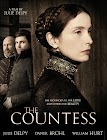
The Countess (4½ Stars)


This review won't go into much detail, so please click here to read my first review of "The Countess".

Yesterday my son discovered while searching online that Elizabeth Bathory is considered to have been the world's most prolific serial killer, with approximately 650 victims. I wonder what he was searching for?

Even though the reputable Guinness Book of Records agrees with this statement, it's difficult to know the exact truth. Some claim that it was only 450 murders, while others suggest that she didn't kill anyone at all and it was all lies fabricated by her political enemies. Different films made over the last 50 years have told different stories, depending on the way the director wanted to interpret Elizabeth Bathory's life.

The director of "The Countess" is Julie Delpy, who also plays the title role. Her intention is to present Elizabeth Bathory from a feminist point of view. She was a woman who was misused from the beginning of her life. At her birth it was decided who she should marry. After her husband's death it was expected that she should marry another nobleman to look after her kingdom, but she refused, insisting on ruling by herself. Her weakness was that she couldn't bear to grow older. She wanted to be eternally young and beautiful.

"The Countess" shows Elizabeth committing murder, but it also shows how her enemies united forces against her; her male enemies. She was a wealthy woman, and they wanted her land. At the end the question is asked, in a monologue by her former lover Istvan Thurzo, whether his father faked all the evidence against her. As we know, history is written by the victors. Elizabeth Bathory was the one who lost.

I intend to watch the other films in my DVD collection about Elizabeth Bathory this month. That should partially make up for my decision not to watch horror films all month as I've done in October in previous years.

Order from Amazon.com
Order from Amazon.de

Friday, 14 September 2018

Big Girls Don't Cry (4 Stars)


When I bought this film on DVD I had no idea what it's about. All I knew is that it stars two of my favourite actresses, Anna Maria Mühe and Karoline Herfurth. It also stars Jennifer Ulrich in her first film role, but I didn't recognise her until the second time I watched the film. I'm not used to seeing her as a blonde.


Jennifer Ulrich isn't a natural blonde, obviously.

Now to the plot. Steffi (Karoline Herfurth) and Kati (Anna Maria Mühe) are two 16-year-old girls in Berlin. They live in the eastern part of the city that was still ugly when the film was made in 2002. It looks better now. The two girls have been friends all their lives, and they're still inseparable. Yvonne (Jennifer Ulrich) is an outsider. She doesn't have any friends in school. She wants to be friends with Steffi and Kati, but as they say, "Three's a crowd".

Yvonne is beaten by her father so badly that she has bruises on her back. She wants to go to Paris as soon as she's saved enough money. It's not easy to make money when you're 16, so Yvonne does the only thing she can: she dances naked for a man who makes pornographic films.

Kati's parents are strict Catholics. They try in vain to stop her going out with boys. It's not a happy family. Kati's parents shout at one another so often that Kati and her little sister sit together shivering.

Steffi is the only one of the three girls who has a happy family. Her parents both have successful careers, and they love one another very much. Or so she thinks. Steffi's world falls apart when she finds out her father is having an affair. She wants to make the woman suffer.


Steffi's revenge is trivial at first, nothing more than pranks. She scratches the woman's car and squirts glue into the keyhole of her apartment. When she finds out that the woman has a teenage daughter the revenge becomes more sinister. Steffi pretends to become friends with the daughter, a shy young girl called Tessa. When Tessa says she wants to become a singer Steffi sends her for an audition to the man that Yvonne works for.


Kati thinks this is going too far, so she follows Tessa and waits outside. When she hears screaming she bursts in and finds the film producer attempting to rape her. Kati doesn't tell Steffi about this because she doesn't want her friend to know that she foiled her plan.


Tessa is played by Josefine Domes in her only film role. She's now a professional singer who has been a member of different groups. She also composed and sang several songs for the film soundtrack.

Shortly after the attempted rape Yvonne disappears. Steffi assumes that Yvonne has gone to Paris, but Kati suspects that she's been murdered by the film producer. Under the stress the two friends grow apart and stop talking to one another.

The DVD that I watched today, the English edition, is packed with special features, including interviews with the director and the cast. The director, Maria von Heland, who also wrote the screenplay, says that the film is about the problems of being a teenager. I'd say that the film is about more than that.

I was confused by the interview with Anna Maria Mühe. She was asked if it was difficult to play a nude scene in her very first film. Nude scene? I didn't see a nude scene. It must have been cut from the English edition, possibly because Anna was only 17 when she appeared in the film. I don't know.

I have to criticise the English DVD for another reason. The volume is so low throughout the film that I had to turn on the subtitles. I could hardly make out what the girls were saying to one another.

Despite the serious subject matter the film isn't too intense. The only thing that's intense about the film is the grey concrete buildings of eastern Berlin.

Order from Amazon.com
Order from Amazon.co.uk
Order from Amazon.de

Saturday, 14 February 2015

Deckname Luna (4 Stars)


In 2006 a film was made called "The Lives of Others", about the way in which the German secret police, the Stasi, observed the citizens of East Germany. It won an Oscar as the best foreign language film in 2007, and as a result it became one of the best known German films in recent years. Six years later in 2012 the television film "Deckname Luna" (in English "Code Name Luna") was made. It's also about the Stasi and the way it operated. The Stasi agent in "The Lives of Others" was played by Ulrich Mühe, and the East German spy in "Deckname Luna" is played by his daughter, Anna Maria Mühe.

The film begins in April 1961 with the space flight of Yuri Gagarin. This was the first major step in the discovery of outer space, and it was an enormous propaganda victory for Russia. This was proof that Communist technology was better. Now the race was on to land a person on the Moon. Despite all the rhetoric in the West, it was expected that Russia would get there first.

That's the historical background to the story. The fictional characters in the film are woven into the true events that followed. Lotte Reinhardt lives in Peenemünde in East Germany. She's the granddaughter of Professor Arthur Noswitz, a scientist working on rocket fuel, who lives in Augsburg, West Germany. She dreams of becoming the first woman on the Moon. She thinks of herself as a loyal socialist, but when the Berlin Wall is built in August 1961 she joins a protest group. After being arrested and released with a warning she manages to flee to West Germany by stowing away on a ship. Her twin brother Kurt is arrested for aiding her. Lotte goes to live with her grandfather and her Aunt Martha in Augsburg.

Lotte has no peace in West Germany. Stasi agents are operating in her city. They promise her that if she spies on her grandfather they will release her brother. Her grandfather's work is vital to the space program. The main reason that America was unable to travel to the Moon was that the fuel was too heavy. The company Bayrische Trieb Technik (BTT) in Augsburg was working on the invention of new, lighter fuel. That part of the film is true: the fuel used for the Moon flights was invented in Germany.

Lotte is encouraged to apply for a job working in her grandfather's office as an interpreter. This gives her access to his secret notes, which she passes on to the Stasi. Things develop further when she marries a young scientist working in her grandfather's team. She continues to work as a spy behind her husband's back.

Anna Maria Mühe, a perfect German beauty

This film contains a lot more action than "The Lives of Others". It also paints a darker picture of East-West relationships. The Stasi is able to kidnap people on the streets of West Germany and drive them over the border into East Germany. Nobody has privacy. There are always Stasi agents hiding in the dark with cameras. And the film also touches on a well-known subject: the Stasi used to spy on their own members. Nobody was exempt from being watched during the days of the Cold War.

My only real criticism of the film is that it contains an unnecessary sub-plot about secrets behind Lotte's family background. The film lasts four hours, and 30 minutes could have been shaved off by removing it.

Monday, 22 April 2013

The Countess (4½ Stars)


This film has grown on me since I watched it last monrh. Click here to read my review. In that review I called Countess Bathory remote and unemotional. That was a mistake. Julie Delpy portrays her as a deeply emotional woman. All that she did she did from love. She fell in love with a man 18 years younger than herself, and she felt cursed by being too old for him. This is what drove her to the excesses for which she has become famous. She killed dozens, maybe hundreds of young girls, but she did it because of love.

We also see that Erzsebet Bathory was hated because she was a strong, intelligent woman. Men felt threatened by her, so they plotted in secret. I find the scene chilling in which Gyorgy, Dominic and Istvan sit at a table planning to arrest her as a witch. Gyorgy, the man who proposed marriage to her; Dominic, the man who shared her bed; Istvan, the only man she had ever loved. All three men conspiring against her.

This is a very human portrayal of Erzsebet Bathory. Beneath all her atrocities she is a woman we can love and sympathise with. I praise writer/director Julie Delpy for achieving this monumentous task. This is the pinnacle of her career so far, and it will be difficult for her to exceed it in the future.

Sunday, 3 March 2013

The Countess (4 Stars)


Search for the truth.

This is a 2009 film starring Julie Delpy as Countess Erzsebet Bathory, commonly called Elizabeth Bathory in English. Julie Delpy also wrote the screenplay, directed the film and composed the music. She's a true all-round talent. The film was made in Germany with mostly German actors (the exception being William Hurt), but it was made in English.

Countess Bathory is known as the woman who bathed in the blood of virgins, thinking it would give her eternal youth. There are doubts whether this really happened, but other films such as Hammer's "Countess Dracula" perpetuate the story. In recent years there seems to have been an obsession with the real Countess Bathory. Between 2008 and 2009 there were three films made about her, all three claiming to tell the true story and not the myth of the blood monster. I own all three on DVD, so maybe the obsession is mine. Apart from that there was a Hungarian television series about her life in 2010, which hasn't yet been made available in English. All three films claim to tell the truth, but if you watch them back to back you would get the impression that they are about three different women. "Blood Countess" (2008) accepts her blood-letting as true and shows her as a lesbian who only used men to gain more power. "Bathory" (2008) rejects the blood-letting completely, and shows her as a powerful but misunderstood woman struggling to survive in a man's world. "The Countess" (2009) takes a middle path, showing the blood-letting in a story told by a narrator (Daniel Brühl), but then the narrator suggests that it might all have been fabricated by her enemies.

What are the other similarities and differences? "Blood Countess" and "The Countess" show her as cruel, while "Bathory" shows her as gentle. "Blood Countess" and "Bathory" show her as emotional, whereas "The Countess" shows her as remote. "Bathory" is the only film of the three that doesn't attribute any lesbian tendencies to her. All three films have in common that she was hated by the men of her time for the simple reason that she was a woman.

So which of the three films paints a true picture? It's impossible to say, because history is written by the victors, and Countess Bathory lost the fight against her male opponents. "Bathory" is doubtlessly the most enjoyable film, since it shows the Countess as a pleasant, likeable woman. If I had to make a guess I'd say that "The Countess" is more accurate. Whether or not she really killed virgins to bathe in their blood, I believe she was a cruel woman. Although I enjoy the film, this is the very reason why I can't rate it higher. The main character is someone that I find repulsive.

Tuesday, 28 December 2010

Big Girls Don't Cry (4 Stars)


This is a film that has more in common with "Dangerous Liaisons"/"Cruel Intentions" than typical American teenager stories. Kati and Steffi are two 16-year-old girls who go to school in Berlin. They are from affluent families and have been friends since childhood. Their peaceful life is shattered when Steffi finds out her father is having an affair. The two girls set out to take revenge on the father's lover, and in the process their friendship with one another deteriorates.

This is an intriguing psychological drama that I saw for the first time today. I've given it 4 stars for now, but I might revise my rating after watching it again. Anna Maria Mühe, 16 at the time the film was made, was chosen for the role of Kati when the director saw her sitting with friends in a cafe, and has since become a very successful actress. Miracles happen.