Showing posts with label Gemma Arterton. Show all posts

Friday, 14 March 2025

The Critic (4 Stars)


This is a film with a delayed release in Germany. It was made in 2023, and it's already available on disc in England.

"The Critic" takes place in London in 1934. The central character is Jimmy Erskine (Ian McKellen), a feared theatre critic. He's always in the audience on the opening night of every new play. He sits at his typewriter until late in the night, so that his review can appear in the Daily Chronicle the following morning. There's nothing wrong with a person stating his opinion about a play. I'm fast to criticise any film that I don't like. What's different about Jimmy Erskine is that he veers into personal insults.

In his private life Erskine is a homosexual. Before you say that there's nothing wrong with homosexuality, remember the year. It was considered a crime. Erskine takes part in drunken orgies and is arrested. His employer, Viscount Brooke, uses his influence to get him out of jail, but he fires Erskine the next day so that the scandal doesn't harm the newspaper's reputation. Erskine wants his job back. He wants to blackmail the viscount, so he arranges for the young actress Nina Land (Gemma Arterton) to seduce him in exchange for Erskine promising to write good reviews of all her future ways.

The 1930's were dark years, but the film brightens up the era with colourful characters. Ian McKellen shows off his acting skills in his portrayal of a bad guy with no redeeming features.

Saturday, 26 October 2024

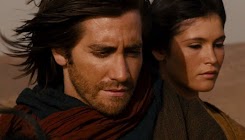
Prince of Persia (3 Stars)


This is one of Gemma Arterton's American films that she made early in her career. She's now said that she'll never make films in America again, after feeling ashamed of the quality of "Hansel and Gretel Witchhunters". She felt it was a poor film, even though it was successful at the box office. I shan't argue with her, even though I disagree with her decision. She's more interested in producing artistic films than in making a lot of money. I respect her for that.

Interestingly enough, I recently received a comment from an anonymous reader telling me I should watch more good films. He gave me a few examples of directors I should watch, while telling me to stay away from Adam Sandler and Marvel movies. I totally disagreed with what he wrote and the way he wrote it. I'll watch any film in any genre, whether it's a Hollywood blockbuster or an obscure independent film, as long as I enjoy it.

There's a certain snobbishness among film fans who claim to know which films are better than others. Maybe they're people who've been to film schools, or maybe they're just people who read certain highbrow magazines. The wisest words I've heard on the subject are from the German director/producer Wolf C. Hartwig. Whether or not you like his films, you have to agree that he knew what he was talking about. He claimed that the measure of a good film is that it's a film people want to see. Not everyone, of course. There are different tastes. But if a film makes money, it's a good film. In an interview he singled out Rainer Werner Fassbinder, who was also named by the anonymous reader in his comment. To paraphrase his words, Wolf C. Hartwig said that people say Fassbinder made good films, but nobody wanted to watch them, which makes them bad films.

I've watched a lot of Fassbinder's films. I was in the middle of working my way through two box sets when I started writing my blog in 2010. You can find reviews of the last few films I watched. I bought the (relatively expensive) box sets because people had told me his films were good. I watched them with an open mind, and I didn't like them. I'll never watch them again.

Don't let anyone tell you you shouldn't watch a film because it's bad. Watch it for yourself. Make up your own mind. If a lot of people like the film, you can say it's a good film. If you like a film that few others like, you might have to grudgingly accept that it's not such a good film, but if you personally like it, don't let everyone else put you off. If you're a Fassbinder fan, go ahead and enjoy his films, but don't try to tell people the films are good.

Success Rate:  + 0.2

Order from Amazon.com
Order from Amazon.co.uk
Order from Amazon.de

Saturday, 19 October 2024

100 Streets (4 Stars)


In this film Gemma Arterton stars alongside Idris Elba, one of my favourite actors. They're the best known actors in the film, but there are others who are just as important to the stories. I said stories, not story. That wasn't an error. The film tells three unrelated stories in parallel. The characters meet each other, but their stories don't interlock.

When I last watched "100 Streets" I didn't understand it. The film's tag line, "Anyone can take a wrong turn", doesn't give a clue. It connects all three stories. All three stories are the results of bad things that a person did in the past, but it still doesn't explain what the director wants to say. The three families that we see are on different levels of society, but they all live within a one square mile area in London. Max and Emily are a wealthy upper middle class couple; George and Kathy are a lower middle class couple; Kingsley (who lives with his mother) is working class or lower. Is there an official category for people who don't work and live from crime?


Now it's clicked. I get it. The film is about existential nihilism. Life has no purpose. As Kingsley puts it, "Shit happens". The amateur actor Terence expresses it more eloquently. He points at a gravestone and says that a person's life is only the dash on a gravestone between the two years.


That might sound depressing, but has existentialism ever been uplifting?

There's another theme that's shown in the interactions of the people. When we meet a person, whether it's once or regularly, we only see a small portion of his life. It's not about keeping secrets. Any person has compartments in his life. Think of your own life:

* You have a family with a wife and children.

* You have a place of work.

* You have hobbies.

Your wife doesn't see you at your place of work. She might or might not see you at a club, for instance a table tennis club.

Your work colleagues have a very limited overview of your life.

You might have more than one hobby, for instance playing table tennis and listening to rock music. Your friends from one club might be surprised if they bump into you at the other club. "So you do this as well?"

But the main point of the film is to show the randomness of life. George and Kathy have been trying in vain to have a baby for almost 20 years. Emily leaves her husband, and then finds out that her husband has made her pregnant. One man dies, while another man who wants to die is persuaded that living is better. It's all random. Nobody can make plans, because he doesn't know what will happen next. You can be crossing the road when you're hit by a taxi cab. One person's life ends, while the life of another person (the taxi driver) changes completely.

The film was an unprecedented flop. It has the lowest success rate of any film I've reviewed. But I like it, and I can recommend it to my readers.

Success Rate:  - 10628.2

Order from Amazon.com
Order from Amazon.co.uk
Order from Amazon.de

Thursday, 17 October 2024

Tamara Drewe (4 Stars)


Over the next few days I intend to watch a few films starring Gemma Arterton. I wouldn't go as far as to call it a marathon. I've just picked five films that I haven't watched for a long time. The discs are already lying on the desk next to my computer. There are also a few films that I haven't been able to buy, but they're available on streaming services. I'd buy them if I could. Gemma is currently my favourite actress, and I'll buy any film she appears in, whatever the genre.

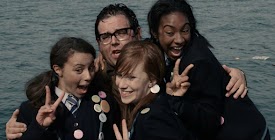
"Tamara Drewe" is a romantic comedy, but only just. It's told in episodes, divided into the four seasons, summer to spring. Tamara, played by Gemma, is a young woman who returns to the village where she grew up to sell her mother's house. It should have been a short stay, but she falls in love. Once. Twice. Three times. Men can't resist her, and she can't resist them. Who will she be with when the film's over? It's easy to guess. Romantic comedies are always predictable.


The film is equally a coming of age drama about the 15-year-old schoolgirl Jody. She's also looking for love, but Tamara offers her hard competition.

It's a beautiful film with magnificent scenery and remarkable actors. I doubt many of my readers would like it because nothing happens. Not much, anyway. The comedy is subtle, enough to make you smile but not laugh out loud.


If you're curious about gratuitous nudity, this is the most you'll see.

Success Rate:  - 0.5

Order from Amazon.com
Order from Amazon.co.uk
Order from Amazon.de

Tuesday, 15 October 2024

The Girl with all the Gifts (5 Stars)


This is a film that takes place in England in the aftermath of a zombie apocalypse. The only survivors are in army camps dotted around the country. The word zombie isn't used in the film. The infected humans are called hungries. Somehow it doesn't sound right to talk about a hungry apocalypse.


Yes, they're definitely zombies, aren't they? Whatever they're called. They're hungry for human flesh. They're not slow like traditional zombies. They run after humans and eat mouthfuls of flesh. Any human who survives turns into another hungry within minutes of being bitten.

When hungries can't find food, they go into a sleep-like trance, standing motionless on their feet. This happens a lot, because more than 99% of the population has become hungries. There aren't enough humans left to eat.

The film begins in an army base somewhere in the south of England. Research is being done into finding a cure. It's been discovered that second generation hungries are halfway between human and hungry. They're hungry for human flesh, but they have normal intelligence. They're children who were born to women who were pregnant when they were first bitten. The scientists at the base believe that by examining these children they can find a cure. It's a long shot, but they have to start somewhere.


Helen Justineau (Gemma Arterton) is the teacher responsible for educating the young hungry hybrids. Her favourite pupil is Melanie, the girl in the title. She knows that children are regularly being taken to be dissected, but she doesn't do anything about it until Melanie is selected. She breaks into the laboratory to free Melanie. Normally disciplinary action would follow, but at this moment the hungries overrun the base, and Helen has to flee with Melanie and a few soldiers.

I don't usually like zombie films, but this isn't a zombie film, it's a hungry film. Apart from which, it stars Gemma Arterton, who's been my favourite actress ever since Leelee Sobieski retired. The film is a perfect mix of action and thoughtful scenes.

Order from Amazon.com
Order from Amazon.co.uk
Order from Amazon.de

Sunday, 19 March 2023

The Amazing Maurice (unrated)


This is a post that I almost didn't write. I saw this film in the cinema today, but I thought it appropriate to ignore it. It would have been the first film I've watched since September 2010 that I haven't told my readers about. But I'll own up. Here's the post.

Since December I've been going to the cinema with my grandson Oliver almost every Sunday. If there's a children's film he hasn't seen yet, I go to watch it with him. Today the film was "The Amazing Maurice". The problem is that I didn't sleep well last night. It happens. I was tired when I went to the cinema, and even more tired when I sat down.

I didn't actually fall asleep, but my eyes kept falling shut and my concentration wandered. I couldn't follow the film. It seemed like a complicated plot, and I couldn't keep up. A fat cat, rats in fancy clothing, evil rat catchers and good rat catchers. It didn't make sense.

When I got home I read a synopsis of the plot. I thought I could cheat by basing my review on the synopsis. No. The synopsis shocked me. There was so much in it that I didn't remember. So I'll be honest. I sat in the cinema for 94 minutes, and all I can remember is a few snippets of dialogue and some slapstick comedy. Laugh at me if you will. I deserve it.

All I can do is promise to watch the film when it's available on a streaming service. I want to see what I missed.

Wednesday, 29 June 2022

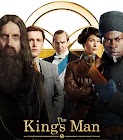
The King's Man (5 Stars)


This is a prequel to the 2015 film "Kingsman", sometimes known as "Kingsman: The Secret Service". It shows how the Kingsman spy organisation came about at the beginning of the 20th Century.

The film's main character is Ralph Fiennes as Orlando Oxford, the Duke of Oxford. He was a war hero in the Boer War, but he became a pacifist after being disgusted by what his country was doing. When the First World War breaks out, his son Conrad is determined to join the army, but he refuses to give him permission while he's underage. In 1916 Conrad turns 18, so he's able to sign up for the army without his father's permission. Orlando is a friend of King George, so he asks the king to keep him away from the fighting. Conrad realises what's happening, so when he's posted to a position in London he exchanges identities with a young Scottish soldier. Conrad volunteers for a dangerous mission on the front line, and he's awarded a Victoria Cross. Posthumously.


The First World War was a family affair. King George of England, Kaiser Wilhelm of Germany and Tsar Nicholas of Russia were cousins. This didn't stop them sending armies against one another. Orlando tried diplomacy to make the three cousins stop fighting and be friends, but it wasn't possible.

Britain and Russia were allies against Germany. A shadowy Scottish figure who calls himself the Shepherd wants Germany to win the war, so he uses the monk Rasputin to persuade Nicholas to withdraw his troops. This puts Orlando in a difficult position. He wants the war to end, but not with Germany as victor, so he has to stop Rasputin.

The Kingsman spy agency isn't formed until 1919 when the war is over.Orlando has learnt lessons from the conflict. There has to be a secret society that isn't controlled by any government, a society which is able to work for peace.


Gemma Arterton plays Polly, a maid who becomes one of Kingsman's founders. A maid? The film is anachronistic in its portrayal of women. In those dark days of male chauvinism women didn't have equal rights, but the Duke of Oxford treats her as his equal. She may work for him, as far as the outside world is concerned, but she's his closest companion and trusted advisor.

"The King's Man" has less humour than the two Kingsman films set in the present day. I can't say whether that's good or bad in itself, but it gives the film a different style to the others.

The film is available for streaming on Disney Plus only five months after it was in the cinema. I'm glad, for purely selfish reasons, but that's a sign that the film wasn't successful at the box office. That's unfortunate. Adolf Hitler is introduced in a mid credits scene, so I was hoping for a sequel to be made soon. There's still hope.

Hitler is played by the young German actor David Kross. In Germany playing Hitler is a right of passage. It happens to every actor at some point in his career, even if he doesn't have a physical resemblance. Am I exaggerating? When I have time I'll make a list of all the German actors who've played Hitler.

A film that's found its way to streaming even faster is "Doctor Strange in the Multiverse of Madness". It's streaming less than two months after it was released, and only three weeks after I saw it in the cinema.

Success Rate:  - 0.7

Order from Amazon.com
Order from Amazon.co.uk
Order from Amazon.de

Wednesday, 5 January 2022

The King's Man (5 Stars)


This film is a prequel to the other two Kingsman films. They take place in the present day, whereas "The King's Man" takes place in the early 20th Century.

The film's story is fictional, but it's wrapped around historical events. These events determine the film's pacing, giving it a stop and start rhythm. A mysterious Scottish figure, whose identity isn't revealed until the end of the film, is steering European events. He wants to start a large war which will destroy England and free the Scottish people. He sends an agent to assassinate Franz Ferdinand, which is the beginning of World War One. The two sides are evenly balanced, so first he incites a revolution in Russia to make Russia abandon the war. Then he undertakes plans to stop America joining the war on England's side.

I shan't give any more details about the plot. Spoilers! All I'll say is that "The King's Man" is a magnificent film. If I'd seen it on its original release date in mid December it would have been the best film of 2021. The releases date was pushed back to January, so I'll have to wait to see its competition later this year. It's a film that has it all: military action, spies and international intrigue.

A mid credits scene gives a hook leading to a possible sequel, also taking place before the two first films. I'm looking forward to it.

Thursday, 29 July 2021

The Boat that Rocked (4 Stars)


Bill Nighy, Philip Seymour Hoffman, Nick Frost and Rhys Ifans walk the plank? Say it ain't so!

This is a cute little comedy that amuses me every time I watch it. It's not just the excellent actors, including a small appearance by Gemma Arterton. It's the whole 1960's atmosphere. Pirate radio ships were a part of British culture. They were a phenomenon unique to the UK, so I need to explain what they were to my readers from other countries. In the early 1960's British radio broadcasting was in a state of chaos. It was a time of musical revolution, sparked by groups like the Beatles and the Rolling Stones, but the BBC never played their music. In the absence of the Internet, people who weren't hip knew that a group called the Rolling Stones existed, but they'd never heard their music.

The BBC had a broadcasting monopoly in the United Kingdom. Private radio stations weren't allowed to broadcast. This led to the creation of pirate radio stations. They anchored boats in international waters, just outside of the British territorial waters, and broadcast pop music 24 hours a day. It's estimated that more than half of the British population, mostly younger people, listened to pirate radio stations regularly. This was a thorn in the eye to the BBC and the UK government in general, so they spent years trying to find ways to make them illegal.

The most popular pirate radio station was Radio Caroline. The radio station in the film, Radio Rock, is clearly based on Radio Caroline. Several of the film's DJs are clearly based on famous Radio Caroline DJs like Tony Blackburn, Terry Wogan and Emperor Rosco. Maybe they all are. I really must listen to the director's commentary to hear what Richard Curtis has to say about the cast.

"The Boat that Rocked" isn't just a film about the 1960's, it's a film in the style of the 1960's comedies. Rather than telling a single story, there are multiple situations taking place side by side. Government ministers are struggling to make new laws. The nephew of the boat owner is trying to find out who his father is. A DJ is heartbroken when a woman marries him only to get close to another DJ. Girls visit the boat every second Saturday to have sex with the DJs, because no women are allowed to live on the boat. The only exception to this rule is Felicity, the ship's cook. She's a lesbian, which means that she's not a real woman. The others on the ship call her lesbionic. Nice word. I'd use it myself, if I were sure that women didn't find it offensive


This is a film that desperately needs a Director's Cut. The Blu-ray contains 44 minutes of deleted scenes that were only removed because the film was too long. That's tragic. Unfortunately, the film was a financial failure, so it's unlikely that the studios would approve a Director's Cut. Maybe the topic is too obscure for cinema audiences outside of the UK. It's worth watching by anyone who loves music, 1960's or later.

Success Rate:  - 1.4

Order from Amazon.com
Order from Amazon.co.uk
Order from Amazon.de

Saturday, 24 July 2021

Song for Marion (3 Stars)


Is this a depressing film or an uplifting film? It depends on the way you look at it. It's supposed to be uplifting, but for me the depressing aspects overweigh.

70-year-old Marion Harris, pictured above, is happy and loves life. Even though she's wheelchair-bound and terminally ill with cancer, she regularly visits her local community centre for choir practise. Her husband Arthur doesn't get it. He thinks she should stay at home and relax instead of exerting herself.

The word cancer is never used in the film, even though it's obvious what's meant. It's a terrible word that people are afraid to use.

Arthur loves his wife, there's no doubt about it, but he's a grumpy old man. Because of her disability he has to bring her to the community centre, but he doesn't go in. He stands outside by himself smoking. He listens to the songs through the window, but he doesn't approve. They're too modern for him.


Halfway through the film Marion dies. Arthur becomes even more of a recluse than he was before. Then he starts to think about Marion's singing. He goes to the community centre and listens through the window, even though he has no reason to be there. Elizabeth, the choir's teacher, encourages him to start singing. At first she gives him private lessons, and then he joins the choir.


I think you can see the film's dichotomy. A man finds new hope through singing after the death of his wife. That's uplifting. But she's dead. The film even shows her dying. I have difficulty watching films about cancer.

In the film's favour, it has outstanding performances by the main actors. Gemma Arterton is my favourite actress among all actresses who're active today. Christopher Eccleston plays his part excellently as Arthur's son. But Terence Stamp steals the show as Arthur. It's amazing how well he portrays a man with pent up emotions. He's playing a man who's trying to hide his emotions, but Arthur isn't 100% successful. Terence Stamp lets the emotions seep through with an occasional flash of his eyes.


For the sake of realism, a complete amateur choir was used in the film. They already knew one another, so they had natural chemistry. There were just a couple of actors inserted into the choir for the speaking roles. As far as the singing was concerned, they were acting naturally and doing what they did best.

I can imagine that many of my friends will like this film. Maybe you can concentrate on the film's uplifting aspects. I can't.

Success Rate:  + 7.2

Order from Amazon.com
Order from Amazon.co.uk
Order from Amazon.de

Thursday, 8 July 2021

Runner Runner (3 Stars)


"The love of money is the root of all evil".

This is probably the Bible verse that I quote more than any other. It's so full of wisdom. It's absolutely true. Sit and think for a moment. Who's the most evil person you know among your personal acquaintances? Then ask yourself what motivates him (or her)? It's the love of money.

The most evil person I know is my brother-in-law, Wolfgang Hengel. He pressured his father into giving him his inheritance early, property worth 6.2 million Euros. When his father died in 2014 the remaining inheritance, property worth 1.5 million Euros, was to be given to his sister, my ex-wife Brigitte, but he claimed he'd been disinherited and demanded a quarter of it, as well as insisting that she should pay the sole costs of the care of her mother for the rest of her life.

My ex-wife's lawyer advised her to take the matter to court, but she was intimidated by her brother and made an out-of-court settlement against the advice of her lawyer. Part of the settlement was that 200,000 Euros should be paid to her mother, but Wolfgang has control of her bank account, and we strongly suspect that he's stolen the money. 

Money. When money is involved, people lie, cheat and steal. Wolfgang is no different to criminals all over the world.

"Runner Runner" is about big money. Millions. Ivan Block is the owner of an online poker site. He hires the Princeton student Richie Furst to run his daily business, tempting him to abandon his degree with a large salary.

The company is based in Costa Rica. It's a corrupt country where everything is dealt with by bribes. Police officers receive small bribes, and government officials receive large bribes, just so that the poker website will be allowed to continue to operate. Richie begins his work as a naive, honest man, but he gets seduced and drawn ever deeper into the web of corruption.

When the film begins we think that Ivan Block is an honest man. At the very least, he claims to be honest. Always be wary of people who claim to be honest. (Yes, I know that includes me, because I claim to be honest as well). As the film progresses, we see that Ivan isn't content with the millions of dollars that he possesses; he wants more, much more. Money is addictive, especially if you love money. The more you have, the more you want.

Success Rate:  + 0.1

Order from Amazon.com
Order from Amazon.co.uk
Order from Amazon.de

Tuesday, 22 June 2021

The Disappearance of Alice Creed (5 Stars)


This is a beautifully crafted film that excels through its minimalism. There are only three actors, and almost all of the film takes place in a small apartment. The film was made on the Isle of Man, which has a film industry that's independent of the rest of Britain, so there was only a small budget available. We can be glad. Pouring more money into the film would have ruined it. My suspicion is that most of the budget was used to pay the salaries of the three actors, and they deserved it.

Of the three actors, the best known at the time was Gemma Arterton. It was made in 2009, only a year after she appeared in "Quantum of Solace", so she was the film's biggest star. I hope this meant that she received the largest salary. Last year I had an argument with a rather ignorant person on Facebook who claimed that women should be paid the same as men when they appear in a film together. That's stupid! Actors should be paid based on their Star Quality, i.e. how much audience appeal they have after their previous films. In the case of "The Disappearance of Alice Creed" it would have been unfair to pay Gemma Arterton the same as the male actors, because she clearly deserved more.


The second actor in the film is Eddie Marsan, who plays the kidnapper Vic. I consider him to be a capable actor, but after 20 years in acting he's still waiting for his breakthrough. His face is well known to cinemagoers, but he always plays minor roles. This film is the largest role I've seen him play. He obviously doesn't have Gemma Arterton's Star Quality, which is regretful.


The third actor is Martin Compston, who was completely unknown to me when I first watched the film. I searched IMDB and found that he'd played small roles in a few other films I'd seen, so small that I'd missed him. Ironically, my ex-wife walked in on the film this evening, and he was the only one she recognised. She says that he plays the lead role in the television series "Line of Duty". There's a big difference between film and television careers, although the gap has been closing in the last two or three years. The "big actors" appear in films, and the "small actors" appear on television. As a rule of thumb, acting in a television series means more work and less pay. Some actors begin their career in television and progress to film, but the opposite direction is frowned on and considered to be the result of career failure. I know I'm generalising, but occasional exceptions don't mean it's not true. This film was made before "Line of Duty" began, so it's fair to say that Martin Compston had almost no Star Quality.


Now to the film itself: Alice Creed is the daughter of a rich man (who we never see in the film). She's kidnapped by two men and held for a ransom of two million pounds ($2.8 million). I admit that it's disgusting to see the way she's treated, tied to a bed and gagged for most of the film, but I can say in the kidnappers' favour that they're professional; they don't hurt her more than they have to. Interestingly, Gemma Arterton insisted that she should remain tied to the bed even when she wasn't being filmed, to help her play her part more realistically.

The film develops slowly through twists and turns as a psychological thriller. Vic and Danny are no match for her. After her initial shock she plays them against one another.


She also tempts Danny to untie her so they can have some fun. I think you can guess where this is going.


Is this photo a spoiler?

Significantly, the film's title isn't shown until the last few seconds of the film. Today is the third time I've watched it, but I didn't notice this detail until today.

There should be more films like this. We don't need helicopters, car chases and big explosions. All we need to make a good film is a well written plot and good actors. Although, judging by the film's lack of success, the majority of cinema audiences disagree with me.

Success Rate:  - 2.7

Order from Amazon.com
Order from Amazon.co.uk

Monday, 5 April 2021

Magnus (4 Stars)


This is a documentary about the reigning world chess champion Magnus Carlsen, from his early years to November 2013, when he became world champion. During the final credits there are a few scenes from events that took place later.

Magnus was born on 30th November 1990 in Tonsberg, Norway. He has an older sister and two younger sisters. From his early years his father was concerned about his physical development. Was he autistic? That isn't stated in the documentary, but when asked in interviews whether he's autistic he's replied "Isn't it obvious?"

Because of his skills recognising patterns, his father taught him how to play chess. He took to the game immediately and soon overtook his father. He became a chess grandmaster in 2004 at the age of 13. That's when I first began to follow his career. At that time I had an active interest in chess. I was a member of a chess club in Birmingham, and I was working for Chessbase as a translator. I read about Magnus Carlsen's development on the Chessbase website. (Chessbase's German website has more detailed news reports).

The documentary gives insight into his personal life that was missing from the Chessbase articles. I never knew that he had sisters, and I didn't know that he likes to read Donald Duck comics.


Despite barely winning the qualification tournament, Magnus was the clear favourite to win the world championship match against Viswanathan Anand in 2013. He'd already been the world's highest ranking player for two years. The world championship was fought in Anand's home town of Chennai in India, but this gave him no obvious disadvantage. The documentary shows Magnus in a daze as he arrives at the airport. He was in a strange world, and he was overwhelmed by the way people made a fuss of him. Obviously, the Indians wanted their hometown hero to win, but they graciously respected Magnus when he was victorious.


Magnus didn't lose a single game. He became world champion after 10 games (three wins and seven draws).

Back in November 2013 I wrote detailed reviews of all 10 games:


I'm very proud of these reviews. I was an amateur when it came to reviewing chess games, but I think my reviews are very good. I've read the reviews a few times over the years, and I have to ask myself, "Did I really write all that myself?" I remember that I put hours of effort into the reviews every day, but even so, I don't think I could ever do something like that again. It was a unique period of inspiration that I'll never have again. Since then Magnus has defended his world championship three times (2014, 2016 and 2018), but I haven't been able to write any more reviews.


In the after credits scenes we see some of Magnus Carlsen's other activities. He was a fashion model for G-Star Raw, posing with Liv Tyler and Gemma Arterton. That would have driven any normal man like me crazy, but not Magnus. All he thinks about is chess. He claims that he's always thinking about chess, whatever he's doing.

I greatly enjoyed the documentary. It's not for everyone, but it's ideal for chess fanatics like me. As far as I know, it's never been released on disc, but it's available to watch on Amazon Prime.

Monday, 23 November 2020

Their Finest (4 Stars)


This is a charming tale about a film crew making a propaganda film in early 1941. The central character is the screenwriter, Catrin Cole, played by Gemma Arterton. She was a strong woman fighting to establish herself in a man's world.

Click here to read my full review. I'm not feeling motivated to write a lot while the new Blogger interface is full of bugs.

Success Rate:  - 0.9

Order from Amazon.com
Order from Amazon.co.uk
Order from Amazon.de

Saturday, 7 November 2020

Hansel and Gretel Witch Hunters (3 Stars)


As you can see if you compare this post with my last two reviews of "Hansel and Gretel Witch Hunters", my ratings aren't always consistent. I change my mind. It often depends on my mood when I watch a film. If I think a film is absolutely brilliant the first time I see it, it will always get a five star rating, however many times I watch it. On the other hand, if a film is merely good to average, my rating can oscillate between three and four stars. Three stars is the lowest rating I've given to the film so far.

I'll always remember this film as the beginning of a new period in my life. It was the first film that I went to see with the Birmingham Film Group on 27th February 2013. Until then I'd watched films almost exclusively at home. My daughter Fiona, who still lived with me at the time, suggested that I look online for a film group in Birmingham. She was worried that I was becoming a hermit. It was one of the best suggestions that she ever made to me. I finally developed a social life.

At the film group I met Mike McAuley, the group's leader. Over the next months we became close friends. I'd go as far as to say he was one of my best friends. A year later I became a co-host in the film group. We made it a routine that I hosted one film a week (usually on Wednesday) and Mike hosted one film a week (usually on Sunday). In addition, he frequently hosted social meetings on Saturdays, which I always attended. It was usual for Mike and I to be the last ones to leave.

Mike was disappointed when I said I was moving to Germany in 2016. He tried to talk me out of it, for several reasons. Firstly, he thought that the film group would suffer without my help. Secondly, he would miss me as a friend. I wasn't his best friend, but those that he considered his best friends all lived in different parts of the country. A possible third reason, which he didn't state directly, was that he felt that I was betraying my country by leaving. Maybe I'm wrong about this, because I'm basing this opinion on remarks he made while he was drunk.

Time went by. Four years. I stayed in touch with Mike, speaking with him regularly on Facebook, and I visited him whenever I was in England. In Germany I formed a new film group in Stuttgart. Then the Coronavirus lockdowns started. Mike organised online meetups for social purposes or to watch films, so I was an active participant in his group once more. Then something strange happened. Mike started to send me rude messages on Facebook, usually late at night. I shrugged them off, because I assumed he'd been drinking. Then the following conversation took place on my timeline:


As you can see, I was being polite and understanding with him, but he was totally crazy. In the following conversation my friends jumped to my defence. They confirmed that I'd never said I wanted Boris Johnson to die. My friends all know that I'm a strong supporter of Boris Johnson. I consider him to be the best prime minister the UK has had in the last 30 years.

At first I thought Mike McAuley had made a mistake. However, the matter escalated further. He began to spread lies about me on his Facebook timeline. He unfriended me to stop me reading what he was writing, but my friends sent me screenshots of the conversations. For instance:


This is interesting for a few reasons. First, he's backed away from saying that I wanted Boris Johnson to die. This is probably because too many people told him it wasn't true. He's gone on to accuse me of hate speech in general. My friends know that I never indulge in hate speech of any form, but anyone who doesn't know me might believe him.

Secondly, who is Phil Murtagh? I don't know him, and he's certainly never been on my Facebook friends list. How can someone who doesn't know me call me racist or bigoted? It's possible he's confused me with another Mike.

Thirdly, Andy Pettitt (who is Mike's best friend) says I've been warned repeatedly. What's he talking about? When was I ever warned about wanting Boris Johnson or any other politician to die? Andy was one of my Facebook friends, so I sent him a message asking him about it. Instead of replying, he unfriended me immediately. I can understand him taking Mike's side as his best friend, but I'm disappointed that he didn't have the moral integrity to look into the matter and find out what Mike was talking about.

So what's it all about? It's not about Boris Johnson or racism. The problem must lie elsewhere. I think it had to do with my recent appearances in the online meetups. I talked with the people, mostly new members who hadn't been in the group in 2016, and they liked me. This bothered Mike. To explain this I need to go back to 2013. 

On one of our first meetings Mike McAuley boasted to me that he'd had sex with 300 women. I was impressed, but when he left the room one of the other group members said, "It's not true. That's what he tells everyone to make himself sound special". In the following years I realised it was something he often repeated, so I just smiled and nodded, winking at anyone else who was listening.

When I became a co-host of the film group, many people who only visited during the week met me first and considered me the group's leader. Eventually they met Mike, and I told them he was Big Mike, I was only Little Mike. But they still confided in me. One of the members, Elisha, complained to me that Mike had been sexually harassing her by text. I told her that he often misbehaves when he's drunk, but she wasn't happy with my excuse and left the group. A few months later it happened again. Emma, a very good friend of mine, complained that Mike had been sexually harassing her. Once more I told her that he was drunk, but she said that the text messages came early in the day, so he couldn't have been drunk. Emma broke off her friendship with me because I was defending Mike. After I left England in 2016 my daughter Fiona joined the group, and the same happened with her. Mike was sending her sexual messages less than a week before his wedding. This time I spoke to Mike, and he denied it. Fiona sent me screenshots to prove it was true. She also left the film group.

Mike knew by now that women were telling me about him. He'd wanted me to remain in England for the sake of his group, but now that I was gone he wanted me to stay away. I wouldn't have made a connection, but after the initial arguments with Mike in Facebook another two women came forward and told me Mike had sexually harassed them. One of them, Anne, had left the group immediately. The other has remained in the group, and she's asked me not to name her. Anne thinks that Mike only harasses women to make up for his inadequacy at hardly ever having had sex.

I think it's sad that things have turned out like this. For seven years Mike McAuley was one of my best friends. Now he's decided to spread lies about me. This post tells the truth, for anyone who's willing to listen. Despite everything, I don't bear a grudge. If Mike apologises to me in public, everything will be forgiven.

Success Rate:  + 2.5

Order from Amazon.com
Order from Amazon.co.uk
Order from Amazon.de

Thursday, 21 May 2020

Vita and Virginia (3 Stars)


This is a true story based on the romance between Vita Sackville-West and Virginia Woolf from 1925 to 1928. I confess that I knew almost nothing about either of these women before I sat down to watch the film. After it finished I searched online for details about their lives. In retrospect, I wish I'd known about them first. My recommendation to anyone who wants to watch this film is that you should familiarise yourself with the characters first.

Vita and Virginia – I'll stick to their first names – were two English writers from the opposite ends of society. Vita was an aristocrat who lived in a large mansion. Her husband was a diplomat who was shuttled from country to country by the government. Virginia and her husband owned a small publishing company, and they could barely avoid bankruptcy. Vita's books were bestsellers. Virginia's books, published by her own company, sold just enough to make a profit.

Vita was fascinated by Virginia's books and determined to meet her, even though she was discouraged by her family. When they met, Vita fell in love with her and began to woo her. Vita had had previous lesbian relationships, but it was new to Virginia. Vita also aided Virginia by letting her new books be published by Virginia's company. Virginia was jealous that Vita's books sold so well, but Vita always insisted that Virginia was the better writer.

Homosexuality wasn't something that people talked about in those days. Their relationship was kept secret from the public, but their husbands knew about it.


Vita, played by Gemma Arterton, isn't a very pleasant person. She uses Virginia, and she doesn't hesitate to hurt her when she doesn't get her way. Virginia, played by Elizabeth Debicki, is emotionally unstable, and she has a mental breakdown when Vita parades her new girlfriend in front of her.


I'm a big fan of Gemma Arterton, as I constantly repeat whenever I review her films, but in this film I was amazed by the performance of Elizabeth Debicki. I've seen her in lots of other films, but today is the first time I realised what a good actress she is. The subtle changes in her facial expressions express a range of emotions. I'll pay more attention to her in her other films when I watch them again.


Despite the relatively low rating I've given this film, I'm sure to watch it again. I think I'll be able to enjoy it more now that I know the backgrounds of the two women.

Here are photos of the two women taken at the time when they were having an affair.

Vita Sackville-West in 1926

Virginia Woolf in 1927

Virginia Woolf died by suicide in 1941 (not shown in the film). After her death her books became widely popular, far outselling Vita's books. In contrast, Vita's books fell in popularity as time went by, and today very few people know her name. Virginia's most famous book, "Orlando", was inspired by Vita, and the first edition contained photos claimed to be of Orlando, but they were photos of Vita.