Showing posts with label David Kross. Show all posts

Wednesday, 29 June 2022

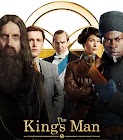
The King's Man (5 Stars)


This is a prequel to the 2015 film "Kingsman", sometimes known as "Kingsman: The Secret Service". It shows how the Kingsman spy organisation came about at the beginning of the 20th Century.

The film's main character is Ralph Fiennes as Orlando Oxford, the Duke of Oxford. He was a war hero in the Boer War, but he became a pacifist after being disgusted by what his country was doing. When the First World War breaks out, his son Conrad is determined to join the army, but he refuses to give him permission while he's underage. In 1916 Conrad turns 18, so he's able to sign up for the army without his father's permission. Orlando is a friend of King George, so he asks the king to keep him away from the fighting. Conrad realises what's happening, so when he's posted to a position in London he exchanges identities with a young Scottish soldier. Conrad volunteers for a dangerous mission on the front line, and he's awarded a Victoria Cross. Posthumously.


The First World War was a family affair. King George of England, Kaiser Wilhelm of Germany and Tsar Nicholas of Russia were cousins. This didn't stop them sending armies against one another. Orlando tried diplomacy to make the three cousins stop fighting and be friends, but it wasn't possible.

Britain and Russia were allies against Germany. A shadowy Scottish figure who calls himself the Shepherd wants Germany to win the war, so he uses the monk Rasputin to persuade Nicholas to withdraw his troops. This puts Orlando in a difficult position. He wants the war to end, but not with Germany as victor, so he has to stop Rasputin.

The Kingsman spy agency isn't formed until 1919 when the war is over.Orlando has learnt lessons from the conflict. There has to be a secret society that isn't controlled by any government, a society which is able to work for peace.


Gemma Arterton plays Polly, a maid who becomes one of Kingsman's founders. A maid? The film is anachronistic in its portrayal of women. In those dark days of male chauvinism women didn't have equal rights, but the Duke of Oxford treats her as his equal. She may work for him, as far as the outside world is concerned, but she's his closest companion and trusted advisor.

"The King's Man" has less humour than the two Kingsman films set in the present day. I can't say whether that's good or bad in itself, but it gives the film a different style to the others.

The film is available for streaming on Disney Plus only five months after it was in the cinema. I'm glad, for purely selfish reasons, but that's a sign that the film wasn't successful at the box office. That's unfortunate. Adolf Hitler is introduced in a mid credits scene, so I was hoping for a sequel to be made soon. There's still hope.

Hitler is played by the young German actor David Kross. In Germany playing Hitler is a right of passage. It happens to every actor at some point in his career, even if he doesn't have a physical resemblance. Am I exaggerating? When I have time I'll make a list of all the German actors who've played Hitler.

A film that's found its way to streaming even faster is "Doctor Strange in the Multiverse of Madness". It's streaming less than two months after it was released, and only three weeks after I saw it in the cinema.

Success Rate:  - 0.7
Order from Amazon.com
Order from Amazon.co.uk
Order from Amazon.de

Friday, 7 January 2022

Race (4½ Stars)


Name: Jesse Owens
Lived: 12 September 1913 – 31 March 1980
Film dates: 1933 to 1936
Film made in 2016

This is the true story of Jesse James, real name James Cleveland Owens, from his entry into college until his success at the 1936 Olympic Games in Berlin. Jesse was a nickname that came from his initials, J.C.

Jesse came from a poor family in Cleveland, Ohio. He was the youngest of ten children. His family decided to send him to Ohio State University, because of his intelligence. He was the only member of his family to get a college education, and it was a big sacrifice for the family. His father was noticeably grumpy when he leaves home. Maybe he didn't approve? His father's motivation is never explained in the course of the film. Maybe he thought his son should fulfil his family obligations instead of leaving home. Jesse already had a three-year-old daughter when he went to college. He loved the mother of his child and promised to marry her after completing his education.

Whether he was ever educated in college is questionable. As soon as he arrived he was noticed by the athletics coach, Larry Snyder, who helped him refine his already considerable talent as a runner and long jumper. The film gives the impression that he spent all his time training.

The training paid off. On 25 May 1935 he performed a feat that has never been equalled since. Within 45 minutes he set world records for three sports: the long jump, 220 yards sprint and 220 yards hurdles. He became the pride of America.

It wasn't certain that America would participate in the upcoming Olympic Games. There were nationwide protests against the atrocities reported from Germany. It was a close decision. After weeks of discussion, the American Athletic Association decided to take part after a vote of 58 to 56.

The history books tell the tale of what happened in 1936. Jesse Owens won the gold medal in three events: the long jump, the 100 meter sprint and the 200 meter sprint. At the last minute he replaced one of the other runners in the 4 x 100 meter relay team, which America also won, giving him a fourth gold medal.


Jesse made friends with Luz Long, the German long jumper who finished second. Luz was a real sportsman, congratulating Jesse on his victory. They celebrated together in the stadium, which was seen unfavourably by Adolf Hitler and Josef Goebbels. It's interesting to see that Luz was played by the young German actor David Kross, who played the part of Hitler in "The King's Man". I wish I had a photo that I could post as a comparison. A good actor can play any role, whether it's a hero or a villain.


Leni Riefenstahl was the director charged with making the official film about the Olympic Games. Even though she faithfully followed the instructions of her boss, Joseph Goebbels, she included special footage about Jesse Owens.

The film mentions the atrocities of Nazi Germany several times, but it gives a balanced picture. It shows that racism was also widespread in America in the 1930's. Jesse Owens was bullied by white athletes at university, and he was also booed by white people when he took part in athletic events. Even after winning four gold medals at the Olympic Games, he wasn't allowed to enter a hotel through the main door. He had to use the tradesman's entrance. Disgusting!

Success Rate:  + 3.0

Order from Amazon.com
Order from Amazon.co.uk
Order from Amazon.de

Wednesday, 5 January 2022

The King's Man (5 Stars)


This film is a prequel to the other two Kingsman films. They take place in the present day, whereas "The King's Man" takes place in the early 20th Century.

The film's story is fictional, but it's wrapped around historical events. These events determine the film's pacing, giving it a stop and start rhythm. A mysterious Scottish figure, whose identity isn't revealed until the end of the film, is steering European events. He wants to start a large war which will destroy England and free the Scottish people. He sends an agent to assassinate Franz Ferdinand, which is the beginning of World War One. The two sides are evenly balanced, so first he incites a revolution in Russia to make Russia abandon the war. Then he undertakes plans to stop America joining the war on England's side.

I shan't give any more details about the plot. Spoilers! All I'll say is that "The King's Man" is a magnificent film. If I'd seen it on its original release date in mid December it would have been the best film of 2021. The releases date was pushed back to January, so I'll have to wait to see its competition later this year. It's a film that has it all: military action, spies and international intrigue.

A mid credits scene gives a hook leading to a possible sequel, also taking place before the two first films. I'm looking forward to it.

Friday, 1 March 2019

The Reader (4 Stars)


This is a film that I took down from my shelf this morning in remembrance of the late, great actor Bruno Ganz. It's a long time since I last watched the film, an unjustifiably long time. I didn't even remember that Bruno Ganz appeared in the film. I remembered that it starred Karoline Herfurth in a supporting role, but she's someone I could never forget.

The film begins in 1995 with the lawyer Michael Berg looking back on his life. In 1958 he was 15 and lived in Berlin. He fell in love with an older woman, Hanna Schmitz, a 36-year-old tram conductor. The affair only lasted for a few months, but it made an impression on him for the rest of his life. First love can do that. Every day he spent a few hours reading books to her, after which they made love. The sex was the most important thing to him, but the reading was more important to her. She laughed and cried at the stories he read her. Then she left Berlin suddenly without telling him where she was going. The relationship ended as abruptly as it had begun.

In 1966 Michael was studying law in Heidelberg. Bruno Ganz was his professor. Together with a small group of the best students they visited the trial of six women, Auschwitz prison guards, who were accused of letting 300 women die in a burning church. Michael was shocked to see that Hanna was one of the women. The other five women denied responsibility, but Hanna admitted and justified everything she had done, claiming the other women were equally guilty. In response they accused her of being the ringleader, telling them what to do and writing the report to their superiors about the action. Hanna denied having written the report, but when asked to give a handwriting sample she changed her testimony and agreed that she had written the report. Michael knew it wasn't true, because she couldn't read or write. She was ashamed of revealing to the world that she was illiterate. The other women received light sentences, but Hanna was sentenced to life imprisonment.


Some people might think of "The Reader" as a film about the Holocaust. That's not quite true. It's primarily a love story. The Holocaust is something that provides a background to the story. Hanna's complicity in the war crimes can't be denied, but she was a naive Mitläufer. Naive and uneducated. She worked as a guard, and she considered it her duty to do her job as best as she could. 20 years later her defence was that she was innocent because she was just following orders. As for the other five women, they were well aware of their guilt, but they lied to defend themselves. Hanna was at least honest in her testimony.


Karoline Herfurth plays Marthe, one of Michael's fellow law students.


I've always found her beautiful. She would have distracted me in the lectures.


Bruno Ganz admires her when they're sitting in court. I don't blame him in the least, but he should try to make it less obvious.


Bruno Ganz was an excellent actor in every role he played. There was something Shakespearean about him, if that's the correct word. Maybe a better word is regal. He had an imposing bearing in all his films, whether he was playing a university professor, a police chief or Adolf Hitler. His presence overwhelms the audience whenever he appears on screen. If you've seen any of his films you'll know what I mean.

"The Reader" was nominated for five Academy Awards, including Best Film. Kate Winslet won the award for Best Actress. She deserved it.

Success Ratio:  + 1.4

Order from Amazon.com
Order from Amazon.co.uk
Order from Amazon.de

Monday, 6 June 2016

Race (4½ Stars)


The 1936 Olympic Games in Berlin are now 80 years ago. Why has it taken all this time to get round to making a film about Jesse Owens, the black athlete who put Hitler's views on Aryan supremacy to shame? I'm using the word "black" deliberately, rather than the modern polite expression "African American", because it wasn't a matter of his ethnic origins or where he lived, it was all about his skin colour.

Jesse Owens was a phenomenon. He was the youngest of 10 children born to a poor family in Cleveland, Ohio. He was the only member of his family and one of the few black children in his neighbourhood who went to college. He enrolled in Ohio State University in 1933. He felt guilty for the financial strain that this was putting on his parents. He also had to support his girlfriend and her baby daughter.

At university it seems (based on the evidence of the film) that he didn't study much. All his time was spent training as an athlete. The university's athletic coach, Larry Snyder, recognised Jesse's talent and was preparing him for the 1936 Olympic Games in Berlin. Jesse first gained national attention at a sporting event in Ann Arbor, Michigan, in 1935. He set three world records in 45 minutes, for the long jump, the 220 yards and the 220 yard hurdles. No other athlete has ever equalled this achievement.


This isn't just the story of Jesse Owens, it's the story of the Berlin Olympic Games. It was intended to be the biggest Olympic Games ever, as a tool of German propaganda. The games were to be filmed by Hitler's favourite director, Leni Riefenstahl, even though Josef Goebbels, the head of the German film industry, disliked her because she was a woman. Goebbels' intention was to use the film as propaganda, whereas Riefenstahl's sole intention was to make the best film ever. She opposed Goebbels when he tried to stop her filming events which Germany wasn't expected to win.

America almost boycotted the 1936 Olympic Games. In their invitation to the games the German Olympic Committee said that no countries could send athletes who were black or Jewish. America insisted on these conditions being withdrawn. America's only two Jewish athletes were runners in the 4 x 100 meter relay race. The day before the event Germany went back on its word and didn't allow them to compete. Jesse Owens was named as one of the replacements.


Including the relay race, Jesse Owens won four gold medals at the Berlin Olympic Games, the most ever won by a single athlete until then. Hitler was shown to leave early, so that he didn't have to shake the hands of the winning athletes. However, the film also shows that racism was strong in the USA at that time. When Jesse returned to America and a celebration was held in his honour he wasn't allowed to use the main entrance; it was for whites only.

This is a stunning film with first rate performances by mostly unknown actors, including Stephan James as Jesse Owens. The only familiar face is William Hurt as Jeremiah Mahoney, the head of the American Amateur Athletic Union.


Leni Riefenstahl didn't just direct the film about the Olympic Games, she also appeared herself in idealised portrayals of Olympic athletes. This snapshot of her from the film might give an idea why Adolf Hitler liked her so much.