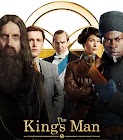
Showing posts with label Ralph Fiennes. Show all posts

Thursday, 1 October 2026

28 Years Later: The Bone Temple (3 Stars)


"The Bone Temple" is an improvement on "28 Years Later", but that's not saying muxh. There are fewer zombies, which suits me perfectly, but the film still has an unpleasant post-apocalyptic atmosphere. I dislike post-apocalyptic films almost as much as I dislike zombies.

12-year-old Spike is the main hero in the film series, but he spends most of the film as a member of the Jimmies, disguised by a ridiculous blond wig.

The film's saving grace is Ralph Fiennes. Whenever he appears on screen, things immediately become more interesting. He's eccentric, funny and wonderfully watchable, bringing some much-needed personality to the grim proceedings.

And then there's the highlight: Fiennes dancing to Iron Maiden. I was slumping back in my chair for most of the film, but when "The Number of the Beast" started playing I sat up with a jolt. For a few glorious minutes "The Bone Temple" became exactly the sort of film I wanted it to be.

Then they killed Ralph Fiennes.

He was the best thing in the trilogy, but he won't return for the last film. Is there any reason left for me to watch it?

Success Rate:  - 1.1

Order from Amazon.com
Order from Amazon.co.uk
Order from Amazon.de

Wednesday, 30 September 2026

28 Years Later (2 Stars)


Spike has grown up with his parents on the isolated island of Lindisfarne, where his mother is increasingly sick and partially demented. On his 12th birthday, his father takes him to the mainland to kill his first infected – a fancy new name for zombies – as a rite of passage. Spike later returns with his mother after hearing rumours that a doctor lives on the mainland who may be able to help her. 

Unfortunately, I didn't enjoy the film. It's very slow for most of its running time, with long stretches of people talking and relatively little happening, and I found the infected themselves rather uninteresting as opponents. I've never been a great fan of zombies because they're just ugly, empty things to be killed; I prefer villains who have a personality and motivation that gives me something to engage with. There are exceptions, such as "The Girl with All the Gifts", but "28 Years Later" has only dull, uninteresting zombies. It wasn't until the last few minutes, when Jimmy and his group appeared, that I suddenly became interested in where the story might be going. That was too late.

Success Rate:  + 0.3

Order from Amazon.com
Order from Amazon.co.uk
Order from Amazon.de

Saturday, 31 December 2022

The Menu (5 Stars)


This is my last film of the year, and it's a terrific film to end with. I've wanted to see it for some time. At this year's Fantasy Film Festival a trailer for it was shown before every single film, which means I saw the trailer 24 times. That's a lot. The trailer was shown in German, but it still fascinated me. Today I managed to see it in English, which is the only way to watch an American film.

Wikipedia calls it a dark comedy horror film. I don't think that's a good description of the genre. Yes, it's dark, but it's not really a comedy, and as for it being a horror? It's a borderline case. There are a few scenes which could be called horror, but mostly it's a tense psychological thriller.

The film is about Julian Slowik, a master chef who's invited 12 people to a private island for a meal, charging them  $12,500 each. The courses served are practically satires of the meals served by top chefs. They're delicious, but such small portions that the guests are left hungry.

Nicholas Hoult plays Tyler Redford, an enthusiastic food fan, not a professional critic but an expert on fine food. His partner left him shortly before the meal, so he's found a replacement at short notice. This disturbs Julian, because he's carefully selected the attendees. For him the balance of the guests is just as important as the mixture of foods in the menu.

As the film progresses we find that Julian has issues with all of the guests (eleven of them, anyway). They've all wronged him in some way, and he wants revenge.

I had to ponder for a long time how to rate the film. It's excellent, as far as the acting is concerned, but many of the things that happen are highly infeasible. I wasn't sure whether that was reason enough to lower the rating. I eventually decided to suspend disbelief and judge it as a fantasy. Five stars. It's one of the best films I've seen this year.

Wednesday, 23 November 2022

No Time To Die (4½ Stars)


I've finally got round to seeing the latest James Bond film after missing it in the cinema last year. I like the film a lot, and I felt tempted to give it a five star rating, but I changed my mind at the last moment because of one thing: it's not a James Bond film.

I refuse to get into arguments about whether Daniel Craig is a good Bond or not. For me it's all about how the script has been written. Daniel Craig doesn't play the brash, sexist Bond that we've grown to love over the last 60 years. He stands mourning for his lost love, Vesper Lynd. She was a character in Ian Fleming's first James Bond novel, "Casino Royale", a book that was never filmed in the classic James Bond series, 1962 to 2002. It was finally filmed in the rebooted series in 2006.

There's no bad Bond girl. That's not right. James Bond always needs a sexy woman trying to kill him, whether or not she eventually succumbs to his charms. The only real good Bond girl is Ana de Armas as Paloma, but this is spoilt by her not falling into bed with him. Madeleine Swann is a character from a previous film, which is a no-no, as far as James Bond is concerned. His lovers never last from one film to the next, so I wouldn't count her as a Bond girl.

And James Bond as a father? Really? He's always careful that things like that don't happen.

Let's see what happens in the next film. Will it be another reboot? Or will it be a James Bond film without James Bond? It would be interesting to have Nomi return as the new 007, as long as the tables are turned. Lashana Lynch could play a sexist Jane Bond, and each new film would feature Bond Boys that she beds at a whim. I'd like that.

Success Rate:  + 1.1

Order from Amazon.com
Order from Amazon.co.uk
Order from Amazon.de

Wednesday, 29 June 2022

The King's Man (5 Stars)


This is a prequel to the 2015 film "Kingsman", sometimes known as "Kingsman: The Secret Service". It shows how the Kingsman spy organisation came about at the beginning of the 20th Century.

The film's main character is Ralph Fiennes as Orlando Oxford, the Duke of Oxford. He was a war hero in the Boer War, but he became a pacifist after being disgusted by what his country was doing. When the First World War breaks out, his son Conrad is determined to join the army, but he refuses to give him permission while he's underage. In 1916 Conrad turns 18, so he's able to sign up for the army without his father's permission. Orlando is a friend of King George, so he asks the king to keep him away from the fighting. Conrad realises what's happening, so when he's posted to a position in London he exchanges identities with a young Scottish soldier. Conrad volunteers for a dangerous mission on the front line, and he's awarded a Victoria Cross. Posthumously.


The First World War was a family affair. King George of England, Kaiser Wilhelm of Germany and Tsar Nicholas of Russia were cousins. This didn't stop them sending armies against one another. Orlando tried diplomacy to make the three cousins stop fighting and be friends, but it wasn't possible.

Britain and Russia were allies against Germany. A shadowy Scottish figure who calls himself the Shepherd wants Germany to win the war, so he uses the monk Rasputin to persuade Nicholas to withdraw his troops. This puts Orlando in a difficult position. He wants the war to end, but not with Germany as victor, so he has to stop Rasputin.

The Kingsman spy agency isn't formed until 1919 when the war is over.Orlando has learnt lessons from the conflict. There has to be a secret society that isn't controlled by any government, a society which is able to work for peace.


Gemma Arterton plays Polly, a maid who becomes one of Kingsman's founders. A maid? The film is anachronistic in its portrayal of women. In those dark days of male chauvinism women didn't have equal rights, but the Duke of Oxford treats her as his equal. She may work for him, as far as the outside world is concerned, but she's his closest companion and trusted advisor.

"The King's Man" has less humour than the two Kingsman films set in the present day. I can't say whether that's good or bad in itself, but it gives the film a different style to the others.

The film is available for streaming on Disney Plus only five months after it was in the cinema. I'm glad, for purely selfish reasons, but that's a sign that the film wasn't successful at the box office. That's unfortunate. Adolf Hitler is introduced in a mid credits scene, so I was hoping for a sequel to be made soon. There's still hope.

Hitler is played by the young German actor David Kross. In Germany playing Hitler is a right of passage. It happens to every actor at some point in his career, even if he doesn't have a physical resemblance. Am I exaggerating? When I have time I'll make a list of all the German actors who've played Hitler.

A film that's found its way to streaming even faster is "Doctor Strange in the Multiverse of Madness". It's streaming less than two months after it was released, and only three weeks after I saw it in the cinema.

Success Rate:  - 0.7

Order from Amazon.com
Order from Amazon.co.uk
Order from Amazon.de

Wednesday, 5 January 2022

The King's Man (5 Stars)


This film is a prequel to the other two Kingsman films. They take place in the present day, whereas "The King's Man" takes place in the early 20th Century.

The film's story is fictional, but it's wrapped around historical events. These events determine the film's pacing, giving it a stop and start rhythm. A mysterious Scottish figure, whose identity isn't revealed until the end of the film, is steering European events. He wants to start a large war which will destroy England and free the Scottish people. He sends an agent to assassinate Franz Ferdinand, which is the beginning of World War One. The two sides are evenly balanced, so first he incites a revolution in Russia to make Russia abandon the war. Then he undertakes plans to stop America joining the war on England's side.

I shan't give any more details about the plot. Spoilers! All I'll say is that "The King's Man" is a magnificent film. If I'd seen it on its original release date in mid December it would have been the best film of 2021. The releases date was pushed back to January, so I'll have to wait to see its competition later this year. It's a film that has it all: military action, spies and international intrigue.

A mid credits scene gives a hook leading to a possible sequel, also taking place before the two first films. I'm looking forward to it.

Wednesday, 13 October 2021

In Bruges (5 Stars)


Where's Bruges? It's in Belgium. It's a beautiful little town that most people have never heard of, unless they've seen this film.

Don't watch this film if you're easily offended. The characters are racist, homophobic and dwarfophobic, or whatever the word is for being prejudiced against dwarfs.

The film is about  two Irish hit men who've been ordered by their boss to hide in Bruges after an assassination was botched. Ken (Brendan Gleeson) is an older, experienced assassin. Ray (Colin Farrell) is a young man who's suffering from guilt after messing up his first job. Ken wants to spend time enjoying the sights of Bruges. Ray hates the town and can't wait to get back to England.

The language is foul throughout. Neither of the men is capable of speaking two sentences in a row that don't contain the F word. And yet we can't help liking the two characters. Their on screen charisma is overwhelming.


However, the film's main character isn't either of these magnificent actors, it's the city of Bruges itself. The director visited Bruges in advance and made a note of the tourist attractions. He put them all in the film. If you've never been to Bruges, watch this film as an alternative.


Success Rate:  + 0.3

Order from Amazon.com
Order from Amazon.co.uk
Order from Amazon.de

Friday, 4 September 2020

Grand Budapest Hotel (5 Stars)


This is a remarkable film. It received nine nominations for the Academy Awards, of which it won four. It failed to win the Best Film award because of "Birdman", a film I greatly liked at the time, but when I look back, "Grand Budapest Hotel" was by far the better film.

The film is about a hotel concierge and his lobby boy. The concierge is wrongly accused of murdering Madame D, an old rich woman. In her Will she's left him a valuable painting, "Boy With Apple". Madame D's son hires an assassin to kill the concierge, who's assisted in his flight by the faithful lobby boy.

The story in itself is good, but it's all about the cinematography. The colours are bright and dazzling, giving the impression that it's a fairy tale. In addition, every scene is perfectly framed like a piece of art, giving the impression of hyper-reality.


The concierge and the lobby boy. Do you see what I mean about the colours?


So this is the painting that people were willing to kill for? I don't understand art.


I've never seen Edward Norton looking so amart. It doesn't suit him. He's a jeans and t-shirt man, like me. But just look at the perfectly framed scene.


There are close-ups of newspapers several times during the film. The articles are all well written, albeit with American spelling. Very few films make the effort to use good texts in newspapers. However, there's one small error. Look at the date of the newspaper: Friday, October 19th, 1932. Wrong! It was a Wednesday.


Here's another edition of the Trans-Alpine Yodel, dated Tuesday, October 28th, 1932. That's wrong again. It was a Friday. But there's another error. The dates aren't even consistent with themselves. If the 19th had been a Friday, the second newspaper, printed nine days later, would have been printed on a Sunday. That's sloppy.

Success Rate:  + 4.9

Order from Amazon.com
Order from Amazon.co.uk
Order from Amazon.de

Sunday, 15 March 2020

Clash of the Titans [2010] (4 Stars)


It's getting very difficult for me to write reviews at the moment. The people I'm living with are panicking. The first Coronavirus case has been reported in the village where I live. As a result a doctor's surgery has had to be closed until the staff have been tested.

People are afraid of dying. Why? I don't see any logic in the fear of death. If you're a religious person, you know what's going to happen after you die, so you can make plans for it today. To use religious jargon, "Get right with God".

If you're an atheist, you know that there's nothing after death. Dead is dead, so why worry about it? If you die you won't even know you're dead.

Maybe the problem is that you believe in a fickle, unpredictable God waiting for you after your death. That's the situation in "Clash of the Titans". Zeus created man, and he even says that he loves man, but he's selfish and does what he wants. So the crops fail two years in a row, even though the farmers prayed to him? Sorry, he was too busy chasing virgins to listen to prayers. And when you die you're in the hands of Hades, a cruel God who's fuelled only by his hatred for Zeus.

But nobody believes in Zeus and Hades today, do they? Maybe the trouble is that people don't know what they believe. People in the West have abandoned their faith in Christianity, but they're worried it might really be true. They get sentimental and feel religious when they walk into a beautiful church for a wedding, but the feeling wears off the next week at work.

"Clash of the Titans" is about a war between the man and the Gods. It's not that people don't believe in the Gods, they just don't want to obey them any more. The film's hero, Perseus, fights against the Gods, even though Zeus is his father. Would I have followed Perseus? That's the question I asked myself while watching the film. I think not. I would have followed the Gods, but it wouldn't have been blind devotion. I wouldn't have fought the Gods, but I would have attempted to educate the Gods. I would have told them to listen to mankind instead of partying all day long.

Maybe I'm someone who ought to be afraid of death. I'm an agnostic, someone who doesn't know what's after death. I'm still not worried. If there's a God waiting for me, he needs me to educate Him. (Or Her. Or Them). He needs me to tell Him what He's been doing wrong.


The first time I watched this film I thought it was almost as good as the original 1981 version. Today I changed my mind. It's a very slick, polished film with high quality special effects, but it's lacking the naive beauty of the original. In the original version, Perseus is rewarded for his labours by being allowed to marry Princess Andromeda of Argos. In the remake he turns his back on her, having fallen in love with Gemma Arterton as Io. I think my readers know which choice I would have made.

Success Rate:  + 1.9

Order from Amazon.com
Order from Amazon.co.uk
Order from Amazon.de

Sunday, 27 October 2019

Official Secrets (3½ Stars)


"The truth is always the first casualty of war".

I immediately liked the film's tag line, which is super-imposed on the film poster. It wasn't until I sat down to write this review that I questioned whether it's a true statement. Maybe it is, maybe it isn't. It varies from case to case, so I would definitely strike the word "always". A lie might be told to justify a war. That was possibly the case in the Iraq War of 2003, when it was claimed that the Iraqi regime was stockpiling weapons of mass destruction. I say possibly, because it's impossible for me to decide after all these years whether it was a lie or a mistake.

It's more often the case that lies are told after a war has ended. It's said that after a war history is written by the winners. If the other side had won, the history books would tell a different story. My favourite example is the statement that World War Two was started by Germany invading Poland. That's something that people in England, America and most other western countries repeat without thinking, but it's only one way of interpreting the facts. It could also be claimed that Germany didn't invade Poland at all; German troops entered German territories that were being occupied by Poland. If Germany had won the war, the "invasion of Poland" would have been called the "liberation of West Prussia and Posen".

Those are interesting topics worth discussing some other time in greater detail. For now, let's stick to the film. It deals with the true story of Katharine Gun, an employee of GCHQ (Government Communications Headquarters) in 2003. She intercepted a message from America to the British government asking for the non-permanent members of the UN Security Council to be put under surveillance to find a means of persuading them to vote in favour of a war against Iraq. The suggestion that diplomats should be blackmailed shocked Katharine so much that she leaked the memo to a friend who was an anti-war activist. The memo found its way to the British newspaper, The Observer.

An investigation was made to find the whistleblower responsible for the leak. At first Katharine denied it was her, but she eventually confessed in order to protect her colleagues who were the main suspects.

This is a fascinating story told with documentary precision. If anything, it's too close to being a documentary. The opening scenes show the actual footage of interviews with politicians like George Bush and Tony Blair. This slows the film down, and it needs at least half an hour to get moving. For me it only became interesting when it focused on the personal drama in Katharine's life. Keira Knightley plays the role perfectly, displaying the emotions of her character while attempting to keep them under control. It's a subtle but very effective performance.

The most shocking part of the film is the way the detectives talk to her about her legal rights. Katharine is allowed to speak to a lawyer, but as an employee of GCHQ she had signed an agreement to adhere to the Official Secrets Act by not talking about her work to anyone. This meant that if she discussed her work with her lawyer, including any details of the case against her, there would be additional charges against her. That makes a mockery of the whole British legal system.

Friday, 1 March 2019

The Reader (4 Stars)


This is a film that I took down from my shelf this morning in remembrance of the late, great actor Bruno Ganz. It's a long time since I last watched the film, an unjustifiably long time. I didn't even remember that Bruno Ganz appeared in the film. I remembered that it starred Karoline Herfurth in a supporting role, but she's someone I could never forget.

The film begins in 1995 with the lawyer Michael Berg looking back on his life. In 1958 he was 15 and lived in Berlin. He fell in love with an older woman, Hanna Schmitz, a 36-year-old tram conductor. The affair only lasted for a few months, but it made an impression on him for the rest of his life. First love can do that. Every day he spent a few hours reading books to her, after which they made love. The sex was the most important thing to him, but the reading was more important to her. She laughed and cried at the stories he read her. Then she left Berlin suddenly without telling him where she was going. The relationship ended as abruptly as it had begun.

In 1966 Michael was studying law in Heidelberg. Bruno Ganz was his professor. Together with a small group of the best students they visited the trial of six women, Auschwitz prison guards, who were accused of letting 300 women die in a burning church. Michael was shocked to see that Hanna was one of the women. The other five women denied responsibility, but Hanna admitted and justified everything she had done, claiming the other women were equally guilty. In response they accused her of being the ringleader, telling them what to do and writing the report to their superiors about the action. Hanna denied having written the report, but when asked to give a handwriting sample she changed her testimony and agreed that she had written the report. Michael knew it wasn't true, because she couldn't read or write. She was ashamed of revealing to the world that she was illiterate. The other women received light sentences, but Hanna was sentenced to life imprisonment.


Some people might think of "The Reader" as a film about the Holocaust. That's not quite true. It's primarily a love story. The Holocaust is something that provides a background to the story. Hanna's complicity in the war crimes can't be denied, but she was a naive Mitläufer. Naive and uneducated. She worked as a guard, and she considered it her duty to do her job as best as she could. 20 years later her defence was that she was innocent because she was just following orders. As for the other five women, they were well aware of their guilt, but they lied to defend themselves. Hanna was at least honest in her testimony.


Karoline Herfurth plays Marthe, one of Michael's fellow law students.


I've always found her beautiful. She would have distracted me in the lectures.


Bruno Ganz admires her when they're sitting in court. I don't blame him in the least, but he should try to make it less obvious.


Bruno Ganz was an excellent actor in every role he played. There was something Shakespearean about him, if that's the correct word. Maybe a better word is regal. He had an imposing bearing in all his films, whether he was playing a university professor, a police chief or Adolf Hitler. His presence overwhelms the audience whenever he appears on screen. If you've seen any of his films you'll know what I mean.

"The Reader" was nominated for five Academy Awards, including Best Film. Kate Winslet won the award for Best Actress. She deserved it.

Success Ratio:  + 1.4

Order from Amazon.com
Order from Amazon.co.uk
Order from Amazon.de

Sunday, 24 February 2019

Hail, Caesar! (3 Stars)


I gave this film five stars when I saw it in the cinema three years ago. In retrospect, I don't understand why. "Hail Caesar" has many good points, but it's not a great film. Maybe I was biased in its favour because I like all the other films made by the Coen brothers. Watching it again today, the first time since 2016, I felt disappointed by the story. On the plus side, I love the cinematography. Every scene is perfectly framed, especially when the production of 1950's films is shown. It's a perfect homage to the golden age of cinema. Or is it the silver age? I don't know what's what in cinema terminology.

The film is about the making of a big budget film called "Hail, Caesar", an obvious parody of "Ben Hur". It's a film about Jesus Christ as seen through the eyes of a Roman centurion called Autolycus, played by Baird Whitlock, who's played by George Clooney. Baird is kidnapped when he has only one scene left to film, his speech at the cross. A group of Communist screenwriters hold him to ransom for $100,000. The studio boss pays up immediately, and the money is donated to the Communist cause; or rather the Russian cause.

I know the film is a parody, but it seems to be glorifying Hollywood's anti-Communist sentiments in the post war years. I doubt this was intentional when the Coen brothers made the film, but it's the impression I get. This gives me a queasy feeling in my stomach. The film's sub-plots are totally irrelevant to the main story. There are two rival celebrity gossip columnists, both played by Tilda Swinton, and there's a pregnant film star who wants to adopt her own baby to avoid a scandal. I don't know why these stories were included, except to pad the film out to a full 90 minutes.


There's one small remark that I'd like to close with. After seeing Channing Tatum sing and dance I'm convinced that he should have played the lead role in "La la Land". Ryan Gosling was the wrong man for the role.

Success Rate:  + 0.9

Order from Amazon.com
Order from Amazon.co.uk
Order from Amazon.de

Saturday, 16 February 2019

The Lego Movie 2 (3 Stars)


This film begins immediately after the last film ends, at the point where Finn's younger sister Bianca is allowed to play with the Lego pieces in the cellar. Then we fast forward five years, which was probably only done because the sequel was made five years later and the actor who plays Finn looks much older now. During this time Bianca hasn't just played in the cellar, she has also carried Lego pieces up to her room. She's also brought her own Duplo pieces downstairs and has mixed them with Finn's Lego creations.

That's the real world. Inside the Lego universe chaos has broken out because of Bianca's damage to their world.

After highly enjoying the first film, I have to say that the new film doesn't reach the same level. Both films quote other films repeatedly, such as "The Matrix", "Jurassic World", "Back to the Future" and various DC films. The difference is that the first film followed the philosophy of the films it referenced, whereas the second film just quotes them anecdotally. The result is that the second film is most definitely a children's film, which couldn't be said of the first film. The only subject of any philosophical importance was Emmet's future self returning from the future with a different attitude and trying to influence the present day Emmet to make sure he developed into himself. That's a topic that Jim Starlin used in his 1980's comics, when Warlock's future self, the Magus, came back in time to help him develop into the Magus. Why? Because he remembered how he'd once been Warlock and he'd needed the Magus' assistance to become himself.

There was a young boy sitting next to me in the cinema today, probably about 10 years old, who was talking a lot. Normally I don't like people talking in the cinema, but he impressed me. He was explaining what was happening to his mother. He seemed very knowledgeable, because he recognised most of the references to other films. It looks like he has the makings of a real film fan. Maybe one day he'll have a blog like mine.

One thing I'd like to mention is the amazing song being sung during the credits. The song was about the credits, praising the credits as the best part of the movie. I haven't yet figured out who was singing the song, but I loved it.

Friday, 6 July 2018

In Bruges (5 Stars)


I mentioned recently that I've been looking through my DVD collection for films that I haven't watched since September 2010 when I started my blog. Surprisingly, this is one of them. How could I have forgotten this brilliant film? I don't know if "forgotten" is the right word. I could clearly remember the plot and many of the scenes, but I'd forgotten how good it is. I sat laughing out loud as I re-watched it this evening.


Colin Farrell and Brendan Gleeson are two of the world's best actors. I doubt many people would disagree with me. Their onscreen charisma is overwhelming. They play two Irish hit men who have been ordered by their boss to hide in Bruges after an assassination was botched. Ken (Brendan Gleeson) is an older, experienced assassin. Ray (Colin Farrell) is a young man who is suffering from guilt after messing up his first job. Ken wants to spend time enjoying the sights of Bruges. Ray hates the town and can't wait to get back to England.

"I grew up in Dublin, so I love Dublin. If I'd grown up on a farm and was retarded Bruges might impress me, but I didn't, so it doesn't".

I can't say much more without giving away the plot to those of you who haven't seen it yet. The scenery of Bruges is beautiful, but somehow sterile. It's easy to see how some could love it while others hate it. The placid appearance is in stark contrast to the subculture of drugs and violence.

The film was made in 2008 and directed by Martin McDonagh, who has recently become famous for his film "Three Billboards Outside Ebbing, Missouri". That's doubtlessly a good film, but "In Bruges" is his greatest masterpiece so far.

Order from Amazon.com
Order from Amazon.co.uk
Order from Amazon.de

Saturday, 31 March 2018

Clash of the Titans [2010] (4½ Stars)


It's taken me a long time to get round to watching this film. It was strongly recommended by my guest writer Kaylena in her review, but I was still reluctant to watch it. The problem is that I love Ray Harryhausen's version so much. For me it's perfection that can't be improved upon. On the other hand, the new version stars Gemma Arterton in one of her early films before she quit Hollywood, which is a reason to watch any film. It's not just her beauty and grace. She has acting skills which set her far above her peers.


Any doubts I had about the quality of the film were washed away within the first five minutes. The cinematography and special effects are perfect, as realistic as computer graphics can make them. Forgive me if it sounds blasphemous, but my first thought was "This is the sort of film Ray Harryhausen would make if he'd been born 50 years later". The flying horse, the Djinn, the winged monsters -- whatever they're called -- they all looked perfect.

Unfortunately, I found that the final scene was a letdown. I don't know what happened, why the portrayal of the Kraken was so disappointing. Maybe the special effects budget had run out by the end of the film. Maybe the director thought that an overpowering, invincible monster would be better portrayed by close ups with only a few complete  shots. Whatever the reason was, I'm disappointed. Compare the two Krakens:

Ray Harryhausen's 1981 Kraken.
The 2010 Kraken.
Do you see what I mean? Even though the older version is obviously a model, it looks more terrifying. It looks more real. Surely today's computers could have done a better job.

I think I detected something of a message in the film. Some of the dialogue seemed to be referring to religion in general, including today's Christianity, not just to the ancient Greek Gods. I'm not certain. Next time I watch it I'll pay attention to this aspect, and I might write something about it.

Order from Amazon.com
Order from Amazon.co.uk
Order from Amazon.de

Thursday, 7 December 2017

Spectre (4 Stars)


This is the fourth film in the New Bond series. Like the previous film, "Skyfall", it's directed by Sam Mendes, but it has a completely different feel to it. It's a darker, more depressing film. This is intensified by the cinematography, which uses dull colours, even in daytime scenes. I'm glad that I've watched the Daniel Craig Bond films (almost) back to back, four films in six days. That's the only way to notice subtle changes in style.

Why is "Spectre" darker than the previous films? It's the arrival of Bond's nemesis Blofeld, whose full name is Ernst Stavro Blofeld. He introduces himself as the man who has been making Bond suffer for years; at least for the last four films. We can expect him to continue making Bond suffer for years to come. Does this mean we can expect more dark, depressing Bond films? I hope so. We had 40 years of camp James Bond films, especially in the Roger Moore years, so it's time to try something new.


Blofeld is played by Christoph Waltz. In an interview after the film's release he said that he wasn't satisfied with his performance. It's the mark of a great actor -- or a great anything else -- that he's the biggest critic of his own work. I felt that he played the part admirably, but he must see minor faults that aren't apparent to me. It depends on what he's trying to achieve. Is he attempting to model himself on any one of the past incarnations of Blofeld? In the Classic Bond films he was played by five different actors. For me Donald Pleasance is the version of Blofeld that I most fondly remember. Telly Savalas was so different that he seemed like a different person.


Donald Pleasance was a superbly evil version of Blofeld. Telly Savalas ran around too much, which made him seem comical. Christoph Waltz is somehow creepy as every bad guy that he plays, and that fits the role of Blofeld. I assume that he'll try to be closer to his vision of the role in the next Bond film. When I see him again I'll better understand what he's trying to achieve.

"Spectre" adds something to the character of Blofeld that wasn't in the Classic Bond films or the Ian Fleming novels. Bond and Blofeld are brothers! By adoption, at least. After the death of Bond's family he was adopted by Blofeld's father. At the time Blofeld used his birth name, Franz Oberhauser. He despised his adopted brother so much, feeling jealous of the attention his father gave him, so he killed his father, faked his own death and changed his name. Blofeld is his mother's maiden name, but his new Christian names are random.


There's a subtle irony that my friends missed when I went to watch "Spectre" with them in the cinema two years ago. In the Austin Powers films Dr. Evil, pictured above, is a parody of Blofeld. In the third film, "Goldmember", he reveals that he's really Austin Powers' lost brother. Now "Spectre" has copied this idea from "Goldmember". James Bond influenced Austin Powers, and now Austin Powers is influencing James Bond. I wonder if this crossed the minds of the screenwriters when they were writing the script.


Could Daniel Craig and Christoph Waltz be brothers? Even though the relationship is only by adoption there are certain similarities. Judge for yourself.

Where did the film take me on my virtual holiday today? London, as always, followed by Mexico, Morocco, Italy and Austria. Who needs to fly to other countries when he has a Blu-ray player?


You can skip the rest of this post if you don't speak German. Here's a newspaper report about the death of Blofeld's father. It contains a few errors and examples of poor style that could have been avoided by letting Christoph Waltz, a native Austrian, take a quick look at it. "Tal" and "gebracht" are two separate words that shouldn't have been combined. The word separation is faulty throughout. Probably the text was typed using an English version of MS Word, and the English language word separation algorithm was used. A German would never separate "Obduktionsbericht" as "Obduktionsberi-cht". Also, it's not usual to call the body of a dead person a "Körper". The word "Leiche" would be used. That's sloppy.

Order from Amazon.com
Order from Amazon.co.uk
Order from Amazon.de