Showing posts with label Alexandra Maria Lara. Show all posts

Wednesday, 24 April 2024

Chantal im Märchenland (3 Stars)


"Chantal im Märchenland", engl. "Chantal in Fairy Tale Land", is a German comedy. It's still in the cinemas, and it's already the most successful film of 2024 in Germany, out-grossing the American blockbusters. As a serious film fan I had to acknowledge it by laying my money on the counter.

It's a spin-off of the "Fack Ju Göthe" film series. That's a strange premise. "Fack Ju Göhte" is a high school comedy that takes place in the real world, whereas "Chantal im Märchenland" is a fantasy film. Chantal is a girl that we met in the previous films. Now she's in her early twenties and she's trying to become famous as a YouTube influencer. It's not as easy as she thinks. She only has 500 subscribers to her channel.

One day Chantal falls into a magical mirror that she wants to use as a prop for a video. Her best friend Zeynep jumps in after her. The two young women find themself in a fantasy world. Chantal is a princess, while Zeynep is a commoner. The fantasy world is a mixture of fairy tales and other fantasy stories. Chantal meets a witch and realises that she's about to be cursed to become Sleeping Beauty, so she deflects the curse onto a prince. The prince falls into a deep sleep until he's awakened by the kiss of a stable boy. The two men fall in love, but he's ashamed to admit it, so he tells his mother that Chantal's kiss woke him up.

There are other things mixed in. There's a sword in a stone which will belong to whoever can pull it out. Many men try in vain, until a princess arrives and pulls it out easily.

Then Chantal meets a young man called Ali Baba. She weaves him a flying carpet, so that they can fly together to Bagdad.

The film is hilarious. It's a product of today's mixing of gender and sexuality roles, but it's successful because it's a comedy. When the prince and the stable boy kissed, nobody in the audience sighed romantically, they all laughed.

The film's biggest problem is the language. The dialogue is full of vulgar swear words. I see no reason for it. It's a fairy tale world, so why is everyone swearing? Is it supposed to be funny? I didn't find it funny. The bad language is totally unnecessary.

Wednesday, 29 June 2022

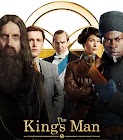
The King's Man (5 Stars)


This is a prequel to the 2015 film "Kingsman", sometimes known as "Kingsman: The Secret Service". It shows how the Kingsman spy organisation came about at the beginning of the 20th Century.

The film's main character is Ralph Fiennes as Orlando Oxford, the Duke of Oxford. He was a war hero in the Boer War, but he became a pacifist after being disgusted by what his country was doing. When the First World War breaks out, his son Conrad is determined to join the army, but he refuses to give him permission while he's underage. In 1916 Conrad turns 18, so he's able to sign up for the army without his father's permission. Orlando is a friend of King George, so he asks the king to keep him away from the fighting. Conrad realises what's happening, so when he's posted to a position in London he exchanges identities with a young Scottish soldier. Conrad volunteers for a dangerous mission on the front line, and he's awarded a Victoria Cross. Posthumously.


The First World War was a family affair. King George of England, Kaiser Wilhelm of Germany and Tsar Nicholas of Russia were cousins. This didn't stop them sending armies against one another. Orlando tried diplomacy to make the three cousins stop fighting and be friends, but it wasn't possible.

Britain and Russia were allies against Germany. A shadowy Scottish figure who calls himself the Shepherd wants Germany to win the war, so he uses the monk Rasputin to persuade Nicholas to withdraw his troops. This puts Orlando in a difficult position. He wants the war to end, but not with Germany as victor, so he has to stop Rasputin.

The Kingsman spy agency isn't formed until 1919 when the war is over.Orlando has learnt lessons from the conflict. There has to be a secret society that isn't controlled by any government, a society which is able to work for peace.


Gemma Arterton plays Polly, a maid who becomes one of Kingsman's founders. A maid? The film is anachronistic in its portrayal of women. In those dark days of male chauvinism women didn't have equal rights, but the Duke of Oxford treats her as his equal. She may work for him, as far as the outside world is concerned, but she's his closest companion and trusted advisor.

"The King's Man" has less humour than the two Kingsman films set in the present day. I can't say whether that's good or bad in itself, but it gives the film a different style to the others.

The film is available for streaming on Disney Plus only five months after it was in the cinema. I'm glad, for purely selfish reasons, but that's a sign that the film wasn't successful at the box office. That's unfortunate. Adolf Hitler is introduced in a mid credits scene, so I was hoping for a sequel to be made soon. There's still hope.

Hitler is played by the young German actor David Kross. In Germany playing Hitler is a right of passage. It happens to every actor at some point in his career, even if he doesn't have a physical resemblance. Am I exaggerating? When I have time I'll make a list of all the German actors who've played Hitler.

A film that's found its way to streaming even faster is "Doctor Strange in the Multiverse of Madness". It's streaming less than two months after it was released, and only three weeks after I saw it in the cinema.

Success Rate:  - 0.7

Order from Amazon.com
Order from Amazon.co.uk
Order from Amazon.de

Sunday, 20 March 2022

Only God can judge me (4 Stars)


Let's get one thing out of the way first. This film has nothing to do with religion, apart from a single scene where the main character prays before he picks up a gun to go on an armed robbery. The film's title is a random quote from his prayer. That's all.

The photo above shows Rafael and Ricky, two brothers who live in Frankfurt. Ricky is a hardened criminal, who feels no remorse when he picks up a gun to shoot someone. Rafael wants to be a good boy, but he loves his brother and lets himself be talked into things.

After an unsuccessful armed robbery, both brothers are sent to prison for five years. When they come out, Rafael swears that he's going straight. Ricky wants to do just one more big job. Ricky's friend Latif has a perfect job planned. Latif's brother is going to sell two and a half kilograms of heroin to an Albanian gang for 100,000 Euros. Latif and Ricky should interrupt the deal, stealing the heroin and the cash. After the job is over, Latif will give the heroin and the cash back to his brother, receiving a 50,000 Euro reward, which he'll share with Ricky. That's a nice double cross. The problem is that on the morning of the robbery Latif is arrested for a minor parole violation. Ricky needs another partner, so he convinces Rafael to go along.

The robbery goes badly. There's a shootout, and they only manage to steal the heroin, not the cash. They're stopped by the police, and Rafael drops the heroin in panic. So they have nothing. Latif's brother threatens to kill the two brothers if they don't give him the heroin or 100,000 Euros.

So far it sounds like a typical gangster thriller. Then comes the twist. The brothers were stopped by the policewoman Diana Dunker, who was in the area by chance. Her daughter needs a heart transplant, and there's no donor available, but she's been told she can "buy" a donor from Eastern Europe for 30,000 Euros. She keeps the confiscated heroin and attempts to sell it. She's inexperienced in dealing drugs, so she offers to sell it to Latif, knowing nothing about his connection to the crime. Latif tells Ricky to kill Diana, but Rafael wants to save her life.


This is an exciting crime thriller with non-stop action from beginning to end. It shows the seedy criminal scene in Frankfurt. In the disc's special features it's claimed that Frankfurt has the most organised crime in Germany. I didn't know that. When I was younger Hamburg was the city with the most crime, but the city's gentrification has driven the gangs out.

The film has only been released in Germany, but the German Blu-ray has English subtitles.

Friday, 11 March 2022

Das Perfekte Geheimnis (4 Stars)


Seven people in a room. A lunar eclipse. Seven mobile phones.

The film's title means "The Perfect Secret". It's a remake of an Italian film called "Perfect Strangers" ("Perfetti Sconsciuti"). The German title is misleading. A perfect secret would be a secret that's never discovered. In this film everyone has secrets, and they're all exposed.


Eva and Rocco are a married couple who live in a luxurious apartment in the middle of Munich. She's a therapist, he's a plastic surgeon. They invite six friends (three couples) to dinner. Only five of them arrive. After talking about mobile phones controlling everyone's life today, Eva suggests a game. Therapists like games. Everyone has to lay his mobile phone on the table. Incoming calls have to be answered on speaker phone. Text messages and emails have to be read aloud.

The perfect friends soon realise that they're perfect strangers. Everyone has secrets that he's been keeping from his partner or his other friends. What starts out as a happy evening turns into arguments, and everyone leaves in tears.


We think of mobile phones as a means of communication that brings people together. This film shows that they tear us apart. It's not that the phones are bad in themselves. They're just tools to be used. The trouble with phones is that they offer methods for people to keep secrets. They bring out the worst in people.

Only one of the dinner guests, a teacher called Pepe, wants his secret to be exposed. He's a homosexual, but he's never had the courage to tell anybody. He's hoping that the game will help him come out of the closet. Unfortunately, it doesn't work as planned. Some of his friends that he's known since childhood are homophobic.

Something about this film has touched a nerve, The original version was released in 2016, but it's already been remade 20 times. The Guinness Book of Records includes it as the most remade film in cinema history.

  • Italy: Perfect Strangers (2016) – the original version
  • Greece: Perfect Strangers (2016)
  • Spain: Perfect Strangers (2017)
  • Turkey: Stranger in my Pocket (2018)
  • France: Nothing to hide (2018)
  • South Korea: Intimate Strangers (2018)
  • Hungary. Happy New Year (2018)
  • Mexico: Perfect Strangers (2018)
  • China: Kill Mobile (2018)
  • Russia: Loud Connection (2019)
  • Armenia: Unknown Subscriber (2019)
  • Poland: Strangers (2019)
  • Germany: The Perfect Secret (2019)
  • Vietnam: Blood Moon Party (2020)
  • Japan: Adult situation (2021)
  • Slovakia: Known Unknown (2021)
  • Romania: Perfect Strangers (2021)
  • Holland: Perfect Strangers (2021)
  • Israel: Perfect Strangers (2021)
  • Egypt: Perfect Strangers (2022)
  • Norway: Full Coverage (2022)
  • Iceland: Wild Game (2022)

Remakes are currently planned in Qatar, Sweden and (finally) America.

I've seen four versions of the film so far: the original and three remakes. They all have subtle differences, while keeping to the main lines of the original. The German remake deviates the most by adding a happy ending that was missing in the original. That weakens the story. It's a story about tragedy.

One small comment for my English speaking fans. The film has only been released in Germany, but the Blu-ray contains English subtitles.

Thursday, 10 February 2022

Control (4 Stars)


Name: Ian Curtis
Lived: 15 July 1956 – 18 May 1980
Film dates: 1973 to 1980 (death)
Film made in 2007

When I reviewed the film about Oystein Aarseth yesterday I wrote that those loved by the gods die young. It's appropriate that I watched "Control" today, a film about a singer who died even younger.

Ian Curtis was a tragic figure. He was exceptionally intelligent, but he didn't go to university. The film doesn't state the reason. Maybe his parents were too poor, although that shouldn't have been an issue, because my parents were poor as well. My university degree was financed by a government grant. Maybe his mental disposition prevented him going to university. As a teenager he was very aloof, and it was questionable whether he could have looked after himself. Maybe the book on which this film is based gives an answer.


Here's a tip for serious film fans. Pay attention to any books shown in a film. It doesn't matter whether someone's reading a book or there are just books as props in a bookcase. Directors make deliberate choices what books to show in a film, and they're always significant. In "Control" we're shown the books on Ian Curtis' shelf. It's astounding reading material for a 16-year-old. The books show the depth of his intellect.

Note: Allen Ginsberg's name is spelt wrong. It was a blunder when creating an artificial prop for the shelf. I also owned the book "Howl and other poems", and it was a very thin book. If the real book had been used in the film, the spine would have been too thin to read the title, so a fake book was created for the scene, and they slipped up.

Ian might not have gone to university, but he remained an avid reader as he grew older. We see him reading books in later scenes. He got married to Debbie Woodruff at the age of 19, which blocked any possibility of beginning higher education later in his life.


After seeing the Sex Pistols in concert, Ian met three other teenagers who'd formed a band and were looking for a singer. He joined the band, Joy Division, and wrote all of their songs. Ian Curtis was a true poet, one of the greatest poets of the 20th Century. It's usual to compare him with Jim Morrison, especially because of the similarity of their voices, but Ian's songs were darker and more depressing than Jim's. In the film he says that Joy Division's songs aren't meant to be beautiful, they're meant to make people depressed.

Depression is what characterised Ian's life. He had little interaction with the other band members. He was on a completely different level. In later years they said that literary critics explained his songs, and they'd never know what they were singing about. On stage Ian went into a trance, looking neither at the audience nor the other band members. He had a unique stage antic in which he walked or even ran on the spot, pushing his body to the point of exhaustion. He gave everything on stage, more than he had to give.

Ian Curtis suffered from epilepsy. Despite heavy medication, he was unable to keep it under control. He even had fits on stage. It was common for the rest of the band to continue playing while he was carried out, pretending it was part of the show.

Joy Division toured Britain, and then the rest of Europe, but the band remained poor. They hardly earned enough to cover their expenses. That put a great strain on Debbie, who needed to work to support their family, including their new-born baby girl.


That leads to the most controversial element in the film. The film shows him having an affair with the Belgian embassy employee Annik Honoré. It's doubtful that this ever happened. "Control" is based on a book written by Ian's wife Debbie. She wrote a lot about the affair in the book, but Annik herself denies there was ever an affair. When Debbie wrote the book in 1995, Annik shrugged it off as fantasy, but after the film was made she couldn't remain silent any more. In the book Debbie wrote that Annik rang their house every day to speak to Ian. Annik claims that she never rang their house, not once, but Debbie rang her every day, yelling at her to leave her husband alone. Annik often accompanied Joy Division on tours, but she says there was never a romantic involvement with Ian. She says that they used to talk for hours. Ian complained to Annik that Debbie couldn't understand him, and Annik was the only one he could talk to. Judging by what she said, it sounds like Annik wasn't a lover, she was a good friend. The other band members could neither verify nor deny an affair. They knew that Ian and Annik spent time together, but they didn't ask what they were doing.

Speaking from my own personal experience, many women are like Debbie, especially women who don't have an intellectual connection with their husband. Debbie had no idea what was going on in Ian's head, so she assumed that if he was with another woman it must have been a love affair. That's sad. Adding a love affair to the film makes it a good story, but it doesn't mean it's true.


In the end, Debbie threw him out of their house. Ian attempted to make up with her, but she rejected him. The following morning he hanged himself, and he was dead at the age of 23. It's a morbid fact that Ian's suicide boosted the sales of Joy Division's two albums. Posthumously he's been recognised as a great singer and an outstanding poet.


Maybe Ian Curtis and Annik Honoré were never lovers, but a new romance blossomed between the actors. Sam Riley and Alexandra Maria Lara met for the first time while making "Control". They married two years later and are still together today.

Success Rate:  - 0.6

Order from Amazon.co.uk
Order from Amazon.de

Wednesday, 5 January 2022

The King's Man (5 Stars)


This film is a prequel to the other two Kingsman films. They take place in the present day, whereas "The King's Man" takes place in the early 20th Century.

The film's story is fictional, but it's wrapped around historical events. These events determine the film's pacing, giving it a stop and start rhythm. A mysterious Scottish figure, whose identity isn't revealed until the end of the film, is steering European events. He wants to start a large war which will destroy England and free the Scottish people. He sends an agent to assassinate Franz Ferdinand, which is the beginning of World War One. The two sides are evenly balanced, so first he incites a revolution in Russia to make Russia abandon the war. Then he undertakes plans to stop America joining the war on England's side.

I shan't give any more details about the plot. Spoilers! All I'll say is that "The King's Man" is a magnificent film. If I'd seen it on its original release date in mid December it would have been the best film of 2021. The releases date was pushed back to January, so I'll have to wait to see its competition later this year. It's a film that has it all: military action, spies and international intrigue.

A mid credits scene gives a hook leading to a possible sequel, also taking place before the two first films. I'm looking forward to it.

Sunday, 20 June 2021

Downfall (5 Stars)


There have been many men who have played Adolf Hitler over the years, some better than others. Has anyone ever attempted to make a full list? I found a list of 27 actors in IMDB, but it's incomplete. Rolf Kanies is missing, who played Hitler in "Joe and Max". However, I think all the performances pale into insignificance in comparison to Bruno Ganz. It's difficult to say what makes him so good. His physical appearance matches Hitler, but his mannerisms really make the difference. Before filming he spent four months watching videos of Hitler and listening to recordings of his speeches. That's dedication! But there's still more to it. The excellent script and directing add to the complete picture of the man Adolf Hitler.

When "Downfall" (German "Der Untergang") was released in 2004 it hit the cinemas like a bomb. After the many films about World War Two, here was something different. It's not a war film. It's a ruthlessly accurate portrayal of Hitler's last 10 days in his Berlin bunker, showing the despair and debauchery of those closest to him.

Initial response to the film was positive. In more recent years the film has been criticised because it's too positive in its portrayal of Hitler. I think that the recent critics don't get it. Adolf Hitler is known as the most evil person who's ever lived. This leads to him being portrayed as a caricature. When I lived in England it was common for people to make fun of him as stupid, as a "failed painter". Believe me, no man who's stupid could have become the leader of Europe's largest country. Maybe he didn't go to university, but he had great intelligence when it came to influencing people. Arguably, his greatest fault was that he relied on his own intelligence too much. He was incapable of delegating decisions to those below him. In particular, he was unskilled as a military strategist. He could possibly have won the war if he'd listened to the advice of his generals.

This is shown at the beginning of "Downfall". Hitler is surrounded by his generals. They're giving him advice, good advice, but he refuses to listen. Anyone who contradicts him is accused of treason.

The main reason for people criticising the film in recent years is that they claim it's pro-Hitler. What they really mean is that it's not anti-Hitler. The film carefully avoids the propaganda that has become the norm in films about Hitler. The film is based on the biography of Traudl Junge, who was Hitler's personal secretary from 1942 to 1945. The story is told as she saw it. The film shows Hitler not as a monster, but as a man, with all the strengths and weaknesses of any man.

Historians have frequently mentioned that Hitler had a charm that attracted women to him, but this has rarely been shown in films. We can see that Traudl Junge was drawn in by Hitler's charm. When Hitler offered to let her leave Berlin, she insisted on staying with him until the end. 


The real Traudl Junge in 2002, shortly before her death.


Alexandra Maria Lara as Traudl Junge in the film.

Alexandra Maria Lara was an excellent choice to play Traudl Junge. She expresses a naive innocence in the middle of the chaos of Hitler's last days. She was one of three women who remained close to Hitler's side. The others were Gerda Christian, also a secretary, and Eva Braun. They were friends, but Traudl's facial expressions in the film show her amazement and disapproval as Eva continued to party until the last moments.


The three women take Hitler's dog for a walk in one of the rare quiet moments. Apart from these few moments, the scenes look like they come from an absurd horror film. Senior officers are committing suicide, other officers are sitting getting drunk, and Eva Braun is dancing on the tables.


Most of the film takes place in almost staccato fashion, hurrying from one chaotic scene to the next. An exception is the scene in which Magda Goebbels murders her six beautiful children. Everything else stops, and this scene is shown slowly and deliberately, as each child is forced to swallow a cyanide capsule one by one. Hitler is portrayed neutrally, but Magda Goebbels is shown as a woman of pure evil. How could any mother act like this? It's horrific beyond description.

If you haven't yet seen this film, what are you waiting for? It's not a war film. It's a study of the breakdown of society in a confined space. It's not an easy film to watch. Try to see the film through Traudl Junge's eyes. She was an innocent woman watching her whole world collapse around her.

Success Rate:  + 3.5

Order from Amazon.com
Order from Amazon.co.uk
Order from Amazon.de

Monday, 27 April 2020

The Tunnel (4½ Stars)


This is a German film, made in 2001, based on a true story. The names have been changed, but the film's audio complementary reveals the names of the real characters. The story takes place in 1961-1962, and most of the characters were still alive in 2001, as revealed by the "What happens next" texts.

In 1961 Harry Melchior was the best swimmer in the DDR (East Germany). Two weeks after winning the national swimming championship he escaped to West Berlin, using a fake passport. He was determined to rescue his sister Lotte from the East, so together with his best friend Mathis, who had fled from East Berlin through the sewers, he began to build a tunnel under the Berlin Wall. The tunnel was 145 meters long, seven meters below the ground. Their plan was to rescue 32 people from the East, all of them friends and relatives of the people building the tunnel.

Initially there were problems with building the tunnel, because it had to be constructed part time. Then an American film company became aware of the project, and they paid the people building the tunnel 15,000 Marks each for the exclusive rights to film the escape. This financial backing made it possible for the builders to work full time.


It's chilling to see how deviously the East German secret police, the Stasi, operated. They tortured suspects and blackmailed citizens to spy for them. As I've often pointed out, the supposedly Communist government of East Germany continued to operate in the spirit of Hitler's Fascist government.

I almost gave the film five stars, but I deducted half a star because the film is unnecessarily long. It runs for 160 minutes, but I feel it could have been compressed to less than two hours without losing any of the drama.

This film was also released in England and America with subtitles, but it's now out of print everywhere. I'm glad I bought it in 2005 when I still had a chance.

Tuesday, 5 November 2019

Das Perfekte Geheimnis (4 Stars)


The cinema was fairly full when I went to see "Das Perfekte Geheimnis" (engl. "The Perfect Secret") today. Based on the box office figures of the first week, it will probably the most successful German language film in 2019. It features some of the biggest German movie stars, and when I walked out I overheard people telling one another how much they'd enjoyed it.

But how many of the people in the audience knew what they were watching?

It's a remarkable film, unique in the history of cinema. There's never been a phenomenon like it. I'm using the word "film" in an extended sense, referring to the story and the series of remakes.

In 2016 an Italian film was made called "Perfetti Sconosciuti" (engl. "Perfect Strangers"). Seven friends meet for dinner. (Three couples, plus a single man whose girlfriend doesn't turn up). The host's wife suggests that they play a game. They lay their mobile phones on the table. All incoming calls have to be answered on speaker phone. All texts and emails have to be read aloud.

Something about this film attracted the imagination of audiences. Film studios jumped on the opportunity and bought the rights for their respective countries. Believe it or not, "Das Perfekte Geheimnis" is the ELEVENTH remake within three years. Another seven remakes are currently in production, and the Guinness Book of Records now lists it as the most remade film ever.

It's a topic that people in countries all over the world can relate to. Mobile phones are a global phenomenon. They bring people together and pull them apart at the same time. Couples don't share their phones, so each partner has the opportunity to lead a double life.

The only other version I've seen is "Perfectos Desconocidos" (engl. "Perfect Strangers"), made in Spain by the legendary director Alex de la Iglesia. Based on a plot synopsis I've read, he remains very close to the original film. The German version omits a few small details, and it adds an epilogue to give the story a happy end. The French vesion, "Le Jeu" (engl. "The Game"), is available in Netflix, so I'll probably watch it soon for comparison.

I enjoyed the film a lot, even though I always knew what would happen next. The actors are all first class, many of them reuniting after making "Fack Ju, Göthe" together. My only criticism is the epilogue. It was unnecessary. They should have stuck to the seven people in a room.

Friday, 1 March 2019

The Reader (4 Stars)


This is a film that I took down from my shelf this morning in remembrance of the late, great actor Bruno Ganz. It's a long time since I last watched the film, an unjustifiably long time. I didn't even remember that Bruno Ganz appeared in the film. I remembered that it starred Karoline Herfurth in a supporting role, but she's someone I could never forget.

The film begins in 1995 with the lawyer Michael Berg looking back on his life. In 1958 he was 15 and lived in Berlin. He fell in love with an older woman, Hanna Schmitz, a 36-year-old tram conductor. The affair only lasted for a few months, but it made an impression on him for the rest of his life. First love can do that. Every day he spent a few hours reading books to her, after which they made love. The sex was the most important thing to him, but the reading was more important to her. She laughed and cried at the stories he read her. Then she left Berlin suddenly without telling him where she was going. The relationship ended as abruptly as it had begun.

In 1966 Michael was studying law in Heidelberg. Bruno Ganz was his professor. Together with a small group of the best students they visited the trial of six women, Auschwitz prison guards, who were accused of letting 300 women die in a burning church. Michael was shocked to see that Hanna was one of the women. The other five women denied responsibility, but Hanna admitted and justified everything she had done, claiming the other women were equally guilty. In response they accused her of being the ringleader, telling them what to do and writing the report to their superiors about the action. Hanna denied having written the report, but when asked to give a handwriting sample she changed her testimony and agreed that she had written the report. Michael knew it wasn't true, because she couldn't read or write. She was ashamed of revealing to the world that she was illiterate. The other women received light sentences, but Hanna was sentenced to life imprisonment.


Some people might think of "The Reader" as a film about the Holocaust. That's not quite true. It's primarily a love story. The Holocaust is something that provides a background to the story. Hanna's complicity in the war crimes can't be denied, but she was a naive Mitläufer. Naive and uneducated. She worked as a guard, and she considered it her duty to do her job as best as she could. 20 years later her defence was that she was innocent because she was just following orders. As for the other five women, they were well aware of their guilt, but they lied to defend themselves. Hanna was at least honest in her testimony.


Karoline Herfurth plays Marthe, one of Michael's fellow law students.


I've always found her beautiful. She would have distracted me in the lectures.


Bruno Ganz admires her when they're sitting in court. I don't blame him in the least, but he should try to make it less obvious.


Bruno Ganz was an excellent actor in every role he played. There was something Shakespearean about him, if that's the correct word. Maybe a better word is regal. He had an imposing bearing in all his films, whether he was playing a university professor, a police chief or Adolf Hitler. His presence overwhelms the audience whenever he appears on screen. If you've seen any of his films you'll know what I mean.

"The Reader" was nominated for five Academy Awards, including Best Film. Kate Winslet won the award for Best Actress. She deserved it.

Success Ratio:  + 1.4

Order from Amazon.com
Order from Amazon.co.uk
Order from Amazon.de

Saturday, 23 February 2019

Baader Meinhof Komplex (4 Stars)


I clearly remember the first time I saw this film in 2008. It was shown at the Empire Cinema in Birmingham Broad Street, which has since become a Cineworld cinema. I was excited about it because German films were rarely shown in Birmingham's cinemas. That's still the case today. While I was waiting upstairs I overheard an elderly couple speaking German with one another. It was something special for them as well.

The film was overwhelming, from the first few minutes onwards. I still consider the scene with the demonstration against the Shah of Iran in 1967 to be one of the best filmed scenes ever. I sat in my seat open-mouthed, hardly able to take it all in. That continued to the end of the film, even though the last hour of the film had less action. That's a "problem" with true stories. The pacing can't be planned, it just happens.

When I walked out of the cinema my thoughts were, "Wow! That's the best film I've ever seen". I bought the film on DVD as soon as it was released. I also bought the extended version, even though it's only 15 minutes longer. I watched it frequently between 2009 and 2010. Slowly my opinion on the film changed. I no longer consider it the best film ever made, or even the best German film. Today I wouldn't even place it in the top 50 German films. So what happened?


There are problems with the end of the film that I noticed when I first saw the film, but I overlooked them as artistic license. After repeated viewing the last half hour annoys me. By now it's got so bad that I don't think I can watch the film again. I only watched it today because it stars Bruno Ganz as Horst Herold, the head of the German police. This is doubtlessly one of his best performances. He's such a quiet, unassuming figure, determined to stop the rise of terrorism, but not hot-headed enough to make rash decisions. I especially like the scene where he serves his top advisers lobster soup while discussing police matters. This makes me smile. He's calm and collected, making others think he's not taking the problems seriously, but if people can no longer enjoy lobster soup terrorism has won.

To sum up my problems with the film: it's the true story of the Red Army Faction, commonly called the Baader-Meinhof Gang, from 1967 to 1977. The film begins with the visit of the Shah to Berlin and ends with the assassination of the industrialist Hanns-Martin Schleyer. The film is told with almost photographic documentary precision for the first two hours. Then it falls apart in the last half hour. Instead of sticking to proven facts it shows wild theories for which there is no proof.

The fact is that on 18th October 1977 three terrorists, Andreas Baader, Jan-Carl Raspe and Gudrun Ensslin were found dead in their cells in Stammheim, Germany's highest security prison. Baader and Raspe died of gunshot wounds, Ensslin was hanged. On the same morning the terrorist Irmgard Möller was found with four stab wounds in her chest, but she survived.

A police inquest claimed that the three deaths were the result of suicide. Möller, who is still alive today, claims that she was stabbed by masked men who entered her cell at night, but this was never proved. It's impossible to verify what happened because the prison's security cameras were turned off and the security guard on the seventh floor was called away from his post for three hours.

The story that Andreas Baader and his three fellow terrorists were executed is called a conspiracy theory by those who believe the German state would never act unlawfully. I know what conspiracy theories are. They're theories that people decide to believe, even though the facts prove the opposite. In this case there are no facts that prove it was suicide, and all the clues point to an execution, so I consider the suicide story to be a conspiracy theory.

In the last half hour the film builds up an elaborate theory about how a lawyer smuggled guns into the cells of Baader and Raspe. At meetings Brigitte Mohnhaupt made lengthy speeches about Baader and Ensslin wanting to end their lives on their own terms. There is no proof for this. My opinion is that Stefan Aust, the journalist on whose book the film is based, had a personal agenda in promoting the suicide theory, and the director Uli Edel followed his thoughts blindly. The film would have been better if the deaths of Baader and his friends had been left open. It would have been more satisfying to see them dead in their cells, then see different people arguing about whether it was suicide or an execution. The viewer should be allowed to make up his own mind rather than being subjected to a conspiracy theory.


I'll end this post with a few snapshots of the magnificent Martina Gedeck playing the role of Ulrike Meinhof. She's one of my favourite actresses, and this is her best ever performance. She perfectly portrays a woman who starts out as a brilliant journalist, then becomes an author of fanatical pamphlets before finally being driven to madness by three years of solitary confinement.


These snapshots aren't just for my readers. They're also intended to remind me of her performance in this film, because I probably shan't watch it again.

I defend my four star rating. I'd give the first two hours five stars and the last half hour one star. That makes an average of four stars. Approximately.

Success Rate:  - 1.2

Order from Amazon.com
Order from Amazon.co.uk
Order from Amazon.de