Showing posts with label Julie Delpy. Show all posts

Saturday, 25 January 2025

But I'm a Cheerleader (4 Stars)


My friend Anna introduced me to this film today. It's difficult to believe that I'd never heard of it. It's described as a comedy, but the humour is very subtle. The humour isn't so much in what the film says directly, but what it suggests.

Megan is a 17-year-old cheerleader. She seems like a normal teenage girl, but her parents suspect her of being a lesbian, so they send her to True Directions, a camp that carries out gay conversion therapy. At first she strongly denies being a lesbian, because she's been dating a boy for two years, but after intensive counselling she realises that she really does have lesbian tendencies. This shocks her, because she's a Christian and homosexuality is evil, but after recognising her lesbianism she agrees to the conversion program. After all, homosexuality is an illness that can be cured. Right? Or is it a sin? Or is it both?

The other young people in the group are less willing to be converted. Megan observes the boys kissing each other in secret, and a girl called Graham attempts to seduce her. That's a weird name for a girl. The whole group sneaks out to visit a gay bar after dark.

I shan't shy away from spoilers, because I'm sure you can guess what happens. The therapy fails, not just for Megan but for the whole group. They all become comfortable with their homosexuality, much to the horror of the camp's leaders.

I've heard of gay conversion camps in the USA. Are they ever successful? I doubt it.

The only thing that confused me is that True Directions doesn't seem to be a Christian camp. I've always assumed that gay conversion therapy is carried out by Christian fundamentalists. The participants in the therapy are encouraged to simulate heterosexual sex with one another. I can't imagine that happening at a Christian camp.

Success Rate:  + 0.6

Order from Amazon.com
Order from Amazon.co.uk

Wednesday, 23 January 2019

Avengers: Age of Ultron (4½ Stars)


This is the eleventh film in the Marvel Cinematic Universe, released in May 2015. Stan Lee appears in a short scene as a proud World War II veteran at a party in the New York Avengers headquarters. Thor is sharing a flask with Captain America.

Thor describes the drink, "This was aged for one thousand years in the barrels built from the wreck of Grunhel's fleet. It is not meant for mortal men".

Stan Lee, sitting nearby, butts in, "Neither was Omaha Beach, blondie. Stop trying to scare us. Come on".

Thor agrees and pours a small amount into a glass. Moments later we see Stan being carried out slurring the single word "Excelsior".


He really was an army veteran. In 1942 he volunteered to join the US Army, and he served in the Signal Corps from 1942 to 1945. After initially serving as a lineman he was transferred to the Training Film Division, where he wrote material such as training manuals and the scripts for propaganda films.


In this wartime photograph Sergeant Stanley Lieber – that was his real name – is shown designing a poster. That's curious. In his career he was never an artist.


In June 2017 Stan Lee was made a lifetime member of the Signal Corps Regimental Association. Better late than never. Most people knew nothing about his military history, so it needed a comic book fan in the Signal Corps to suggest him.

This is a video of the award being presented. After the presentation Stan says, "This is one of my proudest moments. Excelsior!"

Often when news reports talk about Stan Lee they refer to him as "Stan Lee, the creator of Spider-Man". That description gives a point of reference for the people who aren't dedicated comic fans, but it's always annoyed me. He created so many other characters, both heroes and villains. Here are a few of the other characters he created, all of them featured in "Avengers: Age of Ultron".

Hulk (May 1962)
Thor (August 1962)
Iron Man (March 1963)
Nick Fury (May 1963)
Quicksilver (March 1964)
Scarlet Witch (March 1964)
Black Widow (April 1964)
Hawkeye (September 1964)

I can't guarantee that their film representations resemble their original appearances in the comics. If you want on-screen realism you have to watch Axel Braun's Marvel films.

Success Rate:  + 1.2

Order from Amazon.com
Order from Amazon.co.uk
Order from Amazon.de

Friday, 5 October 2018

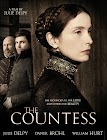
The Countess (4½ Stars)


This review won't go into much detail, so please click here to read my first review of "The Countess".

Yesterday my son discovered while searching online that Elizabeth Bathory is considered to have been the world's most prolific serial killer, with approximately 650 victims. I wonder what he was searching for?

Even though the reputable Guinness Book of Records agrees with this statement, it's difficult to know the exact truth. Some claim that it was only 450 murders, while others suggest that she didn't kill anyone at all and it was all lies fabricated by her political enemies. Different films made over the last 50 years have told different stories, depending on the way the director wanted to interpret Elizabeth Bathory's life.

The director of "The Countess" is Julie Delpy, who also plays the title role. Her intention is to present Elizabeth Bathory from a feminist point of view. She was a woman who was misused from the beginning of her life. At her birth it was decided who she should marry. After her husband's death it was expected that she should marry another nobleman to look after her kingdom, but she refused, insisting on ruling by herself. Her weakness was that she couldn't bear to grow older. She wanted to be eternally young and beautiful.

"The Countess" shows Elizabeth committing murder, but it also shows how her enemies united forces against her; her male enemies. She was a wealthy woman, and they wanted her land. At the end the question is asked, in a monologue by her former lover Istvan Thurzo, whether his father faked all the evidence against her. As we know, history is written by the victors. Elizabeth Bathory was the one who lost.

I intend to watch the other films in my DVD collection about Elizabeth Bathory this month. That should partially make up for my decision not to watch horror films all month as I've done in October in previous years.

Order from Amazon.com
Order from Amazon.de

Tuesday, 31 October 2017

American Werewolf in Paris (5 Stars)


I often argue with film critics about their evaluation of a film. That's normal. I know more than the so-called experts who sit in their offices getting paid to write about films that they watch for free. Don't tell me I only say that because I'm jealous. It's true, I am jealous of people in that position, but I'd still think they were wrong in their judgements if I were one of them. I'd be a rebel. That's probably why nobody has ever rung me up and offered me a job.

What makes me uncomfortable is when I argue with my fellow film fans about the quality of a film. I don't mean when there are differing opinions about a film and I take one side against the other. What I mean is when I praise a film and nobody agrees with me. This is such a film. Ever since I first saw it in the cinema I've loved it and spoken positively of it, but I haven't found a single person who agrees with me. Not one. On the other hand, nobody that I've spoken to has been able to give me constructive arguments to explain why they think it's bad. All that my friends say to me is either "It's rubbish" or "I watched it years ago and didn't like it".

Some reviewers call it a sequel to "American Werewolf in London", but that's not correct. It shares none of the original film's characters, although it copies a lot of the visual images. I consider it to be a parody, not a sequel. "American Werewolf in London" was a parody itself, so "American Werewolf in Paris" is a parody of a parody. Is that the problem? Is that why my fellow film fans don't get it?

"American Werewolf in London" is considered to be a cult film (whatever that means), which could also be a problem. My friends went to the cinema thinking it's somehow blasphemy to make a sequel or new version of a film they love so much, so they didn't give it a chance.

Let me state briefly what I like so much about "American Werewolf in Paris". If I get any constructive criticism I'll go into it in detail the next time I watch it.

I like the exaggerated gothic element of the opening scene.

Julie Delpy's acting is superb.

The contrast of the superficial American teenagers to the serious French community is amusing.

I love the blasphemous elements of the scene in the church. This is also aptly gothic in character.


Do you like "American Werewolf in Paris"? If so, please leave me a comment so that I know I'm not the only one. If not, please leave a comment and explain your reasons.

Order from Amazon.com
Order from Amazon.co.uk
Order from Amazon.de

Sunday, 1 October 2017

Avengers: Age of Ultron (4½ Stars)

Aaron Johnson as Quicksilver.

Fans of Marvel films have probably noticed something strange in recent films. There are two different actors who play Quicksilver, Aaron Johnson in the Avengers films and Evan Peters in the X-Men films. Their secret identities are almost the same: Pietro Maximoff in the Avengers films and Peter Maximoff in the X-Men films. In the X-Men films he's an only child and his father is Magneto. In the Avengers films he has a twin sister called Wanda and his father is unknown.

The reason for this confusion is the legal ownership of Marvel's characters by film studios. 20th Century Fox bought the rights to the X-Men, while the Avengers and most of Marvel's other characters belong to Marvel Studios. Quicksilver and his sister, known in the comics as the Scarlet Witch, are a grey zone. They were first introduced as villains in X-Men #4, but they later became members of the Avengers in Avengers #16. For that reason they can be used in both film series, although 20th Century Fox has decided not to use Wanda as a character. Magneto can't appear or even be named in the Avengers films because his character belongs exclusively to 20th Century Fox.

Evan Peters as Quicksilver.

Now the problem has been solved, temporarily at least. Quicksilver has been killed in "Avengers: Age of Ultron". Yes, that's a spoiler, but I assume my readers all know about it by now. I say "temporarily", because there's a common saying that "In Marvel comics nobody stays dead except for Ben Parker". That's not just true of the comics. Jean Grey was also killed in "X-Men: The Last Stand" but returned in "X-Men: Days of Future Past" after Wolverine changed the past. Somehow it's easier to accept that in comics than in films.

Order from Amazon.com
Order from Amazon.co.uk
Order from Amazon.de

Saturday, 15 April 2017

Avengers: Age of Ultron (4½ Stars)


I'm continuing with my Easter Marvel films session. If I watch "Age of Ultron" today and "Ant-Man" tomorrow, that means I shall have watched the 9th, 11th and 12th films in the Marvel Cinematic Universe (MCU). I skipped the 10th film, "Guardians of the Galaxy", but that's not a problem because it's not in the continuity of the Earth-based Marvel films. As far as I know the Guardians and the Avengers won't meet each other until "Avengers: Infinity War", the 19th film in the MCU.


After watching the film today I realised that the MCU's version of Vision has the same characteristics as his counterpart in the comics, even though he has different powers and a different origin. It seems that the MCU Vision is supposed to be a combination of the Vision and Adam Warlock. In the comics both characters are placid philosophers, but the difference is that Adam Warlock is plagued by self-doubt and guilt, emotions lacking from the Vision. The only inner torment felt by the Vision was regret that he wasn't a human, as brought to a head in Avengers #58, "Even an android can cry", considered to be one of the best comics ever written.


Yesterday I watched "Captain America: The Winter Soldier" and I made a few remarks about the budding romance between Natasha Romanoff and Steve Rogers. I wondered how it would continue. Now I have my answer. It doesn't continue at all. In "Age of Ultron" her only interest is in Bruce Banner. It seems that Steve's kiss wasn't good enough to keep her interest.

I also asked whether Natasha was ever referred to as the Black Widow, and I found an answer in this film. In one of the early scenes a fellow Avenger (off-screen, but I believe it was Captain America) calls her Widow (without "Black"). That's a good enough answer.

Google has introduced an annoying new limitation. The length of a post's labels, including the spaces, isn't allowed to exceed 200 characters. I've already reviewed this film before, and I wanted to copy the labels unchanged from this post, but I got an error message. The length of the labels is 240 characters. That means I have to remove at least three actor names from my new post. I've removed Stan Lee, Josh Brolin and Stellan Skarsgard, because they have the shortest screen time in the film. That brings me down to 198 characters. I'll try to re-add them later in the posts list without going via the editor. That might work. If you see the three missing labels when you read my post you'll know that I succeeded.

Order from Amazon.com
Order from Amazon.co.uk
Order from Amazon.de

Saturday, 30 April 2016

Avengers: Age of Ultron (4½ Stars)


It's interesting to read recent interviews with Joss Whedon, the man who directed "Avengers: Age of Ultron". He says he's disappointed with the film. It seems that the more time passes the more critical he becomes of the film and the harsher he judges himself for his failure. That's rather amazing, considering the film's success. "Avengers: Age of Ulton" earned $1.4 billion at the box office, making it the seventh highest earning film ever.

I don't consider it to be a bad film at all. It captures the essence of the 1970's Avengers comics that I love so much. If anything, the film is in the style of the Roy Thomas Avengers comics.

The film's weaknesses are things endemic to Marvel's films, things that Joss Whedon can't be blamed for. The characters are changed from the way they appear in the original comics. They have different powers, different origins and different costumes. To take a simple example: in the comics Ultron is created by Hank Pym (Ant-Man), but in the film he's created by Tony Stark (Iron Man). If I were to describe every way this film's characters deviate from the comics I would be writing for hours.

I've heard rumours that the original version of the film was three and a half hours long, but it was shortened to make it more suitable for the cinema. That's a shame. I hoped for the release of a Director's Cut, but Joss Whedon has said there won't be one. I see that in the context of his disappointment with the film. I'm hoping that the studio will force his hand or even release the original version without his consent.

Monday, 27 April 2015

Avengers: Age of Ultron (4½ Stars)


I think I'll keep this review to an absolute minimum, because it hasn't been released in the USA yet. I don't like to give spoilers, and most of what I would like to say, both in praise and criticism of the film, would give too much away. I'll write a more complete review when I buy the film on Blu-ray.

I'll restrict myself in this review to two issues. Actually, it's only one issue, but it involves two characters, the Vision and the Scarlet Witch. In the film Wanda Maximoff isn't called the Scarlet Witch, but that's the name she uses in the Marvel comics that I know and love.

The issue is the differences between characters in the film and the comics, in particular the differences in their powers. Wanda's powers in the film bear almost no resemblance to what she can do in the comics. In the film she seems to be able to fire energy bolts, she can read minds, she can give people nightmares, and she can perform acts of telekinesis. This sounds very similar to the original powers of Jean Grey, the X-Men's Marvel Girl. In the comics her abilities were described as "hex powers", a rather erratic gift over which she had only limited control. Whenever she used a "hex" on someone it altered the laws of probability, so that something happened which was unlucky for the person and at the same time lucky for herself. In the 1990's her powers were redefined as involving "chaos magic", but I don't accept such latter day changes to the Marvel characters as canon. Back in the 1970's Wanda was taught witchcraft by Agatha Harkness, but this knowledge of the dark arts was something she could do in addition to her natural powers.

The film's Vision is also far removed from the character that we know in the comics. In the comics he is an android, created by using the body of the original Human Torch and the brain patterns of Simon Williams aka Wonder Man. In the film he's a robot created using the artificial intelligence of Tony Stark's robot butler Jarvis. (In the comics Jarvis was a real person, but that's another story altogether). In the comics the Vision has a synthetic gem on his forehead, probably part of his own body, but in the film it's the Mind Gem, one of the Infinity Gems. In the comics the Vision has the power to change his body density, but this ability is missing altogether in the film. In fact, it's not quite clear to me what powers the Vision is supposed to have in the film. I have a slinking suspicion that he will be used as a replacement for Adam Warlock, who was one of the main characters in the battle against Thanos.

I did enjoy the film, as is obvious from my rating, despite my disappointment at the redefinition of the central characters. I'm sure it will be one of the most successful films of 2015, maybe even the most successful film.

Monday, 6 October 2014

Broken Flowers (3½ Stars)


Don Johnston, played by Bill Murray, is an ageing gigolo whose latest girlfriend has just left him. On the day of her departure he receives an anonymous letter telling him that he has an 18-year-old son who is looking for him. He didn't know he has a son, and he wants to know who the mother is. Based on the letter's postmark he narrows it down to five of his ex-girlfriends. He sets out on a journey to visit each one of them.

Is this a good film? A bad film? I can't really say. The film is stylish and has a strong sense of purpose, and it seems to be getting somewhere, but in the end -- and I know this is a spoiler -- it gets nowhere. The women are fascinating, each one different from the one before, but apart from the first he visits, played by Sharon Stone, there's no possibility of a romance rekindling. Bill Murray's usual low key acting makes me wonder how he could have been so successful with women. Maybe they only wanted his money.

I can't criticise the film for leaving loose ends, because I know this was deliberate. But it's still unsatisfying.

Monday, 22 April 2013

The Countess (4½ Stars)


This film has grown on me since I watched it last monrh. Click here to read my review. In that review I called Countess Bathory remote and unemotional. That was a mistake. Julie Delpy portrays her as a deeply emotional woman. All that she did she did from love. She fell in love with a man 18 years younger than herself, and she felt cursed by being too old for him. This is what drove her to the excesses for which she has become famous. She killed dozens, maybe hundreds of young girls, but she did it because of love.

We also see that Erzsebet Bathory was hated because she was a strong, intelligent woman. Men felt threatened by her, so they plotted in secret. I find the scene chilling in which Gyorgy, Dominic and Istvan sit at a table planning to arrest her as a witch. Gyorgy, the man who proposed marriage to her; Dominic, the man who shared her bed; Istvan, the only man she had ever loved. All three men conspiring against her.

This is a very human portrayal of Erzsebet Bathory. Beneath all her atrocities she is a woman we can love and sympathise with. I praise writer/director Julie Delpy for achieving this monumentous task. This is the pinnacle of her career so far, and it will be difficult for her to exceed it in the future.

Sunday, 3 March 2013

The Countess (4 Stars)


Search for the truth.

This is a 2009 film starring Julie Delpy as Countess Erzsebet Bathory, commonly called Elizabeth Bathory in English. Julie Delpy also wrote the screenplay, directed the film and composed the music. She's a true all-round talent. The film was made in Germany with mostly German actors (the exception being William Hurt), but it was made in English.

Countess Bathory is known as the woman who bathed in the blood of virgins, thinking it would give her eternal youth. There are doubts whether this really happened, but other films such as Hammer's "Countess Dracula" perpetuate the story. In recent years there seems to have been an obsession with the real Countess Bathory. Between 2008 and 2009 there were three films made about her, all three claiming to tell the true story and not the myth of the blood monster. I own all three on DVD, so maybe the obsession is mine. Apart from that there was a Hungarian television series about her life in 2010, which hasn't yet been made available in English. All three films claim to tell the truth, but if you watch them back to back you would get the impression that they are about three different women. "Blood Countess" (2008) accepts her blood-letting as true and shows her as a lesbian who only used men to gain more power. "Bathory" (2008) rejects the blood-letting completely, and shows her as a powerful but misunderstood woman struggling to survive in a man's world. "The Countess" (2009) takes a middle path, showing the blood-letting in a story told by a narrator (Daniel Brühl), but then the narrator suggests that it might all have been fabricated by her enemies.

What are the other similarities and differences? "Blood Countess" and "The Countess" show her as cruel, while "Bathory" shows her as gentle. "Blood Countess" and "Bathory" show her as emotional, whereas "The Countess" shows her as remote. "Bathory" is the only film of the three that doesn't attribute any lesbian tendencies to her. All three films have in common that she was hated by the men of her time for the simple reason that she was a woman.

So which of the three films paints a true picture? It's impossible to say, because history is written by the victors, and Countess Bathory lost the fight against her male opponents. "Bathory" is doubtlessly the most enjoyable film, since it shows the Countess as a pleasant, likeable woman. If I had to make a guess I'd say that "The Countess" is more accurate. Whether or not she really killed virgins to bathe in their blood, I believe she was a cruel woman. Although I enjoy the film, this is the very reason why I can't rate it higher. The main character is someone that I find repulsive.

Saturday, 2 March 2013

The Three Musketeers (1993) (4¼ Stars)


I hate double-sided DVDs.

My intention for March was to write only 4-word reviews. I have to give up now, there's way too much I have to say about this film. Or at least I can make a compromise. I'll write 4-word summaries, as above, then add more thoughts if necessary.

I enjoy this film, the 1993 version of "The Three Musketeers", but as far as the DVD release itself is concerned, this is the worst DVD in my collection. To explain: you have to put the DVD in your player. You watch half the film. Then you have to turn the disk over to watch the other half. This is dreadful. Disgusting. Shameful. What is the point in making a double-sided single-layer DVD? Is it cheaper to manufacture than the usual single-sided double-layer DVDs?

I don't like double-sided DVDs anyway, even if they're double-layered. I have a few in my collection, and I hate them all. The "City of Angels" DVD has the film on one side, the extras on the other. "Snatch" has two different versions of the film, one on each side. The "Kung Fu" box set is made up entirely of double sided DVDs to halve the number of discs. Some of the DVDs in the Sopranos box sets are double sided. I despise this. The sides, A or B, are marked in very small writing on the edges of the discs. It's just unacceptable. It's not just a problem that the lettering is so small, and almost illegible. The problem is that the lettering is inconsistent. On some DVDs the "A" means that the side it's written on is the first side, so it should be placed face down in the player. On other DVDs it means that the opposite side is the first side, so the "A" should be face up when putting in the disc. I've solved the problem for myself by always putting the first side face down when I put a DVD back in its case. But it's still no excuse. Double-sided DVDs should be banned.

As for the film itself: "The Three Musketeers" is a novel written by Alexandre Dumas in 1844 that has somehow won the imagination of film makers. It has been filmed at least 30 times from 1903 till today. In fact, it has been filmed twice in the last three years. There must be a psychology to films that are constantly remade over the years. There must be something special about the stories. As far as I know, the story that has been filmed the most often is Bram Stoker's "Dracula", filmed more than 40 times. Other multiply filmed stories are "Cinderella", "Tristan and Isolde" and "Dangerous Liaisons".

This version of "The Three Musketeers" stars Kiefer Sutherland, Oliver Platt and Charlie Sheen as the title characters, plus Chris O'Donnell as D'Artagnan, who is actually the film's main hero. Tim Curry is his usual evil self, and Rebecca de Mornay is sexier than I have ever seen her in any other film. It's an exciting film from beginning to end. It's just a shame I have to get up half way through to turn over the DVD.

Tuesday, 25 December 2012

The Air I Breathe (4 Stars)


I already reviewed the film in October last year. What should I add to the review? Overall I've rated it less highly this time. I found on second watching that I was looking for a golden thread of hope, which was never clearly defined. Sure, there were happy moments, but maybe not happy in the way you would expect.

Forest Whitaker (Happiness) finds true happiness when he knows he is going to die. It's not even a happiness based on the promise of an afterlife, it's simply happiness that he has escaped a life of meaninglessness.

Brendan Fraser (Pleasure) also finds fulfilment in the events leading up to his death. He has been denied the pleasure of unexpected surprises, so being confronted with something he knows nothing about satisfies him.

Kevin Bacon (Love) saves the life of the woman he loves, but he still has to accept that she is married to his best friend.

Only Sarah Michelle Gellar (Sorrow) finds true happiness in the film. She is offered a way out. She is allowed to become anonymous and hide from her life of glamour and paparazzi.

I've read different reviews about which of the characters connects the others. The gangster called Fingers appears in connection with all four characters, though only slightly in connection with the doctor, Love. Others say that it's the doctor who connects everyone. In my eyes Sorrow is the true central character. The other three, Happiness, Pleasure and Love, all work together to give her a new start.

This is an interesting, haunting film. I'm sure I shall watch it again, at the right time. Click here to view the trailer.

Sunday, 2 October 2011

The Air I Breathe (4½ Stars)


Happiness. Pleasure. Sorrow. Love.

This 2008 film is based on a Chinese proverb which says that it's impossible to know one of these emotions without experiencing the other three. The four leading characters in the film are named after these emotions.

Forest Whitaker is Happiness, a bank employee in a dead end job who knows there is more to life.

Brendan Fraser is Pleasure, a gangster's enforcer and debt collector, with the ability to see but not change the future.

Sarah Michelle Gellar is Sorrow, a famous pop star who is miserable despite her popularity.

Kevin Bacon is Love, a doctor who is dedicated to saving lives, but is tragically in love with his best friend's wife.

The four of them are brought together by their interaction with the gangster Fingers, played by Andy Garcia. All four of them find what they want by their chance meetings with one another. This is a deeply spiritual film, and with the multi-star cast it's difficult to understand why it wasn't more successful. Maybe it's too spiritual, too allegorical. Maybe the unusual naming of the four main characters is too abstract for the usual cinema fan. I enjoyed this film greatly, and I feel I may like it even more on watching it again. Wait for my next review.