Showing posts with label Michelle Williams. Show all posts

Friday, 20 March 2026

Synecdoche, New York (5 Stars)


"Synecdoche, New York" is one of the most ambitious, disorienting and emotionally punishing films of the 21st century; less a conventional narrative than a sustained immersion into consciousness, memory and decay.

Written and directed by Charlie Kaufman, the film follows theatre director Caden Cotard, played with extraordinary vulnerability by Philip Seymour Hoffman. At first, his problems seem recognisable: a failing marriage, a distant child and a growing catalogue of unexplained illnesses. What begins as a character study soon expands into something far more abstract and unsettling.

After receiving a MacArthur Fellowship, a seemingly unlimited grant, Caden embarks on a theatrical project of total realism. He rents a vast warehouse in New York and constructs a full-scale replica of the city inside it, populating it with actors who play real people, including actors who play the actors themselves. As the project grows across years, then decades, the boundary between representation and reality collapses. Time becomes unstable, identities blur and Caden loses any fixed sense of self.

Kaufman’s central idea, that art is both an attempt to capture life and an admission of its impossibility, unfolds through increasingly recursive layers. The warehouse becomes a physical expression of the mind: obsessive, self-referential and incapable of completion. Each attempt at authenticity pushes Caden further from it. The more detailed the simulation becomes, the less meaningful it feels.

Hoffman anchors the film emotionally. His Caden is not an eccentric visionary but an ordinary man overwhelmed by existence. His physical decline mirrors his inner disintegration, and the film’s emphasis on bodily decay, illness, ageing and fragility, gives it the texture of existential horror. Death is not distant here; it is constant and mundane.

The supporting cast, including Samantha Morton, Michelle Williams and Catherine Keener, reinforces the film’s shifting emotional terrain. Relationships begin, transform and dissolve without resolution. People drift in and out of Caden’s life with dreamlike abruptness; time seems to accelerate beyond comprehension.

Visually, the film moves from muted realism into quiet unreality. Spaces subtly distort, timelines overlap and the warehouse expands into something impossible. Kaufman avoids spectacle; the surreal elements emerge gradually, which makes them more disturbing.

What makes the film so challenging is its refusal of catharsis. There is no clear arc, no resolution and no comforting conclusion. Instead, it confronts the viewer with difficult ideas: that life exceeds understanding, that identity is unstable and that the search for meaning may itself be futile. Yet there is also a kind of tenderness. Even flawed, incomplete attempts at connection, in art or in life, are all that remain.

Over time, the film has come to be regarded as a modern masterpiece, though it remains divisive. Some find it deeply moving, others find it alienating or oppressive. Both responses feel appropriate. Kaufman is not aiming for entertainment; he is attempting to mirror the overwhelming complexity of being alive.

In the end, "Synecdoche, New York" lingers. It unsettles and gradually reshapes how one thinks about time, art and mortality. Few films demand so much; fewer reward that effort so completely.

Success Rate:  - 4.4

Saturday, 25 January 2025

But I'm a Cheerleader (4 Stars)


My friend Anna introduced me to this film today. It's difficult to believe that I'd never heard of it. It's described as a comedy, but the humour is very subtle. The humour isn't so much in what the film says directly, but what it suggests.

Megan is a 17-year-old cheerleader. She seems like a normal teenage girl, but her parents suspect her of being a lesbian, so they send her to True Directions, a camp that carries out gay conversion therapy. At first she strongly denies being a lesbian, because she's been dating a boy for two years, but after intensive counselling she realises that she really does have lesbian tendencies. This shocks her, because she's a Christian and homosexuality is evil, but after recognising her lesbianism she agrees to the conversion program. After all, homosexuality is an illness that can be cured. Right? Or is it a sin? Or is it both?

The other young people in the group are less willing to be converted. Megan observes the boys kissing each other in secret, and a girl called Graham attempts to seduce her. That's a weird name for a girl. The whole group sneaks out to visit a gay bar after dark.

I shan't shy away from spoilers, because I'm sure you can guess what happens. The therapy fails, not just for Megan but for the whole group. They all become comfortable with their homosexuality, much to the horror of the camp's leaders.

I've heard of gay conversion camps in the USA. Are they ever successful? I doubt it.

The only thing that confused me is that True Directions doesn't seem to be a Christian camp. I've always assumed that gay conversion therapy is carried out by Christian fundamentalists. The participants in the therapy are encouraged to simulate heterosexual sex with one another. I can't imagine that happening at a Christian camp.

Success Rate:  + 0.6

Order from Amazon.com
Order from Amazon.co.uk

Wednesday, 20 July 2022

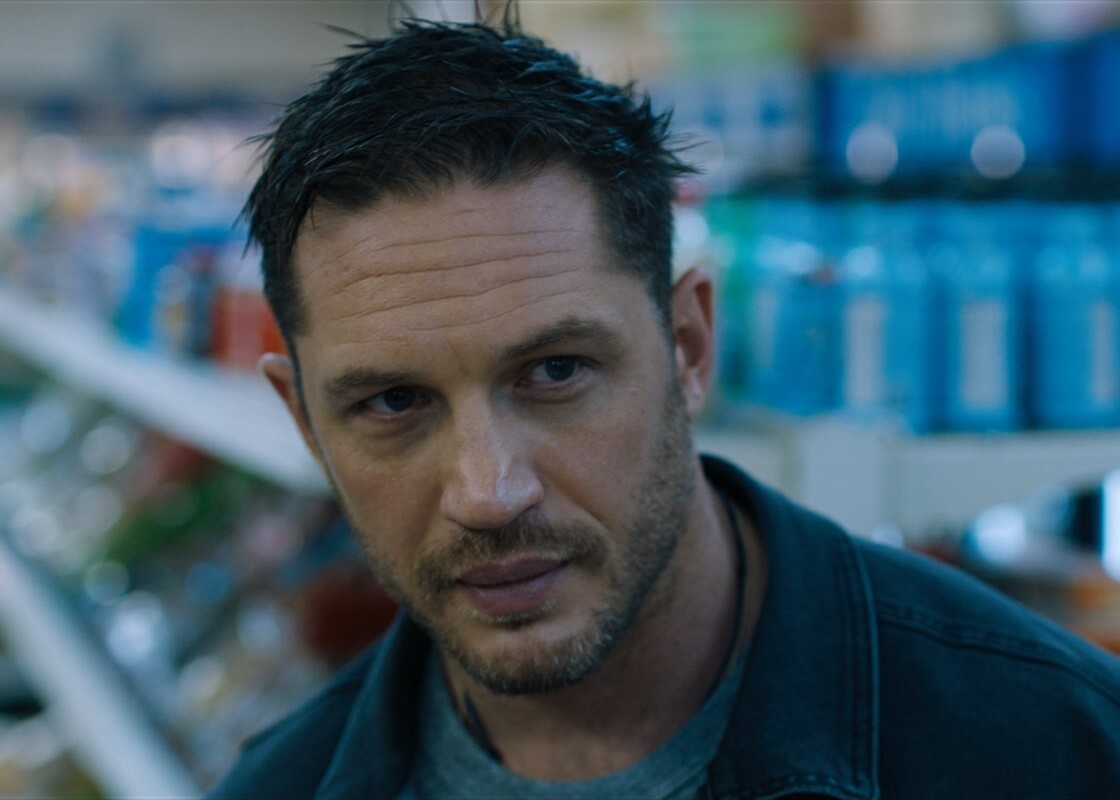
Venom: Let there be Carnage (3 Stars)


The Venom films aren't part of the Marvel Cinematic Universe. Or are they? The final scene of the second film, shown in the middle of the credits, suggests otherwise.

When I saw it in the cinema last year I expressed great disappointment and said I wouldn't buy it on Blu-ray. That was an emotional reaction. I bought it last week as the third film in the Prime Day offer, buy two Marvel films and get one free. I would have bought it eventually anyway. I'm too much of a Marvel fan to skip it. I might even buy "The Eternals", if the price is low enough, but the price will have to be very low to tempt me.

I'll shorten the film's name to "Venom 2". It's a film that I really wanted to like. I was biased in its favour before I saw it in the cinema, and I'm still biased now. I watched it today looking for positive things to say about it. There are a few. Tom Hardy's acting is superb. The fight scenes are good, though not up to the fight scenes in "Spider-Man 3", made way back in 2007. That's about it. The list of negatives is much longer:

  • The cinematography is dark and grubby.
  • The presence of an ex-girlfriend (Michelle Williams) is annoying.
  • The romance between Cletus Kasady and Frances Barrison isn't developed.
  • The humour is excessive.


At least, I hope the interaction between Eddie Brock and the Venom symbiote is intended to be funny. If not, it's just stupid. The symbiote repeatedly half-emerges from Eddie's body like a ridiculous sock puppet, arguing about what he wants to do. This never happened in the comics. The symbiote was in control and determined what was going to happen. If he wanted to eat a bad guy (or a good guy) he didn't talk about it, he just did it.

Venom should be shown as a cold-blooded killer. The film shouldn't be certificate 12, it should be rated R for violence. Film fans like to criticise "Spider-Man 3", but Sam Raimi got it right. He showed Venom and Eddie Brock feeding off one another's hatred. He also showed the symbiote as a Spider-Man imitator, an aspect missing in the new Venom films.

I shan't write any more about the film. It makes me sad just thinking about it.

Success Rate:  + 2.6

Order from Amazon.com
Order from Amazon.co.uk
Order from Amazon.de

Wednesday, 3 November 2021

Venom (5 Stars)


I should have re-watched "Venom" before going to the cinema to watch the sequel on Monday, but in retrospect I'm glad I watched them this way round. It reminded me that "Venom" is an excellent film, in contrast to "Venom 2", which is a mess. Marvel is losing its path. I used to feel excited whenever a new Marvel film was announced. Now I just groan. "Venom 2" was a new low point.

That doesn't mean that there aren't problems with "Venom" itself. Venom (the character) is introduced without any connection to Spider-Man. That's a shame, but I can live with it, because "Venom" (the film) is so good. It's a first class horror film.

Success Rate:  + 6.6

Order from Amazon.com
Order from Amazon.co.uk
Order from Amazon.de

Monday, 1 November 2021

Venom: Let there be Carnage (3 Stars)


I don't remember when I was so disappointed with a Marvel film. I enjoyed the first Venom film with Tom Hardly greatly, even though it was far removed from any connection with the comics. I expected the sequel to be similar, but it wasn't. The film is less violent. Marvel Studios have tamed down the character. The original film was a 16 certificate in America, whereas the sequel has a 12 certificate. The main problem is the humour. There's too much of it, especially in the first half of the film. Venom was never intended to be a comedy figure, a funny alien from another planet.

"Venom 2", as I prefer to call it, improves when it moves into the main fight scenes in the second half, but there are still repeated silly jokes. As soon as I got home today I read what other reviewers think. Interesting. Most say that it's better than the first film. I don't understand them. Did they watch the same film as me?

I'm in no hurry to buy "Venom 2" on Blu-ray. If it's shown on a streaming service I'll watch it again and write more about it. Until then, it's a film I'd rather forget. Marvel's next film, "The Eternals", is in the cinema next week. I hope it won't be as bad.

Unusually for Marvel, there's no post-credits scene, but there's a very important mid-credits scene. Don't miss it.

Thursday, 13 June 2019

Venom (5 Stars)


In this film we're kept in suspense. We don't see Stan Lee's cameo until close to the end. In the 11-second scene he's walking his dog in San Francisco. Whether he's supposed to be playing himself or someone else is uncertain, but whoever he is he's knowledgeable. The few words he speaks to Eddie Brock show that he knows he's carrying a symbiote inside him.

The question can be asked whether we can have Venom without Spider-Man. The much criticised "Spider-Man 3" is a more accurate portrayal of both Venom and Eddie Brock. I miss Spider-Man in this film. He should have had at least a brief appearance. Maybe the next film will make up for it.


When watching the film on Blu-ray today I was aware of a B-Movie feeling that I didn't notice in the cinema last year. For a moment I felt inclined to lower the rating, but then I reminded myself that I love B-Movies.


The symbiote jumps from person to person, including Eddie Brock's ex-fiancee Anne. It makes her look sexy. Very, very sexy.


Tom Hardy is one of my favourite actors. In my eyes he can't do anything wrong. He gives an almost psychotic depth to the character. I hope he'll be allowed to play the character again. Nothing speaks against it. The film was a big box office success, which is enough to green-light a sequel.

Success Rate:  + 6.6

Order from Amazon.com
Order from Amazon.co.uk
Order from Amazon.de

Thursday, 4 October 2018

Venom (5 Stars)


When I go to see a Marvel film in the cinema I usually write a review comparing it with the comics on which it's based. Not this time. As was already clear to be from the trailer, this film is so far removed from the Venom we know in the Spider-Man comics that it's not worth trying to reconcile it with the comics. It's a completely different character who just happens to have the same name and appearance as Venom in the comic books.

Carlton Drake is the CEO of Life Foundation, a company that's exploring space in order to find new worlds for colonisation as a solution to the Earth's overpopulation. That's a noble goal. One of his spacecrafts picks up four alien creatures from a race of symbiotes. Drake sees the symbiotes as a key to mankind's evolutionary development necessary for space travel. The symbiotes need a human host to survive in Earth's atmosphere, but humans need the symbiotes to survive in space.

Eddie Brock is a television reporter in San Francisco. He loses his job after accusing Drake of wrongdoing in an interview, but that isn't the end of his interest in Life Corporation. He breaks into the company to find proof that homeless people are dying as a result of being used in experiments. A symbiote accidentally bonds with Eddie, giving him supernatural strength and agility.

In the comics Venom is a villain. The film portrays him as an anti-hero. He has an appetite for eating living humans, but this can be channelled by only eating men who deserve to die.

I was warned before going to see the film that it had received poor reviews. After watching it for myself I don't understand why. Of the ten members of the Stuttgart film group present this evening, nine of us loved it. This is a fun film with fast moving action. The humour is toned down, not as brash as the comedy in the official Marvel Cinematic Universe. Tom Hardy, always an excellent actor, plays the role perfectly. This is one of the best films of the year.

Monday, 14 May 2018

I Feel Pretty (4 Stars)


This is a comedy with a serious message that most women can relate to.

Amy Schumer plays Renee Bennett, a technical employee for LeClaire, a large cosmetics company in New York. Her job is to manage the company website, so she's evidently intelligent, but that's not enough for her. Her body doesn't match the beauty ideals projected by her company, so she feels inferior. When she visits fashionable stores the saleswomen hint that she's too fat for their products. She goes to a fitness studio and immediately feels intimidated because all the other women are thinner than her. On her first visit the exercise bike breaks under her weight. She has trouble dating, not because men don't look at her, but because of her attitude: she assumes men don't want to look at her.

On her second visit to the fitness studio she falls off the exercise bike and cracks her head. This changes her. She thinks her appearance has changed completely, so much that her friends won't recognise her any more. She looks in the mirror and sees a beautiful person. Nobody else sees a change, but it's a complete attitude adjustment. She feels beautiful and she acts like it.

She applies for a job as receptionist in the LeClaire headquarters, a big wage drop, but she wants to be seen. She wants to put her beauty to work. At first this is alienating to the woman around her who think that her appearance doesn't match her attitude, but her self-confidence is so overwhelming that it's impossible not to like her.

Renee meets the company's CEO, Avery LeClaire, who is suffering from different self-confidence issues. She's constantly being belittled and told she's not good enough by her grandmother, the company's founder. Renee gives useful insight into a new product line, because she remembers what she felt like buying cosmetics before she became beautiful.


The film rolls through one comic situation after another, but it's very serious when it shows that the fashion industry's beauty ideals are flawed. Women look at pictures in magazines and feel they aren't good enough. Even women who fulfil the beauty ideals still think they're not good enough. An example is the model Emily Ratajkowski who appears in the film as a woman who thinks she doesn't look good enough. Self-confidence is sexy. That's what Renee discovers in the film, and I know enough about Amy Schumer to realise that she's playing herself.

The question about whether beauty is even important is hardly mentioned by the film, but I'll deal with it here. Many women consider it a feminist ideal to be able to succeed in life without being beautiful. I disagree. The women who say that are the ones who consider themselves unattractive. They work hard in their careers and congratulate themselves on succeeding without having good looks. That's wrong. They should start off by accepting themselves the way they are. Every woman can cry out "I feel pretty!" She can walk into her office every day with an air of self-confidence before she sits at her computer to do her job. Intelligence and beauty don't have to be contrasts, they can go hand in hand.

I hope I've managed to express myself well.

Wednesday, 3 January 2018

Greatest Showman (5 Stars)


One thing I've found over the years is that it's easier for me to write about films that I don't like than films that I like. I have no problems in making a list of a film's faults. On the other hand, when I love a film I get writer's block. This evening I've sat staring at the screen for at least 20 minutes, not knowing where to start.

I went to the cinema this evening expecting something good. That's the same feeling I had when I went to see "La La Land" 12 months ago. As soon as Hugh Jackman opened his mouth and began to sing I was amazed. That's how I felt after the first musical number of "La La Land". That's where the similarities stopped. "La La Land" slumped after the first 15 minutes and never got its magic back. "Greatest Showman" succeeds where "La La Land" failed.

I was amazed at how good Hugh Jackman can sing. I never expected it from him. Zac Efron is also an amazing singer and dancer, but I knew that already. He was probably the best dancer in the film. Michelle Williams has a weak voice, but it was good enough for the film. Rebecca Ferguson amazed me with her singing talent. How has she managed to keep it secret all these years? As well as that, many of the performers that I'd never seen before, young and old, are excellent singers.

The film is about the life of Phineas Taylor Barnum, from his impoverished youth to the creation of the world's largest circus. He began his business as a freak show, but slowly added animals and athletic performers to become a fully fledged circus.

It's a powerful emotional story. I felt my eyes moistening on two occasions.

A lot of the criticism raised against the film is the lack of historical accuracy. This piqued my curiosity, so I spent some time reading about P. T. Barnum. None of what I read contradicts the film, but his life has been simplified. He did many more things than were shown in the film, but to include them all would have added hours to the film. He had four daughters, not two, but that doesn't disturb me. Maybe situations were dramatised, such as the first meeting with his parents-in-law after his marriage, but that's usual in true stories.

This is a wonderful film, and I can't find any valid criticisms to make me think otherwise. I strongly recommend it to all my readers.

Saturday, 13 June 2015

Species (4 Stars)


At the moment I'm looking through my DVDs and picking out ones I haven't watched for a long time and want to watch again. At first it was only a few films, but my pile is gradually growing larger. "Species" is a film that I haven't seen for at least 10 years. I never watched the sequels, so I thought that it would be time to watch them as well.

Many people desribe "Species" as "Alien" with added nudity. They probably mean that as an insult, but it's not so far off. The people who say things like that as a criticism are the movie snobs who equate nudity with pornography, and even get critical when the nudity is in small doses and essential to the plot. I personally think that nudity is natural and should be used more often in non-pornographic films. Let me give a trivial example. I personally have the habit of walking around my house naked on hot days. If a film were ever made about my life it would be correct to show the actor who plays me sitting naked at home. I wonder who should play me. Maybe Jamie Foxx?

But let's get back to the film. It was made in 1995, and the events take place in the present day, i.e. in the mid-1990's. For more than 20 years the Earth has been broadcasting radio signals into space in an attempt to make contact with other intelligent life forms. Finally there are replies. The first reply is instructions on how to create a new artificial fuel source that is so revolutionary that it can solve the Earth's energy problems. The second message is a description of the DNA of an alien species, together with instructions on how to splice it with human DNA. That would have made me suspicious straight away. Didn't the scientists ever read the story about the Trojan War and the big horse? Obviously not. They inject the alien DNA into 20 human embryos. Most of them die, but one is born. It's a beautiful little girl who they call Sil. She grows into adulthood within a few days and shows supernatural strength, so the scientists panic and try to kill her, but she escapes.

Apart from having great strength, she is also very intelligent. While she wanders around Los Angeles she learns how to speak English and picks up all the other skills she needs to survive. That wouldn't be bad in itself, but she is also ravenously hungry, and she feeds on human flesh. She doesn't know who she is or what she is, but she has an instinctive desire to mate, so she looks for a man to impregnate her. Her beauty attracts men, and she soon realises that when she's nude they are unable to resist her. A team of scientists accompany a professional hitman to hunt for her and destroy her before she manages to procreate.

This is a high quality science fiction thriller with a top level cast. The story is realistic and well-filmed, with the possible exception of the final scene when Sil morphs into a lizard-like creature. She looks very similar to the creature in Alien, but the film's smaller budget lets it down, and the special effects are unrealistic.

Monday, 16 March 2015

Suite Francaise (3¾ Stars)


The film takes place in a village called Bussy, 20 miles from Paris, in 1940. I didn't realise until the end of the film that it's a true story. It was written shortly after the events by a French Jewess who lived in the village after fleeing from Paris, but it wasn't published until 60 years later when her daughter finally discovered what was contained in her mother's notebook.

The main character is Lucille Angellier (Michelle Williams), who lives in a large mansion in Bussy with her mother-in-law, a wealthy land-owner referred to only as Madame Angellier. Her husband has left to fight against the Germans, but when Germany conquers Paris in June 1940 she begins to despair that he's still alive. At first the war seems far away, but Bussy is overrun by a stream of refugees from Paris, and shortly afterwards a German regiment is posted in the village. Each household has to put up a German soldier, and as the owner of the largest house Madame Angellier is assigned the highest ranking German office, Lieutenant Bruno von Falk (Matthias Schoenaerts).

The Germans are the enemies, and Lucille expects to have an inhuman monster living in her house. She's surprised when she meets a highly sensitive man who spends the evenings sitting at her piano composing a piece of music that he calls the "Suite Francaise". A romance develops between the two.

The film is a very honest portrayal of the situation during the German occupation of France. It's usual for the opposing sides in a war to demonise one another, but the fact is that the soldiers who fight for a country are just normal men who have more in common with the enemy soldiers than they do with their warmongering leaders. This is especially the case if the soldiers have been conscripted. While I lived in Germany I had a friend whose father had been part of the occupying army in France. His father was a religious man, and while in France he had visited French churches, sitting side by side with the enemy. War is something that divides people who would otherwise have been friends.

I enjoy films based on true stories, even if they lack the tidy resolution of purely fictional films. Real life never ties up loose ends, and there's rarely a happy ending. My only real criticism of the film is that the romance isn't as tender as the picture above suggests. When Lucille and Bruno are together they seem to be driven by lust rather than love. That clashes with the love of classical music that first draws them together. This must have been an interpretation of the film's screenwriters, because I doubt that the authoress knew the couple well enough to know that when in private they were tearing one another's clothes off to have a hasty fumble.


My praise goes out to Sam Riley, who is barely recognizable as the French farmer Benoit. His wife Alexandra Maria Lara plays a small role as a Jewish refugee, probably the authoress herself. Tom Schilling ably portrays the swaggering German lieutenant Kurt Bonnet. He's fast developing into one of Germany's top actors. Heino Ferch, probably my favourite German actor, plays a small role as the commander of the troops stationed in Bussy. Matthias Schoenaerts is a Belgian actor who is currently making a breakthrough into the American market, and he certainly has the talent to go all the way to the top. But all the other actors are eclipsed by Michelle Williams. After all these years I still associate her with the TV series "Dawson's Creek", which was her first big role at the age of 18. I never realised that she would develop into such a competent actress. She has a cool composure that makes her able to express emotions with the slightest change of facial expressions.

Thursday, 3 April 2014

TV Series: Dawson's Creek


I recently began to watch "Dawson's Creek" again. It's a series I can keep returning to, even though I have to admit that after the first two seasons it wasn't as good. Somewhere in the third season the stories began to turn in circles and never stopped. But maybe the reason is that I could relate best to the early years when the cast was youngest. Or at least, when the characters were youngest. When the series began the four school friends were supposed to be 15, although the actors playing them were between 18 and 21.

It's the series' teen angst that fascinates me most, especially the character of Dawson Leery himself. I can relate to him. He thought about everything, he analysed everything, and he understood nothing. I miss those days. Sure, I knew a lot less than I do now, but I do miss those days of naive innocence. I just watched the episode in the second season in which it's Dawson's 16th birthday. He went to a blues club, got drunk, then went home to his birthday party and insulted everyone, including his parents. I don't remember what happened on my 16th birthday. It can't have been as memorable. I wish I could turn back the clock and be back on that day now.

My teen years were a difficult time, especially between the ages of 16 and 20. When I was 16 I had my first girlfriend. And my second. And my third. I was a late starter, but I quickly became so successful with girls that my friends envied me. Maybe it was my long blond hair? Nobody knew about the suffering I had inside. When I was 18 my mother developed a drinking problem. I tried to kill myself because I couldn't deal with what she had become. When I was 20 she left home to be with another man, and she seriously expected me to go and live with her. The poor deluded woman. I believed in eternal love. I believed in happy families. I was naive then. I wish I could be like that again.

It's ironic. Despite all the pain, I wish I could be back in those years. I wish I could be trapped in a time loop from the ages of 16 to 20. I feel like I'm 16 inside, whatever age I might look. I want to win back the carefree attitude of that age. I want the angst back. Angst? I invented it.

Tuesday, 4 February 2014

Synecdoche, NY (5 Stars)

Cotard's syndrome is a mental disorder in which people hold a delusional belief that they are dead, do not exist, or are decaying. While this does not necessarily lead to schizophrenia, such people are detached from the world and have strong fantasies which they use to replace reality.


This is one of the best films ever made. The combination of Charlie Kaufman's brilliant story and the incredible acting by Philip Seymour Hoffman make it the perfect film. It's difficult to believe that it flopped at the box office. It cost $20 million to make and only earned $4 million. Roger Ebert called it the best film of the decade, and many other film critics said it was the best film of 2008. So what went wrong?

Maybe the film is just too complex for the average popcorn-munching movie-goer. The following review contains some spoilers, but not too many to prevent you enjoying the film after reading it. Make your own mind up whether you want to carry on reading after the picture below.


Philip Seymour Hoffman plays Caden Cotard, a New York playwright who thinks he's dying. He is convinced that he has cancer, that he's going blind and that he's having epileptic fits. The first time I watched the film I believed he really was ill, since we see blood in his stool, but after seeing it again I realised he was imagining it, he's only a malade imaginaire. Ironically, at the end of the film he's one of the last people left alive in a city of corpses.

Caden's wife Adele is a world famous artist who paints miniature pictures that can only be seen through a magnifying glass. At the beginning of the film she leaves Caden and goes to live in Berlin with their 4-year-old daughter, Olive. Shortly after this Caden's skills as a playwright are acknowledged by him being awarded a grant which is big enough for him to make the most extravagant play ever performed. He buys an enormous warehouse in which he rebuilds New York and gathers a cast around himself to make a play about his own life. Each day, as things happen to him, he adds new events to the play. After 17 years of rehearsing the cast members complain that he's still not finished and ready to invite an audience, but he asks them to persevere. After that the film doesn't give any details about the passing of time, but my guess is that he works on the play for at least 40 years.

During this time Caden has an affair with Hazel, a box office girl who he later promotes to producer. He gets married again to Claire, an actress. These are events featured in his play, so he has to hire actors to play himself and Hazel, but he asks Claire to play herself, much to her distress when the other Caden is touching her. The actor playing Caden makes a play about his own life, so he builds a warehouse inside the warehouse to use for a large scale play. After about 20 years Adele returns to New York. Caden goes to visit her apartment, but she isn't at home. A neighbour mistakes him for the cleaning lady, Ellen, and gives him the key. Over the next months (or is it years?) he visits Adele's apartment every time she goes out and cleans it for her. This too is featured in his play, although he uses a real woman to play Ellen. When the actor playing Caden commits suicide, Caden decides to give up directing the play and become the actor playing himself. The actress who had been playing Ellen takes his place directing the play, and she orders all of his actions, both inside the play and in the real world.

Whooo! Is that confusing? Yes. Is it brilliant? Yes.

Caden and Caden and Hazel and Hazel

Monday, 29 November 2010

Dick (4 Stars)


The Watergate affair as told through the eyes of the two 15-year-old girls who used to walk President Nixon's dog. During their time in the White House they got to know all the top politicians and became the president's friends. After hearing a tape in which he shouted at his dog they decide to expose him and become instrumental in forcing him to resign.

I feel tempted to give half a star less because the sexiest scene in the film is ruined by being shown at the end with the credits rolling over it. If you've seen the film you know what I mean.