Showing posts with label Russell Crowe. Show all posts

Monday, 11 May 2026

Nuremberg (5 Stars)


This is a powerful historical drama about the Nuremberg trials. It focuses on the army psychologist Douglas Kelley, who was assigned to monitor the mental health of 22 senior Nazi officers who were awaiting trial. Even though he dealt with all of them, the film shows only his dealings with Hermann Göring, Hitler's second-in-command.

Göring was highly intelligent, charismatic and a narcissist. Instead of hiding after the war, he surrendered to the allied troops, because he was certain that he would never be found guilty in a court of law. In actual fact, this is discussed at length in the early scenes. There was no legal precedent for putting the leaders of another country on trial. New laws had to be created to make the trials possible. As Göring correctly says, "I am a prisoner because you won and we lost, not because you're morally superior". At least, that's almost correct. The Nazis were morally inferior because they murdered six million Jews, but if Germany had won the war it would probably have been kept secret.

The performances by Russell Crowe and Rami Malek are brilliant. We can feel Göring's charming arrogance in every mannerism played by Crowe. Rami Malek plays Douglas Kelley as a slightly unhinged man, which is the characteristic of almost every psychiatrist.

Saturday, 15 November 2025

Kraven the Hunter (4 Stars)


Despite having given this film a 4 star rating eleven months ago, I could hardly remember anything about it. Strange. So I checked my review, and it didn't help at all, because it was spoiler-free. As it should have been for a new film. Seeing it today was like watching it for the first time.

Sergei Kravinoff (Aaron Taylor-Johnson) is portrayed as a hero, even though the film posters had a tag line that suggested he would turn to evil: "Villains aren't born, they're made". The posters were probably designed before the film was completed by someone who had no idea what the plot would be. Not everyone in Hollywood is competent.

Sergei is shown as a boy growing up with a father who was a ruthless drug dealer. He's supposed to follow in his father's footsteps and take over the business, but his conscience prevents him. He doesn't want to become the same as his father. He runs away from home, leaving his younger brother Dimitri behind. This plagues him for years, and eventually leads him back to his family home.

The film's villain is the Alexei Sytsevitch, a crook who's a deceitful ally of Sergei's father. He's the super-villain known in Marvel Comics as the Rhino. Apart from a certain physical resemblance he doesn't have much in common with the comic book character. In the film he's an intelligent criminal, but in the comics he's a simple minded brute.

In the course of the film Dimitri develops into the Chameleon, one of Marvel's oldest villains.

Kraven is a hunter. It's not a matter of him being attacked by the Rhino or the other bad guys. He tracks them down. 

Aaron Taylor-Johnson puts on an excellent performance as Kraven. The film didn't deserve to be a box office flop. Put it down to Marvel Fatigue. Is there a way for Kraven to be adopted by the MCU? I hope so.

Success Rate:  - 1.8

Order from Amazon.com
Order from Amazon.co.uk
Order from Amazon.de

Sunday, 15 December 2024

Kraven the Hunter (4 Stars)


I've reached the point where I don't expect Marvel films to be good. Most of them are average quality at best. So I went to the cinema today expecting nothing, and I walked out pleasantly surprised at the high quality. "Kraven the Hunter" has received many negative reviews, but most of them were written before it was released. Were the critics given advance screenings? Or did they just assume it would be bad and wrote their reviews without seeing the film? I suspect the latter.

The theme of the film is identical to "Wicked", which I watched yesterday. Kraven is a villain in Marvel comics, who first appeared in "Amazing Spider-Man" in 1964. The film shows him as a good man with noble motives. The posters have the tagline, "Villains aren't born, they're made". We don't see him developing into a villain, so that's something we could expect in "Kraven Part Two", if it's ever made.


At the moment it seems unlikely that there will ever be a sequel. Sony has announced that it will no longer continue with its Spider-Man Shared Universe (SSU), a series of films featuring characters connected with Spider-Man. Most of them were box office failures, whether the reason was Marvel fatigue or simply poor quality. It's a shame that the decision was made to cancel the Kraven character even before the film was released. Aaron Taylor-Johnson puts on an outstanding performance, as always, and he deserves a second chance. Maybe he can appear in the Marvel Cinematic Universe (MCU), if they ever step back and stop making multiverse films.

Saturday, 23 November 2024

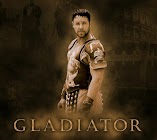
Gladiator (5 Stars)


My son Benjamin told me that he intends to go to see "Gladiator 2" on Monday, so he suggested that we rewatch "Gladiator" today. That was a good suggestion. It's one of my favourite films, included in my top 100 film list. Admittedly, it's in the bottom half of the list, but every film in my top 100 is a work of genius. There are even brilliant films that aren't quite in the top 100 because there isn't enough room for them. I actually have a top 200 list on my computer, but the bottom 100 are unordered. They're just a list of a hundred films that I don't want to forget because they're almost good enough to be in the top 100. Sometimes I change my mind and push a film into the top 100, but it's always with a heavy heart, because it means that another film has to be omitted.

"Gladiator 2" has been in the cinemas for ten days, but I still haven't gone to see it. I'll probably get round to it soon, but I admit that I have a certain aversion. The thought of making a sequel to an excellent film that's perfect in itself puts me off. There's no Russell Crowe, there's no Joaquin Phoenix. That's obvious, because both their characters died in the first film, but do you see what I mean? It's just an unrelated film which also takes place in an arena. If the film had been given a completely different name, it wouldn't have bothered me. Calling it "Gladiator 2" suggests that the film is something it isn't.

I've avoided reading reviews of "Gladiator 2" because I'll go and see it eventually. The only feedback I've received is the opinion of my friends who've seen it. They're unanimous. They all say, "It's good, but not as good as the original". That's what I expected. I'm sure it's a good film, though not good enough to enter my top 100. I just have to criticise my friends for calling "Gladiator" the original film. It's not the original of anything. It was a standalone film.

Success Rate:  + 2.5

Order from Amazon.com
Order from Amazon.co.uk
Order from Amazon.de

Tuesday, 18 July 2023

Thor: Love And Thunder (3½ Stars)


This is the 29th film in the Marvel Cinematic Universe (MCU). I gave it a lukewarm review when I watched it in the cinema last year. Now that I can finally watch it on Blu-ray I wanted to like it, I made a real effort to appreciate it more than last year, but the best I could do was increase the rating by half a star. The film's biggest problem is the main character, Thor himself. He's portrayed as being arrogant and a fool. I can put up with the arrogance. That's something we see at times in the comics. But foolish? Never! He was always a noble God, with or without his arrogance. I can see what Taika Watiti wanted to do as director and co-writer. He wanted to pull Thor down to our level, so we can relate to him better. That's a mistake. He's a God, so there should be a distance between him and the viewer.

But there are also questions about his godhood which remain unanswered in the film. In the comics we read that he's the God of Thunder. That's it. No explanations. He's a God, the same God that the people in northern Europe used to pray to. When Thor was introduced into the MCU the studios were nervous about insulting people, so it was expressly stated (in words spoken by Phil Coulson) that Thor isn't really a God, he's an alien. I'm not happy with that, but in "Love and Thunder" we meet a character called Gorr who claims to be a God killer. So Gorr disagrees with Phil Coulson and says that Thor is a God after all?


It's all a matter of definition. What is a God? Can we make a definition which isn't specific to just one religion? Is a God the person who created the universe? That would exclude Thor. Is a God someone that people pray to? That would include Thor. Is it someone who's immortal? That's a tricky one, because it's conceivable that human medicine can one day promise immortality. Is a God someone who lays down teachings to live by? Maybe, but some religions would call that person a prophet. I don't have an answer. Gorr could evidently tell the difference. For Gorr anyone is a God if he says he's a God and has followers who agree he's a God. That's a very simplistic definition, with obvious problems, but it works for Gorr in the film.

Let's say, for example, that I stood in the street and told people I'm a God (with an article). The first reaction would be that people say I'm mad. But let's get past that. Let's say that people who disagree want to discuss it with me. In order to convince me that I'm not a God, they first have to know what a God is. Many cults begin with a person claiming to be a God and others believing him.


In "Love and Thunder" Jane Foster carries Mjolnir and possesses the power of Thor. She even calls herself Mighty Thor (without an article). Does this make her a God? Maybe not, because the hammer is also killing her. That's one of the things that doesn't make sense in the film. In a book of Norse legends Jane reads that Mjolnir promises health. She's suffering from terminal cancer, so she travels to Tonsberg (New Asgard) in Norway to take the hammer. It gives her the power of Thor on a temporary basis, but it's actually sucking the strength from her body, speeding up her death. Mjolnir should do better. The problem lies with Marvel Studios, in particular Kevin Feige. He wanted to be modern and present a female Thor, but he wasn't brave enough to do it permanently, so he had to kill her off.


There's a passionate kiss between Thor and Mighty Thor. How passionate is the kiss? Are they using tongues? It looks like they aren't. Maybe Gods don't use their tongues. Or maybe Natalie Portman agrees with Kristin Kreuk that it's not professional.


Here's a small feature that was introduced in the previous Thor film, "Ragnarok". There's a play about the events of previous films. In this case Melissa McCarthy is playing Hela. She looks good, but I still prefer Cate Blanchett. Melissa is only pretending to be the God of Death.


How the mighty have fallen! In the comics Thanos claimed to be God (without an article), although he doesn't say this in the films. Nevertheless, he was all powerful. A few years have passed, and now an imitation of his Infinity Gauntlet adorns an ice cream parlour. I wonder if it tastes good. I'll have to try it the next time I'm in Tonsberg.

Success Rate:  + 1.0

Order from Amazon.com
Order from Amazon.co.uk
Order from Amazon.de

Friday, 8 July 2022

Thor: Love and Thunder (3 Stars)


I'm writing this review with a very heavy heart. I'm a Marvel fan. I always have been. I started reading Marvel comics when I was six and bought the comics regularly until I left university. (After that I moved to Germany, and the comics were less easily available at that time). The Marvel films made in the 1980's and 1990's were disappointing, but in the 2000's high quality, big budget films based on the comics were finally made. "X-Men" was the turning point in 2000, and the films have kept up momentum ever since.

But what's happened now? The Marvel Cinematic Universe (MCU) is producing flop after flop. They should have quit while they were ahead. "Avengers Endgame" should have been the last Marvel film, but corporate greed caused Marvel to take more and more risks.

The first three Thor films were good. They weren't perfect, but they were highly enjoyable action romps. So what went wrong with the fourth film, which I saw in the cinema this evening? Too much CGI. Too much humour. Too many characters. Too much humour. Or did I mention the humour already?

I like comedies. Anyone who reads my blog regularly knows that already. But Marvel isn't about comedy. Maybe there can be occasional jokes, but the repeated humour in "Love and Thunder" just got on my nerves. The cinema was packed, and the audience was laughing at the silly little monsters in the early scenes. Most of the audience, that is. I was groaning.

I can't say too much without giving away spoilers. All I'll say for now is that the film is a failure. It's tempted me to never watch another Marvel film.

Sunday, 21 March 2021

Gladiator (5 Stars)


This is a film made out of time. It could have been made in the 1950's, when big budget historical films were popular. It has the same style to it as "Ben Hur" and "Spartacus". The film's generic title pays homage to those films. It could be argued that it has greater poignancy than "Spartacus". Spartacus was a slave who became a rebel leader. He started out with nothing before rising in importance. The gladiator Maximus in "Gladiator" moves in the opposite direction. He begins as a general, a trusted friend of the Roman emperor, and then he's reduced to a slave who has to fight in the arena.


There's no doubt that Russell Crowe puts on an incredible performance, but for me the real star of the film is Joaquin Phoenix as Emperor Commodus, the man who becomes Rome's emperor by strangling his father. He's such a complicated character, and Joaquin Phoenix portrays this perfectly. He loves his father, but he kills him because he doesn't feel loved in return. He tries to kill Maximus, because he knows that his father loves him more. He loves his sister and hopes to marry her to produce a pure blooded heir. In so many ways Commodus is a despicable creature, but the way he's played makes us want to weep with him.


I don't think Joaquin Phoenix has found his signature role yet, but this is the closest he's got to it so far.

This is one of only four films I saw in the cinema while I lived in America. The other three were "Jurassic Park: Lost World", "Austin Powers: International Man of Mystery" and "Titanic". Four films in three years is a poor showing. I wasn't such a big film fan back them. Since 2014 I've been going to the cinema on average twice a week, or at least I used to, before the Coronavirus closed the cinemas. The German government promised that cinemas can reopen on March 22nd (tomorrow), as long as the Inzidenzzahl remains below 50. That's the number of new Coronavirus infections per 100,000 people in a seven-day period. Unfortunately, the Inzidenzzahl has shot up from 46.2 to 81.1 over the last three weeks. Things are getting worse, not better.


Success Rate:  + 2.5

Order from Amazon.com
Order from Amazon.co.uk
Order from Amazon.de

Here's a summary of the films in my top 100 countdown so far. You don't have to tell me there's a hole in the list. I know. I've been watching some films out of order, for various reasons.

71. Enter the Dragon (1973)
72. Pink Floyd: The Wall (1982)
73. The Legend of 1900 (1998)
74. Young Frankenstein (1974)
75. The Virgin Psychics (2015)
76. The Man who would be King (1975)
77. John Rabe (2009)
78. The Paperboy (1994)
79. The Walk (2015)
80. Perfume (2006)
81. The Green Mile (1999)
82. Little Nicky (2000)
83. Monster (2003)
84. Gloomy Sunday (1999)
85. We are the night (2010)
86. Dark Water (2002)
87. What to do in case of fire (2001)
88. The Shining (1980)
89. Azumi (2003/2005)
90. The Mummy (1999)
91. Wie Feuer und Flamme (2001)
92. Attack of the 50 Foot Centerfold (1995)
94. Titanic (1997)
95. Mad City (1997)
96. Leon (1994)
97. Iron Rose (1973)
98. Kick-Ass (2010)
99. Rush Hour (1998)
100. Bella Martha (2001)

Tuesday, 26 February 2019

Boy Erased (4 Stars)


Most times when I walk out of the cinema I already know how I'm going to rate a film. I already know if I love it, hate it or it's somewhere in the middle. I've given "Boy Erased" a preliminary four star rating, but it's possible that I'll increase its rating next time I watch it. It's definitely a film that I need to watch again.

The film is the true story of an 18-year-old boy who was sent to Gay Conversion Therapy by his parents. This is a programme that is carried out by Christians in the USA on the assumption that homosexuality is an illness that can be cured. I'd heard about it in the past and considered it to be harmless nonsense. The first ten minutes put me right. I couldn't believe that the Gay Conversion centre, Love In Action, could really be so bad. If it hadn't been a true story I would have accused the film of exaggerating.

When Jared Eamons checked into the centre all his personal possessions had to be handed over. He was told that each day someone from the contacts list on his mobile phone would be rung at random to check who he was talking to. That alone would have made me turn round and walk out. But it got worse as the film progressed. In one scene a boy who is considered unrepentant has to kneel while the centre's staff and his family members, including his young sister, hit him over the head with their Bibles. All I can say is that anyone who uses a Bible as a weapon has never read what's written between the pages.

Although homosexuality is a sin in the eyes of the Christian church that Jared belongs to – Baptists? – the emphasis is on its status as an illness which can be cured by a mixture of psychotherapy and Christian preaching. The centre's leader is convinced that homosexuality is the result of sins in the immediate family, such as drugs, alcohol, pornography and similar matters. He also insists that homosexuality is caused by hatred towards your father. As part of the therapy the young men have to sit and yell at their father (represented by an empty chair) to let their anger out. When Jared says he can't do this because he's never hated his father he's accused of lying.


Jared's father is the pastor in the church he goes to. He's not a bad man. In fact he's a very good man, not at all hypocritical, and he loves his son. He's just somewhat confused. When he finds out his son is gay he wants to help him overcome his illness. He means well. He wouldn't have hit his son with a Bible. He's not that bad.

When Jared enters the centre, one of the first things he hears is the leader saying, "You weren't born gay, that's a lie. It's a choice". I disagree with both of these statements.

In recent years it's become common to say that people are born gay because they have a homosexual gene. That's nonsense, from a purely evolutionary standpoint. Evolution is all about the survival of the fittest. The strong survive, the weak die. This happens through procreation. A homosexual gene, if it existed, would hinder procreation and only be passed on by a person acting against his genetic makeup or as a recessive gene. Any gene which makes procreation less likely is a weak gene, which might survive a few generations, but over the course of a thousand years it would die out.

The concept of a homosexual gene isn't the result of scientific studies. It was invented to make people accept homosexuality by saying, "Everyone has to accept homosexuals because they were born that way". I don't think the tolerance of one's fellow man needs such artificial props. The people who say that there's a homosexual gene don't realise that the existence of a weak gene would mean that homosexuals are inferior. I refuse to believe that homosexuals are in the least inferior to heterosexuals. They're in every way as valuable as everyone else.

It's also foolish to call homosexuality a choice. Nobody chooses what he likes and doesn't like, whether it's music or food or sexual partners. Instead of choice I would use the word preference. Choice implies a positive action, whereas preference is something passive. Where does a preference come from? It can come from anywhere, except I would say it's post-existence. It might come from childhood experiences, it might come from pre-natal experiences, or it might come purely at random. These preferences only become apparent to others when they're strong enough to be expressed, so by then it's too late to change them. Brainwashing a person with Gay Conversion Therapy might work, but even if it does force a person to think differently it will do a person more harm than good.

Preferring sex with people of one's own gender is a sexual preference like any other. For instance, I have a sexual preference that leans towards masochism. I don't know where this came from. It's not a choice. The earliest I can remember is when I was eleven years old, and I found myself sexually aroused by comics in which Supergirl was hitting men. This feeling has remained with me all my life. When I was in my late teens I thought something was wrong with me and made a conscious effort to suppress these feelings, but I couldn't. It wasn't until I finally spoke to someone about it when I was 21 that I realised my masochism was normal. I learnt to accept myself.

Homosexuality is normal. Suppressing homosexuality is wrong. Suppressing homosexuality will make you ill. If you choose to be heterosexual when your natural preference is to be homosexual you will never be happy.

Sunday, 12 August 2018

Gladiator (5 Stars)


When it comes to films, my son Benjamin is in the same place that I was in 2002. I rarely went to the cinema, at most four times a year. I watched films on television, and I occasionally borrowed films on VCR tapes from Blockbuster. There were some films that I liked, but I didn't really know films, if you understand what I mean. In 2002 I hadn't even heard of "Pulp Fiction", which shows how limited my film knowledge was. Benjamin doesn't often go to the cinema – mostly when I drag him along – and he watches most of his films on Netflix.

Benjamin is visiting me this weekend, so I sat with him watching "Gladiator". I occasionally glanced sideways at him and saw he was sitting with an expressionless face. I thought he might be bored, so after an hour I paused the film and asked him what he thought. He replied, "This is one of the best films I've ever seen". His face was blank for the rest of the film, but I'd misinterpreted him. He was overwhelmed. The action, the emotion, the opulent backdrops, it was something he'd never seen before. My son might not be a big film fan like his father, but he has good taste. When we spoke afterwards he was wildly enthusiastic about what he'd just seen.

I don't know whether he will ever be a film fan like me. He's more interested in computer games, mostly on his Play Station 4. That's a time-consuming hobby which leaves little opportunity to do anything else. Let's see how he develops. At his age I played a lot of computer games. I had my first PC in 1990, and I spent a lot of time playing adventure games. I couldn't go back to it now. I've moved on.

Order from Amazon.com
Order from Amazon.co.uk
Order from Amazon.de

Thursday, 15 June 2017

The Mummy [2017] (4 Stars)


When I first heard about a remake of "The Mummy" being planned I groaned. After all, the previous remake starring Brendan Fraser was so excellent that it didn't need to be made again. Then I heard that the film would star Tom Cruise as the leading character, the archaeologist, so I groaned even more. I avoid films with Tom Cruise unless there's a very good reason to see them. Then I finally saw the trailer, and I saw that the mummy is a woman this time, making it a distinctly different film from the previous versions. That was the very good reason that I needed. An insanely powerful woman trying to conquer the world? That's hot.

So I went to see the film. I was pleasantly surprised to see that Tom Cruise wasn't as bad as usual. He managed to play the role without grinning too much. I was disappointed with the portrayal of the female mummy. Rather than conquer the world for herself, she's planning to raise the God Set in human form to give him control of the world. So the alpha female is really just a beta female subjecting herself to the big, bad alpha male. That's disappointing.

"The Mummy" (2017) can't properly be called a remake of the 1933 film, because the story deviates enough from the original to make it a new film. It's intended as a reboot of Universal Studios' mummy franchise and a part of a reboot of the 1930's Universal monsters, an interconnecting universe that will include Count Dracula, Frankenstein's monster, the Wolfman and various other monsters from the Golden Age of Cinema.

Why are they doing this? It's because they're running out of ideas. Universal Studios has no inspiration for new blockbusters, so they're repeating what made them money 80 years ago, in the hope that history will repeat itself. That's sad. I'm sure there are talented individuals out there who would be able to write riveting stories that would draw people into the cinemas, but they're not given a chance.

Today it's all about "cinematic universes". Marvel Studios started the ball rolling by making films about different characters who all live in the same universe and interact with one another. Warner Bros. said "We can do that too" and jumped on the bandwagon by making a film universe based on the DC Comics characters. Universal Studios doesn't want to be left behind, so they've dredged the bottom of their film archives looking for something they can use. And this is it. In order to let people who don't read film magazines know that it's a new universe, they threw Dr. Jekyll and Mr. Hyde into the film.

As a standalone film "The Mummy" is entertaining. It's no masterpiece, but I think the critics have been too harsh on it. Nevertheless, as a reboot it's totally unnecessary.

Sunday, 11 May 2014

Gladiator (5 Stars)


After watching "Pompeii" recently I thought I should watch "Gladiator" again. This film is so much better. It's an epic that keeps the viewer entranced from beginning to end. I'm actually surprised that I haven't watched it for so long. It's a film that deserves repeated viewing.

The film is set at the end of the second Century A.D. in the reign of the emperor Marcus Aurelius. Russell Crowe plays General Maximus Decimus Meridius, who was responsible for conquering Germania. Knowing that he is about to die, Marcus Aurelius entrusts Maximus with the task of turning power over to the Senate after his death. Before this can be made public knowledge, the emperor's son Commodus strangles his father and declares himself the new emperor. Maximus refuses to acknowledge Commodus, so he is sentenced to death. He escapes and kills his executioners, but while on the run he collapses from exhaustion and is captured by slave traders. Maximus is sold as a gladiator, and he soon becomes the mightiest fighter in the arena.

The film is both epic and moving. Even though Russell Crowe is the main character, the actor who impresses me the most is Joaquin Phoenix as Commodus. Despite being evil he wins our sympathy, when we see how he is suffering from the perceived lack of love from his father. In 2001 the film was nominated for 12 Oscars and won five, including best film.

Apart from the names of the emperors, the film doesn't keep to historical accuracy. Marcus Aurelius is portrayed too positively. In the film he wants to end the dictatorship of the emperors, but he was actually a tyrant who wanted Rome to continue as a dictatorship. For more than 100  years emperors had chosen a military general as successor, but Marcus Aurelius went against tradition by appointing his son as his heir, the exact opposite of what is shown in the film. Marcus Aurelius wasn't murdered, he died of natural causes. Commodus reigned for 12 years after his father's death, not the seemingly short time in the film. Commodus' madness was even more extreme than in the film. He claimed to be a God on Earth, the reincarnation of Hercules. During his reign he renamed the months of the year to match his own 12 names, Lucius Aelius Aurelius Commodus Augustus Herculeus Romanus Exsuperatorius Amazonius Invictus Felix Pius. He frequently fought in the arena, usually naked.


Can anyone tell me what the point is of selling a Blu-ray disc inside a paper box which has artwork identical to that of the inlay of the amaray case inside? Look at the picture above. They're exactly the same. The backs are identical as well, take my word for it. I don't like the paper boxes anyway, because they are never sealed, and they're often already scuffed when I buy the Blu-ray. The amaray case is sealed, and then the sealed case is put in the box. Even if I have an undamaged box, repeatedly taking the case out and putting it back in damages it. Usually I throw the paper box away. If it at least looked different there would be a point in keeping it. As I see it it's just an unnecessary increase in the production costs and a few more trees cut down.

Monday, 7 April 2014

Noah (3½ Stars)


It's difficult to see what the target audience was when Darren Aronofsky decided to write and direct this film about the Biblical character Noah. He could have kept closely to the Biblical story, which would have pleased Christian fundamentalists while irritating the evolutionists, or rather the anti-creationists, as I prefer to call them. He could also have written a modern story, trying to explain Noah's adventure in the light of modern scientific theories, which would have pleased sceptics but annoyed creationists. Instead of this he wrote a fantasy epic, made up of 50% Bible and 50% his own ideas. Judging by the first reviews I've read, this middle path seems to have alienated everyone.

The trouble with filming the story of Noah is that even though it was a major event in human history, very little is said about it in the Bible. Mr. Aronofsky felt the need to add things to pad out the story and make it more dramatic. I can just about accept this as a necessity to make a good film, but in my opinion he went too far when he added things that contradicted the Biblical accounts.

I think everyone knows the story, so I won't shy away from spoilers in this review. We read about Noah in the Bible from Genesis 5:28 to Genesis 9:29. He received a prophecy from God that the world would be destroyed by a flood, so he built a giant ship, an "ark", in which he saved himself, his family and all living creatures that walked on the Earth or flew in the air.

Now let's talk about my problems with the film itself. Noah is assisted in building and defending the ark by "watchers", who are the remainder of fallen angels. Maybe they are included as a reference to Genesis 6:4, "The Nephilim were on the earth in those days, and also afterward, when the sons of God went to the daughters of men and had children by them. They were the heroes of old, men of renown". There is a lot of theological controversy about the meaning of this verse, but the use of the same word in Numbers 13:33 shows that the Nephilim were giants. A common interpretation of the verse is that before the Flood the fallen angels ("sons of God") mated with women, and their offspring were superior in size and strength to normal pure bred humans. The "men of renown" would be the heroes of the old myths, men such as Hercules. That's a possible interpretation. The film's portrayal of the Nephilim as stone golems who had crawled out of Tolkien's imagination is highly speculative.

It is very strange that Mr. Aronofsky made Tubul-Cain a stowaway in the ark. In Jewish traditions Tubul-Cain was Noah's brother-in-law, the brother of Noah's wife Naamah. This story, though denied by many scholars, could have been used to add poignancy to the film. It could have been Noah's wife trying to save her brother, not Ham having sympathy with an enemy. But placing Tubul-Cain in the ark was just a cheap trick to add an extra battle to the end of the film.

To me it's incomprehensible why the story of Noah's sons and their wives is so mixed up. Genesis 7:13 is very clear on the subject: "On that very day Noah and his sons, Shem, Ham and Japheth, together with his wife and the wives of his three sons, entered the ark". It wasn't just Noah, his wife, three sons and Ham's wife, as the film portrays it. It's totally unnecessary for the film to make Ham the father of his brothers' wives, then wander off alone. In the Bible Ham had four sons after the Flood, Cush, Mizraim, Put and Canaan (Genesis 10:6), whereas Shem had five sons and Japhet had seven sons. Presumably they had daughters as well, but the Bible rarely considers women important enough to name them.

Overall, I have to praise the film for the good acting. My relatively low rating is a punishment for the inaccurate screenplay. It could have been a lot better if the story had stuck closer to the Biblical account.

Sunday, 2 March 2014

A New York Winter's Tale (3 Stars)


This film was released in America as "A Winter's Tale", but in this case I prefer the full title of the international version. It's a fairy tale involving angels and demons in New York, with a guest appearance by Lucifer and a dog that looks like a horse.

The story begins in New York in 1895. Colin Farrell plays Peter Lake, a man who was abandoned in a boat as a baby when his parents were refused entry into the USA on health grounds. He grew up on the streets as an orphan and became a master thief. He worked for the gang of Pearly Soames (Russell Crowe), who is really the demon responsible for "Manhattan and the five boroughs". Pearly's main intention isn't to become rich; he wants to prevent miracles happening in his territory. The angel watching over Manhattan does nothing to stop him because they have reached an agreement. When Pearly finds out that Peter is about to perform a miracle he tries to kill him, but Peter is saved by a dog who appears in the form of a white flying horse. While on the run Peter enters the house of Beverly Penn (Jessica Brown Findlay), a woman dying from the consumption (now referred to as tuberculosis). He loves her and is convinced that his love is strong enough to save her life, but she dies and is buried.

Pearly attacks Peter and pushes him off one of Manhattan's bridges. Maybe someone from America recognises it and can tell me which one it is. Peter is left for dead, but he manages to swim to the shore. When he dries himself off it's 2014, and he hasn't aged a day. He's convinced that Beverly is somewhere in the city waiting for him. Pearly attempts to kill him again, but once more Peter can rely on his flying horse.

Well. Does that sound like a mess? It is. And I haven't even mentioned other details of the story, like Will Smith's appearance as Lucifer and Beverly's younger sister. And the street paintings. And the stars. Colin Farrell is a brilliant actor, but not even he can save this film. As my regular readers know, I'm a very romantic person who believes that love is stronger than death, which is the message of this film. It might have worked as a Disney cartoon film. But not like this.

Saturday, 8 February 2014

Les Misérables (4 Stars)


I'm reviewing the 2012 version of the musical starring Hugh Jackman as Jean Valjean. The original story stems from a novel written by Victor Hugo in 1862. Unlike other French novels the original title has been retained for the English version, since it is difficult to translate accurately. A musical based on the novel was first performed in 1980, in French. In 1985 an English language version was first performed in London. The original novel spends a lot of time discussing moral issues, but this is kept to a minimum in the musical. Nevertheless, the lessons are there to be learnt.

The story begins in 1815 when Jean Valjean is released from prison after serving 19 years hard labour for stealing a loaf of bread. Officially he is still on parole, so he has to report to the authorities once a month for the rest of his life. He is given food and refuge in a church, but he is tempted by the riches he sees. He steals the silver plates and flees. The police capture him and bring him back, but the church's priest says that he had given Jean the plates as a gift, and chides him for having forgotten the most valuable items, the silver candlesticks. This act of kindness changes Jean's life, but he also decides that he will never report for his parole.

In 1823 Jean is living under a false name in Montreuil-sur-Mer as a factory owner and the town's mayor. One of his employees, Fantine, is fired because she has an illegitimate daughter. Destitute, she is badly beaten and Jean finds her shortly before she dies. Since he feels guilty for her fate he promises to take care of her daughter, Cosette, as if she were his own child. But Inspector Javert, a policeman who knew Jean as a prisoner, recognises him. Jean flees to Paris and takes on another new identity.

Cosette living in poverty
The story continues in 1832. A revolution is being planned. Inspector Javert is sent to Paris, where he recognises Jean. The revolutionaries capture Javert and deliver him to Jean, but Jean releases him. He says that he bears Javert no ill will because he was only doing his duty. Javert gives no thanks, saying that he will return to arrest Javert after the revolution has been crushed.

There are many more details to the story, but I've only described what's necessary to understand the moral issues. Jean started out as a petty thief, only stealing out of desperation, but his time of imprisonment hardened him. When he was released he had become an immoral person, willing to steal even from some someone who was helping him, but the priest's act of forgiveness made him want to help others. It's wrong to say that Javert was a bad man. In one scene he is speaking to God, and we see that he honestly thought he was doing God's work in pursuing Jean. Javert's mistake was not seeing that a person can change. "Once a thief, always a thief". This is a mistake made by many today, Christians and others. Repentance can be a reality, but others who have "always been good" don't want to accept it and assume the change is only being pretended.

Jean, in the face of persecution, continues to do good. He lives to serve others, especially his adopted daughter Cosette. He even saves Javert's life when he has the chance, by letting the revolutionaries think he is already dead. A man who is truly good doesn't do good in order to gain a reward -- in this case a pardon from Javert -- he does good for its own sake. "Les Misérables" has a lot of lessons to teach us.

Monday, 30 September 2013

Man with the Iron Fists (4¾ Stars)


This is a Grindhouse Hong Kong martial arts crossover film. As such it's very successful. The overlayed parody elements are much more effective than in "Kung Fu Hustle".

The story takes place in Jungle Village, China. The date isn't specified, but I estimate the second half of the 19th Century. Let me quote the plot summary from IMDB, because I couldn't put it better myself:

In Jungle Village the leader of the Lions Clan, Gold Lion, is summoned by the Governor and assigned to protect his gold that will be transported through the village. However, he is betrayed and murdered by the greedy Silver Lion. Gold Lion's favourite son, Zen Yi aka The X-Blade, seeks revenge and heads to Jungle Village, but he is defeated by Brass Body and rescued by Thaddeus, the local blacksmith. Meanwhile, the Gemini Killers are protecting the Governor's gold, but they are vanquished by the army of Silver Lion. The blacksmith is abducted by the Lions Clan and has his arms severed by Brass Body. He is saved by the Englishman Jack Knife, who is acting as the emissary of the Emperor, and he manufactures iron arms for himself. Meanwhile, the Governor sends the Jackal army to fight against the Lions, and they hide the gold in the brothel of Madam Blossom. However, Madam Blossom and her girls form an army of black widows and together with Jack, Zen Yi and the blacksmith they fight against the Lions.

Does all  that sound complicated? That's because it is, and yet the film is never bogged down by the details. It's exciting from beginning to end. Just ignore the negative reviews the film has been given by many others. If you enjoy grindhouse action or kung fu films you'll love it.

Thursday, 20 June 2013

Man of Steel (4 Stars)


Last night I went out to see "Man of Steel". I've never been a Superman fan, but for me it was an excuse to get out of the house and spend time with other members of the Birmingham Film Club. I had a lot of fun, even though I was shocked to see that almost none of them have seen my favourite film, "Lost Highway". It's my favourite English language film, anyway; at the moment I like "Summer in Orange" more, but it hasn't been released in English, and probably never will be. It's far too German to be popular abroad.

My problem with Superman, the comic book character, is that he's too strong. He can do almost anything. At least "Man of Steel" toned this aspect down by not giving him super speed and letting him run around in a blur. I've read very few of his comics, but the ones I read all seemed to revolve around an excuse for Superman to be weakened to make his battles more credible. Imagine a fight between Superman and the Joker, or any of Batman's enemies. One punch and he's dead. It makes me wonder what the point of Batman is in the DC Universe.

"Man of Steel" is a slightly darker take on the Superman mythology. He lives as a drifter, afraid to reveal his powers, but unable to stand idly by when people need help. He's drawn into the open when a fellow exile from the planet Krypton arrives on Earth, General Zod, who has powers similar to those of Superman. The final battle is over the top action, in which most of Metropolis is destroyed. It was an enjoyable film, but my lack of sympathy for the Superman character makes it unlikely I'll want to watch it again.