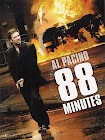
Showing posts with label Al Pacino. Show all posts

Saturday, 13 June 2026

Insomnia [American Version] (4½ Stars)


The original Norwegian "Insomnia" and the American remake tell essentially the same story: a police detective investigating a murder in a town where the sun never sets accidentally kills his partner and then becomes psychologically entangled with the murderer. However, the films differ significantly in tone, themes, characters and even in what they ultimately say about guilt and morality.

The setting

Original (1997)

The Norwegian film, directed by Erik Skjoldbjærg, takes place in northern Norway. The setting feels cold, isolated and alien. Even though the midnight sun provides constant daylight, the world seems emotionally frozen.

Remake (2002)

The remake, directed by Christopher Nolan, moves the action to a small town in Alaska. The landscape is grander and more picturesque. Nolan uses mist, forests and mountains to create atmosphere, whereas the Norwegian film often feels stark and oppressive.

The detective

This is the biggest difference between the two films.

Original: Jonas Engström

In the Norwegian film, detective Jonas Engström is already morally compromised before the story begins.

He arrives in the north under investigation by Internal Affairs. There are strong suggestions that he has previously falsified evidence and may have convicted innocent people. When he accidentally shoots his partner during a foggy pursuit, he deliberately covers up the truth.

The film gradually reveals that Engström's sleeplessness isn't simply caused by the endless daylight. It is caused by his guilt and by the collapse of the dishonest life he has built.

He is not a sympathetic hero. He is arrogant, dishonest and increasingly desperate.

Remake: Will Dormer

In Nolan's version, detective Will Dormer, played by Al Pacino, is much more sympathetic.

Dormer is also under investigation, but the circumstances are softened. His previous misconduct appears motivated by a desire to convict criminals rather than personal corruption. When he accidentally shoots his partner, he covers it up, but the film presents this as a tragic mistake rather than the action of a fundamentally corrupt man.

The audience is encouraged to feel sorry for him.

This changes the entire moral balance of the story.


The murderer

Original

The killer, Jon Holt, is intelligent, manipulative and disturbingly calm. He gradually becomes almost a mirror image of Engström.

The relationship between the two men is the heart of the film. Both have committed crimes. Both justify their actions. The detective and murderer become morally indistinguishable.

Remake

The killer is Walter Finch, played by Robin Williams.

Williams gives one of the most restrained performances of his career. Rather than playing the role as a monster, he portrays Finch as an ordinary, lonely man who committed a terrible act.

The remake spends more time humanising the killer. The cat-and-mouse relationship remains important, but it is less existential and philosophical than in the original.


The female detective

Original

The young detective investigating Engström is a relatively minor character. The focus remains squarely on the duel between the detective and the murderer.

Remake

The character is more important. She's played by Hilary Swank.

She represents the moral centre of the film. Dormer increasingly sees in her the idealism he has lost. This gives the remake a stronger redemption narrative.

The use of insomnia

Original

The insomnia feels almost physical.

The endless daylight becomes torture. Engström blocks his windows with blankets, tapes and cardboard, yet the light still penetrates. The film often feels like a nightmare in which reality is gradually disintegrating.

The audience experiences his exhaustion.

Remake

Nolan retains the concept, but uses it somewhat differently.

The sleeplessness becomes a manifestation of guilt and psychological pressure. It is important, but the remake is more interested in character relationships and moral choices than in making the viewer feel physically exhausted.

The Norwegian film is more oppressive.

The endings

This is perhaps the most important difference.

Original

The ending is bleak.

Engström survives but is exposed. There is no sense of redemption. The film suggests that guilt cannot be escaped and that moral corruption eventually destroys a person.

The conclusion is deeply pessimistic.

Remake

The remake moves toward redemption.

Dormer ultimately confesses the truth and encourages the young detective not to repeat his mistakes. After he is shot, he dies having finally accepted responsibility.

His final words, "Don't lose your way", transform the story into a cautionary tale about integrity.

The ending is tragic but hopeful.

Style and atmosphere

Original

  • Minimalist
  • Cold and clinical
  • Psychological
  • Ambiguous
  • Art-house sensibility

The film often feels closer to a European character study than a conventional thriller.

Remake

  • More polished
  • More emotional
  • Stronger focus on suspense
  • Larger scale cinematography
  • More conventional crime-thriller structure

Despite this, it remains one of Nolan's most restrained films. Viewers expecting the complexity of Memento or Inception may be surprised by how straightforward it is.

Which is better?

That largely depends on what you're looking for.

The Norwegian original is generally regarded as the more psychologically rigorous film. It presents a detective whose corruption is inseparable from the crime he is investigating. The moral ambiguity is unsettling and never fully resolved.

The remake is more accessible and arguably more emotionally engaging. The performances by Pacino, Williams and Swank are excellent, and Nolan adds a stronger sense of redemption and tragedy.

A useful way to think about them is this:

The original asks: "What happens when a corrupt man is forced to confront himself?"

The remake asks: "Can a good man who has done something terrible redeem himself?"

They start from the same premise, but they arrive at very different conclusions about human nature. The Norwegian film is darker, colder and more cynical. Nolan's remake is warmer, more compassionate and ultimately more hopeful.

Success Rate:  + 0.5

Order from Amazon.com
Order from Amazon.co.uk
Order from Amazon.de

Friday, 3 May 2024

Scarface (5 Stars)


"Scarface" is a story of the American dream. You can come to America with nothing, but if you work hard you can move to the top fast. That's what Tony Montana wanted. He came to America on a boat from Cuba in 1983 with nothing in his pocket. It wasn't even certain that he'd be allowed to stay in America. But he worked hard. He was a criminal, but crime in a business like any other. With hard work he became the biggest drug dealer in South Florida.

Even though Tony is the bad guy, people have sympathy with him. That's probably because they value his work ethic. They respect him as the underdog who came out on top.

But he fell from his top position. Was it his morals? Was it because he refused to kill children for the Bolivian drug lord? I don't think so. He could have worked around it somehow. He was already acting erratically. The problem was drugs. Not the ones he was selling, the ones he was using. "Never get high on your own supply".


When a man has cocaine piled up on his desk, he's dead already.


The actress Jenna Presley gave up her career in pornography, blaming porn for ruining her life. She was wrong. Appearing nude in films ruined nothing; her drug addiction ruined her. She was the highest earning porn star in America, but she was always broke because she spent her money on drugs as soon as she earned it. Without drugs, she'd still be making high quality pornographic films today.

It's been argued that many things are a drug, even coffee and alcohol. I can see the problem in making clear definitions. I shan't attempt to define the word drug itself. I'll just talk about which drugs are harmful and should be outlawed. A drug is bad if you can't stop taking it. For instance, I drink coffee every day, but I've had times when I did without it for weeks, mostly when I was taking blood pressure medication in England. I missed my morning cup of coffee, but I didn't feel like I was suffering without it. Alcohol is a borderline case. Most people, including me, can take it or leave it, but there are many who need alcohol every day.

What about cigarettes? Nicotine isn't usually considered a drug because it's legal, but it's highly addictive. Despite warnings about negative effects, nobody who smokes can do without cigarettes.

An interesting case is marijuana. For years people have been saying it should be legalised because it's harmless. I've never used it myself, but I've had a lot of friends who smoked it, and I've made interesting observations. People who use marijuana like to talk about it. They become obsessed with it without noticing. It's a medically proven fact that it brings on psychotic episodes in people with a tendency to psychosis. The figures from studies vary between 10% and 15%. The normal marijuana users deny this. They make excuses or just say it isn't true. But I witnessed it myself in my second wife Nicola. She didn't smoke marijuana often, but whenever she did she became suicidal. I knew that and she knew that, but she still made mistakes. One afternoon we were sitting with Pete, a friend of mine in Birmingham, who regularly smoked marijuana. He offered her some, and she turned it down, saying it was bad for her. So he started a long monologue about how good it is. Eventually, despite my protests, she smoked a joint. When we went home Pete said, "Look how good it's made you feel". Later that evening I had to take her to hospital after she cut her wrists.

Cocaine is considered a helpful drug by many. It keeps people awake, and it helps them function. It's often called the drug of intellectuals. Maybe, just maybe, it can be helpful in small quantities, but how easy is it to remain with small quantities? I have no experience.

Heroin is a destructive drug. Whoever takes it is incapable of functioning in society. It's so addictive that a person's only interest in life is getting more heroin. I knew several heroin addicts, and they were all wrecks. Subhuman. There was only one exception. There was a girl called Maisie, the girlfriend of a drug dealer called Alexis Thomas. One day when I met her she said, "Mike, everyone told me that heroin is bad, but I take it and it makes me feel great".

I asked her how long she'd been taking it. She said "One week". I wonder if she's still alive today.

It's obvious that drugs (and I'm talking about illegal drugs) feel good when you try them. If they didn't, nobody would want them. But there's a sting in the tail. The negative effects come later. Maybe it doesn't feel as good any more, or maybe you realise that you're spending too much money on them and ruining your life. When you realise you can't stop, it's already too late. I wonder how many weeks Maisie needed to realise this point.

Success Rate:  + 0.6

Order from Amazon.com
Order from Amazon.co.uk
Order from Amazon.de

Wednesday, 26 October 2022

Insomnia (5 Stars)


Two things amaze me about this film. First, why haven't I watched it for eight years? Second, why haven't I watched the original version for more than 12 years? Actually, there's a third thing that amazes me: why did I only give "Insomnia" four stars last time I watched it? It's possibly because I thought it wasn't as good as the original version, which I watched first. I'm not sure. I vaguely remember watching the original Norwegian version of "Insomnia" twice in my pre-blog days. I liked it a lot, which is why I gave the American remake a lower rating. It's been so long since I watched the original that I can judge the remake on its own merits, and it's excellent. The performances by Al Pacino and Robin Williams are outstanding, and it's a fascinating psychological drama.


It's a crime thriller, but it breaks all the rules. How often do we see a police detective taking a ferry with the murderer and not arresting him, despite having heard his confession?

Will Dormer is a highly successful detective in Los Angeles. He's solved many high profile cases. However, Internal Affairs is examining his most recent arrest. He planted evidence on a man that he knew was guilty, because he was afraid that a jury wouldn't convict him. That doesn't mean he's a bad cop. He just cut corners. Now he's worried that if the truth about this one case comes out, all his previous cases might be questioned. All the bad men that he's put behind bars might be released.

The only person who knows that Will planted evidence is his partner Hap Eckhart. The two are sent on a mission to aid the police in a murder investigation in Nightmute, a small town in Alaska. Less than 300 inhabitants. On the plane Hap tells Will that he's going to testify against him. That puts tension between the two men who used to be friends.

While chasing the murderer in the fog, Will accidentally shoots Hap. He thinks he might be accused of deliberately shooting him, so he claims the murderer shot him. The murderer, a local author called Walter Finch, witnessed what happened. He blatantly confesses the murder to Will, then offers to protect Will, as long as he plants evidence on someone else. Will is spiralling out of control. It's one thing to plant evidence on a guilty man, but another entirely to plant evidence on an innocent man.


The local police officer Ellie Burr is a big fan of Will Dormer. She wrote a paper about one of his cases when she was in police academy. She finds evidence that he lied about Hap Eckhart's death, but she can't believe that her hero has really crossed the line. She doesn't know what to do.

The film is called "Insomnia". That's because Nightmute is within the Arctic Circle. It's summer, and the Sun doesn't set. Will can't sleep. Ellie quotes something that Will once said: "A good cop can't sleep because a piece of the puzzle's missing. A bad cop can't sleep because his conscience won't let him". So the lack of sleep isn't just about the Sun shining at night.

I can still remember the main differences between the two versions. They're significant, but I shan't discuss them until I rewatch the Norwegian version.

Success Rate:  + 0.5

Order from Amazon.com
Order from Amazon.co.uk
Order from Amazon.de

Thursday, 23 December 2021

88 Minutes (5 Stars)


My memory is weird. Sometimes I can clearly remember a film that I only watched once 30 years ago. Then there's "88 Minutes", which I've watched at least three times, but when I sat down to watch it today I could hardly remember it. It was like watching a completely new film.

Al Pacino was nominated for a Golden Raspberry award as Worst Actor for this film. That's unfair. There's nothing at all wrong with his performance. Leelee Sobieski was also nominated as the Worst Supporting Actress. That's terrible. Sometimes the critics have no taste at all.


Success Rate:  - 0.9

Order from Amazon.com
Order from Amazon.co.uk
Order from Amazon.de

Wednesday, 26 August 2020

Once upon a time in Hollywood (4½ Stars)


I gave this film five stars when I saw it in the cinema last year, but I've decided to lower the rating after watching it again today. The film is disjointed. In 2017 it was announced that Quentin Tarantino was going to make a film about the Manson Family murders. As the release date came closer, it was reported that the film was about Hollywood at the end of the 1960's. It's actually about both. The first two hours are about the golden days of Hollywood, while the last half hour is about the Manson Family murders. Both parts of the film are perfect in themselves, but it looks like the second part has been tagged on as an afterthought. It's true, the Manson Family also appears in a scene in the first part, but the Family doesn't seem to have any great importance, along all the other things that are happening.

There's a lot that I could write about the relationship between the actor Rick Dalton (Leonardo DiCaprio) and his stuntman Cliff Booth (Brad Pitt). I'll leave my thoughts on them until I watch the film again. In this review I'll concentrate on women's feet.


Margot Robbie is sitting in the cinema watching "The Wrecking Crew" with her feet up. I have no problems with that. When I went to see "Emerald Green" there was a teenage girl with her legs up sitting next to me, and I allowed myself a few looks. The problem is that Margot's feet are dirty. I've heard that some men like dirty feet, but not me! I find them revolting, not sexy at all.


This is Pussycat (Margaret Qualley) hitching a ride from Cliff Booth (Brad Pitt).


Pussycat has beautiful feet, and even more beautiful legs, but I have to offer her some advice: when she's hitching a ride, she shouldn't lay her head on the driver's lap. It's not safe.


Dakota Fanning plays Squeaky, the Manson Family member keeping ranch owner George Spahn as a sex slave. The other recent film about the Manson Family, "Charlie Says", goes into more detail on their relationship, but only Quentin Tarantino shows us Squeaky's feet.


"George is that way, Cliff". Why should Squeaky point with her finger when she can use her toes?


I don't know who these two girls are, but they have nice feet.

I have difficulty rating Quentin Tarantino's films in order, but this film is easy to rate. Out of his nine films, I put this in eighth place. (His weakest film is "Hateful Eight"). Apart from the film being disjointed, I have two other slight criticisms. The first is the portrayal of Bruce Lee. Why is he so arrogant? It's also shocking that a random stunt man is able to beat him in a fight.

My second criticism is the rewriting of history. When Quentin Tarantino rewrote history in "Inglourious Basterds" it didn't bother me. It had a purpose that suited the movie well. The rewriting of history in "Once upon a time in Hollywood" is puzzling. Is there a purpose behind saving Sharon Tate's life? She's saved by the random meeting of Cliff and Tex in the first part of the film. Does Tarantino want to say that random events, however minor, can change history? That's the message of "Run Lola Run". If he's ever commented on this in interviews, please let me know in the comments box below.

Success Rate:  + 2.2

Order from Amazon.com
Order from Amazon.co.uk
Order from Amazon.de

Sunday, 24 November 2019

The Irishman (4 Stars)


I admire Martin Scorsese, even though he's not one of my favourite directors. He's created several great works of art in his career. "The Irishman" is one of his best films, although I had to lower my rating because it slowed down too much in the last half hour. However, I'm quite shocked by his recent statements that Marvel films "aren't cinema". That's such a stupid statement that I can hardly believe he really said it. It's not something that I would expect from a man of his stature. Doesn't he know what cinema is?

Let me tell him. Cinema is about human experience. People go to the cinema to be touched, which can happen in a variety of ways. If a film is a tragedy, people are dragged down. If a film is a romantic love story, people are uplifted. If a film is an action adventure, people sweat and their pulses race while they watch it. If a film is a horror film, people jump and are terrified. If a film is a pornographic film, people are sexually aroused.

Which of those is cinema? All of them, and there any many other examples that I could add. Do people like all of these types of films? I do, I'll watch anything, but most people have their favourite genres that they stick to. That's not a problem to me. If someone tells me that he doesn't like horror films I accept it, even though I think he's missing out. But if someone tells me that horror films aren't cinema, I shake my head and I say he doesn't know what he's talking about.

I've tried to understand Martin Scorsese by reading his "not cinema" quotes in context. I get it. Almost. He thinks that Marvel films don't touch human emotions. He thinks they don't offer intellectual enlightenment for the viewer. If he were a food connoisseur he would be saying that McDonald's isn't food because it's not a three star Michelin restaurant.

What he's saying is partially snobbish, partly ignorant. People walk into the cinema expecting to be touched in different ways. Not all Marvel films are the same. Has he ever watched them? Has he ever compared them with one another? "Deadpool" isn't the same as "Infinity War". What's wrong with Martin Scorsese? If he'd said, "I don't like Marvel films because fill-in-the-blank" I would nod and say that I understand him. If he says that Marvel films aren't cinema, my answer is "That's just dumb".

I enjoyed watching "The Irishman" today. I didn't enjoy it as much as "Avengers: Endgame", even though I'm an intelligent film fan. Nevertheless, I'll watch it again when it's available on Netflix. That's a certainty.

I wasn't aware that it's a true story until I walked into the cinema. I'd never heard of Jimmy Hoffa and the other characters in the film. That's probably because I grew up in England. I was never affected by American mob-influenced politics. "The Irishman" has educated me more than it's entertained me. The lasting impression that I took with me today is that it's Robert De Niro's best performance for a long time. I've been annoyed by his comedy roles over the last 20 years. I've always thought he could find better roles, and by playing Frank Sheeran he hit the jackpot.

I'll write about the plot the next time I watch it.

Tuesday, 27 August 2019

Once upon a time in Hollywood (5 Stars)


Some films are too good to watch just once. Any Quentin Tarantino film is too good to watch just once. That's why I returned to the cinema today to watch "Once upon a time in Hollywood" a second time. The cinema wasn't quite as full as it was two days ago, but let's be fair, today is a weekday, and I went to an early showing. Some people work while others are watching films. I feel sorry for them.

Watching today, I made an attempt to compare it with Tarantino's other films. There's less of a narrative, as I pointed out in my first review. It's his most self-indulgent film to date. It's all about nostalgia for a past era, in films, television and music. I'm including music, because the music that we hear on the radio is essential to the film, even more than it was in his early films ("Reservoir Dogs", "Jackie Brown" and "Death Proof"). I recognised most, but not all of the songs. I grew up in England, and England has always had a different pop music scene to America. Maybe the two music scenes are merging now, in the YouTube generation, but in the 1960's the music played on the radio in the two countries was very different.

Where does "Once upon a time in Hollywood" rank among Tarantino's films? Ask me again next time I watch it. It's difficult to compare his films. I can never decide which one I like most, they're all so good. It's not his best film, but it's definitely not his worst. I already know that it'll get a high place in my top 10 list for 2019. I'm glad I started doing a top 10 in 2015. Think of it as a snapshot of my opinion at the end of each year. When I look back at my old lists, I'd rate the films differently today. I'd put "The Walk" at the top of the list for 2015. My tastes change. Slightly.

Sunday, 25 August 2019

Once upon a time in Hollywood (5 Stars)


Hollywood is the place of dreams. The problem with dreams is that they don't last. When you wake up in the morning they're gone. This is what we see in "Once upon a time in Hollywood", the 9th film by Quentin Tarantino. Sharon Tate is at the beginning of a successful career. After six years of minor roles she's finally become a face that people recognise. She expects her career to continue to dizzying heights, and her marriage to Roman Polanski is additional help.

Rick Dalton's success is waning. After years as a successful film and television actor he's having to play smaller roles. He's advised to go to Italy to make spaghetti westerns, but he thinks it's below him. The only person who believes in him is his stunt double and best friend Cliff Booth, but Cliff is on his way out as well. His bad temper makes him unpopular on film sets.

While I was sitting in the cinema I was asking myself what the film was about. When I walked out at the end I still didn't know. There doesn't seem to be a plot that leads from A to B. There are no recognisable character arcs. The story just rambles on, in a way typical for a true story, but in this case Rick Dalton and Cliff Booth are fictional characters. I'm sure they're composites of well known actors from the 1960's, but I won't know who Quentin Tarantino is thinking of until he names them in an interview. I can see some similarity between Rick Dalton and Lee Van Cleef, but I'm sure Tarantino is thinking of other actors as well.

Nevertheless, the story, or rather the non-story, is overwhelming. We're immersed in the good old days of Hollywood. Was 1969 the turning point? I don't know. I really want to hear Tarantino himself talk about the film.

I'm going to see the film again next week. Maybe I'll understand it better the second time.

Tuesday, 9 April 2019

Scarface (5 Stars)


I don't like Brian De Palma as a director. I don't particularly like Al Pacino as an actor. And yet this film is brilliant. I can't put my finger on what makes it so good. Is it the chemistry between the main actors, or is it just a good story? I don't know.

The film was made in 1983, and it was a current topic at the time. Tony Montana was one of many ex-criminals that Fidel Castro was sending to America. It was a clever strategy. Rather than have to feed criminals in jail for years, putting a strain on a poor nation, he told them they could go to America if they pretended to be refugees. Tony turns up at the US immigration centre spouting the same anti-Communist rhetoric as all the other Cuban boat people. He's put in a cramped refugee camp while the authorities decide what to do with him. He might have been sent back to Cuba, eventually, but he's given a chance. Among the refugees is a former government official who has fallen into Castro's bad favour. He used to torture prisoners for Castro. An influential politician offers a green card to anyone who kills him. Tony Montana is the man for the job.

From then on he steadily climbs up the ladder in the criminal underworld. He carries out drug deals. He becomes a senior member of a large gang of drug smugglers. Eventually he becomes the boss of the South Florida drug syndicate. He imports cocaine directly from Bolivia, bypassing middle men and making huge profits.


It's a rise and fall story. When someone reaches the top the only way is down. Different factors play a role in Tony Montana's fall. I'll only name the main problem here: drugs. His former boss gave him a rule to live by: "Never get high on your own supply". That's a good rule. Hard drugs like cocaine are destructive. If you want to make money you have to sell it to others for high prices to destroy them. Taking the drugs yourself is suicide. By the end of the film Tony is a wreck. It's true, things in his life have driven him to drugs, but someone who has never used drugs won't be tempted when life goes bad.

The film is a tragedy of epic proportions. Tony Montana is the film's hero. We want him to succeed. He's the underdog who fights and claws his way to the top, when everything is against him. We shed a tear for him when he finally fails. We can shrug our shoulders and say he got what he deserved, but that doesn't change the fact that we wanted him to succeed. The speech that he holds to respectable restaurant guests is also for the viewers:

You need people like me. You need people like me so you can point your fingers and say, "That's the bad guy". So what does that make you? Good? You're not good. You just know how to hide, how to lie. Me, I don't have that problem. Me, I always tell the truth, even when I lie. So say good night to the bad guy! Come on. This is the last time you're gonna see a bad guy like this again.

Success Rate:  + 0.6

Order from Amazon.com
Order from Amazon.co.uk
Order from Amazon.de

Saturday, 29 April 2017

Devil's Advocate (4 Stars)


This is a film I've watched a few times over the years. I believe it was one of the first DVDs I ever bought, but surprisingly I haven't watched it since I started writing my blog in 2010. I'll make up for that now.

The film stars two actors that I don't rate highly. Neither Al Pacino nor Keanu Reeves particularly impresses me. Nevertheless, this is one of the few films in which Keanu Reeves is in his element. He plays a cold-hearted, emotionless lawyer. He's best in roles in which he doesn't need to show emotion. My problem with Al Pacino is that he doesn't seem genuine, his acting always makes him look like an actor rather than a real character. That works to his advantage in this film. His character is someone who's pretending to be something that he isn't.

Keanu Reeves plays Kevin Lomax, a Florida lawyer who has never lost a case. He specialises in defending clients who he knows are guilty. In our legal system everyone has the right to the best possible defence, but Kevin pushes it to the extreme. He has no conscience. He wants to succeed at all costs. This is displeasing to his mother, a devout Christian woman. His wife Mary Ann also dislikes it, but as long as her husband earns good money she accepts it.

Kevin is offered a job by John Milton (Al Pacino), the head of a multi-national company. It's not a law firm, it's a trading company, but it has shady business partners, so it hires lawyers to protect its partners from prosecution.


It's no spoiler to tell you that John Milton is really the Devil. That's obvious to the viewer from the film's name, and as if that's not enough the text on the back of the DVD case tells us that Kevin Lomax is working for the Devil. This isn't a story about a man being offered wealth in exchange for his soul. Kevin Lomax is no good man, he already gave up his soul by becoming a lawyer, and now the Devil is offering him his reward.

Al Pacino isn't quite as charismatic as Gabriel Byrne's portrayal of the Devil in "End of Days", but his performance still shines. He tries to justify himself with arguments to show that he isn't all bad, and God is the true cause of all the evil in the world. It's a perfect mixture of truth and lies that would fool most people who listen to him.

"Let me give you a little inside information about God. God likes to watch. He's a prankster. Think about it. He gives man instincts. He gives you this extraordinary gift, and then what does He do? I swear, for His own amusement, His own private, cosmic gag reel, He sets the rules in opposition. It's the goof of all time. Look, but don't touch. Touch, but don't taste. Taste, don't swallow. Ha ha ha! And while you're jumping from one foot to the next, what is He doing? He's laughing His sick ass off. He's a tight-ass! He's a sadist. He's an absentee landlord! Worship that? Never!"

Calling God an absentee landlord is like the pot calling the kettle black. We don't see God in the world, but where do we see the Devil? In God's absence he could do whatever he wants. He could create a false religion, verified by miracles, to lead mankind away from God. It would be so easy, so why doesn't he do it? The usual answer from the Christian churches is that the Devil doesn't need to lead people astray because they're already on the wrong path. The truth is that the Devil is an absentee enemy.


It was interesting to see Charlize Theron in this film. I'd forgotten that she was such a baby face when she started acting. She was 22 at the time "Devil's Advocate" was made, but she didn't look a day over 16. Even now, 20 years later, she's still one of the most beautiful women on the planet.

One of my friends told me that she considers this to be the scariest film she knows. I don't rate it quite that highly, but I understand what she means. The film has an intense atmosphere, laced with evil and supernatural elements. It doesn't rely on jumps the way modern horror films do, the scary scenes build up slowly and menacingly.

Watching the film today I realised that I've missed it. It's a film I need to watch again, maybe back to back with other portrayals of the Devil.

Order from Amazon.com
Order from Amazon.co.uk
Order from Amazon.de

One more thing. I thank whoever it was who ordered so many articles from Amazon in March using my links. I really appreciate it. It's no effort to you, but it makes money for me. Thank you. If all my readers did the same as you I would be rich.

Monday, 19 December 2016

Scarface (5 Stars)


The poster above is a pleasant piece of art, but why did the artist find it necessary to increase the breast size of the two leading ladies, Michelle Pfeiffer and Mary Elisabeth Mastrantonio? Both of them are flat-chested in real life, but the artist has blown them up to D cups for the poster. I believe that the technical term for his changes is artistic license.

This is a remake of a 1932 film with the same name. The original is about an Italian immigrant called Tony Camonte in Chicago in the 1920's. The remake is about a Cuban immigrant called Tony Montana in Florida in the 1980's. It begins with the refugee crisis of 1980. Refugees were fleeing from Cuba by boat to the USA. Rather than try to stop them, Fidel Castro loaded criminals onto the boats with them in an attempt to destabilise America. Not much has changed since then. Almost 30% of the one million so-called refugees who have arrived in Germany in the last two years have committed crimes since arriving. They pretend to be fleeing from conflict zones, but in truth they want to move to a country where crime isn't punished as harshly as where they come from.

Tony works his way up from the bottom. He begins with murder and progresses to selling drugs, primarily cocaine. His downfall comes from taking drugs himself. "Never get high on your own supply".

I didn't see "Scarface" when it was first released in 1983, but I bought the soundtrack. The music is by Giorgio Moroder, who used to be one of my favourite musicians. His 1976 album, "Knights in White Satin", was one of the most revolutionary albums of the disco era, inspiring much of what came after it. Equally ground-breaking were the two albums that Giorgio wrote and produced for Donna Summer, "Love to Love You, Baby" (1975) and "A Love Trilogy" (1976). (He produced other albums for Donna Summer, but these two are the ones regarded as classics).


I finally got round to watching the film 20 years later, because it was one of my wife's favourite films. Introducing me to "Scarface" was one of the few good things she did for me. Watching it again today, for the first time in years, made something clear to me. There have been a few good gangster films in the last 30 years, such as "Goodfellas" and "Casino", but no film influenced "The Sopranos" as much as "Scarface". Despite the different ethnic origins the two Tonys, Montana and Soprano, have many traits in common.


A newspaper is shown with a front page article about Tony's arrest. You can click the above picture to enlarge it, but it might still be difficult to read, so here is a transcript of the first three paragraphs:

Drug King Posts Record $5,000,000 Bond

Cuba-born Tony Montana charged the Drug Enforcement Agency today with infringing on his Fourth Amendment rights in a press conference held after he posted a record $5,000,000 bond.

The facts regarding the situation remain the same, state the authorities. Details concerning the action have been given a preliminary investigation, but it is felt that only by a more detailed study will the true facts become known.

Many persons feel at this stage that some legal action is forthcoming. but it now becomes common knowledge that there is pressure from the inside which will materially change the aspects of the case.


That all sounds like a good newspaper report, but if you look at the fourth paragraph it begins with the words, "The facts regarding the situation remain the same, state the authorities". That means the second paragraph is being repeated. Sloppy.

Order from Amazon.com
Order from Amazon.co.uk
Order from Amazon.de

Saturday, 5 November 2016

88 Minutes (4 Stars)


This is the 23rd film starring Leelee Sobieski, made in 2007. That's when it was released in Europe, but it didn't appear in American cinemas until a year later. Despite being savaged by critics it was a moderate box office success, and DVD sales have been enough to turn in a sizeable profit. "88 Minutes" has a 5% rating on the rotten Rotten Tomatoes site. Yes, that's FIVE percent! Most of the critics talk badly about Al Pacino's performance, but I honestly can't see what he does wrong.

The film begins in 1997. Al Pacino plays Dr. Jack Gramm, a forensic psychiatrist giving evidence at a murder trial in Seattle. The victim was hung upside down by one leg and her blood drained by cuts to her arms. The evidence for the trial is sparse. There is no DNA evidence linking the defendant, Jon Forster, with the crime, and only one witness who admits that she couldn't see clearly. It all rests on the doctor's testimony. Dr. Gramm is a university lecturer who's an expert on serial killers, and after interviewing the defendant he's convinced that he's a potential serial killer who was fortunately caught after his first crime. Despite being found guilty of murder Jon Forster remains defiant and taunts Dr. Gramm, saying to him the cryptic words "Tick tock, Doc".


Nine years later, after a series of appeals, the day of Jon Forster's execution has arrived. The problem is that over the previous three months there have been another three killings in the same style: a woman hung upside down by one leg and her blood drained. Jon Forster has been giving interviews saying this is proof that the wrong man was arrested. The police suspect that it's a copycat killer. Dr. Gramm suspects an accomplice who was never arrested. Then Dr. Gramm receives a phone call, telling him, "You have 88 minutes left to live. Tick tock, Doc". This sounds like a hoax, but then Dr. Gramm finds out that one of his university students was killed the previous night, and a prostitute that Dr. Gramm slept with was killed in the morning, both in the same ritualistic manner, hung upside down and drained. Dr. Gramm feels that someone is stalking him, watching him wherever he goes, and it's a race against the clock as he tries to find out who is threatening him before the time runs out.


Leelee Sobieski plays Lauren Douglas, one of the two female students assisting Dr. Gramm. He's also helped by his assistant Shelly and the female university dean. Another thing the critics complain about is that Dr. Gramm is surrounded by women as he tries to solve the mystery before it's too late. What's wrong with that? If I only had 88 minutes to live I'd want beautiful women at my side. Especially women who look like Leelee Sobieski.


This is a fast paced psychological thriller that's worth watching, whatever the critics say. Critics are less involved with films than the public. The critics sit in their cosy armchairs and make their votes on cheap paper, but the public votes with its hard-earned cash. This time the public is right and the critics are wrong.


I strongly recommend that my readers watch the film's alternate ending. It's an extra six minutes included as a DVD extra that occurs after the official theatrical version of the film ends. Dr. Gramm holds a short speech which puts him in a different light, reminding me of Al Pacino's character in "Insomnia". This scene shouldn't have been cut. In the speech he says that justice is more important than truth. If a man is guilty and there isn't enough evidence to convict him he says that it's okay to lie or fake evidence.

Order from Amazon.com
Order from Amazon.co.uk
Order from Amazon.de

Wednesday, 13 August 2014

Insomnia (2002 version) (4 Stars)


You don't get to pick when you tell the truth. The truth's beyond that.

This is the second film I've watched this week starring Robin Williams. As far as I know it's unique among his films. This is the only film in which he plays the bad guy. When Robin Williams first appears on screen, almost an hour into the film, our first instinct is to like him. After all, it's Robin Williams! It's a mark of his acting ability that he's subtly able to convince us he's an utterly reprehensible character, and by the end of the film we're desperate to see him arrested or killed.

Detectives Will Dormer (Al Pacino) and Hap Eckhart (Martin Donovan) are sent from Los Angeles to Nightmute, Alaska to help the local police solve the murder of a teenage girl. This is partly because the Nightmute police have had no experience of dealing with murders, but also to get Detective Dormer away from Los Angeles. The police's internal affairs division has suspicions that Dormer has been cutting corners to get convictions. However, on the plane Eckhart tells Dormer that he intends to testify against Dormer when they return to Los Angeles.

Dormer sets a trap and lures the killer to a cabin by the sea. The area is extremely foggy, and in the confusion Dormer accidentally shoots Eckhart. He realises that he might be blamed for deliberately killing his partner, so he fakes the evidence to make it look like the killer fired the shot. A day later the killer, a murder mystery author called Walter Finch (Robin Williams), rings Dormer and confesses to murdering the girl. But Finch saw Dormer shoot his partner, so he blackmails him to protect himself from arrest. Together Dormer and Finch make a plan to plant evidence of the murder on the girl's ex-boyfriend. Dormer's judgement is confused by a lack of sleep, due to the sun shining all day in the Arctic Circle.

This film is a remake of the 1997 Norwegian film with the same name. In lesser hands it would have been a disaster, but Christopher Nolan ably recreates it. The original takes place in Tromso, Norway, but the main differences are in the film's moral undertones. In the American film Detective Dormer is a good man who has sometimes done bad things to solve cases. The end justifies the means. In the original the detective's dark side is emphasised, and we have greater difficulty sympathising with him. As well as this, the film ends differently in the two versions. I don't want to give the story away by going into details. All I'll say is that the American film ties everything up neatly, whereas the Norwegian film leaves open ends.

Wednesday, 20 October 2010

88 Minutes (4 Stars)


This film is a gem that deserves to be watched more than once. A forensic psychologist is caught in a cat and mouse game with a serial killer sitting in death row. While watching it the first time I felt unhappy, because the killer seemed to be omniscient and omnipotent, but the conclusion wrapped up everything tidily. Other reviewers criticize Al Pacino's acting in this film, but I find his cool under-stated approach to his role perfect. The supporting characters also shine, especially the incomparable Leelee Sobieski.