Showing posts with label Leonardo DiCaprio. Show all posts

Thursday, 2 October 2025

One Battle After Another (4 Stars)


Pat Calhoun and Perfidia Beverly Hills are members of a left-wing revolutionary group called French 75. The similarity with Germany's Baader Meinhof group is deliberate. Perfidia falls in love with Steven Lockjaw, an army colonel who's hunting the group. She's arrested, and she gives the names of the group's members in exchange for being put in witness protection. She continues the affair with Colonel Lockjaw for a short while, but then she disappears.

16 years later Colonel Lockjaw suspects that a girl called Willa Ferguson is his daughter. Without telling anyone about his suspicions, he arranges a large army task force to find her.

The film is very topical. It doesn't mention the name of the current American president, but there are many scenes which make me think about him.

There's a lot of action, in comparison with Paul Thomas Anderson's other films. It's a very good film, which I need to see again when it's released on Blu-ray.

Thursday, 4 January 2024

Django Unchained (5 Stars)


This is the latest selection from my top 100 film list that I decided to watch with my son Benjamin. It's currently in 40th place.

I don't have much to write about it today, apart from sharing some information I recently read.


There's a scene where Leonardo DiCaprio, playing the slave owner Calvin Candie, had to bang his hand on the table. He did this so vehemently that he broke a plate and cut his hand. This wasn't scripted, but it looked so good that the cameras continued to roll.


Is Samuel L. Jackson, the head slave Stephen, staring at Leonardo because of the unexpected blood on his hand?


Leonardo went on to smear his blood onto the face of Broomhilda, played by Kerry Washington. That's an amazing improvised scene. I'm surprised that Kerry even put up with it. Some actors are true professionals.

Success Rate:  + 2.3

Order from Amazon.com
Order from Amazon.co.uk
Order from Amazon.de

Monday, 23 October 2023

Killers of the Flower Moon (3 Stars)


This is my biggest disappointment of the year. I don't mean the worst film of the year. That was "Skinamarink". What I mean is that I expected so much after seeing the trailer. It looked like an exciting action film. Instead, it was a dreary tale of murders and conspiracies that dragged on for three and a half hours. I might have enjoyed the film if it had only lasted 90 minutes.

I didn't realise until the film started that it was a true story. I'm sympathetic to the uneven pacing of true stories, but in this case it wasn't uneven, it was slow throughout.

The film takes place in the Osage Nation, a reservation belonging to the Osage tribe. In 1897 oil was discovered on their land. The even distribution of wealth made everyone in the tribe rich. Due to murky laws, the oil could only be traded by white businessmen, so a large number of white people moved into the reservation. William Hale (Robert De Niro) was a wealthy rancher who was much loved by the Indians. He helped them with the building of shops and schools. What they didn't know is that he was secretly conspiring to kill Indians and get the money into his own hands. In 1919 his nephew Ernest Burkhart (Leonardo di Caprio) returned from the war and assisted his uncle. The strategy was simple:

Marry an Indian woman. Kill her. Inherit her wealth.

Ernest married an Indian woman, and so did a lot of other white men.

That's all that happens for the whole film. First the murders, then the investigations, then the trial. William Hale is a terrifying man. He honestly thinks he's a good man. After all, he's a 32nd degree Freemason, so he must be a good man. Leonardo DiCaprio's character is annoying. He's simple minded, and he doesn't seem able to differentiate between right and wrong. He swears that he loves his wife, even though he's poisoning her.

If you have the patience, sit through the three and a half hours. Try not to fall asleep.

Wednesday, 14 June 2023

Inception (5 Stars)


In my opinion, this is Christopher Nolan's best film. It has mind-bending concepts of being in a dream inside a dream inside a dream inside a dream, and yet the story is never difficult to follow. That is to say, it isn't difficult to follow until the final scene. When Dom Cobb finally wakes up from his nested dreams and returns to his children, is he really awake, or is he still in a dream above all the other dreams?

Dom uses a spinning top to check whether he's in reality or a dream. In dreams the top spins indefinitely, in reality it stops spinning after a while and falls over. He spins the top at the end of the film, and the film cuts out before we see whether it continues spinning or not. Many fans of the film have asked Christopher Nolan whether the top stops spinning or not. His responses are always evasive, and rightfully so. If he'd wanted there to be a clear answer, he'd have put it in the film.

The answer is that it doesn't matter. Dom wants to be back with his children, and when he's with them it doesn't matter whether it's reality or a dream. All that matters is that he's happy. But what most viewers don't notice is the way Dom spins the top. Usually he spins it, then sits and watches the result. This time is different. He spins the top, then walks away. He doesn't want to see the result. What the director is saying is that Dom himself doesn't want to know whether it's a dream or not. If it doesn't matter to him, why should it matter to us?

Do I personally have an opinion whether he's in reality or a dream? No, I don't. There's evidence to support both answers. The main evidence for reality is the complexity of the architecture. Dom flies from one country to another, whereas the manufactured dream architecture is always a confined area. The main evidence for a dream is the way his children are dressed. They have the identical clothes to the ones in his dream, and they're playing in the same garden. I'm sure that Christopher Nolan planted these contradictory clues to keep us guessing.

Success Rate:  + 3.2

Order from Amazon.com
Order from Amazon.co.uk
Order from Amazon.de

Saturday, 29 January 2022

Catch me if you can (4½ Stars)


Name: Frank Abagnale
Lived: 27 April 1948 – still alive
Film dates: 1963 to 1974
Film made in 2002

From one con man to another. Steve Russell was a master con man, but Frank Abagnale was possibly the greatest con man who ever lived. His expertise was forgery, which he mastered at a young age. By the time he was 17 he'd gained $1.3 million by fraud, and by the time he was 19 it was $4 million. That was the 1960's. Allowing for inflation, you need to multiply those figures by nine.

Maybe he was too greedy. If he'd stopped stealing after his first million he would have had enough money to last the rest of his life, and he probably wouldn't have been caught. That's the trouble with money. If you love money, you can never have enough.

Frank Abagnale left home when he was 16, because he was traumatised by his parents' divorce. He paid for his rent by writing cheques, but he could never stay in one place long, because the cheques bounced and he was evicted. He had the idea to forge cheques issued by banks the other side of the country. In the pre-Internet days this meant that it took weeks for the cheques to be recognised as fakes. In order to cash cheques he needed credibility. He did this by wearing a pilot's uniform. Everyone trusts an airline pilot.

He forged university certificates to become a doctor, and then a lawyer. All the time he was writing cheques. The FBI detected him. Agent Carl Hanratty pursued Frank from one side of the country to the other. A bizarre relationship developed between the two. They had respect for one another, as if they were boxers duelling in the ring. Frank rang Carl every year on 24th December to wish him a Merry Christmas. Wasn't he afraid of having his call traced?

Eventually Frank was arrested in France and imprisoned in very unsanitary conditions. The film doesn't tell the whole story. According to Wikipedia, "At Perpignan he was held nude in a tiny, filthy, lightless cell that he was never allowed to leave. The cell lacked toilet facilities, a mattress, or a blanket, and food and water were strictly limited". Carl had Frank extradited to America so he would be treated better. While in prison in America Carl frequently consulted Frank for help catching other cheque forgers. Frank's assistance was so invaluable that after four years he was released and hired by the FBI. He became the FBI's top expert on cheque forgery.


This is an excellent film directed by Steven Spielberg. As I've said before, Steven Spielberg never makes a bad film. Tom Hanks is a phenomenal actor, and Leonardo DiCaprio also has great talent. They bounce off one another by their contrast between a humourless, uptight FBI agent and a flamboyant young man.

Success Rate:  + 4.8

Order from Amazon.com
Order from Amazon.co.uk
Order from Amazon.de

Monday, 24 May 2021

Django Unchained (5 Stars)


I don't hesitate to call "Django Unchained" the best western ever made. When Quentin Tarantino made the film in 2012 he was deliberately breaking the rules that had been implicitly set for westerns for decades. The lead actor is black, which had only ever been done in the comedy "Blazing Saddles". Even more significantly, westerns have always ignored the subject of slavery. Slaves are never shown in westerns, even though slavery was common in the years before the Civil War. Tarantino doesn't just acknowledge slavery in this film, it's the main subject.


Django is a slave who's given his freedom by the bounty hunter Dr. King Schultz. He's a German who used to be a dentist. It's been five years since he last practised dentistry, but he still uses his wagon with a wobbly tooth on the top. It's difficult not to laugh.

Schultz's attitude to slavery isn't completely negative. Even though he says in an early scene that he's "no friend of slavery", he still purchases Django and keeps him as a slave until he's succeeded in killing the Brittle Brothers. After this he releases Django, and the two men become friends. He trains Django to become a bounty hunter, although it seems that not much training is necessary. Django is a natural when it comes to shooting people.

Schultz is naive when it comes to racism. He doesn't expect or understand the negative reaction to a black man riding a horse or walking around free.


Today is the fourth time I've watched the film, but I picked up a few small details that I didn't notice in the past. Django (Jamie Foxx) is enjoying a drink at the bar. He's joined by an Italian slaver called Amerigo Vessepi. He asks Django his name, then asks him if he knows how to spell it. Django tells Amerigo that the D is silent. Amerigo is played by Franco Nero, the actor who played the original Django in 1966.


After this Django is joined at the bar by Dr. Schultz, who's drinking a beer from a Bügelflasche, commonly called a flip-top bottle in English. This sort of beer bottle is common in Germany, but its use in the film is a blunder. The film takes place in 1858, but this type of bottle wasn't invented until 1875.


Bam! The sight of this young woman carrying an axe gave me such a shock that I had to pause the film. Could it possibly be Zoe Bell? I ran to my computer to check, and yes, it's her. I'm surprised that I never recognised her in the past.


She appears again in a later scene, where it's easier to recognise her. There's no special significance to her scenes. They're purely gratuitous. It's no secret that Quentin Tarantino is a fan of Zoe Bell, so he wanted to slip her into the film.


Quentin Tarantino plays a small role as an Australian miner. Is his accent any good? It sounds okay to me, but only an Australian can judge his accent. I welcome comments from my Australian readers.


Samuel L. Jackson plays a very untypical role. He's a slave, in theory, but he has a special position as the head of the household at the Candyland Plantation. He's a despicable character. He can be considered a traitor to his race. He unquestioningly accepts white superiority and looks down on the black slaves around him.


His boss is the head of the plantation, Calvin Candie, who's excellently portrayed by Leonardo DiCaprio. He typifies everything that people praise about the Old South. He's elegant, well-spoken and a perfect gentleman; and yet he's a bigoted racist.


I admit that I've never liked Jamie Foxx as an actor. He's usually bland and emotionless, but in "Django Unchained" he's wonderful. Somehow Quentin Tarantino can coax the best out of actors.

One of the things I like about all of Tarantino's films is the pacing. His films move slowly, with long periods of conversation between the action. I don't know any other director who can make this type of film so successfully.

Success Rate:  + 2.3

Order from Amazon.com
Order from Amazon.co.uk
Order from Amazon.de

Monday, 22 February 2021

Inception (5 Stars)


"Inception" is an incredible film, and I'll start off by saying that it should have been included in my top 100 films list. It's unforgivable that I forgot it. It was directed by Christopher Nolan, who has a certain cult status today. He's well known for making films that show mind-bending views of reality. I own 10 of the 11 films he's directed. Many of his fans are so devoted to him that they buy all his films unquestioningly. I'm more selective, in his case anyway. The only directors whose films I buy without needing to see them first are Sion Sono, Zhang Yimou, Quentin Tarantino and Alex de la Iglesia. They're directors who have never disappointed me.

"Inception" is about a group of extractors, as they're called in the film. They enter a person's dream to extract knowledge that the person would never reveal while awake. This would be an interesting enough story in itself, but Christopher Nolan further complicates it by inroducing the concept of dreams within dreams.

The film follows the team as they try something more difficult. Instead of retrieving something from a person's mind, they want to implant a thought that will influence his decisions when he wakes up.

But getting back to my initial statements, blunders like this omission show how difficult it is to make a top 100 film list. I'll never attempt another list like this again.

Success Rate:  + 3.2

Order from Amazon.com
Order from Amazon.co.uk
Order from Amazon.de

Wednesday, 27 January 2021

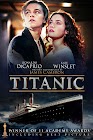
Titanic (5 Stars)


Today I thought Oliver would watch his second film. He picked "Madagascar 3" from Netflix. He sat fascinated for the first 72 minutes. Then there was a quiet scene. The characters were standing in the zoo talking to one another. That was too much for him. He turned the film off, even though I begged him to watch it till the end. It was only another 20 minutes. It was too much for him. He watched some silly little cartoon instead. It was called Trotro, something I've never seen before. Oh well. Maybe he'll find the patience to watch another film soon.

Soon he went to bed, so I turned to the next film in my top 100, "Titanic". It's a brilliant film. I don't know why I don't watch it more often. Maybe it's the length. I've noticed that I'm reluctant to watch films longer than three hours, however good they are.

There's no point in me describing the film. Everyone knows what happens. It's a love story set on a sinking ship. Here's my advice to single women: if you're thinking about marrying someone, watch "Titanic" with him. If he doesn't cry, he's no good for you. It makes me cry every time. Even Celine Dion's song, "My heart will go on", makes me cry, because it reminds me of the film.

The film is so well crafted, it can be used as an example of how to make a film. As far as the Academy Awards are concerned, it's the most successful film ever. It received 14 Oscar nominations, of which it won 11. Will that record ever be equalled, let alone broken? Time will tell.

I still think that this is Leonardo DiCaprio's best film. I know that sounds like an insult when said of a film early in someone's career, but I honestly don't think he's risen to this level since. Kate Winslet, on the other hand, has made many outstanding films since "Titanic".

Some of the films in my list will be a matter of taste, but how can anyone not like "Titanic"? Please let me know. If you don't like "Titanic", leave me a comment telling me why you don't like it.

While watching the film today I drank a glass of Eberbach-Schäfer's Schwarzriesling. I tried drinking it the correct way, as recommended by David Klenert. I poured it in a glass and waited half an hour before drinking it. It was amazing. After 20 minutes the room was full of the rich, fruity smell. I've even considered putting a small amount in a bowl in my bedroom at night. The wine definitely tasted better after being allowed to breathe. I wonder if all high quality red wines profit from this treatment.

Success Rate:  + 9.0

Order from Amazon.com
Order from Amazon.co.uk
Order from Amazon.de

Wednesday, 26 August 2020

Once upon a time in Hollywood (4½ Stars)


I gave this film five stars when I saw it in the cinema last year, but I've decided to lower the rating after watching it again today. The film is disjointed. In 2017 it was announced that Quentin Tarantino was going to make a film about the Manson Family murders. As the release date came closer, it was reported that the film was about Hollywood at the end of the 1960's. It's actually about both. The first two hours are about the golden days of Hollywood, while the last half hour is about the Manson Family murders. Both parts of the film are perfect in themselves, but it looks like the second part has been tagged on as an afterthought. It's true, the Manson Family also appears in a scene in the first part, but the Family doesn't seem to have any great importance, along all the other things that are happening.

There's a lot that I could write about the relationship between the actor Rick Dalton (Leonardo DiCaprio) and his stuntman Cliff Booth (Brad Pitt). I'll leave my thoughts on them until I watch the film again. In this review I'll concentrate on women's feet.


Margot Robbie is sitting in the cinema watching "The Wrecking Crew" with her feet up. I have no problems with that. When I went to see "Emerald Green" there was a teenage girl with her legs up sitting next to me, and I allowed myself a few looks. The problem is that Margot's feet are dirty. I've heard that some men like dirty feet, but not me! I find them revolting, not sexy at all.


This is Pussycat (Margaret Qualley) hitching a ride from Cliff Booth (Brad Pitt).


Pussycat has beautiful feet, and even more beautiful legs, but I have to offer her some advice: when she's hitching a ride, she shouldn't lay her head on the driver's lap. It's not safe.


Dakota Fanning plays Squeaky, the Manson Family member keeping ranch owner George Spahn as a sex slave. The other recent film about the Manson Family, "Charlie Says", goes into more detail on their relationship, but only Quentin Tarantino shows us Squeaky's feet.


"George is that way, Cliff". Why should Squeaky point with her finger when she can use her toes?


I don't know who these two girls are, but they have nice feet.

I have difficulty rating Quentin Tarantino's films in order, but this film is easy to rate. Out of his nine films, I put this in eighth place. (His weakest film is "Hateful Eight"). Apart from the film being disjointed, I have two other slight criticisms. The first is the portrayal of Bruce Lee. Why is he so arrogant? It's also shocking that a random stunt man is able to beat him in a fight.

My second criticism is the rewriting of history. When Quentin Tarantino rewrote history in "Inglourious Basterds" it didn't bother me. It had a purpose that suited the movie well. The rewriting of history in "Once upon a time in Hollywood" is puzzling. Is there a purpose behind saving Sharon Tate's life? She's saved by the random meeting of Cliff and Tex in the first part of the film. Does Tarantino want to say that random events, however minor, can change history? That's the message of "Run Lola Run". If he's ever commented on this in interviews, please let me know in the comments box below.

Success Rate:  + 2.2

Order from Amazon.com
Order from Amazon.co.uk
Order from Amazon.de

Tuesday, 27 August 2019

Once upon a time in Hollywood (5 Stars)


Some films are too good to watch just once. Any Quentin Tarantino film is too good to watch just once. That's why I returned to the cinema today to watch "Once upon a time in Hollywood" a second time. The cinema wasn't quite as full as it was two days ago, but let's be fair, today is a weekday, and I went to an early showing. Some people work while others are watching films. I feel sorry for them.

Watching today, I made an attempt to compare it with Tarantino's other films. There's less of a narrative, as I pointed out in my first review. It's his most self-indulgent film to date. It's all about nostalgia for a past era, in films, television and music. I'm including music, because the music that we hear on the radio is essential to the film, even more than it was in his early films ("Reservoir Dogs", "Jackie Brown" and "Death Proof"). I recognised most, but not all of the songs. I grew up in England, and England has always had a different pop music scene to America. Maybe the two music scenes are merging now, in the YouTube generation, but in the 1960's the music played on the radio in the two countries was very different.

Where does "Once upon a time in Hollywood" rank among Tarantino's films? Ask me again next time I watch it. It's difficult to compare his films. I can never decide which one I like most, they're all so good. It's not his best film, but it's definitely not his worst. I already know that it'll get a high place in my top 10 list for 2019. I'm glad I started doing a top 10 in 2015. Think of it as a snapshot of my opinion at the end of each year. When I look back at my old lists, I'd rate the films differently today. I'd put "The Walk" at the top of the list for 2015. My tastes change. Slightly.

Sunday, 25 August 2019

Once upon a time in Hollywood (5 Stars)


Hollywood is the place of dreams. The problem with dreams is that they don't last. When you wake up in the morning they're gone. This is what we see in "Once upon a time in Hollywood", the 9th film by Quentin Tarantino. Sharon Tate is at the beginning of a successful career. After six years of minor roles she's finally become a face that people recognise. She expects her career to continue to dizzying heights, and her marriage to Roman Polanski is additional help.

Rick Dalton's success is waning. After years as a successful film and television actor he's having to play smaller roles. He's advised to go to Italy to make spaghetti westerns, but he thinks it's below him. The only person who believes in him is his stunt double and best friend Cliff Booth, but Cliff is on his way out as well. His bad temper makes him unpopular on film sets.

While I was sitting in the cinema I was asking myself what the film was about. When I walked out at the end I still didn't know. There doesn't seem to be a plot that leads from A to B. There are no recognisable character arcs. The story just rambles on, in a way typical for a true story, but in this case Rick Dalton and Cliff Booth are fictional characters. I'm sure they're composites of well known actors from the 1960's, but I won't know who Quentin Tarantino is thinking of until he names them in an interview. I can see some similarity between Rick Dalton and Lee Van Cleef, but I'm sure Tarantino is thinking of other actors as well.

Nevertheless, the story, or rather the non-story, is overwhelming. We're immersed in the good old days of Hollywood. Was 1969 the turning point? I don't know. I really want to hear Tarantino himself talk about the film.

I'm going to see the film again next week. Maybe I'll understand it better the second time.

Saturday, 10 November 2018

Inception (5 Stars)


The last time I watched "Inception" in October 2014 I said I would probably write a longer review the next time I watched it. I'm sorry. Maybe next time. This is an excellent film, one of my favourite films ever, but it's difficult to write about.

Success Rate:  + 3.2

Order from Amazon.com
Order from Amazon.co.uk
Order from Amazon.de

Thursday, 20 July 2017

The Aviator (4 Stars)


I vaguely remember watching "The Aviator" when it was first shown on television more than ten years ago. All that stuck in my mind was the aerial scenes and the plane crash. Today I finally returned to it, determined to remember more this time. The chances are better. I write a blog now, so if I'm still alive in 2027 I can read this post to remind myself about the film.

The film is famous for several near misses at the Academy Awards. It's the film for which Leonardo DiCaprio should have won the Best Actor award. (He had to wait another 11 years until "The Revenant", which wasn't in the same class as "The Aviator"). It's the film for which Martin Scorsese should have won the Best Director award. (He had to wait another two years until "The Departed", which was definitely inferior to "The Aviator"). It should also have won the Best Film award. The top awards in 2005 went to "Miilion Dollar Baby", which is quite remarkable, because it really wasn't such a good film, as most critics agree today. Jamie Foxx was awarded the Best Actor award for his performance in "Ray", which is so ridiculous that I doubt even Jamie expected it. "The Aviator" was nominated for 11 Oscars in 2005, of which it won five, one for Cate Blanchette as Best Supporting Actress -- wasn't she the Lead Actress? -- and the other four in technical categories. It should have won twice as many.


"The Aviator" tells the story of Howard Hughes from 1926 to 1947.  He was a tortured soul who was unlucky enough to become America's richest man. He was born in 1905. His father made millions from the invention of a drilling bit that was used in drilling for oil. His mother died in 1922 and his father in 1924, making him one of the richest men in America at a precariously young age.

Howard Hughes had a passion for two things: films and flying. He was a multi-millionaire at 20, but his passion for films, or rather his obsession with films, put him in danger of being bankrupt by 25. At 21 he began to make a film called "Hell's Angels" about the fighter pilots of World War One. Over a period of two years he invested two million dollars of his personal wealth in the film (the equivalent of $30 million today). When the film was complete he was unhappy with it, because sound movies had just been invented, so he spent another two years and another two million dollars on refilming it. The gamble paid off. The film earned eight million dollars at the box office, enough of a profit for him to continue with his passions.

Howard made more films, but he gained notoriety for his flying exploits. He set several speed records for planes, including a round the world flight in 101 hours, less than four days. Howard designed planes himself, he let his engineers build them, he fine-tuned them himself, and then he flew them himself, much to the horror of his business associates who thought he was putting his life at risk. Flying was too much fun to leave it to others.

He also bought Trans World Airlines (TWA), which he intended to become America's largest airline company. He spent $18 million of his own money on 40 new planes, because the company itself didn't have enough money. This failed to make him a profit because the boss of Pan Am, Juan Trippe, bribed a Senator to write a bill not allowing companies other than Pan Am to provide flights to Europe.


With Howard's business sense and his knack for making money came a curse. He was obsessive and paranoid. He was constantly afraid of uncleanliness and being infected. He couldn't touch things that other people had already touched, things like door handles. Eventually it got to the state that he couldn't endure personal contact with other people. This became the most extreme in his later years, not shown in the film, but even in the 1940's he spent days alone in a hotel room. He was afraid to visit the toilet -- a place with a high risk of infection -- so he urinated into empty milk bottles in his room.

During his early years, as shown in the film, Howard had many girlfriends who were film stars. The most famous were Katharine Hepburn and Ava Gardner. He also had a relationship with Faith Domergue, who was only 15 when they met. He sent her to school every day in a chauffeur-driven car, because he insisted that education was essential.

Even within the 20-year time-frame the film omits many details of Howard's life. He was a complex man. He might not have been a likeable man, but the film concentrates on the details that make him sympathetic to the viewer. As viewers we rejoice in his strengths and pity his weaknesses. Leonardo DiCaprio excels in portraying him. He really should have won the Oscar for Best Actor.

Order from Amazon.com
Order from Amazon.co.uk
Order from Amazon.de

Sunday, 14 February 2016

Django Unchained (5 Stars)


This is the film I decided to watch on Valentine's Day. What does it have to do with this special day of the year? Absolutely nothing. I've never cared much for Valentine's Day. When I was in school I always bought a card for whoever I happened to be dating on February 14th. None of my relationships lasted from one year to the next. In fact, while I was at school the longest relationship I had with a girl was two months, and most of the relationships were much shorter.

I can't remember how many girlfriends I had before I got married. There were so many of them. I didn't do one-night stands, that wasn't my thing, but none of my steady relationships lasted long. Looking back with the wisdom of my later life, I can understand why there were so many. In my teens and early twenties I had long blond hair, so I was a pretty boy. Because I had so many girlfriends the girls in the local schools were fascinated by me. They thought I must be experienced, something special, so as soon as I was single girls were queuing up to grab me. They were so wrong. The reason that I had so many girlfriends was because as soon as a girl was with me she discovered how unpleasant I was. In my younger years I was a difficult person, to say the least. I wasn't deliberately nasty, but I was so mixed up in my head that it wasn't easy for girls to put up with me. I didn't know what I wanted. It wasn't just a prolonged puberty, I was trying to suppress desires which I considered to be wrong. It wasn't until I was 22 that I learnt to accept myself as I was.


I'm single now. That isn't for the same reasons as in my youth. Since my mid-20's I've been married twice, and I've had one relationship that was marriage-like, i.e. we were living together for a few years. When I was young it was always the girl who left me, but I was the one who walked out of all three of my more recent serious relationships against the wishes of the woman. Both of my ex-wives would still take me back. In all three cases the woman I was living with was severely flawed.

Brigitte was outwardly cold and incapable of expressing emotion.

Leslie was a slut who wanted an open relationship involving other men.

Nicola was a crack addict who loved drugs more than me.

Of course, none of them were like that when I first met them. I dated Brigitte for almost two years before we got married, and she was very romantic. Things changed very soon afterwards. She seemed to have preconceived ideas about what a marriage should be like, based on what she saw in her parents' life. She wanted a routine and stability, not passion and romance. I wanted a woman I could hold hands with and kiss on the cheek, but Brigitte didn't consider that appropriate for a married couple.

When I first met Leslie she admitted that in the past she'd had wild sex, both with individuals and groups of men, but she said it was over. Maybe the reason that it was over wasn't because she didn't want it, it was because she didn't have the opportunity. When we first moved together I was out of work for a long time, almost a year. That was terrible for me, but Leslie looked after me financially. When I finally found work she quit her job to get a college degree. She enrolled at a college, but could do most of her studying at home. It wasn't until much later that I realised she wasn't studying, she'd quit after a few months because it was too tough for her. During this time she started to see other men while I was at work. I found evidence on her computer that there were 30 men in the last eight months we were together, but I suspect there were others before then. In retrospect I can see the clues, but I was too naive at the time. For instance, she sometimes asked me if I wanted to do a threesome with her and another man, but I turned it down. When I finally found out about the 30 men, including three men she was still seeing, she said she loved me and begged me to stay with her. Slut.

Nicola didn't use drugs when I first met her. She smoked cigarettes, which should have been a warning sign for me, but nothing stronger. I hate smoking, but Brigitte had smoked when we first met and gave it up for me, so I expected the same from Nicola. The problems with hard drugs started when we had been married for two years. One of Nicola's friends, Sharon, was in between accommodation and stayed with us while she was waiting to move into her new apartment. It was only for one week, but it was fatal. Sharon's boyfriend, Alexis Thomas, sold drugs. Nicola decided to try a few things, including crack and heroin. "Just trying" became an addiction within a week. Over the next two years she tried repeatedly to give up crack, but she couldn't do it. I loved her and wanted to support her, but one incident showed me it was impossible. On one evening she wanted to buy crack from Alexis. I refused to let him come into the house. Nicola was unable to walk at the time, so she couldn't go out to him. (She had jumped out of a first floor window while she was high and broken her leg). Because of this she rang the police and told them I had assaulted her. The police came and found no evidence that I had hit her, but they took me to the police station to keep the peace, as they described it. When I returned home the next day Nicola showed no remorse. She said it was my own fault that I'd been arrested because I hadn't allowed her "friend" to visit her. I was scared that the next time she accused me of assault the police might believe her, so I made her leave as soon as I found her a place in a hostel.


Maybe there are good women out there. I don't really care. I'm not looking. After suffering so much, three times over, I'm not willing to take another risk. Of the three, it's probably Brigitte who hurt me the most. I still see her occasionally, but after all this time she still doesn't know why I left her. I've told her, again and again, but it's like she has a mental block. I've told her that I left her because she didn't love me, but she doesn't believe this was the reason, and she thinks it's an excuse for something else. During the 15 years we lived together she only said the simple words "I love you" twice, on December 31st 1982 and May 9th 1983. She doesn't see that as a problem and finds it ridiculous that I remember the dates. Those were special dates for me. I'll always remember them.


Tuesday, 26 January 2016

Catch me if you can (4½ Stars)


This is the true story of Frank Abagnale, one of the most successful con men ever. His criminal career began when he ran away from home at the age of 15. He forged cheques worth more than four million dollars before he was 19. The film is supposedly accurate as far as his crimes are concerned, but fictionalises the relationship with his father.

The film is directed by Steven Spelberg and stars Leonardo DiCaprio as Frank Abagnale. To get the fictional aspects out of the way first, it was important to present Frank's love for his father as his motivation for his crimes. This makes his character more sympathetic to the audience than if he had been shown as a selfish cold-hearted criminal. In 1963 (when Frank was 15) his father had lost money in his business and was facing bankruptcy due to IRS payment claims. I think this is something that could only happen in America. In England (and most other western countries), if a company loses money no tax is due. In America the Inland Revenue levies taxes on a company's profits, even if the profits are subsequently lost later in the year. This leads to the absurd situation that people with no money are expected to pay high tax bills. Young Frank felt that the government was robbing his father -- which is true, if it really happened the way the film portrays it -- so he swore to steal the money back from the government and give it to his father.

When his parents divorced Frank ran away from home rather than decide which parent to live with. His first attempts to cash cheques failed, until he had the idea of pretending to be a pilot. In a pilot's uniform he had no problems cashing forged cheques, because everyone trusts a pilot. Pilots have a reputation as being something special, even more than judges or doctors. It's a mixture of the responsibility and the uniform. Last year I visited a night club and met a group of American navy pilots who were stationed in Cosford, near Wolverhampton. They were in full uniform. They told me that it wasn't compulsory for them to wear their uniforms when off duty, but they did so "because English girls go crazy about the uniforms". It was true. Girls were practically fighting to get near the pilots. Maybe I should buy myself a pilot's uniform.

Of course, it wasn't just the uniform. Frank Abagnale was a skilled forger. As well as cheques he forged certificates, enabling him to work as a doctor and a lawyer. Throughout his short but highly successful criminal career Frank was pursued by the FBI agent Carl Hanratty (played by Tom Hanks), and the two developed a respect for one another.

After his arrest in 1969 he was given short prison sentences in France and Sweden. He was then extradited to America and sentenced to 12 years in prison. This sentence was cut short when he was offered a job in the bank fraud development of the FBI, where he worked for 26 years. No criminals were a match for his skills of fraud detection.

The real Frank Abagnale.

It's been a long time since I last watched this film. Maybe 10 years. I'm not sure why I waited so long. I have a great respect for Steven Spielberg as a director, but there are only a few of his films that really grip me. His films are too smooth, too perfect. "Catch me if you can" has enough of a rough edge to make it a thrilling film. I also consider it to be Leonardo DiCaprio's second best film, second only to "Titanic".

Frank's escape from police custody when being extradited to America seems so ridiculous that it couldn't possibly be true, but I've found out that it really did happen as shown. He jumped out of a moving plane while it was taxiing on the runway at JFK Airport. He managed to break through a fence and flee across country before finally being apprehended.

The prison in France was even worse than how it's shown in the film. According to Wikipedia, "At Perpignan he was held nude in a tiny, filthy, lightless cell that he was never allowed to leave. The cell lacked toilet facilities, a mattress, or a blanket, and food and water were strictly limited". That sounds disgusting. Were things really so bad in France in 1970?

Monday, 18 January 2016

The Revenant (4½ Stars)


This is a remake of the 1971 film, "Man in the Wilderness", based on the story of Hugh Glass, who was left for dead by his fellow hunters and walked 200 miles back to Fort Kiowa in South Dakota.

In 1823 Hugh Glass (Leonardo DiCaprio) was acting as guide for a group of trappers who were gathering beaver pelts. While on their way back to Fort Kiowa they are ambushed by Indians who kill about half of the hunting party and steal the beaver pelts. They decide to return to the fort empty-handed. On the way Hugh is attacked by a grizzly bear. He's left barely alive, and the others are unsure whether to carry him back or shoot him to put him out of his suffering. The final decision is that volunteers should remain with him while the others return. The volunteers should wait to see if he recovers, and then either bring him back or bury him. Hugh's son Hawk and two other trappers stay with him.

Since the volunteers will receive the same payment whether Hugh lives or dies, one of the volunteers, John Fitzgerald (Tom Hardy), decides to kill him as soon as the others have left. Hawk tried to defend his father, but John murders him. John makes his way back to the fort with the third volunteer, who didn't witness the murder, leaving Hugh tied up and left to die.

Miraculously, Hugh manages to free himself. Despite his massive injuries he makes his way back to the fort, partly on foot, partly on horseback after stealing a horse from a French camp. The only thing keeping him alive is his quest for revenge for the murder of his son.

Visually, this is an amazing film. The snow-covered mountains of America have a bizarre beauty. The film shows what the Wild West was really like in the early 19th Century. It wasn't all about gunslingers in shanty towns. It was also about a battle for survival, against the fierce weather, against Indian tribes and against French settlers who disagreed with France selling their land to the USA in 1803. It's not just two sides against one another. The battle lines are blurred and alliances shift.

"The Revenant" was recently nominated for 12 awards at the 2016 Academy Awards, more than any other film. Let's see if it succeeds in winning the Best Film award.