

Note: the official title of this film is "The King's Man", but I've
decided to use the title it has in Germany, "Kingsman: The Beginning". It's
more sensible, and it groups it with the other films in my
alphabetical list of posts.

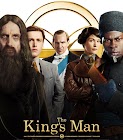
Kingsman: The Beginning (The King's Man, 2021)
An investigation into the history behind the film
Introduction: A different kind of Kingsman
The first two Kingsman films were essentially comic-book adventures. They took
the conventions of James Bond, exaggerated them enormously, and added
spectacular fight choreography, outrageous violence and plenty of humour.
"Kingsman: The Beginning" takes a different approach. It uses the First World
War as the setting for a fictional account of the origins of the Kingsman
organisation.
The interesting thing is that Matthew Vaughn hasn't simply borrowed a few
historical names and placed them in an otherwise conventional adventure. He
has taken actual historical events, actual political figures and actual
personalities, and woven them into an alternative explanation of how the First
World War developed.
His central proposition is that a secret organisation of conspirators
deliberately engineered the conflict, manipulating governments, assassinating
important people and exploiting international rivalries.
That is, of course, fiction. But it's fiction built around some remarkably
interesting historical material.
I shall examine the film in three parts.
1. What historical details are correct?
There is considerably more historical truth in the film than might initially
be apparent.
The three royal cousins

One of the most interesting historical details concerns the three monarchs:
• King George V of Britain.
• Kaiser Wilhelm II of Germany.
• Tsar Nicholas II of Russia.
All three were related, although the film simplifies their family
relationships. George and Wilhelm were first cousins, as were George and
Nicholas. Wilhelm and Nicholas were more distant cousins.
Their family connections were genuine, and they were all part of an
extraordinarily interconnected European royal establishment.
George and Nicholas even looked remarkably alike. Their mothers were sisters,
daughters of King Christian IX of Denmark. Wilhelm was George's first cousin
through Queen Victoria's family.
The film's suggestion that family connections might have helped prevent a
European war is an interesting one. Unfortunately, they didn't.
The relationships between the monarchs did not overcome their competing
national interests, military commitments and political pressures.

The assassination of Archduke Franz Ferdinand
The assassination of Franz Ferdinand and his wife Sophie in Sarajevo on 28
June 1914 is accurately represented in its essential details.
The assassin was Gavrilo Princip, a Bosnian Serb nationalist.
He was one of several conspirators positioned along the Archduke's route. The
group had connections with the Serbian nationalist organisation known as the
Black Hand.
There had already been an assassination attempt earlier that morning. Nedeljko
Čabrinović threw a bomb at the Archduke's motorcade, but it failed to kill its
intended target.
The Archduke subsequently attended Sarajevo Town Hall. Later, while travelling
to visit those injured in the bombing, his chauffeur took a wrong turn. The
car stopped and reversed, bringing it close to Princip, who was standing
nearby.
Princip fired two shots, killing both Franz Ferdinand and Sophie.
The film gets the essential circumstances right, although it simplifies the
sequence of events and the number of people involved.
One important qualification: the precise extent of the Serbian government's
involvement in the conspiracy remains a matter of historical debate. The Black
Hand had connections to Serbian military intelligence, but that doesn't mean
the Serbian government as a whole ordered the assassination.
The National WWI Museum and Memorial provides a particularly useful account of
the events, including the original motorcade route and the positions of the
conspirators.

Rasputin
Grigori Rasputin was very real, and his influence over the Russian imperial
family was considerable.
He was particularly close to Empress Alexandra, the wife of Nicholas II. She
believed that Rasputin possessed remarkable healing abilities and could help
her haemophiliac son, Alexei.
His influence was a source of considerable resentment among the Russian
aristocracy and politicians. Many believed that he was damaging the reputation
of the monarchy.
The film also gets one important detail right: Rasputin was murdered by a
group of conspirators who included Prince Felix Yusupov.
Yusupov was a real Russian aristocrat, married to Irina, a niece of the Tsar.
Rasputin was murdered at Yusupov's palace in December 1916.
The circumstances of his death have become legendary. According to Yusupov's
own account, Rasputin was poisoned, shot, attacked again and eventually thrown
into a river.
The popular story is that he was almost impossible to kill.
However, there's a problem. Much of the extraordinary account comes from
Yusupov himself, whose memoirs were hardly an impartial historical document.
A forensic examination published in 2024 concluded that Rasputin had probably
died from a gunshot wound to the forehead before his body was thrown into the
river. The alleged poisoning is also unsupported by the autopsy evidence.
So, while the film is entitled to portray Rasputin as a formidable and
eccentric personality, the almost superhuman fighting ability is entirely
another matter!
Incidentally, Rhys Ifans's performance is one of the film's most entertaining
inventions.

Lord Kitchener and HMS Hampshire
Herbert Kitchener was another genuine historical figure.
He was Britain's Secretary of State for War when the First World War began and
became famous for his recruitment campaign, particularly the famous image of
him pointing at the viewer with the words "Your Country Needs YOU".
His death in the film is based on a real event.
On 5 June 1916, Kitchener was travelling to Russia aboard HMS Hampshire on a
diplomatic mission. The ship struck a German mine off the Orkney Islands and
sank.
Kitchener was among the 737 people who died. There were only 12 survivors.
The film is correct about the ship, its destination and the date of the
disaster.
What it changes is the explanation for the sinking and the circumstances
surrounding Kitchener's death.
In reality, there is no historical evidence that a secret organisation
arranged his death. HMS Hampshire struck a mine, and the disaster was a
genuine wartime tragedy.
The National Army Museum and Royal Navy both confirm the historical
circumstances.

Mata Hari
Mata Hari was also a real person.
Born Margaretha Geertruida Zelle in the Netherlands in 1876, she became famous
as an exotic dancer in Paris.
During the First World War she became involved with intelligence services and
was eventually accused of spying for Germany.
She was arrested by the French in February 1917, tried for espionage and
executed by firing squad on 15 October 1917.
The film is correct about her existence and her eventual fate.
However, the historical Mata Hari was a much less convincing spy than popular
mythology suggests. British intelligence regarded her as an ineffective
amateur, and the evidence used to convict her was highly questionable.
There is considerable reason to doubt that she was the master spy she was
portrayed as being.
The British government's own historical account, based partly on National
Archives material, makes particularly interesting reading.

Lenin and the Russian Revolution
Vladimir Lenin was, naturally, a real historical figure.
His return to Russia in 1917 was facilitated by the German government, which
hoped that his revolutionary activities would weaken Russia and eventually
remove it from the war.
Lenin was living in Switzerland when the February Revolution took place. He
wanted to return to Russia, but the Allied countries were unwilling to
facilitate the journey.
The German government therefore allowed him to travel through its territory.
On 9 April 1917, Lenin left Zurich by train, eventually reaching Russia.
The film's suggestion that Germany was prepared to help revolutionary
movements in Russia is entirely correct. Germany had an obvious military
reason to do so.
However, that does not mean Lenin was simply a German puppet. He had his own
political objectives and was perfectly capable of pursuing them independently.
The Swiss National Museum has a very good account of this journey.

2. What historical details are incorrect?
This is where things become particularly interesting, because the film takes
quite a few liberties with the historical record.
Some are harmless dramatic inventions. Others substantially change our
understanding of what happened.
The secret organisation responsible for the First World War
The central conspiracy is entirely fictional.
The film proposes that a Scottish nationalist called Shepherd has assembled a
group of influential people who manipulate international events to bring about
the destruction of Britain.
His organisation includes Rasputin, Mata Hari, Lenin and Erik Jan Hanussen,
among others.
They're responsible for manipulating the assassination of Franz Ferdinand,
influencing the Russian Revolution, encouraging international hostility and
prolonging the war.
There is no historical evidence for any such organisation.
The actual origins of the First World War were considerably more complicated.
The assassination of Franz Ferdinand was the immediate trigger, but the
underlying causes included:
• The rivalry between Austria-Hungary and Serbia.
• German support for Austria-Hungary.
• Russian support for Serbia.
• The military and diplomatic commitments between European powers.
• The arms race, nationalism and imperial competition.
• The disastrous decisions made during the July Crisis of 1914.
The assassination did not automatically make a European war inevitable. It was
the subsequent decisions of governments that turned a regional crisis into a
continental conflict.
The film replaces this complicated historical process with a single
conspiracy. It's a convenient explanation for a complicated event, but it
isn't history.
Gavrilo Princip was not working for a Scottish mastermind
Princip was a genuine Serbian nationalist, not an employee of a mysterious
Scottish organisation.
The Black Hand was a real organisation, and members of the Serbian military
intelligence establishment were involved in supporting the assassination plot.
However, there is no evidence that Princip was manipulated by a Scottish
nationalist or that the assassination was organised by an international
criminal organisation.
The film takes a genuine conspiracy and invents a much larger one around it.
Rasputin was not a secret agent
The real Rasputin was a deeply controversial religious figure who acquired
considerable influence over the Russian imperial family.
He was not an international criminal mastermind.
There is no evidence that he was working to bring about a European war or that
he was coordinating activities with Mata Hari and Lenin.
One particularly interesting detail concerns British involvement in his
assassination.
There has been speculation that British intelligence officers were involved in
the plot to kill Rasputin. One British officer, Oswald Rayner, has been
suggested as a possible participant.
However, the evidence is inconclusive. The fact that British agents may have
been interested in Rasputin does not establish that they participated in his
murder.
The film takes an uncertain historical possibility and turns it into an
established fact within its fictional universe.
Mata Hari was not a master spy
As mentioned earlier, Mata Hari was accused of being a German spy and was
executed by the French.
But the historical evidence suggests that her espionage activities were either
ineffective or greatly exaggerated.
She certainly wasn't part of an international conspiracy involving Rasputin
and Lenin.
The film transforms a rather unfortunate woman, whose trial was deeply
questionable, into a highly effective international criminal operative.
That's quite a transformation!

Erik Jan Hanussen
Daniel Brühl plays Erik Jan Hanussen, another real historical personality.
Hanussen was an Austrian mentalist, hypnotist and clairvoyant. He became
particularly famous during the 1920s and early 1930s.
He was eventually murdered in 1933, after attracting the attention of the Nazi
authorities.
His inclusion in the film is interesting, but his role as an international
conspirator is fictional.
The film takes a real personality associated with the world of illusion,
hypnosis and supposed supernatural powers and gives him a completely invented
political role.
Lenin was not part of a criminal conspiracy
The film's portrayal of Lenin is another substantial distortion.
It is true that Germany facilitated his return to Russia because it wanted to
weaken the Russian war effort.
But Lenin was a revolutionary politician with his own agenda. He wasn't simply
following instructions from German intelligence, and there is no evidence that
he was working with Rasputin or an international criminal organisation.
Germany's assistance was an attempt to exploit an existing revolutionary
movement, not proof of a conspiracy controlling the Russian Revolution.
Lord Kitchener was not assassinated
This is probably the clearest example of the film replacing historical fact
with fiction.
Kitchener died when HMS Hampshire struck a German mine.
The film turns his death into part of a conspiracy.
There were certainly suspicions and rumours surrounding the sinking, but no
convincing historical evidence that it was deliberately arranged to kill
Kitchener.
His death was a genuine wartime disaster.
The royal families were not manipulated in the way depicted
The family relationships between George V, Wilhelm II and Nicholas II are
real.
Their political relationships, however, were much more complicated than the
film suggests.
They weren't simply three cousins whose personal disagreements could be
exploited by a secret organisation.
They were heads of states with governments, military establishments,
diplomatic commitments and competing national interests.
The fact that they were related didn't give them the power to ignore those
interests.

3. Could the fictional elements really have happened?
This is perhaps the most interesting question, because historical fiction
doesn't have to be true to be convincing.
It has to be possible.
I would divide the fictional elements into three categories.
A. Things that could realistically have happened
The existence of a private intelligence organisation.
There is nothing particularly implausible about the idea of a wealthy British
aristocrat establishing his own intelligence network.
In fact, British intelligence was undergoing considerable development during
this period.
The Secret Service Bureau was established in 1909, eventually developing into
MI5 and MI6.
Private intelligence gathering, political surveillance and the employment of
informants were all established practices.
A wealthy aristocrat with international connections could certainly have
recruited people to collect information, monitor political developments and
undertake discreet operations.
The idea of the Kingsman organisation therefore has a reasonably credible
historical foundation.
It is fictional, but not inherently absurd.
The use of aristocratic connections.
The film makes considerable use of the fact that wealthy and influential
families were interconnected across Europe.
This is entirely credible.
Aristocrats travelled, entertained one another, attended diplomatic functions
and maintained relationships across national borders.
An individual with the right connections could potentially obtain information
that would be inaccessible to an ordinary intelligence officer.
The Duke of Oxford's ability to move through different social environments is
therefore quite believable.
Covert political interference.
This is also perfectly feasible.
Governments and intelligence services have repeatedly attempted to influence
political developments in other countries.
Germany's assistance to Lenin is an excellent historical example.
The idea that an organisation might try to destabilise a government, influence
public opinion or encourage political unrest is not particularly far-fetched.
The film simply takes these established practices to an extraordinary extreme.
B. Things that are possible but highly unlikely
A small organisation controlling international events.
A wealthy individual could establish an intelligence network, but controlling
events across several countries would be a very different matter.
The conspirators in the film seem to have almost unlimited access to political
leaders, military personnel, intelligence services and influential
individuals.
They can arrange assassinations, manipulate governments and influence the
course of a major war.
This requires an extraordinary degree of organisation and influence.
It isn't impossible that a secret organisation could influence individual
events. But the idea that one organisation could coordinate the entire First
World War is extremely unlikely.
There are simply too many independent actors and competing interests.
The manipulation of the Russian Revolution.
Germany really did help Lenin return to Russia, but that doesn't mean it could
control what happened afterwards.
The Russian Revolution resulted from enormous internal problems, including
economic hardship, military failures, political instability and widespread
dissatisfaction with the Tsarist government.
A foreign organisation might exploit such circumstances, but creating and
controlling a revolution on that scale would be another matter entirely.
The assassination of important political figures.
Political assassinations were certainly possible in this period.
The assassination of Franz Ferdinand demonstrates that even the most important
people in Europe could be vulnerable.
However, the film makes the organisation responsible for an extraordinary
number of events and deaths.
That degree of operational success, without leaving convincing evidence of a
common organisation, would be difficult to sustain.
C. Pure fantasy
The fighting abilities of Rasputin.
I enjoyed the fight enormously, but let's be honest!
The historical Rasputin was not a martial arts expert.
There is no evidence that he was trained in Cossack fighting techniques, let
alone capable of the extraordinary acrobatics demonstrated in the film.
The sequence is entertaining precisely because it is so outrageous.
The secret mountain headquarters.
The enormous headquarters of Shepherd's organisation, with its elaborate
security arrangements and apparently unlimited resources, belongs firmly in
the world of James Bond.
A wealthy criminal organisation could certainly have a remote headquarters,
but the film takes the idea to comic-book proportions.
The personal combat abilities of the Kingsman agents.
The Duke of Oxford and his companions are remarkably effective fighters.
Their ability to defeat heavily armed opponents, infiltrate secure locations
and escape seemingly impossible situations is entertaining, but it isn't
particularly realistic.
The same applies to the elaborate fighting sequences and the film's more
extravagant action scenes.
That, however, is part of the franchise's identity.
The Kingsman organisation itself
There's one aspect of the film that I find particularly convincing.
The idea that an organisation of wealthy individuals might establish a private
intelligence service is not at all ridiculous.
In fact, the real British Secret Service Bureau was established in 1909 with
just two officers. It subsequently developed into MI5 and MI6.
At the outbreak of war in 1914, the domestic section had only 16 staff,
including its caretaker!
That's a fascinating historical detail in itself.
A wealthy aristocrat with sufficient money, connections and motivation could
certainly have established an independent intelligence organisation. It might
even have been useful to the British government.
The Kingsman organisation is therefore one of the film's more plausible
inventions, even if its subsequent activities are considerably
exaggerated.
Conrad's military service
The story of Conrad Oxford is also worth considering.
His desire to enlist despite his father's objections is entirely believable.
Young men from wealthy families volunteered for military service in enormous
numbers. Being the son of a duke would not necessarily have prevented him from
serving.
The circumstances surrounding his military career are fictional, of course,
but the general idea of a young aristocrat joining the army, concealing his
identity and finding himself in dangerous situations is perfectly credible.
The First World War was full of extraordinary personal stories, and many of
them would have seemed almost unbelievable to someone who hadn't lived through
them.

Final verdict: History versus historical fiction
I think "Kingsman: The Beginning" deserves credit for attempting something
different.
It isn't a conventional historical drama, and it certainly isn't an accurate
account of the First World War.
It's an alternative-history adventure that uses real historical personalities
and events to construct an entirely fictional explanation of the war.
There are three particularly interesting aspects of the film.
First, it introduces genuine historical events.
The assassination of Franz Ferdinand, Rasputin's murder, Kitchener's death,
Mata Hari's execution and Lenin's return to Russia are all fascinating
subjects.
The film provides an opportunity to become interested in these events and
investigate what actually happened.
Second, it makes good use of historical personalities.
The three royal cousins are particularly interesting, as is the inclusion of
Rasputin and Kitchener.
Even when the film exaggerates their personalities, the historical background
gives the characters an additional dimension.
Third, it creates a reasonably convincing fictional world.
The existence of a private intelligence organisation, the use of aristocratic
connections and the possibility of covert political interference are all
historically credible.
The problem is that the film takes these possibilities and stretches them much
too far.
A secret organisation might have influenced individual events. It might even
have helped bring about the downfall of a government.
But the idea that one organisation could have engineered the First World War,
manipulated the Russian Revolution and controlled the political destinies of
several European countries is simply too ambitious to be convincing as
history.
There's also one important distinction worth making.
The film isn't suggesting that the First World War happened exactly as
depicted. It's asking us to imagine an alternative explanation for events that
really happened.
That is a perfectly legitimate approach to historical fiction.
And, in this case, I think it works.
My overall assessment
To many, the film is more than the first two Kingsman adventures.
It has a much more substantial historical framework, a more serious tone and a
rather different approach to action.
Ralph Fiennes is particularly well suited to the material. He gives the Duke
of Oxford a sense of dignity and authority, while still allowing him to
participate in some decidedly unconventional activities.
Rhys Ifans' Rasputin is another highlight. The historical accuracy of his
fighting abilities is approximately zero, but the sequence is wonderfully
entertaining.
And the film's greatest achievement, in my opinion, is that it makes history
an integral part of the entertainment rather than simply using it as a
convenient backdrop.
The historical details are frequently accurate, the historical interpretations
are sometimes questionable, and the central conspiracy is entirely fictional.
But the film understands that real history can be every bit as extraordinary
as anything a screenwriter invents.
I would therefore describe "Kingsman: The Beginning" as an entertaining
alternative-history adventure, rather than a historical film.
And that's a compliment.
One final observation: I think the most interesting historical question
raised by the film isn't whether Rasputin could really fight like that. It's
whether the First World War might have been avoided if a few key individuals
had made different decisions. That's a much more serious question, and one
that historians still debate.
Success Rate: - 0.7
 |
Order from Amazon.com |
| Order from Amazon.co.uk | |
| Order from Amazon.de |

No comments:
Post a Comment
Tick the box "Notify me" to receive notification of replies.