

Note: the official title of this film is "The King's Man", but I've
decided to use the title it has in Germany, "Kingsman: The Beginning". It's
more sensible, and it groups it with the other films in my alphabetical list
of posts.
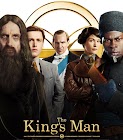
Kingsman: The Beginning (2021)
How much history is there behind the fiction?
Introduction
The first two Kingsman films were essentially extravagant spy adventures,
combining the conventions of James Bond with comic-book violence, spectacular
choreography and a considerable amount of outrageous humour. "Kingsman: The
Beginning" takes a different approach. Rather than simply providing another
adventure involving the Kingsman organisation, it attempts to explain how that
organisation came into existence, using the First World War as its historical
setting.
The result is a curious mixture of genuine history and complete invention. The
director, Matthew Vaughn, introduces real political figures, actual historical
events and some of the most notorious personalities of the early twentieth
century, then connects them through an elaborate conspiracy involving a secret
organisation determined to destroy the British Empire. The assassination of
Archduke Franz Ferdinand, the Russian Revolution, the death of Lord Kitchener
and the activities of Mata Hari all become part of the same fictional
narrative.
The historical background is one of the film's greatest attractions. It gives
the story a substance that the earlier films didn't particularly need, and it
makes the adventure considerably more interesting than a straightforward
collection of action sequences. It also raises three questions worth
investigating. How much of what we see actually happened? Which details have
been changed or invented? And, perhaps most interestingly, could the fictional
events have taken place within the political and social circumstances of the
period?
I'll examine these questions separately, beginning with the actual historical
events.
1. What historical details are correct?
The three royal cousins

One of the film's most interesting historical elements is the relationship
between three of Europe's most powerful monarchs:
• King George V of Britain
• Kaiser Wilhelm II of Germany
• Tsar Nicholas II of Russia.
The film presents them as cousins, and this is entirely correct. George and
Wilhelm were first cousins, as were George and Nicholas. Their family
connections were part of the extraordinarily complicated network of European
royal marriages that had developed over several generations.
George V and Nicholas II were particularly close relatives. Their mothers were
sisters, both daughters of King Christian IX of Denmark, and the physical
resemblance between the two monarchs was remarkable. Wilhelm II was also
closely connected to the British royal family through Queen Victoria, who was
his grandmother. These relationships were not merely ceremonial. The monarchs
corresponded with one another and were familiar with one another personally.
The three men occupied very different political positions, however. George V
was a constitutional monarch whose government exercised political authority,
Wilhelm II had considerably more personal influence over German policy, and
Nicholas II ruled Russia as an autocrat. Their family connections therefore
existed alongside very different political systems and national interests.

The assassination of Archduke Franz Ferdinand
The assassination of Archduke Franz Ferdinand and his wife Sophie on 28 June
1914 is one of the film's central historical events. Franz Ferdinand was heir
to the Austro-Hungarian throne, and his visit to Sarajevo was connected with
military exercises taking place in Bosnia. The date was particularly sensitive
because it coincided with Vidovdan, an important Serbian national and
religious anniversary.
The assassination was organised by a group of young Bosnian Serb nationalists,
several of whom had connections with the Serbian nationalist organisation
known as the Black Hand. One of the conspirators was Gavrilo Princip. The
group was equipped with weapons and explosives, and several of its members
were positioned along the Archduke's planned route through Sarajevo.
The first attempt occurred when Nedeljko Čabrinović threw a bomb at the
Archduke's motorcade. It failed to kill its intended targets, and the Archduke
continued to Sarajevo Town Hall. Later, he decided to visit officers injured
in the bombing. Unfortunately, the route was changed, and the chauffeur of his
car took a wrong turning. The vehicle stopped and reversed, bringing it close
to Princip, who was standing nearby. He fired two shots, killing both Franz
Ferdinand and Sophie.
The assassination was followed by a diplomatic crisis that developed into the
July Crisis. Austria-Hungary accused Serbia of responsibility and presented
the Serbian government with an ultimatum containing extremely demanding
conditions. Serbia accepted most, but not all, of the demands. Austria-Hungary
declared war on Serbia on 28 July 1914, and the involvement of the other
European powers transformed the conflict into a general European war.

Rasputin and the Russian imperial family
Grigori Rasputin was one of the most extraordinary and controversial
personalities in the final years of the Russian Empire. He was born in 1869 in
the Siberian village of Pokrovskoye, into a peasant family. His early life was
a long way removed from the world of the imperial court, and there was little
in his background to suggest that he would eventually become one of the most
discussed figures in Russia.
He married Praskovya Dubrovina in 1887, and they had several children.
Rasputin was not a monk, despite the way he is sometimes described, and he
held no official position within the Russian Orthodox Church. His religious
life developed through experiences and pilgrimages in the late nineteenth
century. He acquired a reputation as a wandering holy man, a spiritual healer
and someone who possessed unusual religious insight. His appearance, manner
and unconventional approach to religion made him a rather different figure
from the priests and officials normally associated with the Church.
By the early twentieth century he had reached St Petersburg, where he
gradually established connections with members of the aristocracy. Two
Montenegrin princesses, Militsa and Anastasia, helped introduce him to the
imperial family. His access to Tsar Nicholas II and Empress Alexandra
eventually became much closer, although it was Alexandra who developed the
strongest personal attachment to him.
The reason for this relationship was largely connected with their son, Alexei.
The boy suffered from haemophilia, a hereditary condition that prevents the
blood from clotting properly. The disease had entered the Russian royal family
through the descendants of Queen Victoria, and it was a constant source of
fear for his parents. Even a relatively minor injury could result in serious
bleeding, and the family went to considerable lengths to keep his condition
secret.
Rasputin appeared to have an extraordinary ability to calm Alexei during these
episodes. On several occasions, when the doctors seemed unable to help, the
boy's condition improved after Rasputin had intervened. Exactly why this
happened remains uncertain. His calming presence may have reduced the child's
distress, and it has also been suggested that he discouraged the use of
aspirin, which can make bleeding worse. Whatever the explanation, Alexandra
became convinced that Rasputin had been sent by God to protect her son. Her
trust in him became exceptionally strong.
This gave Rasputin an unusual position at court. He was not a government
minister, a military commander or an official adviser, yet he could
communicate directly with the Empress and, through her, influence the Tsar.
During the First World War, when Nicholas took personal command of the Russian
army, Alexandra became increasingly involved in political affairs at home.
Rasputin was consulted on appointments and matters of government, and his
influence, although often exaggerated, was a source of considerable resentment
among politicians and aristocrats.
His private life added to the controversy. Stories circulated about
drunkenness, sexual relationships with women and scandalous behaviour. Some of
these accounts were based on genuine incidents, while others were exaggerated
or invented by people who wanted to discredit him. Rumours that he was having
an affair with Alexandra were particularly damaging, but there's no credible
evidence that such a relationship existed. Nevertheless, the combination of
his influence over the imperial family and his unconventional behaviour made
him a deeply unpopular figure among many members of the Russian establishment.
By 1916, Russia was in a disastrous position. The war had brought enormous
casualties, economic disruption and growing public dissatisfaction with the
monarchy. Rasputin became a convenient symbol of everything that was wrong
with the imperial court. A group of aristocrats and political figures decided
that he had to be removed.
He was murdered on 30 December 1916 at the St Petersburg palace of Prince
Felix Yusupov, who was married to a niece of the Tsar. The conspirators
included Yusupov, Grand Duke Dmitri Pavlovich and the politician Vladimir
Purishkevich. The story that subsequently became famous is almost theatrical.
Rasputin was supposedly given cakes and wine containing cyanide, but survived
the poison. He was then shot, attacked, and eventually thrown into the river,
where he drowned.
There are good reasons to be cautious about this familiar version. Much of it
comes from Yusupov's own memoirs, written by one of the men responsible for
the murder. His account is not an impartial record, and the dramatic details
may have been exaggerated to make the assassination seem more extraordinary. A
forensic examination published in 2024 by Roger Byard questioned several parts
of the traditional story, particularly the alleged poisoning and drowning. It
suggested that Rasputin may already have been dead from a close-range gunshot
wound to the head before his body entered the river. The precise sequence of
events remains uncertain, but the popular story of a man who seemed almost
impossible to kill is far from securely established.
Rasputin's murder took place only a few weeks before the February Revolution
of 1917. Within months, Nicholas II had abdicated, bringing the Romanov
dynasty to an end. The former Tsar and his family were eventually executed in
1918. Rasputin had become one of the most notorious personalities of the final
years of imperial Russia, and his life and death have continued to attract an
extraordinary amount of fascination.

Lord Kitchener and HMS Hampshire
Herbert Kitchener was Britain's Secretary of State for War when the First
World War began. He was already a celebrated military figure, having served in
several colonial campaigns, and became one of the most recognisable
personalities of the war. His famous recruitment poster, showing him pointing
directly at the viewer with the words "Your Country Needs YOU", became an
enduring image of British wartime propaganda.
Kitchener died on 5 June 1916 while travelling to Russia on a diplomatic
mission. He was aboard HMS Hampshire, which struck a German mine off the
Orkney Islands and sank. Kitchener was among the 737 people who died in the
disaster. Only twelve people survived.
His death was a considerable shock in Britain. Kitchener had become a national
figure, and his loss removed one of the most recognisable members of the
British government during the war.

Mata Hari
Mata Hari was the stage name of Margaretha Geertruida Zelle, a Dutch woman
whose extraordinary life became almost inseparable from the legend that grew
up around her. She was born in Leeuwarden in the Netherlands in 1876. Her
father was a successful hat merchant, and she enjoyed a relatively comfortable
childhood, although the family fortunes later declined. Her early life was not
particularly glamorous, and her later reinvention was in many ways an escape
from circumstances that had become increasingly unhappy.
In 1895 she married Rudolf MacLeod, a Dutch army officer considerably older
than herself. They moved to the Dutch East Indies, where MacLeod was
stationed. The marriage was deeply troubled, and the couple eventually
separated. Their time in the East Indies nevertheless became important to the
identity Margaretha would later create for herself. She became fascinated by
the region's culture and traditions, although the exotic image she
subsequently presented to European audiences was largely a theatrical
invention rather than an accurate representation of Javanese life.
After returning to Europe, she reinvented herself as Mata Hari, presenting
herself as a mysterious dancer from the East. She claimed to be a Javanese
princess and constructed an elaborate story around her supposed upbringing and
religious education. Her performances in Paris attracted considerable
attention. They were less conventional dance recitals than carefully staged
spectacles, combining exotic costumes, sensual movements and a gradual removal
of clothing. At a time when Paris was fascinated by Orientalism and the
supposed mysteries of the East, Mata Hari became a considerable celebrity.
She also became involved with wealthy and influential men, including military
officers and diplomats. Her relationships were part of her social and
professional world, and she developed a reputation as a courtesan as well as a
dancer. This was later used against her. The image of a woman who could obtain
secrets through her personal relationships was an appealing one for the
authorities and the newspapers, but it was not necessarily supported by
evidence.
The First World War changed her circumstances. As a Dutch citizen, she was a
national of a neutral country and could travel more freely than women from
belligerent nations. Her connections with officers and officials attracted the
attention of intelligence services. In 1916 German intelligence recruited her,
giving her the codename H21. She also came into contact with French
intelligence, and the precise nature of her dealings with the different
services still remains a matter of historical debate.
Mata Hari accepted money from the Germans, but that does not necessarily mean
she was the effective spy portrayed in popular accounts. The information she
provided appears to have been outdated or of little practical value. She later
maintained that she had been playing one side against the other, and there's
considerable uncertainty about what she actually passed on. The British
authorities, who had also investigated her, did not regard her as a
particularly dangerous agent.
The French arrested her in February 1917. She was accused of supplying Germany
with information that had resulted in the deaths of thousands of Allied
soldiers. Her trial took place at a time when France was suffering military
setbacks and public morale was deteriorating. The prosecution relied heavily
on circumstantial evidence, her relationships with influential men and the
image she had created for herself as a seductive and mysterious woman. The
evidence that she had been responsible for serious damage to the Allied war
effort was far less convincing than the accusations suggested.
She was convicted by a military tribunal and executed by firing squad on 15
October 1917. Her death transformed her into an enduring symbol of the
seductive female spy. The popular image of Mata Hari, using her beauty to
extract military secrets from senior politicians and officers, owes much to
wartime propaganda and subsequent storytelling. The real woman was certainly
involved in intelligence contacts, and she did accept German money, but the
evidence for the master spy of popular legend is weak. Her life was
complicated, her activities remain disputed, and her execution has continued
to be regarded by many historians as an example of wartime paranoia and the
search for a convenient scapegoat.

Lenin and the Russian Revolution
Vladimir Lenin's return to Russia in 1917 is another important historical
episode used by the film. Lenin had been living in exile in Switzerland when
the February Revolution brought about the abdication of Tsar Nicholas II. He
wanted to return to Russia to participate in the revolutionary movement, but
travelling through Allied territory presented considerable difficulties.
The German government recognised an opportunity. Russia was still at war with
Germany, and the possibility of encouraging revolutionary activity offered the
Germans a way of weakening their enemy. They therefore permitted Lenin and a
group of fellow revolutionaries to travel through German territory.
The journey began in Zurich on 9 April 1917. Lenin travelled in a specially
arranged train whose passengers were not subjected to ordinary border controls
and were not permitted to leave the train during the journey through Germany.
The arrangement was intended to preserve the appearance that Lenin was not
simply travelling under German supervision. He eventually reached Russia on 16
April, according to the Western calendar.
His return was followed by the events that culminated in the Bolshevik
Revolution of October 1917. The German government had helped him reach Russia
for its own military purposes, although Lenin's political objectives were
entirely his own.
British intelligence before and during the war
There's another historical detail that deserves attention because it provides
an interesting background to the fictional Kingsman organisation. British
intelligence services were beginning to develop into recognisable modern
institutions in the years immediately preceding the First World War.
The Secret Service Bureau was established in 1909 and initially consisted of
just two officers, Mansfield Cumming and Vernon Kell. It was divided into Home
and Foreign Sections, which eventually developed into MI5 and MI6
respectively. At the outbreak of war in August 1914, Kell's domestic
organisation had only sixteen staff, including the caretaker.
During the war, British intelligence expanded its activities, working with
military intelligence and collecting information in neutral and occupied
territories. Women were also recruited for administrative work. The
organisation was still very small by modern standards, but the foundations of
Britain's modern intelligence services were already in place.
2. What historical details are incorrect?
Having established what actually happened, we can now look at the film's
alterations. Some are relatively minor changes made for dramatic convenience,
while others fundamentally rewrite historical events. The most important
distinction is that the film doesn't merely invent a few characters. It
creates an entirely new explanation for events that shaped the twentieth
century.
The origins of the First World War
The film's central conspiracy is its biggest historical invention. It proposes
that an organisation led by a mysterious Scottish nationalist known as
Shepherd deliberately manipulates European governments and arranges a series
of events intended to bring about the destruction of Britain. The
assassination of Franz Ferdinand is only one part of this plan.
In reality, the origins of the war were considerably more complicated. The
assassination provided the immediate trigger, but the underlying tensions had
been developing for decades. Germany and Britain were engaged in an
increasingly serious naval rivalry, Austria-Hungary and Russia competed for
influence in the Balkans, France had never reconciled itself to the loss of
Alsace-Lorraine following the Franco-Prussian War of 1870, and nationalism was
becoming increasingly influential throughout Europe.
The alliance system also played an important role. Germany and Austria-Hungary
were closely associated, while Russia and France had their own military
alliance. Britain had agreements with France and Russia, although these were
not quite the same as a formal military alliance. Once Austria-Hungary
declared war on Serbia, the various commitments and decisions of the European
governments turned a regional conflict into a much larger war.
There was no single organisation directing all these events, and no evidence
of a secret mastermind controlling the European powers. The July Crisis was
the product of political decisions, miscalculations, competing ambitions and a
series of increasingly dangerous responses to an international crisis.
The assassination of Franz Ferdinand
The film uses the real assassination but changes the circumstances by
introducing Conrad Oxford into the events. Conrad is present in Sarajevo and
intervenes in the assassination attempt, even managing to save Franz Ferdinand
from the bomb thrown by Čabrinović.
The real Conrad, of course, never existed, and there was no young British
aristocrat involved in the incident. The assassination was carried out by the
Bosnian conspirators, with Princip firing the fatal shots after the motorcade
took a wrong turning. There's no historical evidence of a mysterious Scottish
organisation arranging the assassination or controlling the movements of the
conspirators.
The film also simplifies the relationship between the Black Hand and the
Serbian authorities. The organisation was real, and members of the Serbian
military establishment were involved in providing assistance to the
conspirators. However, the precise extent of the Serbian government's
knowledge and involvement remains a more complicated question than the film
suggests.
Rasputin as an international conspirator
The historical Rasputin was already a remarkable and controversial personality
without needing to be turned into an international criminal mastermind. His
relationship with the Russian imperial family was real, as was his reputation
for eccentric behaviour and his influence over Alexandra. His murder by
Russian aristocrats was also genuine.
What is entirely fictional is his participation in Shepherd's organisation and
his involvement in the conspiracy to bring about the First World War. The film
also gives him extraordinary fighting abilities, transforming him into an
almost superhuman opponent. His famous dance and the subsequent fight sequence
are entertaining, but they have no basis in historical fact.
There's a further historical complication concerning Rasputin's murder. The
traditional account, largely based on Yusupov's memoirs, describes a lengthy
struggle involving poisoned cakes, gunshots, physical attacks and eventual
drowning. Modern forensic analysis has cast considerable doubt on this
version. The available evidence suggests that Rasputin was probably killed by
a close-range gunshot to the head before his body entered the river. The film
is therefore drawing upon a popular legend rather than an entirely secure
historical account.
The death of Lord Kitchener
The film's treatment of Kitchener's death is another substantial alteration.
His death aboard HMS Hampshire is historical fact, but the suggestion that it
was deliberately arranged by Shepherd is entirely fictional.
Kitchener was travelling to Russia when his ship struck a mine. There's no
convincing historical evidence that the sinking was an assassination organised
by a secret organisation. It was a wartime disaster, not a carefully planned
murder.
The film also uses Kitchener's death to advance its conspiracy narrative,
turning a real tragedy into a convenient plot device. This is a particularly
striking example of the way Matthew Vaughn takes a genuine historical event
and assigns it an entirely different explanation.
Mata Hari as a master spy
Mata Hari's story is perhaps the most interesting example of the difference
between historical reputation and historical evidence. She was certainly
arrested, tried and executed as a German spy. However, the extent of her
actual espionage activities remains disputed.
The prosecution accused her of passing information to Germany, but the
evidence was considerably weaker than the public mythology suggested. Some
historians believe that she was a genuine, albeit rather ineffective, agent.
Others regard her as a convenient scapegoat, condemned in an atmosphere of
wartime paranoia and suspicion.
The film turns her into a highly effective operative working for Shepherd,
capable of manipulating powerful men and participating in an international
conspiracy. That is a considerable exaggeration of her historical activities.
Her real life was already sufficiently unusual, and her trial and execution
remain controversial more than a century later.
Lenin and the German government
The film's portrayal of Lenin also requires some qualification. Germany really
did facilitate his return to Russia, hoping that revolutionary activity would
weaken the Russian war effort. That much is historical fact.
However, Lenin was not simply a German agent. He had his own political
ambitions and was determined to bring about a communist revolution. Germany
was exploiting an existing revolutionary movement, not controlling it.
The film places Lenin within Shepherd's organisation and presents him as part
of a much larger conspiracy. There's no historical evidence for this.
Germany's assistance was a cynical military calculation, and Lenin was
perfectly capable of exploiting the opportunity for his own purposes.
The Zimmermann Telegram and American entry into the war
The Zimmermann Telegram is another genuine historical element, although the
film incorporates it into its fictional conspiracy. In January 1917, German
Foreign Secretary Arthur Zimmermann sent a secret telegram to the German
ambassador in Mexico, proposing a military alliance should the United States
enter the war against Germany. Mexico was promised the possibility of
recovering territory lost to the United States, including Texas, New Mexico
and Arizona.
The British intercepted and decoded the telegram, and its publication caused
considerable outrage in the United States. It was one of several developments
that contributed to America's eventual entry into the war on 6 April 1917.
The film uses the telegram as part of its fictional narrative, involving
Conrad in the recovery of evidence relating to its authenticity. The
historical telegram was real, but Conrad's involvement and the surrounding
conspiracy were inventions.
It is also worth remembering that the telegram was not the sole reason for
American entry into the war. Germany's resumption of unrestricted submarine
warfare in February 1917 was another major factor, alongside the growing
deterioration of relations between the two countries.
The Second Boer War and the opening of the film
The film begins in 1902, during the final stages of the Second Boer War, with
Orlando Oxford, his wife Emily and their young son Conrad visiting a British
concentration camp in South Africa. The historical background is genuine.
Britain did operate concentration camps during the Boer War, holding Boer
civilians and, in separate camps, Black Africans.
Conditions in the camps were appalling. Overcrowding, inadequate sanitation,
poor food and disease resulted in the deaths of thousands of people,
particularly women and children. The camps became one of the most
controversial aspects of the British campaign in South Africa.
Emily Oxford, however, is fictional, as is her death during the visit. The
film uses a genuine and deeply uncomfortable episode of British colonial
history to establish Orlando's opposition to war and his determination to
protect his son from military service.
3. Could the fictional elements really have happened?
This is where the film becomes particularly interesting. Historical fiction
doesn't have to reproduce actual events, but its inventions should ideally be
compatible with the world in which the story takes place. A secret
organisation such as the Kingsman is not inherently implausible, but the
extent of its activities is another matter.
A private intelligence organisation
The basic idea behind the Kingsman organisation is quite feasible. Wealthy
individuals have always employed private secretaries, investigators,
bodyguards and other people to protect their interests. An aristocrat with
sufficient money and international connections could certainly establish an
organisation dedicated to gathering intelligence and protecting influential
people.
Indeed, the timing is quite appropriate. Britain's Secret Service Bureau had
been established in 1909, and intelligence gathering was becoming increasingly
important as European tensions grew. The real organisation was initially tiny,
but it developed rapidly during the First World War.
The Duke of Oxford's network is therefore not an entirely ridiculous
invention. A wealthy aristocrat could employ people with different skills,
establish contacts in foreign capitals and obtain information unavailable to
ordinary members of the public. His servants, Polly and Shola, are also quite
plausible as trusted members of such an organisation, particularly given the
importance of personal relationships and discretion in intelligence work.
What is less convincing is the organisation's ability to operate almost
everywhere, seemingly without encountering serious difficulties. The real
intelligence services of the period were far less efficient and considerably
more limited in their resources.
The aristocracy and international connections
The film makes considerable use of the social connections between European
aristocratic families. This is one of its more convincing elements. The
European nobility was an interconnected community, with marriages, friendships
and family relationships crossing national boundaries. Wealthy individuals
travelled frequently, attended diplomatic functions and maintained contacts
with influential people in other countries.
A British duke might well have known members of the Russian, German or
Austrian aristocracy personally. He could have obtained information through
these connections, attended important social occasions and moved between
political and diplomatic circles.
The Duke of Oxford's ability to use his social position as a means of
gathering information is therefore quite credible. His access to the royal
family and other influential individuals is not particularly difficult to
accept.
Political assassination and covert interference
The assassination of Franz Ferdinand demonstrates that important political
figures were vulnerable to relatively small groups of determined individuals.
The conspirators did not need an enormous organisation or sophisticated
technology. They needed information about the Archduke's movements, access to
weapons and an opportunity to carry out their plan.
Political assassination was certainly not an invention of the twentieth
century, and governments and political organisations had long employed covert
methods to influence events. The idea that a secret organisation might attempt
to destabilise a government, encourage revolutionary activity or arrange the
assassination of an important individual is historically plausible.
There's also a genuine example of foreign interference in the Russian
Revolution. Germany's assistance to Lenin demonstrates that governments were
prepared to exploit political instability in enemy countries. A secret
organisation could conceivably have attempted something similar, although its
success would depend on circumstances largely beyond its control.
The film's conspiracy is therefore built around methods that were available
during the period. The problem is the scale of the operation, not the basic
concept.
Could the First World War have been deliberately engineered?
Here the film becomes considerably less convincing. The idea that an
organisation could manipulate individual political events is plausible. The
idea that it could deliberately engineer a war involving most of the major
European powers is much harder to accept.
The European governments were not puppets waiting for somebody to pull the
strings. They had their own political objectives, military plans and domestic
problems. Even within individual governments, ministers and military
commanders frequently disagreed about the best course of action. The July
Crisis demonstrated how difficult it was to control events once the diplomatic
machinery began moving.
A secret organisation might have been able to encourage hostility between two
countries, provide money to revolutionary groups or exploit an existing
political crisis. But controlling the decisions of Austria-Hungary, Germany,
Russia, France and Britain simultaneously would have required an extraordinary
degree of influence.
It would also have required an organisation capable of anticipating and
controlling events that were frequently unpredictable. Even governments with
extensive intelligence services struggled to understand the intentions of
their opponents. Shepherd's organisation is therefore operating on a scale
that belongs more in a James Bond adventure than in a historical drama.
The manipulation of the Russian Revolution
The Russian Revolution provides an especially interesting example of the
limits of foreign interference. Germany was able to facilitate Lenin's return
because it recognised the possibility of weakening Russia from within.
However, the revolution itself had deep domestic causes.
The Russian Empire was suffering from economic problems, food shortages,
military defeats and widespread dissatisfaction with the Tsarist government.
The February Revolution was not created by Lenin, let alone by Germany. It was
the result of a crisis that had been developing for years.
An outside organisation could certainly have exploited this instability, but
creating and controlling the entire revolutionary movement would have been
another matter. Even Germany, with its considerable resources, could not
simply dictate what happened in Russia.
The Kingsman agents themselves
There's one final aspect of the film that deserves consideration: the
extraordinary abilities of its principal characters. Orlando Oxford, Shola and
Polly are all remarkably effective operatives, capable of fighting their way
through situations that would defeat most trained soldiers.
The idea of highly trained individuals working for a private intelligence
organisation is perfectly credible. The particular fighting abilities
demonstrated in the film, however, are considerably less so. The elaborate
choreography, the ability to defeat multiple opponents and the almost
supernatural physical endurance are part of the Kingsman tradition rather than
a serious attempt at historical realism.
Rasputin's fight is an especially entertaining example. Rhys Ifans gives the
character an extraordinary combination of eccentricity, physical agility and
menace. The choreography is deliberately exaggerated, and I suspect that
Matthew Vaughn had considerable fun creating the sequence. It's one of the
film's highlights, but it has nothing to do with the historical Rasputin.
Could an organisation like Shepherd's really have existed?
The short answer is that an organisation of wealthy and influential people
could certainly have existed. There's nothing inherently implausible about a
private group employing investigators, collecting intelligence and attempting
to influence political developments. The real British intelligence services
were still in their infancy, and private organisations could potentially have
operated alongside them without attracting much attention.
Shepherd's organisation, however, is something else entirely. It appears to
possess practically unlimited financial resources, agents in several
countries, access to the highest levels of government and the ability to
manipulate events with extraordinary precision. Its members include people who
would otherwise have had very different political and personal objectives.
Maintaining such an organisation would have been extremely difficult,
particularly in wartime, when governments were increasingly suspicious of
foreign interference.
There's also a practical problem. The more people involved in a conspiracy,
the greater the likelihood that somebody will reveal its existence. An
organisation responsible for assassinations, political manipulation and the
orchestration of international conflicts would have needed an enormous number
of people. Keeping all of them silent for years would have been a formidable
undertaking.
The film's secret organisation is therefore an entertaining invention, but its
effectiveness belongs firmly in the world of espionage fantasy.
The appearance of Adolf Hitler
The film's mid-credits sequence introduces another historical personality:
Adolf Hitler. Erik Jan Hanussen, having taken over Shepherd's organisation,
introduces Lenin to the man who will eventually become the dictator of
Germany.
This is an intriguing reference to the future, particularly because the film
has already used real historical personalities to create its fictional
conspiracy. Hanussen himself was a real Austrian mentalist who became famous
in Germany during the 1920s and early 1930s. He was murdered in 1933 after
attracting the attention of the Nazi authorities.
The suggestion that Hanussen introduced Hitler into an international criminal
organisation is entirely fictional. There's no historical evidence of such a
relationship or organisation. Hitler's rise to power was the result of a very
different set of political, economic and social circumstances.
Nevertheless, the scene provides a rather ominous suggestion of what might
have happened had the Kingsman story continued into the 1930s.
Conclusion: An entertaining alternative history
I think "Kingsman: The Beginning" deserves credit for attempting something
different from its predecessors. Rather than simply repeating the formula of
the first two films, Matthew Vaughn has created an adventure that uses a
substantial amount of genuine historical material. The First World War is not
merely a convenient background. Its political circumstances, personalities and
events are central to the story.
The film is frequently accurate when describing individual historical events,
although it sometimes relies on popular versions of events that are not
entirely supported by the evidence. The assassination of Franz Ferdinand,
Rasputin's murder, Kitchener's death, Mata Hari's execution and Lenin's return
to Russia all provide genuine historical foundations. The problem arises when
these separate events are connected through Shepherd's fictional conspiracy.
I find the basic idea of the Kingsman organisation considerably more
convincing than the film's explanation of the First World War. A wealthy
aristocrat establishing a private intelligence network is entirely feasible,
particularly during a period when British intelligence was still developing.
The Duke of Oxford's social connections and ability to gather information are
also reasonably credible. What is much harder to accept is that one secret
organisation could have engineered a war involving most of the major European
powers, manipulated the Russian Revolution and controlled the activities of so
many influential individuals.
But perhaps historical accuracy isn't quite the point. The film is an
alternative-history adventure, not a documentary, and it uses real events to
create a fictional explanation of how the Kingsman organisation came into
existence. Its inventions are often outrageous, but they are built around some
fascinating historical material.
I particularly enjoyed the more serious approach. The action choreography is
less exaggerated than in the earlier films, although Rasputin's extraordinary
ballroom sequence provides a welcome reminder that this is still a Kingsman
production. Ralph Fiennes gives the Duke of Oxford considerable dignity, while
Rhys Ifans makes Rasputin an unforgettable character. Gemma Arterton and
Djimon Hounsou also make valuable contributions, and the film benefits from
having a rather more substantial story than its predecessors.
My verdict is that "Kingsman: The Beginning" succeeds as an entertaining historical
adventure, even if it occasionally treats history rather carelessly. It isn't
a reliable account of how the First World War began, but it does provide an
enjoyable excuse to revisit some of the extraordinary personalities and events
of the period.
And if it encourages somebody to investigate what really happened in Sarajevo,
St Petersburg or revolutionary Russia, then it has achieved something
worthwhile.
Success Rate: - 0.7
 |
Order from Amazon.com |
| Order from Amazon.co.uk | |
| Order from Amazon.de |

No comments:
Post a Comment
Tick the box "Notify me" to receive notification of replies.