Showing posts with label Carey Mulligan. Show all posts

Wednesday, 25 August 2021

Promising Young Woman (4 Stars)


Cassie is 30 years old and works in a coffee shop. She lives with her parents and has never had a boyfriend. By all accounts she's a failure in life. And yet, she used to go to a medical school. She was one of the best students, but she dropped out after two years. What happened to her?

It's all because of her best friend Nina. They grew up together, they went to school together, and they went to college together. One evening she got drunk at a party, and she was raped by one of their fellow students. Nobody believed her story. There were other party guests who saw everything, presumably all male, and they kept quiet. She dropped out of college and died a short time later, presumably suicide.

You'll notice that I've already used the word presumably twice. If I continued with a full plot summary I'd have to use the word many more times. There are lots of things that are hinted in the film, not explicitly stated. In the two cases above, it's easy to guess what happened. It's obvious. In later scenes it isn't so clear. That annoyed me.

But getting back to Cassie, what's she doing with her life? Every Friday she goes to a club and pretends to be drunk. She waits for a man to take her home. She keeps a log in her diary of whether the man takes advantage of her in her drunken state. She makes black and red marks in her diary, to show whether it was a good man or not. Presumably. If it's a bad man she reveals that she's still sober at the last moment.

By chance she finds out that Nina's rapist, now a successful doctor, is about to get married. She steps up her activities and prepares to take revenge on him and those closest to him.


I felt slightly disappointed after hearing all the praise heaped on the film. To me it seemed uneven. There are some very good scenes, whereas others are less convincing. Over the years she's gone to the houses of strange men, presumably hundreds of men, and nothing bad has ever happened to her. What are the chances of that? The film is an interesting new slant on rape'n'revenge thrillers, but its uniqueness is what makes it weaker.

"Promising Young Woman" has already been released on disc in Britain and America. Its cinema release in Germany has been delayed by the cinema lockdowns.

Order from Amazon.com
Order from Amazon.co.uk

Tuesday, 20 March 2018

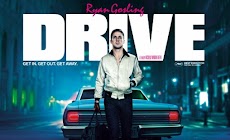
Drive (4 Stars)


After watching "Neon Demon" last week I decided to watch a few more films directed by Nicolas Winding Refn. Luckily several of them are available on Netflix. I'm beginning to get a feeling for his style now. He and his films have never been nominated for Academy Awards, but he's a favourite at independent film festivals, most notably at the Cannes Film Festival. His two most highly praised films so far have been "Neon Demon" and "Drive".

First of all I'll state my biggest criticism of "Drive": it's too short. The plot is complex, so 100 minutes isn't enough. A running time of 150 minutes would have done more justice to the subplots, as well as further developing the characters. Is there a director's cut lying in a draw somewhere?

Ryan Gosling is the film's unnamed hero. He's moved to Los Angeles to make it big, like so many other anonymous faces in and around the film industry. His job of choice is as a stunt driver. Nobody can crash a car like him. Aren't stunt men the most anonymous of all film stars? They're paid to remain unseen.

His relative success in Hollywood isn't enough to pay the bills. He works as a car mechanic. He also does freelance work as a getaway driver for robberies. It's all very impersonal. He doesn't want to make friends, he just does his job. He doesn't even speak to the crooks that he drives to and from crime scenes. They respect him for his driving skills, not for his personality.

He becomes romantically attached to his neighbour, a woman whose husband is in prison. It's a very underplayed romance. He's a decent man and respects the woman's marriage. When the husband is released from prison they make friends, and he offers to help him pay off debts to other criminals. He offers his services as a getaway driver to rob a pawn shop, but the robbery turns out wrong. Instead of the relatively small takings the Italian mafia is using the shop to store over a million dollars. The innocent driver gets caught up in a mob war in which he's the designated scapegoat. Or is he so innocent? That isn't clear. He might be a quiet person whose casual attitude makes other people think he doesn't know what he's doing, but he's more than able to handle himself in a fight.

The film is characterised by two features: bright colours and extreme violence. The style is very much like Quentin Tarantino's films, or at least it would be if there were more conversations. That's why "Drive" needs an extra 50 minutes. And, of course, Tarantino's films don't have such dazzling colours.

I can't help feeling that Nicolas Winding Refn is still slowly developing his style. His big masterpiece is yet to come. I can hardly wait.

Order from Amazon.com
Order from Amazon.co.uk
Order from Amazon.de

Thursday, 10 November 2016

Public Enemies (3½ Stars)


This is the 28th film starring Leelee Sobieski, made in 2009. Unfortunately she only has a small role and doesn't appear until the last 15 minutes. She plays Polly Hamilton, an escort girl accompanying John Dillinger at the time of his death.

The film is the true story of the bank robber John Dillinger in the last year of his life, 1933 to 1934. It's said that he was the most notorious bank robber in the Depression era. I confess to never having heard of him before I watched the film. He isn't part of my general knowledge, so whatever I write is based on what I saw in the film. I'll leave it to others to embellish my words and add remarks concerning the historical accuracy.

The film calls the early 1930's the golden age of bank robbing. I can understand it. It was an age of mass poverty. People were sleeping on the streets. The banks were considered the enemy, so gangs arose to take back the money they thought was rightfully theirs. John Dillinger had respect in the eyes of the public. He never robbed people in the banks, only the banks themselves. He never killed people while committing crimes. Maybe he wasn't as popular as Andreas Baader, who was admired by more than 25% of the German population, but he was still considered to be a hero by many suffering Americans.

Something that made it easier for criminals in the 1930's was that the laws on crime weren't as clear cut as they are today. A robber could escape punishment by crossing into another state where he was still innocent. It wasn't until 1934 that a law was passed that anyone who committed a crime in more than one state could be arrested in any of the 50 states. The FBI (called the Division of Investigation at the time) was still in its formative years, with limited resources, and its authority was repeatedly under question in court.

Eventually Dillinger was found and killed, due to the determined efforts of Special Agent Melvin Purvis. He carried out his mission calmly, without emotion, because he considered it the right thing to do.


The film has first rate performances by Johnny Depp as John Dillinger and Christian Bale as Melvin Purvis. Leelee Sobieski is wasted in her role. She's an insignificant background character and isn't able to display her full acting ability. She would have been better cast in the leading female role of Dillinger's girlfriend, Billie Frechette. That would have greatly improved the film.

Order from Amazon.com
Order from Amazon.co.uk
Order from Amazon.de

Friday, 15 April 2016

Inside Llewyn Davis (4 Stars)


A man, a guitar, a cat, nowhere to live. Actually it's two cats. Maybe three. Llewyn Davis catches his friend's cat after it runs away when he opens the door. He brings it back, but when he gives it back to his friends they say it's the wrong cat, so he adopts it. He carries the cat with him when he hitch-hikes from New York to Chicago, but he abandons the cat half way. When he's driving back to New York he runs over a cat. It looks like the cat he abandoned, but that would be too much of a coincidence, wouldn't it?

Llewyn Davis is an unsuccessful folk singer in New York in 1961. His songs are quite good, but he doesn't have much of a stage presence and earns badly. He engages in couchsurfing. That's a word that I only learnt after watching this film. It refers to someone who has nowhere to live, so he does a round of his friends, sleeping on their couch for a few days, then moving to the next friend as soon as they get tired of him. It's a good way to live if you're a poor musician in an expensive city.

I don't like folk music much, but I enjoy the feeling of the folk era in New York City (mostly Greenwich Village) in the 1960's. It was a time of rebellion. The young were protesting against the old, and especially against being forced to fight in the Vietnam War. Young people sat in dingy cafes and hung on every word from the mouths of the new breed of folk singers. I might have been sitting with them if I'd been alive in that era. After all, the rock music that I love so much didn't exist then, it only emerged in the early 1970's.

I don't know if this film has a message. Probably not. But it's enjoyable as a snapshot of the folk music scene in 1961.

Friday, 16 October 2015

Suffragette (5 Stars)


"Never surrender. Never give up the fight".

The Suffragette movement in the early 20th Century was unique in the history of revolutions. All other revolutions were spearheaded by the suppressed workers. The Suffragette movement was a revolution of middle class women. It could be argued that they didn't need to revolt. They had comfortable lives, they had money, they could do whatever they wanted. But there was one thing they couldn't do. They weren't allowed to vote. They took a stand, fighting for something that most of the working class women didn't care about. Why would a poor woman want to vote when she was more worried about earning enough money to feed her children? In that respect, England's middle class women saw more clearly. They fought to give the working class women what they needed, not necessarily what they wanted.

Having said that, what I enjoy most about this film is that it doesn't concentrate on the fight of middle class women. The main character is Maud Watts, a woman who works in a laundry. As she says of herself, she started work part time when she was 7, full time when she was 12, and she was now a forewoman at 24, but she still earned less than the male employees. This makes the film more poignant. We see a woman suffering from issues other than not being able to vote. For Maud the right to vote is a means to an end, she wants women to vote so that new laws can be passed to achieve equality for women.

The film did make me question some of my personal ethics. I'm someone who believes in obeying the law. If I don't like what's happening around me I call upon the law to be changed to stop it happening. In short, I'm a good citizen. That wasn't the case with the Suffragettes. They weren't good citizens, they were rebels. They broke the law. They smashed shop windows and blew up houses. That was the right thing to do. If they hadn't taken extreme measures women still wouldn't be able to vote today.

"Never surrender. Never give up the fight".

Is the fight over? I think not. I'm not just talking about countries like Saudi Arabia where women still aren't allowed to vote. I'm talking about England. Women have equality in theory, but not in fact. Women are paid lower wages, as long as it isn't admitted that their gender is the reason for the discrimination. When women complain about it men point at the few top women who earn more than most men, trying to distract from the fact that they're rare examples.

Emmeline Pankhurst (who we only see briefly in the film) didn't accept the status quo and the breadcrumbs thrown to her by men. She was a revolutionary. She fought for something that the majority of women in England didn't know they needed. In the same way Valerie Solanas fought for the overthrow of male-dominated society in the 1960's, although most women didn't listen to her. I fear that the fight has already been given up. Women today have been brainwashed into believing that they've already won. It's time to take up the fight again, not stopping until all patriarchal structures in government and religion have been overthrown.

Saturday, 2 May 2015

Far from the Madding Crowd (4 Stars)


Far from the madding crowd's ignoble strife
Their sober wishes never learned to stray;
Along the cool sequestered vale of life
They kept the noiseless tenor of their way.

The film poster that I've included above annoys me. I don't suffer from OCD, as far as I know, but posters like this are just wrong. Four people. Four names. Couldn't the names have been rearranged so that the names match the person below them? Not one of the names is in the right place. It couldn't be that difficult to put the names in the right order, could it?

The film is based on the novel of the same name written by Thomas Hardy in 1874. The book has been filmed four names, in 1915, 1967, 1998 and 2015 (this film). I saw the 1967 version on television years ago, but I couldn't remember it clearly enough to know the story.

Bathsheba Everdene is a young woman who inherits a farm from her uncle. She has to fight against the prejudices of the male-dominated farming community, but she proves herself tough enough to be taken seriously. After turning down two proposals of marriage from good men, the first a shepherd and the second a neighbouring farmer, she falls in love with a soldier who builds up gambling debts after their marriage. Why do women have to fall for the wrong men? I suppose it makes a good story.

I've never enjoyed the classic 18th and 19th Century dramatic love stories. I read a few when I was in school, but the content and the style alienated me. They always seemed to be about women torn between different men. Maybe this came from the repressive society of the time? What I mean is, in the 19th Century it was an awful scandal for women to have affairs, while men could get away with it. In this system of inequality women dreamt of extramarital excitement, so novels gave them something to dream about. That's my theory, anyway.

For me the film's outstanding actor is Matthias Schoenaerts, who plays the shepherd. It's difficult to describe what is so impressive about his performance. He plays a mostly quiet character, but whatever he does is so convincing. I predict a big future for him.

Monday, 27 January 2014

Inside Llewyn Davis (4½ Stars)


I wanted to see this film because of the era it portrayed, the emergence of music and poetry in Greenwich Village in the early 1960's. But I wasn't prepared for what I saw. The film contained a lot more comedy than was apparent from the trailers. Did this disappoint me? Not at all.

The film follows a week in the life of the struggling folk singer Llewyn Davis. He used to have a successful career as the junior partner in a folk duo, but after the suicide of his partner he has been struggling to find success. Llewyn is homeless, and sleeps on the couch of his friends, a few days in each apartment, as long as they will put up with him. His songs are good but gloomy, and he has no stage presence. As a club owner tells him, he's not a front man.

The film has no resolution. It shows Llewyn walking in circles. The film begins with him as a failure and ends with him as a failure. I suppose this makes the film a tragicomedy. Nevertheless, it's an emotionally moving film. We can feel for this poor man who keeps falling flat on his face while others around him with (apparently) less talent are succeeding. At the moment I feel overwhelmed by the dark but fascinating imagery of the film. I'll write more about it next time I see it.