Showing posts with label Bryan Cranston. Show all posts

Sunday, 10 May 2026

The Sheep Detectives (4 Stars)


As soon as I saw the trailers I knew this would be a special film.

Hugh Jackman plays George Hardy, a shepherd who's dedicated to his sheep. He lives in a caravan in the middle of his flock, and every night he reads detective novels to his sheep. They sit spellbound around him, and he assumes that they're only enjoying the sound of his voice, not the content of the novels, but he's wrong. They understand every word, and they discuss the stories with one another after he goes to bed at night.

One day George is found dead outside his caravan. The local policeman says it's a heart attack, but the sheep are convinced that he was murdered. If the police fail, it's up to the sheep to solve the crime.

It's a beautiful story, admittedly silly, but delightfully cute. The sheep aren't just a random flock, the main characters are all named and shown with distinct personalities. Maybe four stars isn't enough. I'll think it over next time I watch the film. Yes, there has to be a next time!

Sunday, 10 March 2024

Kung Fu Panda 4 (5 Stars)


If I'm gauging his reaction correctly, this is the best film that Oliver's seen so far. He didn't laugh much, even though the film is a comedy, but he was shaking with excitement. It's a fast paced martial arts film that's perfect for young children.

There's so much going on that I felt like I needed a scorecard to keep up. What I mean is that there are so many characters running around and fighting. The basic plot is simple. Po the panda has reached the level of Dragon Warrior, but Master Shifu tells him that it's time for him to advance. He has to give up fighting and become the spiritual leader of the Valley of Peace. He has to choose a successor, but the candidates are all so good that he can't decide. Before he makes a choice a village is destroyed by a new enemy, known only as the Chameleon. She's a shape shifter who's able to absorb the kung fu skills of anyone she fights. So Po has to fight as the dragon warrior for one last time.

I remember watching the first Kung Fu Panda film with my friend Pete in Birmingham. I don't remember exactly when it was, but it's not mentioned in my blog, so it must have been before I started writing in September 2010. Pete owned the film on video, and he was totally excited about it. Pete often invited me to his home for a meal, but we rarely watched films together, so it was a special occasion. (As far as I can remember, the only other films that we watched together were "Kill Bill Vol 2" and Peter Jackson's "King Kong").

I never watched the two sequels, so I need to catch up. For Oliver and for me. It seems like "Kung Fu Panda 4" is the final film in the series, so I'll wait for a four-film box set to be released.

Monday, 10 July 2023

Asteroid City (2 Stars)


What is the director Wes Anderson trying to do? Does he want to entertain the audience or just provoke us? I honestly don't know. I felt provoked. There were two young women sitting in front of me who felt just as provoked. Every time something strange happened in the film they turned and looked at one another. About half an hour from the end one of them put on her jacket and wanted to leave, but her friend tugged at her and told her to stay. It's a film that I almost walked out of. As it was, I was the only person in the cinema who remained seating to watch the bird hopping around during the final credits.

It's a film within a film, or rather a play within a film. It's about a playwright who writes, casts and directs a play about a group of people, mostly stargazers, who come together in a fictional city in the desert. While being told about an asteroid that fell in the desert thousands of years ago, an alien arrives and takes the asteroid away.

It's deliberately left unclear what's part of the play and what's really happening. It's possible that a real alien arrives while the play is running.

Wes Anderson has put a lot of work into the visual effects of the film. That's the only reason I haven't given the film a one star rating. I didn't enjoy it, and I have no intention to ever watch it again.

Friday, 8 November 2019

El Camino (4 Stars)


As my regular readers know, I'm an Englishman who lives in Germany. When I watch American films in Netflix I watch them with the original English dialogue. That's the only way I can fully enjoy them. Today was a rare exception that I watched a film in German, because I was watching with a friend who hardly speaks any English. I wanted to watch the film in English with German subtitles, he wanted to watch the film dubbed into German, so we made a compromise: we watched the film dubbed into German with German subtitles as well. That's something strange that I've never done before. However, I'm glad that I did this, because I noticed something: the spoken dialogue in the German dubbing isn't the same as the written dialogue in the subtitles. The meaning is effectively the same, but there are subtle differences in style throughout the film. I'll quote the first three lines of dialogue in the film as examples.

English: Now he's not going to be happy.
Subtitle: Er wird nicht glücklich sein.
Dubbing: Es wird ihm ganz und gar nicht passen.

English: No, I suspect he won't.
Subtitle: Nein, ich vermute nicht.
Dubbing: Nein, ich schätze es wird es nicht.

English: Only you can decide what's best for you, Jesse.
Subtitle: Du entscheidest, was das beste für dich ist, Jesse.
Dubbing: Nur du kannst entscheiden, was am besten für dich ist, Jesse.

I can't say that one version is better than the other. As the film progresses, sometimes the subtitles are a more literal translation, sometimes the dubbing. In all cases, as far as I could tell, the alternative less literal translation always expressed the meaning of the original English language adequately. Obviously the dubbing and the subtitles were translated independently of one another, but I don't understand why. Isn't that a waste of money? Wouldn't it have been easier to transcribe the subtitles from the dubbed dialogue?

I think the film is good. It's difficult for me to say, because I was concentrating on the differences between the subtitles and the dubbing rather than trying to enjoy the film.

The film was given a limited cinema release, and is now only available on Netflix. The fact that it was released on Netflix only a few days after its cinema release is the reason for its low box office sales and the poor success ratio.

Success Rate:  - 150.0

Tuesday, 20 March 2018

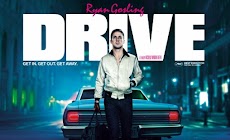
Drive (4 Stars)


After watching "Neon Demon" last week I decided to watch a few more films directed by Nicolas Winding Refn. Luckily several of them are available on Netflix. I'm beginning to get a feeling for his style now. He and his films have never been nominated for Academy Awards, but he's a favourite at independent film festivals, most notably at the Cannes Film Festival. His two most highly praised films so far have been "Neon Demon" and "Drive".

First of all I'll state my biggest criticism of "Drive": it's too short. The plot is complex, so 100 minutes isn't enough. A running time of 150 minutes would have done more justice to the subplots, as well as further developing the characters. Is there a director's cut lying in a draw somewhere?

Ryan Gosling is the film's unnamed hero. He's moved to Los Angeles to make it big, like so many other anonymous faces in and around the film industry. His job of choice is as a stunt driver. Nobody can crash a car like him. Aren't stunt men the most anonymous of all film stars? They're paid to remain unseen.

His relative success in Hollywood isn't enough to pay the bills. He works as a car mechanic. He also does freelance work as a getaway driver for robberies. It's all very impersonal. He doesn't want to make friends, he just does his job. He doesn't even speak to the crooks that he drives to and from crime scenes. They respect him for his driving skills, not for his personality.

He becomes romantically attached to his neighbour, a woman whose husband is in prison. It's a very underplayed romance. He's a decent man and respects the woman's marriage. When the husband is released from prison they make friends, and he offers to help him pay off debts to other criminals. He offers his services as a getaway driver to rob a pawn shop, but the robbery turns out wrong. Instead of the relatively small takings the Italian mafia is using the shop to store over a million dollars. The innocent driver gets caught up in a mob war in which he's the designated scapegoat. Or is he so innocent? That isn't clear. He might be a quiet person whose casual attitude makes other people think he doesn't know what he's doing, but he's more than able to handle himself in a fight.

The film is characterised by two features: bright colours and extreme violence. The style is very much like Quentin Tarantino's films, or at least it would be if there were more conversations. That's why "Drive" needs an extra 50 minutes. And, of course, Tarantino's films don't have such dazzling colours.

I can't help feeling that Nicolas Winding Refn is still slowly developing his style. His big masterpiece is yet to come. I can hardly wait.

Order from Amazon.com
Order from Amazon.co.uk
Order from Amazon.de

Monday, 5 February 2018

The Disaster Artist (5 Stars)


The best thing about reviewing true stories is that I don't have to worry about spoilers, especially if it's a story that's well known. In the case of this film it's even easier because the plot itself is so simple. Let's get the plot out of the way first:

Tommy Wiseau meets Greg Sestero in acting classes in San Francisco. They move to Los Angeles and make a film called "The Room", which is considered to be the worst film ever made.

That's it. No spoilers.

Tommy Wiseau was, and still is, a mystery. To this day nobody knows how old he is, where he comes from or how he became so rich. In 1998, when he met Greg, he claimed to be 19, but he was probably in his mid 40's. He said he was from New Orleans, but his accent sounded like he came from Eastern Europe. An investigator claims to have evidence that he was born in Poland, but Tommy has never confirmed it. As for the source of his money, it's a complete mystery. He invested six million dollars to make "The Room", and how much money he still has left is a closely guarded secret. Estimates range from $500,000 to $20 million.

Tommy Wiseau had unshakeable confidence in himself and the quality of his film. He thought it was good enough to win Academy Awards, even though it only earned $1800 in its opening weekend. Some people claim that the film has finally become profitable due to its notoriety as a bad film, but that's questionable. The midnight screenings at Arthouse cinemas don't earn much money.

Is it really the worst film ever made? That's a matter of opinion, and it depends on the criteria. I've seen films that I consider worse, such as "Jupiter Ascending". There's a common expression that says a film is "so bad that it's good", but I think that expression is only used by people who don't want to admit that they don't know what they're talking about. A film might have technical errors but still be exciting and enjoyable. Another film might be technically perfect but boring. "Jupiter Ascending" fits into the latter category. The best example of the former category is "Plan 9 from Outer Space", which used to be called the world's worst film.

I've only watched "The Room" once. I can't judge it impartially, and I don't even intend to try. I'll probably watch it again soon, but only in order to put "The Disaster Artist" into context. It's probably impossible to understand "The Disaster Artist" if you've never seen "The Room".

James Franco won the Golden Globe award for Best Actor for his role as Tommy Wiseau. This was well deserved, and I'm surprised he hasn't been nominated for the Academy Awards. The film is hilarious, and the cinema audience was in stitches. They weren't laughing with Tommy, they were laughing at him. Does Tommy care? I doubt it. If he'd made a good film he would have been forgotten by now. By making a bad film he's established himself as a legend.

P.S. If you haven't seen the film yet, make sure you don't miss the after-credits scene in which the real Tommy Wiseau appears.

Thursday, 10 August 2017

Trumbo (4½ Stars)


This is a true story that took place during one of the darkest periods in American history. Although the expression isn't used in the film, I call it the "Communist witch hunt". After the euphoria of winning World War Two the American government began to realise that Russia, their wartime ally, was an evil country intent on world domination. Russia was a Communist country, so the assumption was that Communism was evil as a system. There was a Communist Party in America, so it was assumed that its members were also evil and intended to overthrow the American government to subjugate the country to Russia.

That is very simplistic reasoning. On the other end of the scale we find Dalton Trumbo, Hollywood's highest paid screenwriter, who had equally simplistic reasons for being a Communist, as revealed in a conversation with his 9-year-old daughter Nicky:

"At school you're eating your favourite food. You see that another girl has nothing to eat. What do you do?

1. You tell her to get a job so she can buy food.
2. You lend her the money to buy food and charge her 6% interest.
3. You ignore her completely.
4. You share your food with her.

If you choose the fourth option you're a Communist".


That shows Trumbo's reasoning behind becoming a member of the Communist Party. He wanted to help people. That's all. On the other hand, he was criticised by his fellow Communists. His friend Arlen said to him, "You talk like a radical, but you live like a rich man". We see that in the photo. He lived on a ranch. He owned a large field which contained a lake. His daughter had a pony.

Let's look at the fourth option in Trumbo's Communist Test again. Let's assume there are 30 children in school. Nicky has food and the other 29 have nothing. If she shares her food with everyone else nobody will have enough to eat and everyone will be hungry. It's more sensible to share with just one or two people, so that they at least have enough to eat. Being selective in your help is more sensible.

How do you select? If nobody has food Nicky would share with her best friend. If her brother and sister were in the room she would give them priority. That's the sort of Communism that Dalton Trumbo practised. He was relatively wealthy, but not a millionaire. He didn't spend much on himself, but he wanted his family to live in comfort. He paid the legal costs of his critical friend Arlen. That's the same attitude that I have. I invest in very little luxury for myself, but I want my children to have enough. Maybe I don't give my friends money, but that might just be because I don't have enough money to give. I've never been in a position where I could afford to be generous.


Dalton Trumbo wasn't a traitor. He didn't want to overthrow the American government. He loved America, and he loved democracy. His only crime was that he thought America should be fairer. More money for the poor and less money for the rich. He wanted to persuade the government to spread the wealth, but the self-centred establishment that didn't want to give up any of its privileges misinterpreted what he said. They claimed that he wanted to force them to spread their wealth.

There were many Communists who were persecuted by the American government, but the main targets were those who worked in Hollywood, especially directors and screenwriters. In a way, it's understandable that they had to endure the brunt of the guilt. They were in a position to influence the American public with either direct or implied messages in their films.

All those who were members of the Communist Party or merely suspected of having Communist sympathies were blacklisted and forbidden to work in Hollywood. Dalton Trumbo was one of ten men arrested and imprisoned for his political beliefs, or more accurately for his political affiliations. America was in the grip of anti-Communist hysteria. The good people of America had forgotten the foundation on which America had been built: the freedom of speech. I would add to that the freedom of opinion. As Trumbo aptly puts it in the film, "Everybody has the right to be wrong". Nobody should be arrested or disadvantaged because of his membership of a political or religious group; he should only be judged on the basis of what he says and does.


A subplot in the film is Trumbo's troubled relationship with his daughter Nicky. He loved her, but the government pressure on his life harmed the family. Nevertheless, she followed her father in wanting to do good. When she was older she joined the Civil Rights Movement to fight for the equality of black people in America.


Before watching "Trumbo" I already knew about the Hollywood blacklist, but some details were new to me. For instance, after his release from prison Trumbo was still forbidden to work, so he wrote screenplays under false names. This led to absurd situations. In 1956 he wrote the screenplay for "The Brave One", using the pseudonym Robert Rich. At the Academy Awards Robert Rich won the Oscar for the Best Screenplay, and nobody knew who this person was. It wasn't until he wrote "Spartacus" in 1960 that the political climate was calm enough for him to write under his own name.

I was also quite shocked by the attitudes of actors at the time. John Wayne, of all people, considered Dalton Trumbo to be un-American and a traitor. There was no solidarity between the professionals in the film industry. They took opposite sides in the war on Communism.


Bryan Cranston's acting in the main role is nothing short of magnificent. He was nominated for an Oscar as Best Actor, but didn't win. The award was given to Leonardo DiCaprio for "The Revenant". Once more I'm utterly amazed. The Film Academy chose wrong.

Order from Amazon.com
Order from Amazon.co.uk
Order from Amazon.de

Sunday, 26 March 2017

Power Rangers (3 Stars)


I didn't expect this film to be very good, but the trailers looked pleasantly flashy so I gave it a chance. I should have listened to my initial instincts.

The film goes through three phases.

1. The teenagers meet and become friends. This is the best part of the film. It's the equal of any American high school drama series.

2. The teenagers gain their powers and begin training. This theme has been done in countless other films, usually better. It's watchable, but nothing special.

3. The teenagers go into battle. This phase looks ridiculously silly. We can't relate to the villain, and the kids themselves have no distinct identities as super-heroes. If it weren't for their five different colours it would be impossible to tell them apart.

I'll be generous and give "Power Rangers" three stars. From what I've read the film has been highly praised in audience polls. It seems to be aimed at young teenagers who wants films that are flashy and trashy with a lot of wham-bam-wallop. This is supposedly the first of six Power Rangers films. I doubt I'll watch the other five.

Monday, 19 May 2014

Godzilla (2014 version) (2 Stars)


What happened? I don't think I've ever been so disappointed by a film. The trailers made the film look so fantastic, it looked like a potential for my film of the year, and yet it fell flat.

The problems were so manifold that I don't know where to begin. Let me just list them briefly.

  • We didn't see enough of Godzilla.
  • The Motus (re-imagined Mothras?) looked ridiculous, as if made out of metal.
  • Ken Watanabe, usually a good actor, spent all the time staring into space.
  • Joe Brody dies after being picked as the assistant to deal with the crisis.
  • We see too much of the soldiers, even though they're ineffectual.
  • The nuclear explosive crisis at the end is confusing.
  • The mass destruction of cities by the Motus is hardly shown.
  • Most of the film's action is too dark.

I don't understand why some people enjoy the film. The only thing in its favour is that Godzilla, when we see him, looks like the original Japanese Godzilla. In the 1998 film she (yes, Godzilla was a female in that film) looked more like a giant Tyrannosaurus Rex. I went to see the film with about a dozen members of my film group. We were all psyched, expecting something incredible. When we walked out of the cinema the opinions ranged from "average" to "awful piece of shit". None of us liked it.

If you're a hardcore Godzilla fan I'm sure you'll go to see it whatever I say. But it's not worth the money.

Tuesday, 5 November 2013

Argo (4 Stars)


This film, the true story of the rescue of six American fugitives from Iran in 1980, won the Academy Award for best film in 2013. I personally don't think it was the best film at the awards. I consider both "Django Unchained" and "The Life of Pi" better. Nevertheless, "Argo" is a very good film, once more proving that truth can be stranger than fiction.

On November 4th 1979 Iranian protesters, led by students, stormed the American embassy in Teheran and held the embassy staff as hostages. In exchange for their freedom they demanded the extradition of the Shah, the country's previous leader, from the USA to Iran. Unknown to the Iranians six of the embassy staff escaped through the back door and took refuge in the house of the Canadian ambassador. An American government expert, Tony Mendez, devised an ingenious attempt to free them. He would pose as a Canadian film producer who wanted to make a science fiction film in Iran. The six Americans would be supplied with Canadian passports so they could pretend to be the main members of the film crew: the director, the cameraman, the screenwriter, etc. Since it's a true story it isn't too much of a spoiler to say that the mission was a success. To avoid reprisals against America it was claimed that it was a purely Canadian operation. It wasn't until 1997 that the CIA declassified the mission and Tony Mendez could be publicly honoured.

The film is enjoyable, despite some deviation from the facts for dramatic effect. The final departure from the airport is shown as being hindered by a series of problems. This heightens the suspense and makes it a better film. In actual fact the departure went without a hitch. The Iranians didn't know that the Americans had escaped until they saw them on the American news.

The DVD's extra features make fascinating viewing. The six freed Americans and Tony Mendez are all still alive, so they tell us their thoughts about their ordeal. Former president Jimmy Carter also speaks about the mission.


"History starts out as farce and ends up as tragedy".

That's a misquote from Karl Marx, but it sums up the film's message. The whole Iranian revolution was a joke. Incompetent people took power who had no skill at ruling. Now, 30 years later, we see the tragedy. Iran is still being ruled by a Fascist anti-semitic regime that gives its people no freedom and voices threats to neighbouring countries. The current president of Iran, Hassan Rouhani, has denied that the Holocaust ever took place. The world needs to sit up and take notice. In the 1930's the rhetoric of Germany's leader was ignored, allowing the biggest genocide in world history to take place. Have we learnt nothing from history? Fascism is an evil that should never again be tolerated. Iran's leaders should be arrested and imprisoned for life.

Friday, 25 October 2013

Total Recall (4 Stars)


I'm reviewing the version of the film that was made in 2012, starring Colin Farrell as Douglas Quaid.

I'm somewhat confused by the reviews that I've read about the film. So many science fiction fans say "It isn't as good as the original". Was the original really that good? I can vaguely remember seeing it once when it was broadcast on television about 20 years ago. I wasn't very impressed, mainly because of Arnold Schwarzenegger's wooden acting. That's all I can remember, apart from the hooker with three breasts. She was cute. It was directed by Paul Verhoeven, and his films are usually good, so maybe I should go back and watch it again.

The film takes place in the future when most of the world has become uninhabitable due to radioactive pollution. The only countries still existing are the United Federation of Britain (not just the British isles, it also encompasses part of western France and Belgium) and the Colony (Australia). The elite live in the UFB in relative comfort, while the Colony's population is poor and underprivileged. There is a tunnel that connects the two countries, "the Fall", which is used for workers from the Colony to commute to the UFB.

Douglas Quaid is a citizen of the Colony who works in the UFB constructing robots. It's a dull job, and he wants some form of relief. In the future vacations are impossible due to the inhabited world being so overcrowded, but technology supplies a replacement. A company called "Total Recall" offers the implantation of false thoughts, allowing the person to temporarily be anyone he wants to be wherever he wants to be. Douglas visits the company, but as he's about to be imprinted with the thoughts it's discovered that he's already been imprinted. He's not who he thinks he is.

This is a high octane thriller. The two lead characters, Colin Farrell and Kate Beckinsale, are both excellent actors. Jessica Biel is okay, I guess, but she's eclipsed by the other two. Whenever she's on the screen she contributes nothing to the action. I have an antipathy to films about a post-apocalyptic world, but I'll still give this film a good rating. Colin and Kate deserve it.


I have a bad habit. Well, it might be a bad habit if I did it in company, but when I'm alone it's excusable. I wait for memorable quotes in a film, and when a quote comes I stop the film to write it down. It's good that I'm not married, I'm sure that would annoy my wife. Often I'm not even aware I'm waiting for a quote, but when it comes I recognise it immediately. Every film has at least one quote that sums it up. Good films have several.

"The past is a construct of the mind. The heart wants to live in the present".

That's deep. But is it true? I think it depends on a person's past. We all have phases in our life. If my present life is dull, there are two things I can do. I can either live for the future or reminisce about the past. The latter might seem to be a negative attitude, but I don't criticise it. Maybe a person has had a thrilling or distinguished past, so it would be a loss to forget it.

"Live in the present, fight for the future, remember the past".

That second quote isn't from the film, it's all mine. You can quote me.

Thursday, 20 June 2013

Rock of Ages (4 Stars)

This review must come as a shock to my regular readers. I've regularly complained about Tom Cruise's acting ability, but now I've watched one of his films and even given it a good rating. Let's just say that I keep an open mind. Even the worst actors have their day. Arnold Schwarzenegger isn't a good actor, but he was perfect in "Terminator". Keanu Reeves is also a poor actor, but he was the perfect choice for "The Matrix". Kyle McLachlan is probably the worst actor I know, but who else could have starred in "Twin Peaks"? I watched "Rock of Ages" because of the music, and I have to admit that Tom Cruise didn't do a bad job as the washed up rock star Stacee Jaxx. Supposedly washed up, at least. Whenever he climbed on stage he found his old magic.

When this film was in the cinemas last year a film critic for the "Metro" wrote, "It's difficult to believe we used to like music like this". He then went on to ridicule what he called "hair metal", in which long-haired men sing like castrati. I wonder what music the reviewer listens to at home? Does he prefer the type of music where black men dress like pimps and sing about bitches and hoes? No, the rock music of the 80's was real music. Calling it "hair metal" is an insult, it was never about the hair, it was all about the music. I don't like the term "glam metal" either, since it only refers to the stage shows, not the musical style.

The main characteristic of 80's rock music was that it shed the blues element that was characteristic of the big 70's rock bands like Led Zeppelin and Deep Purple. The beats were fast, the music was loud, and yes, the men sang in high pitched voices. More than the 70's, the rock music of the 80's was good time party music, uplifting, happy music. People can complain that the days are gone, but the music is still available today, on CD's or as MP3's. The music of the 80's will live on forever.