Showing posts with label Oscar Isaac. Show all posts

Sunday, 26 October 2025

Frankenstein [2025] (5 Stars)


When I heard that Guillermo del Toro was planning to film "Frankenstein", my immediate thought was "Why? Hasn't it been done so often before?"

It's true. Mary Shelley's famous novel has been adapted for cinema so often over the years, more or less accurately. The best known adaptations were made by Universal Studios in 1931, Hammer Horror in 1957 and the Hollywood version in 1994. All three have their charm, but the 1994 version is the most accurate in comparison with Mary Shelley's novel.

I don't want to include spoilers in this review, but I assume that my readers have seen the three versions named above and many have also read the novel.

The version I watched today includes the story's outer frame that was omitted in the first two versions. We see Victor Frankenstein and his creature on the ice heading towards the North Pole. Then the rest of the story is told in two parts: Victor's life up to the creation of the creature, and the creature's life. The first half is greatly changed from the novel, making it less accurate than the 1994 version, but it's so emotionally moving that it doesn't matter. The second half, the creature's life, keeps close to the novel, even more accurately than the 1994 version.

Guillermo del Toro has created a masterpiece. It's a horror film for people who don't like horror films.

Sunday, 7 September 2025

Ex Machina (4 Stars)


I picked this film almost at random from my shelf today when I realised I haven't watched it for nine years. It's a film about artificial intelligence, which is more topical today than when it was made. Today it's impossible to avoid artificial intelligence. It's been built into Google's search engine, so people are forced to use it whether they want to or not. Many people are scared of artificial intelligence and desperately search for arguments against it. Some of the arguments are valid, but if the people listen to themselves they'll realise that they aren't arguing against artificial intelligence itself, they're arguing against the misuse of artificial intelligence. I shan't go into the subject in any depth here, except to say that we have to live with artificial intelligence. It's part of our lives in the twenty-first Century.

Artificial intelligence isn't a new subject. I took classes about artificial intelligence in university 50 years ago. I attempted (unsuccessfully) to generate poetry. It would be an easy task today. But let's get to the film.

Ava is a robot that's been programmed to think for herself. The young programmer Caleb is selected to speak with her and decide whether or not she's self aware. This is incorrectly called a Turing Test. Caleb knows that she's a robot, but he's asked to decide whether she could pass as human.

What's the measure of intelligence? When does a robot become human? It's suggested that humanity is measured by the ability to deceive. What is more human than lying? Another measure of humanity is the instinct of self-preservation. This is something that a chess program doesn't have. (The comparison is made in the film). A chess program doesn't care if it's turned off. After winning a game its purpose is at an end. But if a robot has the urge to continue to exist, it has intelligence.

Most films about robots show how technology goes wrong. Robots are created for peaceful purposes, but they go crazy and start killing people. "Ex Machina" goes in a different direction. The robot has been designed by a businessman who owns the world's most popular search engine. (Does that sound familiar?) He's the one who has poor morals, not the robot herself.

Success Rate:  + 0.5

Order from Amazon.com
Order from Amazon.co.uk
Order from Amazon.de

Friday, 2 June 2023

Spider-Man: Across the Spider-Verse (3 Stars)


There's a difference between me and professional film critics like Peter Bradshaw and Mark Kermode (both of whom I respect). When they sit down to watch a film they're unbiased. They take in what they see, and they write an impartial review. Not me. When I go to the cinema I already have a good idea what I'll see. More to the point, I know what I want to see. I'm a Spider-Man fan. I've read the Spider-Man comics written by Stan Lee (the first 110 issues of Amazing Spider-Man) over and over again. Pure genius. So I went into the cinema today wanting the film to be good.

I was disappointed from the first minutes onwards. I didn't like the flashing lights in the first film, but in this film they're even worse, especially in the first half of the film. The picture's confusing, and I'm glad I don't suffer from epilepsy. What a mess! And the story is just as messy. We have the main versions of Spider-Man, i.e. Miles Morales and Gwen Stacy (Spider-Gwen), and they would have been enough. But then we have Miguel O'Hara, a Spider-Man from the future, Spider-Punk from England, Pavitr Prabhakar as an Indian Spider-Man and so many other Spider-Mans (sic) that we need a scorecard to keep up. There's even a Lego Spider-Man. Stan Lee must be turning in his grave.

Why gather so many Spider-Mans together in a Spider-Society? That means that the universe each one comes from is unprotected. The hundreds of Green Goblins and Doctor Octopuses must be having a great time.

The film ends on a cliff-hanger. "TO BE CONTINUED". I didn't stay to ask the others what they thought of the film, but there were groans throughout the audience when the film ended abruptly. "So now we have to wait three years to see what happens?" a girl in my row asked. It's not quite that bad. The third film in the trilogy has been scheduled for March next year, only nine months away, but until then anything can happen. If there's another pandemic we might have to wait another five years. This is depressing.

The critics like the film. I have no idea why. I wanted to like it, but I don't.


Is this supposed to be a bad joke? I'm not laughing.

Wednesday, 1 February 2023

Spider-Man: Into the Spider-Verse (3 Stars)


My personal definition of a good film is that it's a film that I want to watch at least three times. Please don't misquote me. I didn't say that it's a film that I've watched three times, it's a film that I want to watch three times. There are many films that I like a lot, but I haven't had time to watch them more than once. There are also films that I've watched three times, but if I saw the film today for the first time I wouldn't want to watch it another twice. "Into the Spider-Verse" is such a film. I rated it four stars when I watched it in the past, but after watching it today I dropped my rating to three stars.

I was being generous. I'm biased in favour of Marvel films. When I go to the cinema to see a Marvel film I want to like it. After watching "Into the Spider-Verse" twice already, I'm finally able to watch it with an open mind. It's not a good film. It's too silly. The whole way that Marvel handles the multiverse in its films is nonsensical. Added to that, the film has scenes that hurt my eyes. Either the colours are too bright, or the picture is blurred.


Peter Parker is Spider-Man. Spider-Man is Peter Parker.


I'm not so fussy about villains. I don't mind Olivia Octavius taking the place of Otto Octavius as Doctor Octopus.


But I don't want to see Peni Parker ever again. Or is her name Penny Parker? Or Peeny Parker?

I've been told that this is the first film in a trilogy. I hope the sequels are better.

Success Rate:  + 2.2

Order from Amazon.com
Order from Amazon.co.uk
Order from Amazon.de

Monday, 17 October 2022

Spider-Man: Into the Spider-Verse (4 Stars)


I didn't intend to buy this film, but when I saw the 4K disc in Amazon's Early Access Sale for 6.95 Euros I couldn't resist the temptation. I have no idea what the sale was about – early access for what? – but it was a good price. Today, as I write this review, it costs 12.99 Euros, almost double the price.

It's a weird film, messing around with Marvel's concept of a multiverse three years before the topic was picked up in "Spider-Man: No Way Home". Evidently the critics like the film more than me. It has a 97% rating on Rotten Tomatoes, the highest rating of any Marvel film so far, and it won the Academy Award for Best Animated Film in 2019.


So the film has six Spider-Mans, or should I call them Spider-Men. It's always a problem with the plurals of proper names. But I can't call them Spider-Men, because two of them are women. So they're Spider-People? Not quite. Spider-Ham (on the right) is a pig, so they're Spider-Things. This is getting confusing.


There are attempts to be humorous in the film, but only one thing made me chuckle: Spider-Man Noir takes a Rubik's Cube back to a black and white universe. Isn't that the same sort of thing that happened in "Pleasantville"?

In my eyes the film isn't bad, but it's not great. If I had to name three things I particularly like about "Into the Spider-Verse" I'd say:

1. There's an animated Stan Lee cameo.

2. In the final scene Miles Morales captures the essence of Spider-Man by talking like Peter Parker.

3. Ummm... I can't think of anything else.

Success Rate:  + 2.2

Order from Amazon.com
Order from Amazon.co.uk
Order from Amazon.de

Tuesday, 12 October 2021

Dune (2 Stars)


I watched David Lynch's version of "Dune" many years ago. I still have the DVD in my cellar, but I doubt I'll watch it again. It wasn't like his other films. It was too conventional, if you know what I mean, but even as a conventional science fiction film I didn't like it. 

I like the new adaptation of Frank Herbert's novel even less. It's an epic film that rushes straight into the story without taking time to introduce the characters or their backgrounds. We pick up details along the way, but everything still seems rushed. I would have preferred the film if it had been an hour longer, with extra scenes at the beginning.

Maybe these extra scenes aren't in the book? The director Denis Villeneuve has taken great pains to keep close to the book in order not to offend the fans. After the film one of my friends told me that I'd appreciate the film more if I'd read the book. I can understand that. In a chaotic film with lots of characters, knowledge of the book would give the missing background knowledge. However, that's not an excuse. A good film should be enjoyable by everyone, whether they've read the book or not. I don't intend to read it. The only science fiction books I read are the ones written by Michael Moorcock.

The book was previously considered unfilmable. Maybe that's the problem. Denis Villeneuve has taken on an impossible task. He was destined to fail. He should tackle an easier project, like Michael Moorcock's "Dancers at the End of Time" trilogy. Maybe even a new adaptation of "The Final Programme" which doesn't omit as much from the book. Leave "Dune" alone.

Wednesday, 8 May 2019

At Eternity's Gate (4 Stars)


There seems to be a Vincent Van Gogh craze at the moment. "Loving Vincent" was made in 2017, one of the most beautiful films ever made, as far as the visuals are concerned. Then there was the play "The Life of Vincent Van Gogh" two years ago. There was another play about him in Stuttgart last year that I didn't go to see. Now there's "At Eternity's Gate", a film about the last two years of his life.

Maybe the current excitement has been caused by the recent discovery of 65 new sketches by Van Gogh in 2015. They're also shown in the film.

The film concentrates on Van Gogh's mania, which kept him isolated from everyone around him. He painted because it was the only thing he could do. God had given him this gift, but it was also a curse, because he was unable to earn any money from his painting. He lived on the generosity of his younger brother Theo, who regularly sent him money. Theo was an art dealer, but he was unable to sell his brother's paintings. They were too revolutionary. Did Theo appreciate his brother's paintings? Somehow I doubt it. For him, the value of an artist was measured by the price paid for his paintings. It wasn't until after his death that his brilliance was noticed by others.

Vincent Van Gogh's only friend was the artist Paul Gaugin. I knew about their friendship before I watched the film, but I didn't realise that it was so one-sided. Gaugin kept telling Van Gogh how to paint, slower and with more planning. Theo bribed Gaugin to be with Vincent. He paid him 250 Francs a month on condition that he would live in Arles, the small town where Vincent lived. He moved away when his paintings started to sell for higher prices. Gaugin was one of the painters who was lucky enough to be appreciated in his own lifetime.

The director tries to show us the world through Van Gogh's eyes. While I appreciate this, it's an impossible task. The only way we can know what Van Gogh saw is by looking at his paintings, so "Loving Vincent" is more successful in this respect. I could accept the scenes with over-exposed sunlight, but I was irritated when the picture was distorted or blurred. This made me want to rub my eyes.

If I'm allowed a little spoiler, I was surprised to see that in the film Van Gogh's death wasn't by suicide. The film shows him being shot accidentally by a teenage boy, after which he claimed it was a suicide attempt to protect him. That's an unusual theory.

The owner of a cafe in Arles gave Van Gogh an empty ledger to use for sketches. He mailed the ledger back to her shortly before his death. Supposedly she put it with the other ledgers without opening it. The collection of ledgers was passed from hand to hand, unopened, for 126 years, until the sketches were finally discovered in 2015.

After watching the film this evening I sat sadly in the train on the way home. I feel that I have the mania of an artist, but none of the talent of an artist. The only thing of any artistic value that I have ever created were the poems that I wrote from the age of 16 to 21. That was my creative phase. I remember that every day I looked around for something to write about, and when I saw something I rushed home. I don't know why I stopped writing. I woke up one day and the inspiration was gone. I kept all my poems in a box in the cellar and didn't open it until 20 years later. That was deliberate. I wanted to wait long enough to forget them, then read them again and see what sort of effect they had on me. After that I wanted to wait another 20 years, but the box was accidentally thrown away when the cellar was being cleaned. That's tragic. I still remember a few of my shorter poems, but my longer poems are all lost forever.

Friday, 26 April 2019

Suburbicon (4 Stars)


It doesn't matter how perfect a town seems to be. It can only be as good as the people who live in it. Suburbicon, founded in 1947, was designed to be a perfect place to live. There's no heavy traffic, no pollution, no crime, everything is pleasant. But that doesn't change the fact that people are greedy and lustful and selfish. It's easy to cover things up on the outside, but the sin still simmers beneath the surface.

Gardner Lodge (Matt Damon) has a perfect life. He owns a small business, he has a beautiful wife and a smart son. What else could he possibly want? Two things. He wants more money, and he wants his wife's sister. The situation escalates as he finds out that everything comes with a price.

The film was a failure at the box office. I think I can understand why. It's not an easy film to understand. There's a mystery that slowly unravels, and the things that are revealed aren't things we want to know. I can't say more without giving away spoilers. The film has a surreal quality to it, as if it's a fairy tale, not real life. This might be unsettling for many viewers.

I have the feeling this is a film that I'll enjoy more with repeated viewing. I'll watch it again when I have time.

Success Rate:  - 2.1

Order from Amazon.com
Order from Amazon.co.uk
Order from Amazon.de

Monday, 17 December 2018

Spider-Man: Into the Spider-Verse (4 Stars)


I almost didn't go to see this film. I dislike animated films and television series, and I particularly dislike the animated versions of Marvel super-heroes that have been made over the last 50 years. The first animated Spider-Man TV series was made in 1967, and I'm unlucky enough to have seen a few episodes. I was surprised to see that it was released on DVD a few years ago, but it's out of print now.

Nevertheless, I enjoyed the film. I knew in advance that I shouldn't try to reconcile it with Marvel canon, because it's set firmly in the post-canon years. Miles Morales is a character who only appeared a few years ago, first in the Ultimate Universe (Earth-1610) and then in the main Marvel Universe (Earth-616). When he first became Spider-Man he was 13 years old, which is presumably the age he's supposed to be in "Into the Spider-Verse". The visual style of the animation is mostly realistic, although I have a few complaints. Wilson Fisk (the Kingpin) looks ridiculous with a head that's lower than his shoulders. Was he ever drawn so badly in the comics? I hope not.

The story takes place in the Ultimate Universe, presumably Earth-1610, although it borrows heavily from Earth-96283. The Kingpin has lost his wife, so he's trying to combine six universes in the hope of finding an alternate version of her in another universe. Spider-Man (Peter Parker) attempts to stop him, but dies in the process. His place is taken by Miles Morales, who has also been bitten by a radioactive spider. Miles has powers that the original Spider-Man didn't have, such as invisibility and electric shocks ("venom blasts"), but he still hasn't learnt how to control his powers. Luckily he has assistance, because the alternate versions of Spider-Man come to him from the other five universes.

An older Peter Parker comes to him from Earth-616. He says that he's been Spider-Man for 22 years, which would mean he's almost 40.

Spider-Woman, alias Gwen Stacy, is from Earth-65. She's approximately the same age as Miles.

Spider-Man Noir is a black and white version of Peter Parker from Earth-90214.

Spider-Ham is a talking pig who comes from Earth-8311.

Peni Parker is a Japanese girl who uses a robot called SP//dr powered by a radioactive spider. She comes from Earth-14512.

The six Spider-Men / Spider-People / Spider-Things have to team up to battle the Kingpin and his super-powered henchmen.


In case anyone doesn't believe that Spider-Ham is really a Marvel character, here's the cover of Spider-Ham #1 from November 1983. The series ran for 17 issues before landing in the trash can where it belonged. I know that it was meant to be humorous, but I find it embarrassing. Even Stan Lee's mid-1960's series Not Brand Echh was better. I disliked the style, but at least it had an element of satire, something missing from Spider-Ham.

If you're wondering why Marvel has all these numbered alternate universes, there's a simple explanation: it's an excuse for poor quality writing. In the early years of Marvel Stan Lee wrote everything. He had everything in his head, and he knew what had already happened to each character. He made a few small mistakes, but they were few and far between. Then other writers came like Roy Thomas and Gerry Conway, who read everything that Stan had written and carried on from it. But as the years went by the amount written, the Marvel canon, was so much that new writers couldn't take it in. How could new writers be expected to read 30 years of stories before writing their own comics? A good editor could have guided them, but another route was taken. Just start again. Write completely new stories with the old characters, and say it takes place in a different universe. The Marvel 2099 Universe was the first major departure from the main Marvel universe in 1992. The Marvel Ultimate Universe in 2000 was another major new universe. I'm not saying that individual comics set in these universes weren't good. What I'm saying is that the whole premise of these universes was the result of lazy writing, lazy editing and lazy everything else. I don't know why Stan Lee allowed it to happen. He probably had too little influence in the company by then.

If you want to read first class Marvel comics, go back to the 1960's. I can't say with 100% certainty at what point canon turned into non-canon – different comics changed at different times – but it was somewhere between 1972 and 1984. I believe that the change was brought about primarily by Jim Shooter when he was editor, but Mark Gruenwald also had a lot of influence. Only a few writers like Roy Thomas and Steve Englehart fought against the changes.

Saturday, 10 November 2018

Operation Finale (4 Stars)


This is another film about Adolf Eichmann, possibly the most evil person in Germany after Adolf Hitler himself. It neatly complements the film "Eichmann", which was made in 2007. "Eichmann" is about the trial of Adolf Eichmann, whereas "Operation Finale" is about the way he was kidnapped in Argentina in 1960.

It would have been easy to assassinate Adolf Eichmann after he was identified. He had been living under the alias Ricardo Klement since 1945. Many of the Jews who took part in the operation would rather have killed him. He was personally responsible for the smooth running of every German concentration camp in World War Two. However, the Israeli prime minister himself, David Ben Gurion, insisted on him being captured alive and brought to Israel. Adolf Hitler, Joseph Goebbels and most of the other Nazi leaders had committed suicide, so Adolf Eichmann was the only prominent Nazi who could be brought to justice.

The capture itself was relatively easy. The difficult part was getting him out of the country. The Argentinian government had promised safe haven to Nazi war criminals, and even 15 years after the war in 1960 they were being protected.

The film doesn't go into all of Adolf Eichmann's crimes – for that you need to watch "Eichmann" – but it's careful to show flashbacks of him standing watching a mass slaughter of Jews in a forest. This should be enough to silence those who believe Hannah Arendt, the American Jew who claimed that Eichmann was innocent because he was only following orders. He was guilty. Throughout his trial he never once expressed any regret for his actions.

Ben Kingsley does an excellent job portraying Adolf Eichmann's indifference as he faced his captors. The film is bizarre in the way it portrays Argentinian life, with wealthy ex-Nazis having dinner parties in which they praised Adolf Hitler and blamed the Jews for losing the war. Bizarre but fascinating.

The film was shown in American cinemas, but in most other countries it's available on Netflix.

Sunday, 15 April 2018

Annihilation (3 Stars)


The film "Annihilation" has received critical acclaim, but it was a box office failure. Maybe it wasn't supposed to succeed. Netflix bought the rights to it before it was released. It was agreed that it would only be shown in cinemas in America and China; in all other countries it would released straight-to-Netflix, if there's such an expression. Maybe it's called straight-to-digital? That also means that you can buy the film on Blu-ray in America and China, but in all other countries there will be no release on disc. It will only be available to Netflix subscribers.

Natalie Portman stars as Lena, a university biology professor who was formerly a soldier. Her husband Kane, also a soldier, disappears after being away for 12 months on a secret mission. One day he returns home, but he has no memory of anything that happened before he was standing at the door. Within hours he becomes sick, spitting blood, but on the way to hospital the ambulance is intercepted by military police. Both Kane and Lena are taken to a secret army facility.

Lena is told that Kane is the only survivor of a team that went to investigate a natural phenomenon called "The Shimmer". It's a slowly expanding area, surrounded by a shimmering light barrier, the reason for the name. People can walk in, but nobody who enters ever returns. Nobody except Kane, and he can't remember anything. The Shimmer is only growing slowly, but the army fears it will one day cover all America, and eventually all the world.


A team of four women will be sent on the next mission to enter the Shimmer. Lena asks if she can join them, and they agree. Their goal is to visit the lighthouse at the centre of the Shimmer, where it first started. They walk into the Shimmer without any problems. Then they wake up in their tents in a state of confusion. They've been in the Shimmer for three days, but they don't remember setting up their tents or anything they've done in this time.

As the women advance towards the lighthouse they encounter several mutated creatures: crocodiles and bears with unusual features. They also find strange blends of different creatures, such as plants that grow in the shape of men. Lena examines samples and finds that the mutations are at cellular level. Usually when cells divide the two resulting cells are identical. In the mutated creatures, every time a cell divides one of the new cells is the same while the other exhibits random differences. Or maybe they're not so random. Maybe they're being influenced by the cells of nearby organic life.

I'll stop there before I drift off into the land of spoilers.

I like the film's atmosphere. It's slow and creepy, keeping me on the edge of my seat. But the story?

The film is based on a novel, so possibly the screenwriters messed it up in the transition. For me there are too many plot holes and unanswered questions.

Why are there only women in the new team? What's that supposed to achieve?

Why are there memory losses? Why does Kane forget how he got home? Why do the women forget their first three days but remember everything after that?

How can creatures survive after random cell changes? If the cells change the DNA sequence is completely shattered, so the resulting creature couldn't survive.

And plants being influenced by human cells so that they grow in human shape? That's too silly to be true.

If anyone has read the book, please tell me what's going on. The film itself doesn't make sense.

Tuesday, 20 March 2018

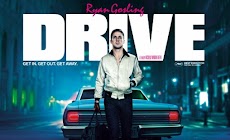
Drive (4 Stars)


After watching "Neon Demon" last week I decided to watch a few more films directed by Nicolas Winding Refn. Luckily several of them are available on Netflix. I'm beginning to get a feeling for his style now. He and his films have never been nominated for Academy Awards, but he's a favourite at independent film festivals, most notably at the Cannes Film Festival. His two most highly praised films so far have been "Neon Demon" and "Drive".

First of all I'll state my biggest criticism of "Drive": it's too short. The plot is complex, so 100 minutes isn't enough. A running time of 150 minutes would have done more justice to the subplots, as well as further developing the characters. Is there a director's cut lying in a draw somewhere?

Ryan Gosling is the film's unnamed hero. He's moved to Los Angeles to make it big, like so many other anonymous faces in and around the film industry. His job of choice is as a stunt driver. Nobody can crash a car like him. Aren't stunt men the most anonymous of all film stars? They're paid to remain unseen.

His relative success in Hollywood isn't enough to pay the bills. He works as a car mechanic. He also does freelance work as a getaway driver for robberies. It's all very impersonal. He doesn't want to make friends, he just does his job. He doesn't even speak to the crooks that he drives to and from crime scenes. They respect him for his driving skills, not for his personality.

He becomes romantically attached to his neighbour, a woman whose husband is in prison. It's a very underplayed romance. He's a decent man and respects the woman's marriage. When the husband is released from prison they make friends, and he offers to help him pay off debts to other criminals. He offers his services as a getaway driver to rob a pawn shop, but the robbery turns out wrong. Instead of the relatively small takings the Italian mafia is using the shop to store over a million dollars. The innocent driver gets caught up in a mob war in which he's the designated scapegoat. Or is he so innocent? That isn't clear. He might be a quiet person whose casual attitude makes other people think he doesn't know what he's doing, but he's more than able to handle himself in a fight.

The film is characterised by two features: bright colours and extreme violence. The style is very much like Quentin Tarantino's films, or at least it would be if there were more conversations. That's why "Drive" needs an extra 50 minutes. And, of course, Tarantino's films don't have such dazzling colours.

I can't help feeling that Nicolas Winding Refn is still slowly developing his style. His big masterpiece is yet to come. I can hardly wait.

Order from Amazon.com
Order from Amazon.co.uk
Order from Amazon.de

Friday, 29 December 2017

X-Men: Apocalypse (4 Stars)


This is the first time that I've watched "X-Men: Days of Future Past" and "X-Men: Apocalypse" back to back. Almost back to back, at least. They were two days apart, but that's still close enough for me to make a direct comparison. More than anything I noticed a difference in the pacing. "Days of Future Past" moves fast and keeps the viewer excited throughout the movie. "Apocalypse" moves slowly, and even when there's action it doesn't last long. There's too much stop and start.

Apocalypse isn't successful as a villain. What I mean is, at no point do we have the slightest sympathy with him. He's just a Big Evil with no redeeming qualities. Compare him with Magneto, who makes us cry when we see the inner suffering that makes him do evil things.

William Stryker is an even worse villain. Who is he? Comic fans will jump up and answer that question immediately, but we can't assume that cinema audiences have read hundreds of comics before buying their cinema ticket. The film should explain to us who he is, but it doesn't, leaving him as a blank slate.


After making the film Olivia Munn, the actress who plays Psylocke, said that she wants Psylocke to have her own film. Let's not laugh that off as the empty request of an actress who thinks too highly of herself. I think she could pull it off. Unlike most of the characters in the X-Men films she actually looks like the character she's supposed to be playing, including the costume. She didn't have much screentime, and there was absolutely no background story. (The same applies to Angel. There was poor character development throughout the film). In the comics she's a heroine, but a solo film could pick up where "Apocalypse" ends, showing her as a villainess seeking redemption, struggling to get back tothe right path. The public would love a film like that.

I'm still not sure about my rating. I always have problems rating X-Men films. Maybe four stars is too high, but that's what I'll stick with for now. I might think differently next time I watch it.

Order from Amazon.com
Order from Amazon.co.uk
Order from Amazon.de

Thursday, 28 September 2017

X-Men: Apocalypse (4½ Stars)


This is a film based on a Marvel villain who was first invented in 1986, when Marvel's non-canon period had begun. For that reason I'll make no attempt to reconcile Apocalypse with the comics, whether it was the Uncanny X-Men or any of the other myriad X-Men spin-off comics.

Apocalypse is said to have been the first mutant. This jars with me, because the whole premise of mutants is that they were a new arrival in the 20th Century. This is briefly mentioned and dismissed in the film: "We always assumed that mutants didn't arrive until the 20th Century, but we were wrong". So Stan Lee was wrong? I'm sad that he gave his approval to the film by appearing in a small cameo. Doesn't he realise what they're doing with his valuable creations, twisting and distorting them however they wish?

I'm not sure that "X-Men: Apocalypse" is even retaining continuity with the previous X-Men films. I shan't comment any further until I have a chance to watch all the X-Men films in release order, starting with the adult X-Men films and then continuing with the prequels.

Apocalypse is shown as the ruler of Egypt in 3600 BC. In the middle of transferring his consciousness into the body of another mutant he's betrayed, and his pyramid is destroyed. In 1980 he's awakened by the prayers of his loyal servants, who are unfortunately destroyed as he arises. He intends to destroy the world and recreate it in his own image, but first he searches for four mutants to support him, his "four horses of the Apocalypse". He selects Magneto, Psylocke, Storm and Angel, who he considers to be the world's strongest mutants. Only later does he discover Charles Xavier, who he considers to be the strongest mutant of all.

Once more the Phoenix force is shown to be part of Jean Grey's mutant powers. That annoys me every time it's said. I might not care if Apocalypse is shown differently from the comics, but Jean Grey should be portrayed accurately.

Nevertheless, this is a good film, full of action and excitement. Michael Fassbender proves once more that he's the best Magneto, giving the character even more emotional depth than in the first films.

Order from Amazon.com
Order from Amazon.co.uk
Order from Amazon.de

Sunday, 27 August 2017

The Promise (4½ Stars)


This is a film that takes place in the Ottoman Empire (modern day Turkey) at the beginning of the First World War, from 1914 to 1915. We see the country as a place of beauty, peace and prosperity, especially Istanbul.

Mikael Boghosian, a young Armenian apothecary from Sirun, in the far south east of the empire, goes to Istanbul to study medicine. He lives with his uncle, a rich merchant. At university he makes friends with Emre, the son of a high ranking Turkish official. Emre has no talent as a student and will almost certainly fail to graduate, but his father has told him that if he doesn't study he will have to join the army.

Mikael's uncle has a private teacher for his children, Ana, an Armenian who has spent many years in France. Mikael falls in love with her, even though he's already engaged to Maral, a woman in his village. Ana already has a lover, Chris Myers, an American journalist, but this doesn't dissuade Mikael from pursuing Ana. At this point I already hated him.

Then the problems start. The Sultan of the Ottoman Empire declared a holy war against the Christians in his country. This began on 24th April 1915. The able-bodied Armenian men in Istanbul were conscripted into the army. For their so-called military service they were sent to work camps where they were treated like slaves. Men who were too old to work were shot. Women and children were sent on marches into the desert, where they were left to survive without food and water.

After Istanbul was cleansed of Armenians, the army moved eastwards, killing Armenians wherever they were found. There were long columns of refugees fleeing from the army who didn't know where they were going. Sometimes refugees from the East met refugees from the West, and the refugee groups told each other there was no point in continuing in their direction.

Mikael escapes from his labour camp and manages to walk back to Sirun. He's persuaded to marry Maral. Together they live in a hut in the mountains, but the army comes and they have to flee.

In the meantime Chris and Ana are at a Protestant orphanage caring for Armenian children whose parents have been killed. They have plans to take the children to the coast, where boats will be waiting to evacuate them. Before they get there the army has destroyed the boats. All Armenians must die.


I admit to knowing very little about the Armenian genocide, except that 1.5 million Armenians were killed. The film shows the sheer brutality of it. It wasn't just the army that did the killing. An evil government persuaded its population that it was their duty to Allah to kill Christians. They had probably been racists for years, but as soon as the government said it was okay to kill Armenians they rushed into the streets with their torches and fancy headgear. Isn't it remarkable how racists look the same, whatever country they come from, whatever their religion is?

Not all Turks are bad. Emre uses his father's influence to assist Mikael and Chris on more than one occasion, but when it's discovered he's executed as a traitor.

The film shows that the Turks were very sloppy with their genocide. The Germans were efficient in World War Two. The Jews were sent to camps, they were killed in the showers, and their bodies were burnt in ovens. All very clean and tidy. The Turks simply shot the Armenians and left their bodies piled up on the road or in the woods. They didn't even attempt to bury them. Didn't they consider that the rotting corpses could start diseases?

After watching the film tonight I read the Wikipedia article on the Armenian genocide. It was depressing. It was even worse than what was shown in the film.

Notably, the Turkish government still denies that the Armenian genocide ever happened. President Recep Little Prick Erdogan is too busy killing his present day opponents to listen to allegations that his predecessors committed mass murder.

I enjoyed the film as a presentation of the Armenian genocide, but I couldn't relate to the love triangle (actually a love square, if you include Marla). I disapproved of Mikael being unfaithful to his fiancée, and Chris wasn't a very pleasant person either. At least they were both heroic in trying to save the Armenian orphans when they finally met again.

Sunday, 5 March 2017

Sucker Punch (3½ Stars)


There's something about this film. The promotional photos, like the one above, all look very sexy and titillating, but when you watch the film itself its very unerotic.

I've watched it twice before and only given it 3 stars. Today I watched the extended version for the first time and have decided to give it an extra half star.

The film has so much promise, but it fails to reach its potential. It's a clever film that runs on three levels of reality. Normally I like films like that. Something is missing, I'm not sure what. The missing character development is a large part of the problem, but that's not all.

Maybe we can find an answer if we look at Zack Snyder's other films. Over the last few years he's become the main director of the DC films. He specialises is films with lots of action and very little story. In "Sucker Punch" there's more of a story than in his DC films, but the over-the-top action scenes are so unnecessary that they can be deemed gratuitous.


If only Emily Browning could have cracked one smile in the film I would have been happier. One little smile would have made all the difference. I'm not saying she was the wrong actresss for the role. Her little girl look suited the film well. She played her part the way she was told to by the director, but it was wrong. She should have put more heart and emotion into the role. She was the right actress, but the film had the wrong director.

Order from Amazon.com
Order from Amazon.co.uk
Order from Amazon.de

Wednesday, 1 June 2016

X-Men: Apocalypse (4 Stars)


I always have trouble reviewing the X-Men films. There have been nine of them so far, if "Deadpool" is included. I don't just have trouble writing about them, I even have trouble rating them. I'm a big fan of the X-Men comics, especially the issues with the original line-up written by Stan Lee and Roy Thomas. The comics written by Chris Claremont from 1975 to 1991 are rightly regarded as classics. Whatever happened after that is simply non-canonical for me. Marvel's continuity was disintegrating from 1985 onwards. Chris Claremont was one of the few authors who was holding things together in the style of the bronze era of comics (1970-1984), despite the interference of his bosses at Marvel. Since his comic, "The Uncanny X-Men", was the highest selling Marvel comic, they asked him to write two issues a month instead of one. That was fine. But his bosses wanted to rake in even more money, so a range of X-Men spin-off comics were devised, including "The New Mutants", "X-Factor" and "Excalibur". The writers of the other books had less artistic integrity than Chris, and they went as far as changing the characters he had previously written. For instance, in his most famous story, the Phoenix Saga (Uncanny X-Men #101-108), Jean Grey was shown to die and be resurrected by something later called the Phoenix force. In a storyline in "X-Factor" it was revealed that during the Phoenix Saga it had never been Jean Grey, it was just a clone. It's hardly surprising that Chris Claremont eventually left Marvel in a rage.

But I realise that I'm rambling on. I'm not really writing about the film. The problem with the X-Men films, this one in particular, is that there are too many characters being thrown at the viewer. This works well in the comics. If you read 300 issues of a comic the characters are only gradually introduced, and you have time to get to know them. In films it's different. The character who comes off the weakest in "X-Men: Apocalypse" is Psylocke, shown on the left in the picture above. "Who's she?" is what most of the people in the cinema audience must have been asking. Nobody could possibly know, unless they've been reading the X-Men comics for years.

The whole film seems to be full of winks and nods that only the comic reading fanboys can understand. The film doesn't repeat what happens in the comics, many of the characters are re-designed, but there are repeated references to what has happened in the X-Men comics over the last 40 years. The end result is enjoyable, but probably confusing to most people.

Is it a well-written film? Probably not. It would have been better if they'd thrown out most of the peripheral characters and kept the remaining cast to a minimum. Did I enjoy it? Yes, especially the poignancy of the relationship between Professor X and Magneto. I think my four star rating is fair, but I shan't argue with anyone who rates it less favourably.

Tuesday, 24 May 2016

Ex Machina (4½ Stars)


I am become death, the destroyer of worlds.

Friday, 15 April 2016

Inside Llewyn Davis (4 Stars)


A man, a guitar, a cat, nowhere to live. Actually it's two cats. Maybe three. Llewyn Davis catches his friend's cat after it runs away when he opens the door. He brings it back, but when he gives it back to his friends they say it's the wrong cat, so he adopts it. He carries the cat with him when he hitch-hikes from New York to Chicago, but he abandons the cat half way. When he's driving back to New York he runs over a cat. It looks like the cat he abandoned, but that would be too much of a coincidence, wouldn't it?

Llewyn Davis is an unsuccessful folk singer in New York in 1961. His songs are quite good, but he doesn't have much of a stage presence and earns badly. He engages in couchsurfing. That's a word that I only learnt after watching this film. It refers to someone who has nowhere to live, so he does a round of his friends, sleeping on their couch for a few days, then moving to the next friend as soon as they get tired of him. It's a good way to live if you're a poor musician in an expensive city.

I don't like folk music much, but I enjoy the feeling of the folk era in New York City (mostly Greenwich Village) in the 1960's. It was a time of rebellion. The young were protesting against the old, and especially against being forced to fight in the Vietnam War. Young people sat in dingy cafes and hung on every word from the mouths of the new breed of folk singers. I might have been sitting with them if I'd been alive in that era. After all, the rock music that I love so much didn't exist then, it only emerged in the early 1970's.

I don't know if this film has a message. Probably not. But it's enjoyable as a snapshot of the folk music scene in 1961.

Thursday, 29 January 2015

A Most Violent Year (4 Stars)

It's difficult to write anything about this film without giving away spoilers. I'll try to go no further than hint at what happens, but in case this is too much for my readers who still want to see this film in the cinema, stop reading now.


Still with me? Then let's get started.

Abel Morales runs a business selling heating oil. His wife is the daughter of a New York gangster, but he is determined to do everything legally, even though he has competitors who are dubious, to say the least. He's about to seal a deal, expanding his business, but at the same time his trucks are being stolen on the open streets, and the New York district attorney is investigating his company for fraud.

The film trailer is very misleading. It gives the impression that the film's story lasts a year, but it actually all takes place over a period of four weeks in January. It looks like another case of the trailer being made by someone who knew nothing about the film. Is there an industry that makes trailers? That must be an easy way to make money.

The film is slow, much slower than the trailer suggests, but never boring. Frequently during the film we have the impression that the constant pressure will make Abel resort to crime, but he always manages to restrain himself. I couldn't help getting the impression that the fraud investigations are only taking place because the district attorney is crooked, possibly being bribed by one of Abel's competitors, but this is never explicitly stated.

Before I went into the film last night one of the staff told me it's not a very good film because there isn't much violence. That's not a problem for me. I enjoyed it.