Showing posts with label James McAvoy. Show all posts

Wednesday, 11 September 2024

Speak No Evil (4½ Stars)


This is the first film in the Stuttgart Fantasy Film Festival.

It's a remake of the Danish film with the same name that was shown at the festival two years ago.

Ben and Louise are an American couple who live in England. While on holiday in Italy they meet an English couple called Paddy and Ciara with a son who's unable to speak. At first Ben and Louise are repulsed by Paddy's extroverted behaviour, but they begin to spend time with one another. They promise to meet when they return to England.

A few weeks later Ben and Louise go to spend a weekend at Paddy's remote farm. Once there they experience things that make them feel uncomfortable. For instance, Paddy seems to be abusing his son. When they try to leave the farm, they realise that they're trapped.

The remake is far better than the original film. Most of the story is the same, with only slight deviations, but it's a much better psychological thriller.

It's a good film to open the festival.

Saturday, 10 June 2023

IT Chapters One and Two (5 Stars)


Today I watched the two chapters of "IT" back to back. It was worth the five hours spent glued to the screen. Okay, I admit that I was forced to take a break because of family commitments. My grandson wanted to play with me. He actually wanted to watch the films with me, but I switched them off fast when he came in. I don't want to give him nightmares. I'm sure he'll become a fan of horror films when he gets older, but there's no need to rush him.

In retrospect, I don't think it was a good idea to write a single review for both chapters. They're distinct enough in essence and style to justify being reviewed separately, even though I've included then in my top 100 films list as a single film. I've already started writing, so I shan't go back and change my review now.


When visiting Derry, be sure to visit the excellent little pawn shop Second Hand Rose.


The pawn shop owner may look creepy, but he has terrific items in stock. Look what's on the wall behind him. It's the original license plate from the car in the film "Christine". I wonder how he got his hands on it.

Someone who was looking at my top 100 film list yesterday said that it's full of old films. I wonder what he means by that. What's the definition of an old film? I judge films by their quality, not the year they were made. My personal definition is that an old film is a film made before 1995, but others might think differently. The two chapters of "IT" were made in 2017 and 2019, which make them new films by anyone's definition.

Here are the statistics of my top 100 films list by decades:

  1960's – 2
  1970's – 6
  1980's – 4
  1990's – 31
  2000's – 33
  2010's – 23
  2020's – 1

The statistics look more interesting if I split the decades in the middle:

  1965-1975 – 4
  1976-1985 – 7
  1986-1995 – 11
  1996-2005 – 42
  2006-2015 – 29
  2016-2023 – 7

It surprised me to see that almost 50% of my favourite films were made in the ten years from 1996 to 2005. Checking my list, I can see that they were good years.

Does that make my list old? You decide. For me the answer is No, because I have only 22 films before 1995 and 78 films from 1996 onwards.

Success Rate:  + 8.3

Order from Amazon.com
Order from Amazon.co.uk

Saturday, 13 March 2021

Atomic Blonde (4½ Stars)


As I've stated in the past, this is an almost perfect film. The only reason I haven't given it five stars is because of the excessive smoking. I don't like smoking. It was cigarettes that killed my father when he was only 53. If you think I'm wrong to penalise the film for one trivial detail like this, so what? This is my blog, and I'll do what I like with it. If you don't like it, write your own blog.

One of the things that makes the film so good is the director David Leitch's selection of 1980's songs, which perfectly give the feeling of Berlin in 1989.

  • Queen: Under Pressure (1981)
  • After the Fire: Der Kommissar (1982)
  • A Flock of Seagulls: I ran so far away (1982)
  • David Bowie: Cat People (1982)
  • Nena: 99 Luftballons (1983)
  • Peter Schilling: Major Tom (1983)
  • Re-Flex: The Politics of Dancing (1983)
  • Siouxsie & the Banshees: Cities in Dust (1985)
  • Til Tuesday: Voices Carry (1985)
  • Depeche Mode: Behind the Wheel (1987)
  • George Michael: Father Figure (1987)
  • New Order: Blue Monday (1988)
  • Public Enemy: Fight the Power (1989)

There's also "London Calling" by the Clash. That's actually a 1979 song, but I'll forgive the director for adding it, because it's very appropriate when it's used in the film.


The Berlin Wall shortly before reunification in 1989. A lot of people don't realise how close the Wall was built to the houses on either side.


This is a film that establishes Charlize Theron as an action heroine. She looks incredible even when she's just been fighting KGB agents to the death. A sequel has been promised, but like so many other films, it's been delayed by the Coronavirus.

Success Rate:  + 1.3

Order from Amazon.com
Order from Amazon.co.uk
Order from Amazon.de

Friday, 12 March 2021

X-Men: Dark Phoenix (4 Stars)


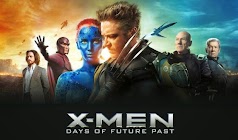
I gave this film five stars when I watched it in the cinema two years ago. That was too much. It's not as good as "First Class" or "Days of Future Past". 

I'm not sure whether the last four X-Men films are consistent with one another concerning Jean Grey's timeline. I suspect there's an error with her being eight years old in 1975, but I'll need to rewatch the films in order to check for errors. Some people call the films starting with "First Class" a reboot, but that's not correct. It's telling stories in the past that lead up to the events of the initial X-Men trilogy. Of course, the events of "Days of Future Past" rewrote the timeline, so the events of "X-Men 3" never happened. That's the film in which we first saw Jean Grey become Dark Phoenix. Now it happens again, this time earlier. How many years earlier is unclear. In this film she became Dark Phoenix in 1992. In "X-Men 3" no date is stated, but we can assume it took place round about the time when the film was released, i.e. 2006.

The Dark Phoenix story is told more accurately than in "X-Men 3", although it still deviates significantly from the comic book stories. The Phoenix force in "X-Men 3" was an innate mutant power, but in "Dark Phoenix" it's something that possesses her. In the comics there were actually two stories, the Phoenix Saga (X-Men #101 to #108) and the Dark Phoenix Saga (X-Men #129 to #138). The first saga shows how she received the Phoenix force and used it for good, while the second saga shows how she lost control of the Phoenix force and used it for evil.

I've read that it was originally planned to make two films, a two-part story. That would have been much better and would have done the original stories justice. Sadly, the film studio blocked this. 20th Century Fox was in too much of a hurry to reboot the X-Men, and this was the last film, so it had to round things off. I find it highly unusual to talk about a reboot before a film is made. What are the film studios up to?


There's a hint at the end of the film that Jean Grey has survived, but who cares if the series is going to be rebooted anyway?

Not as many X-Men members are shown as in the previous films, just a team of six members, without Wolverine around to hog the spotlight for himself. This offered a chance for strong character development, but the chance was missed. Apart from Charles Xavier (Professor X) we only spend time with Hank McCoy (Beast). Mystique, Cyclops, Storm, Nightcrawler and Quicksilver are all blank characters. If we hadn't seen the previous films we wouldn't know who they are. An extra 30 minutes running time would have solved the problem.

Success Rate:  - 0.7

Order from Amazon.com
Order from Amazon.co.uk
Order from Amazon.de

Thursday, 13 August 2020

Atomic Blonde (4½ Stars)


After watching this film in the cinema three years ago I'm finally returning to it. I don't know why I waited so long. It's an almost perfect film. I would have given it five stars, but I deducted half a star because the smoking in the film is excessive. If smoking doesn't bother you, there's no reason not to watch it.

Charlize Theron plays the MI6 agent Lorraine Broughton, who's on a mission in Berlin in the final week of the Berlin Wall, from 2nd November to 10th November 1989. Well, the demolition of the Wall didn't actually begin until 13th June 1990, so the images of people hitting the Wall with hammers are incorrect. What actually happened is that the border checkpoints opened on 9th November, allowing people to pass through without showing their passports. The film "Bornholmer Straße" tells this story. In my review of "Goodbye Lenin" I've listed the dates of the most important occurrences.

When Lorraine arrives in Berlin on 2nd November, Western intelligence services already assume that the opening of the Wall is inevitable, but there's something more dangerous. There's a list of all the spies in Berlin, western and eastern, that's been hidden on microfilm inside a watch. It's expected that whichever government receives this list will assassinate all the other spies and secret agents. Initially it's in the hands of a Russian spy, but instead of delivering it to his country he's attempting to sell it to the highest bidder.


Lorraine's has to work with David Percival (James McAvoy), the head of MI6 operations in West Berlin. He's an efficient agent, but very eccentric. Following the mission's guideline, "Don't trust anyone", he tells Lorraine as much as she needs to know, but lies about everything else. He warns her about an infamous double agent codenamed Satchel, who will do anything to stop the list being made public.


Bill Skarsgard plays a young man called Merkel. He's active in organising demonstrations in East Berlin, but he also assists the CIA if necessary. I hardly recognise him without his face paint.

This is a film that has everything: action, suspense, espionage and nail-biting intrigue. It's a shame about the smoking. Is that supposed to make the film more realistic? If there had been no smoking at all, nobody would have complained.

Rumours have been floated that a crossover between "Atomic Blonde" and the John Wick franchise is planned. That's interesting, but how would it work? "Atomic Blonde" took place in the 1980's, whereas the John Wick films take place today. Or do they? They have very old-fashioned technology, so it's difficult to date them. Lorraine Broughton couldn't possibly be a member of John Wick's organisation, because it stands above international politics. Or maybe she could join later after leaving MI6. She would be an excellent recruit. There are so many questions open, but in principle it's a good idea.

Success Rate:  + 1.3

Order from Amazon.com
Order from Amazon.co.uk
Order from Amazon.de

Saturday, 1 August 2020

IT Chapter Two [2019] (5 Stars)


You wouldn't believe all the trouble I went through to watch this film. After my Blu-ray player broke down yesterday, I had to go to Stuttgart to buy a new one. Actually, I just bought an external Blu-ray drive for my computer. I'll buy a real Blu-ray player later this year when I have more time to choose. Today I was in a hurry and needed a replacement fast. I don't like going to Stuttgart on a Saturday. It's always so busy in the shops, and not even the Coronavirus makes it any different. In addition, today was a hot day, 34 C, even hotter than yesterday, so I was dripping with sweat by the time I got back home.


One of the priorities for the casting of the second chapter is that the adults should look similar to the children who appeared in the first chapter. James McAvoy was an excellent choice to play the adult Bill Denbrough. He's evidently the character that Stephen King most identified with when he wrote the book. Bill has become an author, and Stephen King likes to have an author in most of his novels.


Most of the adults were cast after the first film had been made, but Jessica Chastain is an exception. Andy and Barbara Muschietti already envisaged her as the adult Beverly Marsh from the beginning. The portrayal of her new life, 27 years later, is unfortunately realistic. She grew up with an abusive father, so she's married an abusive man..


Richie Tozier was a fast talker as a child, so now he's become a stand up comedian.


Eddie Kaspbrak grew up with a smothering, over-protective mother. Now he has a smothering, over-protective wife. It's not just a cliché to say that he's married his mother; the same actress plays his mother and his wife in the films.


Stanley Uris is the weakest of the Losers. Or is he the strongest? That depends on how you look at him.


Jay Ryan is the only actor who doesn't look like his child self. That's deliberate. He used to be overweight, but now he's spent years getting into shape.


Of the seven Losers, Mike Hanlon is the only one who's stayed in Derry. He's become the town's librarian, so that he has better access to the books about Derry's history. Like a true fanatic, he lives in the cellar below the library.


Losers, one and all.

I understood some things better than when I watched the film in the cinema last year. Today I understood the context of the scenes in the second film that take place between the two visits to the Neibolt House in the first film. The explanatory dialogue went past too fast the first time I watched it. Good films should always be watched more than once.


I have a small question. Is it possible to kiss underwater? I mean a real, passionate kiss, like the one shared by Ben and Beverly. It's not something I've ever attempted, and I don't understand the mechanics.

Success Rate:  + 4.0

Order from Amazon.com
Order from Amazon.co.uk
Order from Amazon.de

Thursday, 5 September 2019

IT Chapter Two [2019] (4 Stars)


It's been a long two years since "IT Chapter One" was in the cinemas. Much too long. I've been impatient to see the conclusion, and now it's here at last.

It's 27 years since the children in the Loser's Club defeated the clown Pennywise. They weren't sure whether or not he was dead, so they swore that they would return to Derry if he ever came back. Six of them left the town as adults. Only Mike Hanlon remained in Derry. The six who left became rich and successful in their new lives. Mike became a lowly librarian. The six who left forgot what had happened. Mike devoted his life to studying Pennywise and his appearances over the centuries, in case he ever returned.

Now he's back. Once more he's killing children. Mike phones his six friends and reminds them of their promise. Reluctantly they return. Back in the town, they slowly begin to remember their former lives and their battle with Pennywise.

This is a very different film to the first chapter. It's the same horror, but the circumstances of the Loser's Club have changed. In the first film they were seven innocent children, cute and likeable. Now they're middle-aged adults, all 40-ish, and not all of them are pleasant characters.

It's a fascinating film that I need to see again soon, preferably back to back with the first chapter.

I've read news reports that parents have complained about the film posters scaring their children. Clowns are supposed to be funny, but they're always scary. I'm not sure why. I've never been scared of clowns, but I know that many other people find them creepy.

Tuesday, 11 June 2019

X-Men: Dark Phoenix (5 Stars)


The original American name of this film is "Dark Phoenix", but in the rest of the world it's called "X-Men: Dark Phoenix", even in other English speaking countries. Usually I prefer to use the original film titles, but in this case I'll make an exception. Naming the X-Men in the film title seems appropriate. Apart from anything else, it will make sure that all the X-Men films are listed together in my alphabetical list of posts.

"Didn't we already have a film about Dark Phoenix?" some people may ask. Yes, we did. "X-Men: The Last Stand" already showed how Jean Grey aka Marvel Girl became the Dark Phoenix. (Was she ever called Marvel Girl in the films?) This film ended with Jean's death, and yet she's back now. Was there a secret reboot somewhere? No, this all happened within the same continuity. In the fifth X-Men film, "Days of Future Past", Wolverine travelled into the past and changed history, meaning that the events of "The Last Stand" never happened, or if they did, they occurred in a parallel universe.

It was an inevitability that Jean Grey should become the Dark Phoenix, and Wolverine's temporal meddling accelerated events. "The Last Stand" took place in the early 21st Century, but "Dark Phoenix" happens in 1992, 10 to 15 years earlier. On a meta-level, the new film is slightly closer to the plot of the the original comics.

There was a lot of politics and negotiations off-screen. Even before "Dark Phoenix" was made, it was decided that it would be the last X-Men film before a reboot of the franchise. That's highly unusual. Normally talk of reboots doesn't start until after a film has been made, usually many years later, but in this case they jumped the gun. It's as if Marvel had lost faith in its own film, not considering it deserving of a sequel.

This uncertainty has rocked the box office. Based on initial box office figures, it looks like it will be the least successful film in the X-Men franchise. My local cinema also didn't seem to expect it to be successful. It's a multiplex, with theatres in four different sizes. Even though "Dark Phoenix" is in its first week, it's being shown in the third largest room. Tonight the largest room was showing "Aladdin", now in its fourth week. The second largest room was showing "John Wick 3", now in its second week. (Films usually start later in Germany than in America). The smallest room was showing "Godzilla: King of the Monsters".

I was aware of the politics and the fact that the film has had bad reviews from the critics, so I feared I would be disappointed. Imagine my surprise when I sat watching the film and realised it was brilliant. How could anyone not like it? It's one of the best films of 2019.

If you haven't seen it yet, don't be put off by the bad reviews or the whining of the critics. If you're a Marvel fan like me, you'll love it.

Monday, 21 January 2019

Glass (4 Stars)


This is the third part in M. Night Shyamalan's super-hero trilogy that began with "Unbreakable" and "Split". The first two films had different styles. "Unbreakable" was slow with a steady build-up, whereas "Split" was faster paced. "Glass" is somewhere between the two, which surprised me. I expected it to follow in the footsteps of "Split", but it has a lot more subtlety.

David Dunn (Bruce Willis) now prowls the streets as a super-hero, protecting the weak from wrong-doers. He has never given himself a name, so the newspapers have called him different names. He likes being called the Overseer, but he hates being called the Tiptoe Man.

Kevin Crumb (James McAvoy), or rather one of his evil personalities, has kidnapped four cheerleaders. They're being held in an abandoned factory until the Beast emerges to kill them. David finds them first and battles with the Beast, but both of them are arrested and locked in a mental hospital to cure them of their delusion that they're super-heroes... or super-villains. Elijah Price (Samuel L. Jackson), who now calls himself Mr. Glass, is already in the hospital, drugged so heavily that he rarely talks.

Most of the film takes place within the hospital, and we watch the treatment of the three men. The only one who knows how to break out is Elijah, because his super-power isn't something as trivial as great strength or speed; his power is his great intelligence.

There's a lot of talk about comic books, as in "Unbreakable". Elijah sees everything as building up to a real world display of comic book tropes.

As is to be expected from M. Night Shyamalan's films, there are plot twists at the end that I couldn't have imagined, They more than made up for things that made me unhappy in the rest of the film.

I find it strange that the film has received mostly poor reviews from film critics. Maybe it's because they're unfamiliar with comic book tropes. Maybe it's because the plot twists are too radical for them. Either way, I think they're wrong. This is a good film, neatly rounding off the trilogy while laying the groundwork for new films.

Sunday, 30 December 2018

Split (4½ Stars)


Three teenage girls are kidnapped by a man who calls himself Dennis. They meet him repeatedly as they sit in their locked room, and they realise that he has multiple personalities. As Dennis he's a man, as Patricia he's a woman and as Hedwig he's a nine-year-old boy. Dennis and Patricia are partners in the abduction, but Hedwig is an innocent who could possibly be persuaded to let them escape.

The girls only encounter the three personalities, but we find out in interactions with a psychologist that he has 23 different personalities. His birth name and initial personality is Kevin (Kevin Wendell Crumb), but this personality has been repressed and rarely comes to the surface. The dominant personality was an artistic man called Barry, but he's now been replaced by Dennis and Patricia, who are preparing for the emergence of a 24th personality that they call the Beast.

Of the three girls, Casey (pictured above) is considered socially inept by her two friends. That might be true, but she's the only one who knows how to remain calm under pressure. While the other girls shout and panic, Casey waits for the right moment to escape.

This is an excellent film that is a partial sequel to the 2000 film "Unbreakable", which I need to watch again before the cinema release of "Glass" next month. I may even watch "Split" again. I'll write more about the film next time.

The only major fault of the film, in my eyes, is that the subplot of Casey having been sexually abused by her uncle isn't resolved. This is a deliberate choice, as we see from the fact that the uncle is mentioned at the end of the film. I'm curious why the director/screenwriter made this decision.

Success Rate:  + 28.9

Order from Amazon.com
Order from Amazon.co.uk
Order from Amazon.de

Monday, 13 August 2018

Submergence (4 Stars)


This is a very intense love story. It doesn't show that love conquers all. That's just kitsch. It shows that love can endure all adversities.

It all starts with a chance encounter between two people. James Moore (James McAvoy) and Professor Danielle Flinders (Alicia Vikander) are both staying in a picturesque hotel in Normandy. James is a hydraulic engineer. He's a Scotsman who lives and works in Kenya. He's about to begin a job in Somalia to make plans for water purification, even though the British secret service has warned him that the job is too dangerous.

Danielle, who calls herself Danny, is a mathematics professor who is on an expedition which she thinks will discover information about the origin of life on Earth. She's planning to dive to the sea bed north of Greenland to take samples of the life forms that live without light. It's a long, slow expedition from France, around Ireland and Iceland, with many stops on the way, that will last almost a year.

After an intense romance that lasts only a few days they head off in opposite directions. James travels south, Danny travels north, but they promise to stay in touch and meet again as soon as they can. But Danny hears no more from James after he arrives in Somalia. Months go by, and he doesn't answer his phone. Is he dead? Has he forgotten her? She refuses to believe James doesn't love her, and she thinks about him even when she's on the sea bed in total darkness.

James is alive. He was captured by Jihadists immediately after his arrival who think he's a British spy. He was kept for months in a small unsanitary cell, before finally being released and treated as a friend, as long as he converts to Islam.


The film begins slowly with torturous explanations of the deep sea as Danny tries to explain her work to James. He sits there with a blank face, just as blank as the faces of the cinema audience, but it isn't completely irrelevant to the plot.


The two characters are different, almost opposites. James is outgoing, while Danny is quiet and reserved. After a long conversation in the hotel restaurant James tells Danny that he knows everything about her work, but he still knows nothing about her.

The film's images are overwhelming. The open sea and the landscape of the Faroe Islands are breathtaking. Even the Somalian scenery (which was actually filmed in Spain) is beautiful. The visual appeal of the film compensates for the slowness of the action.

One thing that confuses me about the film is the connection between James and the British secret service. At the beginning it's suggested that he might be a spy, but as the film continues we see that he really intends to give Somalia better drinking water. I suppose the two aren't necessarily a contradiction, but the line between his two activities is vague.

That's a secondary problem. First and foremost, this is a love story. Water connects the two lovers, and water divides them. When I walked out of the cinema this evening I felt stunned. "Submergence" is a film I shall think about for a long time.

Click here to see the trailer.

Friday, 29 December 2017

X-Men: Apocalypse (4 Stars)


This is the first time that I've watched "X-Men: Days of Future Past" and "X-Men: Apocalypse" back to back. Almost back to back, at least. They were two days apart, but that's still close enough for me to make a direct comparison. More than anything I noticed a difference in the pacing. "Days of Future Past" moves fast and keeps the viewer excited throughout the movie. "Apocalypse" moves slowly, and even when there's action it doesn't last long. There's too much stop and start.

Apocalypse isn't successful as a villain. What I mean is, at no point do we have the slightest sympathy with him. He's just a Big Evil with no redeeming qualities. Compare him with Magneto, who makes us cry when we see the inner suffering that makes him do evil things.

William Stryker is an even worse villain. Who is he? Comic fans will jump up and answer that question immediately, but we can't assume that cinema audiences have read hundreds of comics before buying their cinema ticket. The film should explain to us who he is, but it doesn't, leaving him as a blank slate.


After making the film Olivia Munn, the actress who plays Psylocke, said that she wants Psylocke to have her own film. Let's not laugh that off as the empty request of an actress who thinks too highly of herself. I think she could pull it off. Unlike most of the characters in the X-Men films she actually looks like the character she's supposed to be playing, including the costume. She didn't have much screentime, and there was absolutely no background story. (The same applies to Angel. There was poor character development throughout the film). In the comics she's a heroine, but a solo film could pick up where "Apocalypse" ends, showing her as a villainess seeking redemption, struggling to get back tothe right path. The public would love a film like that.

I'm still not sure about my rating. I always have problems rating X-Men films. Maybe four stars is too high, but that's what I'll stick with for now. I might think differently next time I watch it.

Order from Amazon.com
Order from Amazon.co.uk
Order from Amazon.de

Wednesday, 27 December 2017

X-Men: Days of Future Past (5 Stars)


This is the fourth time I've watched this film, and my rating has been bobbing up and down like a yo-yo. Evidently I don't know what to make of it. Who knows what I'll rate it next time! Today the story gripped me like it hasn't in the past. Maybe I was just in the right mood for the film. That's why I could never be a professional film critic. I'm much too erratic.


Hank McCoy is apparently a Star Trek fan. He has one eye on Bolivar Trask, the other on Star Trek reruns. By a strange coincidence the episode being shown is "City on the Edge of Forever", in which the Enterprise and its crew has to travel into the past to change the present.


Jennifer Lawrence appears as Mystique and shows that blue is beautiful.


Or do you prefer her with a normal pink skin? It's hard to choose.


There's a newspaper shown in the film. Wolverine is checking it out, holding it in place with his unenhanced bone claws. But take a closer look at it. The first two columns are about the peace treaty between America and Vietnam, but in the third column everything breaks down. The text is about the murder of Isidore Fink, the owner of a small laundry at 4 East 132nd Street. It's strange that this report is in a 1973 newspaper, because the murder took place on 9th March 1929. As if this weren't bad enough, the same text is repeated in the fourth column. That's all very sloppy.

Order from Amazon.com
Order from Amazon.co.uk
Order from Amazon.de

Thursday, 28 September 2017

X-Men: Apocalypse (4½ Stars)


This is a film based on a Marvel villain who was first invented in 1986, when Marvel's non-canon period had begun. For that reason I'll make no attempt to reconcile Apocalypse with the comics, whether it was the Uncanny X-Men or any of the other myriad X-Men spin-off comics.

Apocalypse is said to have been the first mutant. This jars with me, because the whole premise of mutants is that they were a new arrival in the 20th Century. This is briefly mentioned and dismissed in the film: "We always assumed that mutants didn't arrive until the 20th Century, but we were wrong". So Stan Lee was wrong? I'm sad that he gave his approval to the film by appearing in a small cameo. Doesn't he realise what they're doing with his valuable creations, twisting and distorting them however they wish?

I'm not sure that "X-Men: Apocalypse" is even retaining continuity with the previous X-Men films. I shan't comment any further until I have a chance to watch all the X-Men films in release order, starting with the adult X-Men films and then continuing with the prequels.

Apocalypse is shown as the ruler of Egypt in 3600 BC. In the middle of transferring his consciousness into the body of another mutant he's betrayed, and his pyramid is destroyed. In 1980 he's awakened by the prayers of his loyal servants, who are unfortunately destroyed as he arises. He intends to destroy the world and recreate it in his own image, but first he searches for four mutants to support him, his "four horses of the Apocalypse". He selects Magneto, Psylocke, Storm and Angel, who he considers to be the world's strongest mutants. Only later does he discover Charles Xavier, who he considers to be the strongest mutant of all.

Once more the Phoenix force is shown to be part of Jean Grey's mutant powers. That annoys me every time it's said. I might not care if Apocalypse is shown differently from the comics, but Jean Grey should be portrayed accurately.

Nevertheless, this is a good film, full of action and excitement. Michael Fassbender proves once more that he's the best Magneto, giving the character even more emotional depth than in the first films.

Order from Amazon.com
Order from Amazon.co.uk
Order from Amazon.de

Monday, 28 August 2017

Atomic Blonde (4½ Stars)


This is one of the best films of the summer, despite a few small complaints I have about it. Every time I saw the trailer in the last few weeks I grew more excited. I've long considered Charlize Theron to be one of the most beautiful actresses alive today, and seeing her as a kicking, punching, shooting action heroine blew me away. When I found out that the director is David Leitch, who also made "John Wick", I was even more excited. I knew I could expect a feast of over-the-top action.

I'll say straight away that there's less action than in "John Wick", if you count the total minutes, but the action that does take place is just as spectacular. John Wick relies mostly on his guns, but Lorraine Broughton, the heroine of "Atomic Blonde", spends more time fighting with her bare hands. It's a joy to watch her in action. Sitting in the cinema this evening I gasped on more than one occasion. I hope that didn't disturb the man sitting next to me.

Lorraine (Charlize Theron) is an English spy who's sent to Berlin in November 1989 to retrieve a stolen microfilm that contains the names of every double agent operating in Berlin. The city is in a state of chaos, because protesters are demanding that the Berlin Wall be torn down, which does actually happen at the end of the film. Lorraine's contact person is David Percival (James McAvoy), who has been working undercover in the city for 10 years. The action takes place on both sides of the Wall.

David considers himself to be a ladies' man, but he has no success with Lorraine. The only person she's attracted to is Delphine Lasalle, a young, inexperienced French spy.

The film's music is excellent. It's a well-picked selection of 1980's hits. I was tapping my feet when my favourite songs began to play.

Rather than just be a clone of "John Wick" there are elements of mystery interwoven with the action. The plot twists are skilfully built in, and were totally unexpected when they came.

Now to my criticism, which I admit is just a personal issue for me. Everyone is smoking cigarettes. In other films there might be an occasional scene where a character is smoking, but in "Atomic Blonde" the first thing the characters do when there's no fight going on is light up. Every time. As a life-long non-smoker this disturbs me. It surely wasn't necessary to exaggerate the smoking so much. If nobody had smoked at all the audience wouldn't have noticed.

One smaller problem for me is the film's structure: it begins with a debriefing when Lorraine is back in England, in which she tells her superiors what she did in Berlin. For me this takes the edge off the suspense. I can't be afraid that Lorraine will die, because the film has already told me she will return home.

Critics have highly praised this film. This time they've got it right.

Thursday, 8 June 2017

Filth (3 Stars)


This is a Scottish film made in 2013 starring James McAvoy as Detective Sergeant Bruce Robertson, a policeman currently seeking promotion to detective inspector. There are no doubts that he will be promoted. Both he and and his superior officer are members of the same Freemason lodge in Edinburgh.

By all accounts Bruce is an unpleasant character. He relentlessly plays games with his fellow officers. He plays pranks on them, then persuades them that the pranks were played by other officers, turning them against one another, while he remains the friend of all. He also plays games with a fellow lodge member, Clifford Blades, who considers him to be his best friend. He makes anonymous sexual phone calls to Clifford's wife. When asked by his superior officer to investigate the matter, he fakes evidence that Clifford was making the calls himself.

Bruce has other problems in his life, maybe brought on by the stress of his deceptive life, maybe a result of the recreational drugs he uses. He sees and talks to people who aren't there. His friends and colleagues see him breaking down and want to help him, but he considers everyone his enemies.

As the film continues Bruce rapidly spirals downwards. My biggest problem with the film is that I couldn't sympathise with him as a character. I disliked him from the beginning, so I gloated as he deteriorated. It's an interesting experimental film, but even bad guys have to be likeable for a film to win over the audience.

Order from Amazon.com
Order from Amazon.co.uk
Order from Amazon.de

Saturday, 3 June 2017

The Last King of Scotland (4½ Stars)


This could be considered the greatest film of Forest Whitaker's career. He won the Academy Award for best actor in 2007, rightfully so. Why was it that a few years later people were wailing about the lack of diversity in the Oscar nominations and awards? Black actors will win awards when they're the best, and in this case Forest Whitaker really was the best.

It's an amazing film, a perfect mix of fact and fiction. What I mean is that the film portrays real events, from Idi Amin's rise to power to the hostage crisis at Entebbe, in which Palestinian and German terrorists united to kill Jews on Ugandan soil. It writes a fictional character, Dr. Nicholas Garrigan, into the events, portraying him as Idi Amin's closest personal adviser.

Idi Amin was a complicated man. In my opinion he wasn't a bad man, unlike Robert Mugabe, who merely wanted to become the leader in order to exploit his people and make himself rich. Idi Amin had honest intentions to help his people and make Uganda a great nation. He failed because of his paranoia. He saw potential enemies everywhere and reacted immediately, executing them without attempting to find out whether they really were against him. He was also a hypochondriac. He claimed to have been told the day of his death, but whenever he suffered the slightest ailment he screamed that he was about to die. Forest Whitaker skilfully puts us into the mindset of this troubled dictator.

The film wasn't as popular with the public as it was with critics. It made a profit at the box office, but only because the film's budget was so low. It didn't even make it into the year's top 100 films. I just noticed that even though the film is still available in England, it's now out of print in America. Maybe it's too political for American audiences? Or maybe Americans just don't know and don't care where Uganda is.