Showing posts with label Imogen Poots. Show all posts

Saturday, 21 June 2025

The Art Of Self-Defense (5 Stars)


It's often said that martial arts isn't just about learning how to fight. It's also about improving the mind. The students are encouraged to elevate their thoughts to reach a higher level of spirituality.

That's not the case with the Karate dojo that Casey Davies visits. The students use their fighting skills to become bullies. They're also misogynistic, even looking down on female students in their own dojo. Women are considered second class beings, physically and emotionally.

Those are the views of their teacher. They idolise him, so they also accept his negative traits.

Casey has to choose. Does he want to accept the negative character traits while becoming a better fighter, able to defend himself?

Success Rate:  - 0.7

Vivarium (5 Stars)


It's all about the Martins.

One Martin dies, and the next steps up to take his place.

Where do the Martins come from? We don't know. We first see Martin as a young baby. Maybe he had a mother, but we don't see her. We can't even assume that the previous Martin was his father. Maybe, maybe not.

I had a rough idea what a vivarium is, but today is the first time I've looked up its definition.

"A vivarium is an area, usually enclosed, for keeping and raising animals or plants for observation or research".

That definition doesn't exactly describe what we see in the film. Tom and Gemma are being kept in an artificial environment, but it's not with the intention of studying them. They've been put in this artificial nest to raise the cuckoo, Martin, to adulthood. The timeframe isn't exactly specified, but we can assume, based on the markings on the door, that it's about a year. In this time the first Martin dies while the new Martin grows up to take his place. Without Tom and Gemma, Martin would have died. A cuckoo mother places her egg in another bird's nest because she's unwilling to bring it up herself. So maybe there is a mother behind the scenes in "Vivarium" after all?

This is a very good film. Creepy. Unnerving. But brilliant.

Success Rate:  - 9.2

Order from Amazon.com
Order from Amazon.co.uk
Order from Amazon.de

Saturday, 12 April 2025

The Father (3 Stars)


As I've mentioned more than once in my blog, I dislike films about dementia. It's a subject that disturbs me. I witnessed my grandfather suffering from dementia. I witnessed my friend Brian Farmer suffering from dementia shortly before he was murdered. I had already heard about this film and knew that it was critically acclaimed, so my rating is purely subjective.

Anthony Hopkins plays a wealthy man who lives in London. His daughter has been caring for him, but now she has to move to Paris. What will become of him?

What makes "The Father" unique is that it shows dementia through the eyes of the sick person. This isn't even clear in the early stages of the film. As the film progresses we slowly piece things together and see what's really happening.

The performances are excellent by all involved. What else can you expected from actors like Anthony Hopkins and Olivia Colman? I'm sure most of my readers will enjoy the film more than I did.

Success Rate:  + 4.0

Order from Amazon.com
Order from Amazon.co.uk
Order from Amazon.de

Tuesday, 24 December 2024

The Art Of Self-Defense (5 Stars)


I persuaded my son Benjamin to watch "The Art of Self-Defense" (sic) with me today. It doesn't have to be a horror film every time. He liked it, but he wasn't as enthusiastic as me. I don't think he understood the humour. It was too subtle for him. Whenever I laughed he gave me a sideways glance as if he was wondering what was wrong with me. I'll have to watch it with him again next year. Maybe he'll get it next time.

Success Rate:  - 0.7

Friday, 20 December 2024

The Art Of Self-Defense (5 Stars)


Have you ever watched a film a few times, and then it suddenly hit you how good it is? I watched "The Art of Self-Defense" (sic) twice in March this year. Both times I gave it a four star rating. Don't get me wrong, in my rating system any film that receives four stars is a good film that I would recommend to anyone. The missing star just means that something magic is missing. Or maybe the magic was there all the time, but I didn't see it. That's what happened to me this evening. I put the Blu-ray disc in my player and sat back to relax. I found myself laughing out loud at the humour. I laughed the previous times I watched it, but this time it was funnier and I laughed louder than I've ever laughed for any film. Then it hit me. "This film is brilliant. It's one of the best films I've ever seen".

There aren't many comedies in my top 100 list. There's "Deadpool" and "Deadpool 2". And "Mad Heidi". Those are the only overt comedies, but there a few films with subtle humour, such as "Snatch". Maybe I should say that the comedy in "The Art of Self-Defense" is subtle as well. The jokes are delivered with deadpan faces and aren't immediately recognisable as jokes. They need a few seconds to sink in, by which time other things have been said. For instance, when Sensei is explaining the purpose of women he speaks this line:

"There are things that men and women can do together, like riding tandem bicycle and sex. Men ride tandem bicycle to please the woman, with sex it's the other way round".


Maybe I didn't rate the film as highly the first time because of Jesse Eisenberg's wooden acting. In the disc's extra features he tells us this was a requirement from the director, Riley Stearns. Jesse had to speak and act like an inexperienced actor in his first role, struggling to remember his lines.


As many of my readers know, I'm a female supremacist. That made it difficult for me to give the film a five star rating on first viewing. Imogen Poots plays Anna, the only woman in a man's world. She has great strength, both physical and emotional, but she chooses to submit to the misogynistic men around her, which encourages them in their way of thinking. This is unpleasant, on the surface, but when you look deeper you can see that the men around her are stupid and she's only waiting for an opportunity to show them how stupid they are.

A brilliant film. I've pushed it up to ninth place in my top 100 list, the first change in my top 10 for years. If you check my list today you won't see it yet. I'll update my list in the next few days.

Success Rate:  - 0.7

Saturday, 9 March 2024

The Art Of Self-Defense (4 Stars)


It's not usual for me to watch the same film twice in a row. "The Art of Self-Defense" (sic) is a special film that deserves special treatment. I'll just add a few thoughts to the review I wrote yesterday. The main humour in the film revolves around toxic masculinity. It's repeatedly stated by the karate trainer that women are inferior, and his word is unchallenged, because he's the sensei, the teacher. Nobody who practises martial arts disagrees with his sensei. It's not done. His best student is Anna, played by Imogen Poots, but he will never promote her to a black belt because she's a woman.

One thing I don't like about the film is the spelling mistake in the title. It's a common mistake for Americans to misspell the word "defence". Many Americans defend it by saying it's American English, but that's an oxymoron. There's no such thing as American English; there is English and there are mistakes.

Friday, 8 March 2024

The Art Of Self-Defense (4 Stars)


There's one thing I can say about Jesse Eisenberg: he has a knack for appearing in off-beat films. I wonder how it happens. Is his agent always looking for unusual film roles? Or is it the casting agents who say, "This is a weird film. Let's ring Jesse Eisenberg"? Whichever way round it is, this is yet another film with a role that nobody but Jesse could have played.

Casey Davies is an insecure man who works as an accountant. He's 431 months old – that has a significance in the film – but he doesn't have a girlfriend. He lives alone with his dog, a cute little dachshund. One evening he's attacked by a motorcycle gang on the way home from buying dog food. He recovers from his injuries, but the worst damage is below the surface. He's afraid to leave his house. He stops going to work, and he only goes out to get food for himself and his dog.

Then he has an idea. He joins a karate class. He's immediately impressed with the charismatic teacher who calls himself Sensei. Casey's fighting skills quickly advance. But he finds that the dojo has dark secrets.

The film is very slow moving. Too slow? It seems like the slow pacing is deliberate. It makes the interspersed action sequences even more shocking. The lack of background music or even background sounds makes the film enthralling. Even though the film is serious, some of the dialogue is so funny that I had to laugh out loud. It's a ridiculous film. It's a film that showcases Jesse Eisenberg's unique abilities.

When the film came to an end my first thought was, "Wow! I need to watch it again!" Okay, I haven't awarded it five stars, because I'm still not sure what to make of it. It's a film that shocked me. Let's see what I think next time.

Tuesday, 15 March 2022

Vivarium (5 Stars)


This is the second film in my collection that I noticed has a lot of opening vignettes naming the film's production companies. I pitted it against "Imperium", to see which film has the most. It was an easy win for "Vivarium". "Imperium" had only seven production companies, whereas "Vivarium" has a staggering 12. This is reflected in the poor Success Rate of -9.2 for "Vivarium". That's tragic. "Vivarium" is a brilliant science fiction film with a touch of horror. It's overlayed with an atmosphere of Kafkaesque frustration, making it a wonderful film.


Success Rate:  - 9.2

Order from Amazon.com
Order from Amazon.co.uk
Order from Amazon.de

Monday, 7 February 2022

The Look of Love (4 Stars)


Name: Paul Raymond
Lived: 15 November 1925 – 2 March 2008
Film dates: 1956 to 1992
Film made in 2013

I'm biased against Paul Raymond. When I hear his name I always think of him as the man who ruined Mayfair. I mean the men's magazine called Mayfair, not the area in London. Mayfair was the only men's magazine I ever bought. Let me backtrack:

When I lived with my parents my father used to buy men's magazines: Penthouse, Playboy, Men Only, Club, Razzle and Mayfair. He hid them in a box on top of his wardrobe, but I soon found the hiding place and occasionally took a peek. Maybe he didn't buy them; maybe he just borrowed them or swapped them with his friends at work. Probably the latter, because the selection of magazines frequently changed. The old magazines disappeared and new ones arrived in their place. I never asked him. I was about 12 when I started looking at his magazines, and I continued until I was 22.

I divide the magazines into three classes:

1. Playboy and Penthouse were smooth and glamorous. Too American. Not sexy enough.

2. Men Only, Club and Razzle were overtly sexual. Too rough and pornographic.

3. Mayfair was glamorous and discreetly sexual. Perfect for my tastes.

The magazines in the second group were all published by Paul Raymond. I didn't like his style. After I left home at the age of 22 I regularly bought Mayfair. It was the only men's magazine I was interested in. Then, in 1990, Paul Raymond bought Mayfair. Within two months it became a clone of his other magazines. I stopped buying Mayfair. Since then I've never found a magazine to replace it.


Originally, Paul Raymond was known for his musicals and plays that featured nudity. It began very slowly in 1956, but as the laws were relaxed the nudity became more and more explicit. He always insisted that the nudity was tasteful. Based on the evidence of the film, I agree. The problem is that he was ahead of his time. Prudish Britain needed to catch up with him.

The magazines, starting with Men Only in 1971, were more explicit from the start. Paul Raymond also claimed they were tasteful, but I disagree. For me there's nothing tasteful about a naked woman spreading her legs for the camera. That's not what I like.

Those two businesses, the shows and the magazines, are what the public at large knew about him, but he had a third line of business that made him rich. In the late 1950's he began to buy houses in Soho. They were poor quality and cheap, but he predicted their value would rise. He was right. By 1992 his property was valued at £1.5 billion, making him the richest man in Britain.


The film concentrates on Paul Raymond's theatre shows and his magazines. The property business is only mentioned in passing, when he points out to his granddaughter all the houses he owns. We see that he's an immoral man who was unable to remain faithful to any one women. The person he loved most in the world was his daughter Debbie. Was he a good father? In my opinion, No. When he found out that she was taking drugs, in particular cocaine, he made no attempt to stop her. The most disgusting scene in the film is when he gives Debbie cocaine in hospital while she's in labour. It made the birth easier to handle. But at what cost?


Debbie Raymond died of a drug overdose in 1992, at the age of 36, leaving two small children behind. That's where the film ends. That's effectively where Paul Raymond's life ended. He spent the last 16 years of his life in his penthouse suite with the blinds drawn. He was the sad billionaire. Hardly anyone was ever allowed in to see him.

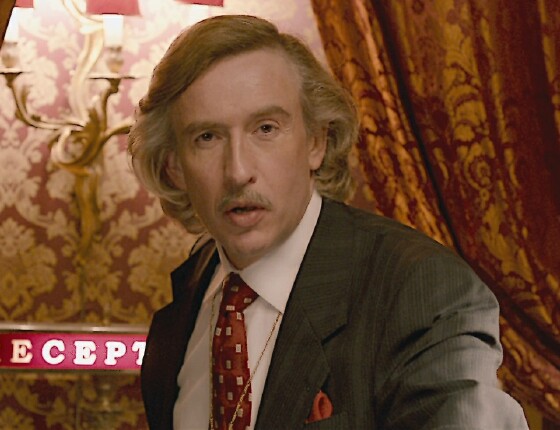
Steve Coogan expertly plays Paul Raymond in a way to make the viewer feel sympathetic with him. But to me he'll always be the man who ruined Mayfair.

Order from Amazon.com
Order from Amazon.co.uk
Order from Amazon.de

Thursday, 12 August 2021

Chatroom (3 Stars)


This is a British film made in 2010, directed by Hideo Nakata. It's his only English language film apart from "The Ring 2" (2005).

William's mother is a famous author of science fiction books. William feels neglected and unloved because she's named the hero of the books after his older brother. He's attempted suicide a few times, but he never had the courage to go through with it.

William has no friends. He spends all his spare time in online chat rooms. The film begins with him starting his own chat room, which he calls "Chelsea Teens". For those of you who don't know, Chelsea is a wealthy area in the centre of London.

After four teenagers join the room, he closes it to new members. It isn't specified how old the teenagers are, but they seem to be 17 to 18. Only one of them, Mo, is still at school. The others, including William, have left school early without A Levels. They might come from wealthy middle class families, but they're on the lower end of the education scale. All five of them are socially inept and live their lives in chat rooms. "Chelsea Teens" becomes their new home.

In the first conversations the teenagers are encouraged to get to know one another. They all have to answer the question "What do you hate most?" William demands honesty from the others, but he lies about himself. He says that his mother is dead.

As the film develops, we see that William has an agenda. To make up for his own inability to kill himself, he wants others to commit suicide. His primary target is Jim, whose father left him when he was eight. He claims to be giving him therapy, but he's actually encouraging him to kill himself.


Most of the film's action takes place on computer screens, but this isn't what we see. Hideo Nakata has made the decision to show the chat room as if it really exists in a dingy, poorly furnished hotel room. This is the way the teenagers imagine the room, not how it really is.

Despite the optics, there's nothing really original about the film. Teenagers bully one another online. That's exactly what they do in the real world. The only difference is that online bullying is with words, not with fists. A person who's weak in real life can be tough online. Nothing is as it seems.

Order from Amazon.com
Order from Amazon.co.uk
Order from Amazon.de

Saturday, 3 October 2020

Vivarium (5 Stars)


This is a film that could have been written by Franz Kafka. It's a chilling horror story about a man and his wife caught in a trap with no way out. They don't know who has trapped them or why. The doors to their prison seem to be open, but every attempt to walk out is met with frustration.

Tom and Gemma visit an estate agent to inquire about a house. They're taken to a house which is surrounded by identical houses. When they attempt to drive home they get lost and can't find the way. Whichever way they drive, they end up in front of the same house. Frustrated, they decide to stay the night in the house, but unseen forces are controlling their destiny. Every morning a box of food is placed in front of the house. Then a baby is left on their doorstep, but it isn't a normal child. He grows rapidly into a teenager within a few months. The boy, who isn't given a name, acts so strangely that they don't know whether to love him or hate him.


The film is unsettling. While watching it I felt revolted at times. I thought to myself that it was disgusting and I didn't want to watch any more, but I was drawn in with morbid fascination. It's an excellent film with awe-inspiring performances by the two main actors.

Order from Amazon.com
Order from Amazon.co.uk
Order from Amazon.de

Monday, 16 December 2019

Black Christmas [2019 version] (3 Stars)


"We're not insane, merely men".

This is the second remake of the 1974 film, "Black Christmas". I haven't watched either of the two previous versions, but I've read enough about them to know that the new version is so different that it can be considered a new film, copying only the background of the previous films but forging ahead in a different direction. Whereas the first films were pure slasher movies, the new film contains conspiracies and feminist messages.

The film takes place a few days in the future. I was amused to see the dates 19th and 20th December 2019 on screen. Riley and her friends in the MKD soriety house are getting ready to break up for Christmas. One by one the girls are attacked and killed by a hooded assailant with various weapons. It's not just the knife in the film poster, he also uses a bow and arrow.

Riley, played by Imogen Poots, has other problems on her mind. Two years previously she was raped by Brian Huntley, the president of the DKO fraternity. He was expelled from the university, but now he's visiting again for Christmas. When she receives threatening text messages she doesn't know whether they're from Brian or the mystery killer. Or maybe they're the same person.

As the poster above shows, the girls aren't intimidated. They pick up weapons and fight back against the slasher. That's very different to typical slasher films, in which one girl at most, the survivor, fights back.

And the story also has supernatural elements... but that would be telling too much.....

The problem with the film is that it doesn't know what it is. Is it a slasher movie or a girls-vs-boys free for all? I welcome feminist messages in films, but they seem out of place in this genre. In slasher films women don't make feminist speeches, they just get killed. The slasher picks on weak women.

I think I'll give it another chance and watch it when it comes out on Blu-ray. I want to watch the other versions first. Maybe then I'll be able to rate it higher. I don't know.

Tuesday, 10 December 2019

The Look of Love (4 Stars)


Doesn't a girl wrapped in a Union Jack make you feel proud to be British? We Brits aren't as obsessed with our flag as the Americans or the Swiss, we usually only dust off our flags for sporting occasions, but this photo should make our hearts beat faster. It's Tasmin Egerton, who plays the role of Fiona Richmond in the true story about the life of the sad billionaire Paul Raymond. I assume that the screenshot above is based on a real photo session in the 1970's, when she was at the peak of her fame.


Was Paul Raymond really sad? He was the richest man in England, and he had sex with countless beautiful women, so most men would envy him. The film shows that money can't make you happy, and sex definitely can't make you happy. At the beginning of the film we see that he has a loving wife who knows that he's being unfaithful with a series of one-night stands. Each night when he returns home late she asks "Was she nice?" He makes no attempt to conceal his infidelity. She loves him enough to put up with his minor affairs. It isn't until he meets Fiona Richmond and stops coming come that she wants a divorce.

Paul Raymond never officially married Fiona, but they had a steady relationship that lasted for a few years (between six and ten years, I can't be sure). She was a sexual woman, and she liked doing threesomes or foursomes with Paul, but she became jealous when he started doing threesomes or foursomes without her. She was willing to share him with other women, but she refused to give him away, not even temporarily.


Fiona Richmond's name was well known when I was growing up. To advertise one of her plays she rode naked on a white horse through the narrow streets of Soho. She was arrested, despite claims that she was portraying Lady Godiva, an icon of British culture. She had to pay a fine, but it was worth it. The tickets of her play sold out. It was a deliberate attempt to shock people, staged by Paul Raymond. He was famous for pushing boundaries. He knew exactly what was allowed in the prude British culture of the 1960's and 1970's, and he always did just a little bit more.

Fiona was also well known for her series of reports, "Around the World in 80 Lays", published in the men's magazine Mayfair. It was a comparison of her experiences with men from different countries, in particular how good they were in bed. As a teenager I read the reports. Mayfair was easily accessible to me, either my father's copies at home or the magazines secretly passed around at school. I was slightly disappointed to find out in the film that it was all fictional. Fiona never left her luxury London apartment, she just sat at her typewriter inventing her stories about men from Moscow to Sydney. I wanted to believe the stories, but Fiona was faithful to Paul Raymond. He didn't deserve her.


In London Paul Raymond was best known for his theatres and cabarets that pushed the boundaries of good taste, at least in the 1970's. Naked women dancing with snakes was scandalous 45 years ago, but today we just find it amusing. In the rest of England he was better known as a publisher of men's magazines. Starting with Men Only, he later founded the magazines Razzle, Club and Fiesta. The magazines all featured his name on the cover beneath the logo, so we knew they were his magazines. It was obvious anyway. They were virtually clones of one another, all with semi-pornographic images. For a few years Men Only was the best selling men's magazine in Britain, outselling the foreign magazines Penthouse and Playboy. This changed when Mayfair was founded in 1966. Paul Raymond's magazines were based on the style of European hardcore magazines, even if they didn't go as far, but Mayfair was a very British magazine. It was a men's magazine version of the Page 3 feature, in style and essence. Even if the girls were completely naked, they still looked glamorous.

It was a thorn in Paul Raymond's eye that Mayfair was outselling him. In 1990 he finally managed to buy Mayfair. At that time I regularly bought Mayfair, and I remember how my heart sank when his name first appeared on the cover. The transition was fast. The first magazine was still in the old style, but from the second issue onwards it sank to the same level as all his other publications. He destroyed Mayfair.

Theatres and men's magazines made Paul Raymond famous, but they're not what made him wealthy. He invested in Soho, buying property when houses were cheap. This part of his career is only mentioned in passing, and the film makes no attempt to show us how he became a property investor. This was his true genius. The houses were worthless, in a seedy part of London where nobody wanted to live, but he knew that prices would rise. The increase in property values is what made him the richest man in England. His wealth didn't make him happy. He was named the richest man in England in December 1992, one month after his daughter Debbie died of a drug overdose. He never recovered from her death. He spent the last 16 years of his life in his apartment with the curtains drawn shut, apart from occasional contact with his grandchildren, Debbie's daughters. Maybe he could have been happy if things had happened otherwise, but without Debbie he was a sad billionaire.

Order from Amazon.com
Order from Amazon.co.uk
Order from Amazon.de

Saturday, 14 September 2019

Vivarium (5 Stars)


This is the tenth film in the Stuttgart Fantasy Film Festival.

Tom is a gardener. Gemma is a schoolteacher. They're not yet married, but they're considering moving together. They visit an estate agent to look at houses. They drive to a housing estate in the suburbs, but they can't find their way back home. Their car runs out of petrol, so they stay overnight in the fully furnished house they looked at. The whole area is deserted. Nobody lives in any of the houses.

The next day a box is left outside the house with food. That's useful, because there are no shops. The day after that a box is left outside the house containing a baby and a note saying that they can't leave until they've brought up the baby.

There's so much I could say about the film, but I'll refrain for fear of giving away spoilers. It's a bizarre mystery, a living nightmare. This is the sort of role for which Jesse Eisenberg is perfet. He reminds me of his character in "The Double".

Friday, 23 November 2018

Centurion (3½ Stars)


In the year 117 AD the Roman ninth legion, which was stationed in York, marched north to battle against the Picts. It never returned. That much is true. This film tells a story about what might have happened.

The ninth legion is travelling northwards, guided by a mute Celtic scout called Etain. She leads them into an ambush, because she's really a Pict, not a Celt. Only seven men survive the attack. The centurion Quintus Dias leads the group, hoping to travel south to safer territory. The King of the Picts, Gorlacon, puts Etain in charge of a hunting group to kill them. One by one the soldiers are killed, until only Quintus is left.

This is a very brutal film. The opening scenes shocked me. It took me at least 15 minutes to get used to the violence. If I hadn't known already it would have convinced me that war is ugly.

I consider it a mistake to have made Etain a mute. The Picts overall are very anonymous in the film, with the possible exception of King Gorlacon. Not allowing Etain to speak made her even more distant. It's as if the Romans are facing an abstract enemy, a force of nature.

Success Rate:  - 1.9

Order from Amazon.com
Order from Amazon.co.uk
Order from Amazon.de

Thursday, 18 January 2018

The Look of Love (4 Stars)


Money can't buy love. But if you have enough money you can maintain the appearance of love for a long time.

When billionaire Paul Raymond died in 2008 he left his son Derry McCarthy nothing. Not one penny. I don't know where he lives now. He's faded into obscurity. It wouldn't surprise me if he's happier than his father ever was.

Click here for a more detailed review.

Order from Amazon.com
Order from Amazon.co.uk
Order from Amazon.de

Thursday, 8 June 2017

Filth (3 Stars)


This is a Scottish film made in 2013 starring James McAvoy as Detective Sergeant Bruce Robertson, a policeman currently seeking promotion to detective inspector. There are no doubts that he will be promoted. Both he and and his superior officer are members of the same Freemason lodge in Edinburgh.

By all accounts Bruce is an unpleasant character. He relentlessly plays games with his fellow officers. He plays pranks on them, then persuades them that the pranks were played by other officers, turning them against one another, while he remains the friend of all. He also plays games with a fellow lodge member, Clifford Blades, who considers him to be his best friend. He makes anonymous sexual phone calls to Clifford's wife. When asked by his superior officer to investigate the matter, he fakes evidence that Clifford was making the calls himself.

Bruce has other problems in his life, maybe brought on by the stress of his deceptive life, maybe a result of the recreational drugs he uses. He sees and talks to people who aren't there. His friends and colleagues see him breaking down and want to help him, but he considers everyone his enemies.

As the film continues Bruce rapidly spirals downwards. My biggest problem with the film is that I couldn't sympathise with him as a character. I disliked him from the beginning, so I gloated as he deteriorated. It's an interesting experimental film, but even bad guys have to be likeable for a film to win over the audience.

Order from Amazon.com
Order from Amazon.co.uk
Order from Amazon.de

Thursday, 19 May 2016

Green Room (3 Stars)


This is a different type of horror film, grounded in reality. A group of young people are trapped in a building and need to escape, but they're being attacked from all sides. Not by zombies or vampires, they're being attacked by neo-Nazis.

A punk band, The Ain't Rights, is on tour in Oregon. They're desperate for money, so they accept an invitation to play at a bar that's owned by neo-Nazis. I'm surprised they were even invited, because everyone knows that punks are usually left-wing. The bar is located in a remote woodland area, no neighbours for miles. After their set they're about to leave when they see a dead body. The bar's owner, Darcy Banker (Patrick Stewart), says that they can't be allowed to leave alive. A siege situation ensues, with the band holed up in a room painted green.

I saw this film with my friends from the Birmingham Film Club. They all enjoyed the film. I was the only one who disagreed, so please understand that the rating only reflects my personal opinion. There's a good chance that you will like the film more than me.

In my opinion, the young people under siege theme has been overdone in horror movies. It makes an interesting twist that the "monsters" are human, but this doesn't make the film better. I don't like the film's slow pace. For me this doesn't succeed in building up the suspense. I expected a rapid onslaught of attackers, rather than occasional short bursts.

On the positive side, Patrick Stewart's performance as the intellectual patriarch of the young Nazi thugs is brilliant. He proves that he's able to play a bad guy.