Showing posts with label Liev Schreiber. Show all posts

Thursday, 30 October 2025

Scream 3 (5 Stars)


Scream 3 (2000) – When the Horror Becomes Hollywood

By the time Scream 3 arrived, the slasher genre had already eaten itself alive through imitation, and Wes Craven knew it. So instead of pretending to resurrect something fresh, he and writer Ehren Kruger (standing in for original scribe Kevin Williamson) leaned even further into Scream's defining trick: horror that knows it's horror. The result is a film that isn't just about killing the survivors of Scream 2, it's about killing the franchise itself, or at least dissecting it on the operating table.

Set against the backdrop of Stab 3, the in-universe film series inspired by the original Woodsboro murders, Scream 3 folds in on itself until the line between fiction and reality all but disappears. Every scene is both a murder sequence and a movie scene, a set within a set. Characters walk through Hollywood replicas of their own traumatic pasts, and Ghostface's violence becomes a twisted form of direction. If Scream was about how horror movies shape behavior, Scream 3 is about how the machinery of Hollywood rewrites the truth.

This is where the film's “rules of the trilogy” come into play, courtesy of Randy's posthumous videotape cameo – a highlight of the film and a meta masterstroke. He reminds the survivors (and us) that in the final act of a trilogy:

The past comes back to haunt you.

Secrets are revealed.

The killer's powers reach “superhuman” proportions.

Craven dutifully checks these boxes: hidden parentage, retconned motives, and a villain who practically embodies the ghost of franchise lore. The meta-commentary doubles as catharsis; what began as parody of slasher tropes becomes a self-portrait of Hollywood's own cyclical storytelling and moral amnesia.

Still, Scream 3 isn't as sharp or as sly as its predecessors. The absence of Williamson's script shows in the pacing and dialogue; the balance between horror and satire tips toward the latter. It's more playful than scary, more commentary than carnage. But as a metafilm, it's fascinating; a horror movie about the impossibility of ending a horror movie.

In the end, Scream 3 doesn't just close a trilogy; it closes a loop between artifice and authenticity. By the time the credits roll, we've watched not only a film about films but a film haunted by its own franchise DNA–a slasher turned séance.

Though generally considered the weakest film in the trilogy, Scream 3 has hordes of fans who praise it and attribute it cult status. It stands as a fittingly self-referential finale – a meta-horror about the rules, myths, and monsters that movies themselves create.

Success Rate:  + 2.1

Order from Amazon.com
Order from Amazon.co.uk

Tuesday, 28 October 2025

Scream 2 (5 Stars)


Scream 2 – The Horror Sequel that Watches Itself Watching You

When Wes Craven released Scream in 1996, it revived the slasher genre by dissecting it – both loving and mocking its clichés. Its sequel, Scream 2, takes that self-reflexive impulse and amplifies it, becoming not only a horror film about horror films, but a horror sequel about the inevitability and predictability of sequels. It's a movie obsessed with its own status as cinema – what it means to depict violence, to consume it and to perform it again and again under the guise of entertainment.

The Meta of the Meta: Watching the Movie Within the Movie

The opening scene of Scream 2 is one of the most audacious metafilm gestures in mainstream horror. Set in a packed cinema showing Stab – a film based on the murders from the first Scream – we are thrust into a spectacle of spectatorship. The audience within the film, masked and gleeful, mirrors the audience watching Scream 2 in real life. Craven transforms the theatre into a mirror maze: viewers watching viewers watching murder as entertainment.

The scene literalises horror's self-awareness while critiquing its consumption. The boundaries between fiction and reality collapse in real time. When Jada Pinkett's character, Maureen Evans, is stabbed to death amid cheering crowds who think it's part of the show, Craven forces us to confront our complicity as horror audiences – our appetite for stylized death and our comfort with seeing certain bodies die first.

Race and the Periphery of the Frame

That opening sequence also foregrounds Scream 2's uneasy engagement with race. The choice to feature two black characters (Jada Pinkett and Omar Epps) in the prologue is not incidental – it's a deliberate metatextual gesture. Their dialogue critiques the horror genre's historical whiteness: Maureen complains that "Black people always get killed first", voicing a long-standing fan frustration and cultural truth about slasher films.

But Craven's choice is double-edged. By having them die in the very next moments, the film acknowledges that critique yet also reproduces it. It's both a self-aware nod and a failure of imagination – a knowing wink that doesn't save the characters from the same fate. This recursive irony is precisely what defines Scream 2's relationship to race: it sees the problem clearly but remains unable (or unwilling) to step outside the structure it mocks.

Beyond the opening, the film reverts to a predominantly white cast, situating its story in a college environment coded as upper-middle-class and implicitly white. The only black characters who speak meaningfully are relegated to brief, marginal roles. Scream 2 thus reflects a broader pattern of 1990's Hollywood diversity: inclusion through commentary, not transformation.

In other words, Scream 2 knows it's participating in exclusion, and calls attention to that fact, but still participates.

The Meta Frame as Social Commentary

What keeps Scream 2 so compelling, however, is that its metafilm sensibility extends beyond just genre rules; it becomes a mode of cultural reflection. The film within the film (Stab) mirrors how the media capitalises on real violence, transforming trauma into spectacle. For Sidney Prescott (Neve Campbell), the survivor of the original film, the existence of Stab turns her pain into entertainment. She's forced to watch her own trauma fictionalised and sold – a meta-commentary on how real-life suffering, especially women's suffering, is endlessly recycled for cultural consumption.

This idea connects back to the racial dynamic of the opening: both Maureen and Sidney are victims of a system that aestheticises violence differently depending on who's watching. The Stab audience cheers Maureen's death; the media profits from Sidney's survival. Both are products in the machinery of spectacle.

Conclusion: Self-Aware but Not Self-Transcendent

Scream 2 remains one of the sharpest horror sequels ever made precisely because it knows it cannot escape its own reflection. It's trapped in the feedback loop of representation: critiquing what it reproduces, reproducing what it critiques. Its metafilm brilliance lies in this tension: the recognition that awareness alone doesn't equate to change.

When Jada Pinkett's Maureen dies screaming in a theatre full of spectators who mistake it for performance, Scream 2 asks us a haunting question: if horror knows it's problematic, and we know that it knows, why do we keep watching?

Success Rate:  + 5.2

Order from Amazon.com
Order from Amazon.co.uk

Monday, 27 October 2025

Scream (5 Stars)


Revitalising the Teen Slasher and Reimagining the Victim

By the mid-1990's, the American slasher film seemed creatively exhausted. After the explosive success of Halloween (1978) and Friday the 13th (1980), the genre descended into formula: interchangeable masked killers, one-dimensional teenage victims and endless sequels that dulled the impact of the original innovations. The archetypes – the "final girl", the sexually active couple, the killer's traumatic backstory – had become so familiar that they no longer provoked fear. Into this stagnation entered Wes Craven's Scream (1996), a film that not only revitalised the teen slasher but also transformed the role and meaning of the victim. Through its self-aware script, complex characters and layered treatment of violence, Scream resurrected a dying form by allowing both its characters and its audience to understand and question the very rules that had once defined it.

Reviving the Rules

Kevin Williamson's screenplay for Scream is built on the premise that its characters are already fluent in horror. They know the "rules" of the slasher film – never have sex, never drink, never say "I'll be right back" – and they recite them with a mix of irony and affection. Yet, despite this awareness, they are still drawn inexorably into the same deadly pattern. This self-referential structure revitalised the genre by acknowledging its clichés while using them to generate new forms of tension.

Director Wes Craven, whose earlier "A Nightmare on Elm Street" (1984) helped shape the original slasher boom, uses this meta-approach not as parody but as reanimation. He brings intelligence and energy back to the genre by blending comedy with genuine horror. The film's opening sequence, in which Drew Barrymore's Casey Becker is terrorised over the phone, encapsulates this new sensibility: the scene references "Halloween" and "When a Stranger Calls", but its execution is sharp, cruel and emotionally devastating. The audience expects irony but gets terror. In killing off its biggest star within the first ten minutes, Scream announces that its rules will not be predictable and that its victims will matter.

The Significance of Each Victim

One of the ways Scream revitalises the slasher is through the individualisation of its victims. Rather than treating them as disposable archetypes, Craven and Williamson give each death emotional and thematic significance, transforming what was once mechanical slaughter into commentary on horror itself.

Casey Becker, the opening victim, is the ultimate meta-casualty. Her playful conversation about favourite horror movies turns fatal when her knowledge fails to save her. Her death represents the futility of media literacy in the face of real violence. Casey's murder re-establishes fear in a genre that had become predictable; it shocks precisely because it violates expectation. The visceral brutality of her death signals a return to the raw horror that the 1980's sequels had diluted, while simultaneously marking the death of the passive horror audience.

Principal Himbry, stabbed in his office, serves as a symbolic victim of adult authority's impotence. His death, though played partly for dark humour, underscores how the adults in Scream are powerless to protect their students. The slasher's focus shifts firmly to the teenage sphere; adults are spectators, not saviours.

Tatum Riley, Sidney Prescott's best friend, embodies the genre's gender politics. Smart, witty and assertive, Tatum might in earlier slashers have been reduced to the "promiscuous victim" stereotype. Yet Scream complicates this by making her death tragic rather than moralistic. Killed in a garage door – a grotesque mixture of humour and horror – her death highlights the absurdity of slasher violence and the audience's uneasy complicity in enjoying it. Craven's staging transforms what could have been a punishment for sexuality into a critique of the genre's misogynistic conventions.

Kenny the Cameraman, representing the voyeuristic media, dies because of his proximity to spectacle. His murder outside the van literalises the film's central anxiety about watching: the line between observer and participant collapses. In Scream, to watch horror is to risk becoming part of it.

The final victims, Stu Macher and Billy Loomis, invert the genre's traditional moral dichotomy. They are not supernatural monsters but horror fans turned murderers, consciously modelling themselves on cinematic killers. Their revelation exposes Scream's central paradox: that violence in the media and violence in life are entwined in a cycle of imitation. The killers' self-awareness reflects the audience's own, implicating viewers in the very horror they consume.

The Final Girl Reimagined

At the centre of this landscape of victims stands Sidney Prescott, the quintessential yet redefined "final girl". Unlike her predecessors, Sidney is acutely aware of the horror narrative she inhabits. Her trauma – rooted in her mother's murder and the town's moral hypocrisy – gives her depth and resilience. When she eventually turns the camera on her attackers, reversing the gaze of the slasher, Sidney symbolically reclaims agency for the genre's victims. Her survival feels earned, not formulaic.

Through Sidney, Scream revitalises not just the slasher's structure but its emotional core. She is not a mere survivor but a participant in the film's deconstruction of horror, embodying both the genre's past and its future.

Cultural and Genre Legacy

The success of Scream was immediate and transformative. It rejuvenated box offices, inspired imitators like "I Know What You Did Last Summer" (1997) and "Urban Legend" (1998), and brought horror back into mainstream teen culture. More importantly, it made the slasher self-conscious without making it sterile. By turning victims into characters with symbolic weight, Scream restored emotional investment to a genre that had become hollow spectacle.

Each victim's death carries meaning – about youth, media, sexuality and spectatorship – so that the film becomes both a critique and a celebration of horror. In recognising the constructedness of its world, Scream paradoxically makes that world feel more real, its violence more shocking, and its victims more human.

Conclusion

Scream revitalised the teen slasher genre by reintroducing intelligence, emotional depth and cultural self-awareness. Its victims are not interchangeable bodies but reflections of the genre's own anxieties: about spectatorship, morality and identity. By giving meaning to each death, Scream transforms the mechanics of horror into a meta-narrative about the genre's rebirth.

Nearly thirty years later, Scream remains the definitive bridge between the classical slasher and the postmodern horror film; a blood-soaked love letter to the genre that refused to die.

Success Rate:  + 10.4

Order from Amazon.com
Order from Amazon.co.uk

Thursday, 26 December 2024

Scream 3 (5 Stars)


After the hot passion in the last film, you might think that Gale Weathers and Dewey are an item.


But Gale was obviously too much for him, so he's settled tor Jennifer Jolie, the actress who plays Gale Weathers in the Stab films. (In case you don't know, the Stab films are the Scream films within the films. It all gets very meta). Dewey would rather have a fake Gale than no Gale at all.


But a few deaths later, Dewey finds his way back to the real Gale. He doesn't have much choice, now that the fake Gale is dead. Dewey finally proposes to her. So they live happily ever after? Wait till the next film to find out.


Why is it that Dewey always look scared when Gale kisses him.

The first three films go through three phases in Sidney Prescott's life:


"Scream" shows Sidney and her friends as high school teenagers.

"Scream 2" shows Sidney and her friends as college students.

"Scream 3" shows Sidney as a young working adult. She's become a recluse and doesn't have any friends.

Success Rate:  + 2.1

Order from Amazon.com
Order from Amazon.co.uk

Scream 2 (5 Stars)


Gale Weathers and Dewey get off to a rough start in "Scream 2". Dewey accuses Gale of exploiting Sidney by writing a book about her mother's murder.


But they can't resist one another. An hour later they enjoy their first kiss.


Within minutes Gale is all over him. She's the apex predator. When she wants a man she takes him, and the small town policeman is unable to resist.

That's as far as they get. There's a killer in the next room watching them.

Wait for the next film to see how the romance continues.

Success Rate:  + 5.2

Order from Amazon.com
Order from Amazon.co.uk

Scream (5 Stars)


As I've recently said, my son Benjamin prefers horror films over all other genres. I have nothing against horror films, but I don't want to watch only horror films for the two weeks that he's visiting me. I tried to calm things down with "Annette" and "White Noise" yesterday, but after the second film he insisted on watching a horror film today. I suggested watching the six Scream films, and he immediately agreed. It's been years since he last watched them. I suggested watching two films a day for three days, but this morning he said he wants to watch three films a day. Why not? They're great films.

The only problem with watching so many films is that I won't have enough time and energy left to write lengthy reviews. I'll keep to a minimum. If you're not happy, you can find my previous, more detailed reviews in my alphabetical list of posts.

 I'll just point out one thing that I didn't mention in my previous reviews. The Scream films feature an on-off relationship between Deputy Dwight Riley (nicknamed Dewey) and the news reporter Gale Weathers. She has a way with words. When she first meets him she tells him that he looks young. Dewey takes it as a compliment, but then she adds that he doesn't look a day over 12.


Way back in 2015 I created my first animated GIF using Photoshop. It was fun, but I never did it again. It's a lot of tedious work, and the resulting animation is huge. There are tools for creating GIFs automatically, if I ever want to make one again. Here's my GIF showing Rose McGowan going down to a chilly cellar. Click on the picture to see everything moving.

Success Rate:  + 10.4

Order from Amazon.com
Order from Amazon.co.uk

Monday, 10 July 2023

Asteroid City (2 Stars)


What is the director Wes Anderson trying to do? Does he want to entertain the audience or just provoke us? I honestly don't know. I felt provoked. There were two young women sitting in front of me who felt just as provoked. Every time something strange happened in the film they turned and looked at one another. About half an hour from the end one of them put on her jacket and wanted to leave, but her friend tugged at her and told her to stay. It's a film that I almost walked out of. As it was, I was the only person in the cinema who remained seating to watch the bird hopping around during the final credits.

It's a film within a film, or rather a play within a film. It's about a playwright who writes, casts and directs a play about a group of people, mostly stargazers, who come together in a fictional city in the desert. While being told about an asteroid that fell in the desert thousands of years ago, an alien arrives and takes the asteroid away.

It's deliberately left unclear what's part of the play and what's really happening. It's possible that a real alien arrives while the play is running.

Wes Anderson has put a lot of work into the visual effects of the film. That's the only reason I haven't given the film a one star rating. I didn't enjoy it, and I have no intention to ever watch it again.

Sunday, 25 June 2023

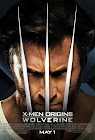
X-Men Origins: Wolverine (3 Stars)


The title of this film makes me think that Marvel intended to make a series of origin films about the different X-Men. Fourteen years have passed, and there still aren't any more films. There used to be origin stories in the early issues of the X-Men comics (X-Men #38 to #57). These stories could have been adapted for films. It was a missed chance.

Success Rate:  + 0.5

Order from Amazon.com
Order from Amazon.co.uk
Order from Amazon.de

Wednesday, 1 February 2023

Spider-Man: Into the Spider-Verse (3 Stars)


My personal definition of a good film is that it's a film that I want to watch at least three times. Please don't misquote me. I didn't say that it's a film that I've watched three times, it's a film that I want to watch three times. There are many films that I like a lot, but I haven't had time to watch them more than once. There are also films that I've watched three times, but if I saw the film today for the first time I wouldn't want to watch it another twice. "Into the Spider-Verse" is such a film. I rated it four stars when I watched it in the past, but after watching it today I dropped my rating to three stars.

I was being generous. I'm biased in favour of Marvel films. When I go to the cinema to see a Marvel film I want to like it. After watching "Into the Spider-Verse" twice already, I'm finally able to watch it with an open mind. It's not a good film. It's too silly. The whole way that Marvel handles the multiverse in its films is nonsensical. Added to that, the film has scenes that hurt my eyes. Either the colours are too bright, or the picture is blurred.


Peter Parker is Spider-Man. Spider-Man is Peter Parker.


I'm not so fussy about villains. I don't mind Olivia Octavius taking the place of Otto Octavius as Doctor Octopus.


But I don't want to see Peni Parker ever again. Or is her name Penny Parker? Or Peeny Parker?

I've been told that this is the first film in a trilogy. I hope the sequels are better.

Success Rate:  + 2.2

Order from Amazon.com
Order from Amazon.co.uk
Order from Amazon.de

Monday, 17 October 2022

Spider-Man: Into the Spider-Verse (4 Stars)


I didn't intend to buy this film, but when I saw the 4K disc in Amazon's Early Access Sale for 6.95 Euros I couldn't resist the temptation. I have no idea what the sale was about – early access for what? – but it was a good price. Today, as I write this review, it costs 12.99 Euros, almost double the price.

It's a weird film, messing around with Marvel's concept of a multiverse three years before the topic was picked up in "Spider-Man: No Way Home". Evidently the critics like the film more than me. It has a 97% rating on Rotten Tomatoes, the highest rating of any Marvel film so far, and it won the Academy Award for Best Animated Film in 2019.


So the film has six Spider-Mans, or should I call them Spider-Men. It's always a problem with the plurals of proper names. But I can't call them Spider-Men, because two of them are women. So they're Spider-People? Not quite. Spider-Ham (on the right) is a pig, so they're Spider-Things. This is getting confusing.


There are attempts to be humorous in the film, but only one thing made me chuckle: Spider-Man Noir takes a Rubik's Cube back to a black and white universe. Isn't that the same sort of thing that happened in "Pleasantville"?

In my eyes the film isn't bad, but it's not great. If I had to name three things I particularly like about "Into the Spider-Verse" I'd say:

1. There's an animated Stan Lee cameo.

2. In the final scene Miles Morales captures the essence of Spider-Man by talking like Peter Parker.

3. Ummm... I can't think of anything else.

Success Rate:  + 2.2

Order from Amazon.com
Order from Amazon.co.uk
Order from Amazon.de

Monday, 3 January 2022

Hitler: The Rise of Evil (5 Stars)


True Stories #1

Name: Adolf Hitler
Lived: 20 April 1889 – 30 April 1945
Film shows: 1899 – 1934, mainly 1919 to 1934
Film made in 2003

This is the first in a row of true stories that I intend to watch over the next two months. Many of the films are biopics, but others aren't, even if they're primarily concerned with one person. The film I watched today is a good example of the difference between biopics and normal true stories. A typical biopic of Adolf Hitler would show his whole life, or at least the most significant deeds in his life. This film begins early in his life, but it ends in 1934, before the main events began for which Hitler is remembered. Other films that I intend to watch show even smaller excerpts from a person's life.

I originally intended to make January 2022 my True Story month, but when I counted the films based on true stories in my film collection I realised that I had almost 50 films. I managed to cut my list down to 40, but I couldn't bare to remove any more. I wanted to start on January 1st, but after the death of Betty White "Lake Placid" took priority.

True stories aren't always completely true. I don't just mean mistakes in a film. Often changes are made for the sake of dramatization, to make a film more exciting or easier to understand. If it's only small factual changes, I'll ignore them and not even mention them in my review. If there are large changes, I shan't include the films in my list.

The German Wikipedia page includes a long list of historical inaccuracies in the film. Most are trivial mistakes, such as the wrong telephones being shown in offices. They don't detract from the quality of the film.

"Hitler: The Rise of Evil" is a film that's divided critics. The majority heaped praise on it, but a large number criticised it for showing Hitler in a favourable light. They don't get it. The film shows Hitler in his formative years, before he committed his major acts of evil. We see bigotry and racism in his early years, but we also see him as a passionately patriotic man struggling to make Germany great again. No man is all good or all bad. The film does its best to paint a neutral picture so that the viewer can understand what motivated him. He wasn't a man who suddenly dropped from the sky and killed six million Jews. The film shows his development, his triumphs and his failures, in the 15 years before he came to power.


The film is based on several historical sources, but the main source is the memoires of Ernst Hanfstaengl, a close friend of Hitler until 1934. He and his wife Helena witnessed things that nobody else did. For instance, after the failed putsch in 1923 Hitler attempted to shoot himself in Hanfstaengl's house, but Helena talked him out of it. This is doubted by many historians, but I see no reason for Hanfstaengl to lie about it.

Ernst and Helena Hanfstaengl are the main supporting characters in the film, alongside the journalist Fritz Gerlich, who was so passionate in his enmity of Hitler that his wife accused him of being the same as Hitler. The SA boss Hans Rohm is also prominent, initially a close friend of Hitler, but later falling into disfavour. 


People think of Hitler as a monster, but he was also a man. Most people today say they would never follow such an evil person. It's easy to say those words in retrospect. Hitler was a talented speaker with great charisma. He could win over his biggest enemies with his words. Without naming names, I have friends that I think could fall under the influence of a man like Hitler. We need to learn from history. Once a man like Hitler is in charge of a country, it's already too late. We need to stand against him before he comes to power.

Order from Amazon.com
Order from Amazon.co.uk
Order from Amazon.de

Monday, 5 April 2021

Scream 2 (5 Stars)


"Scream 2" was  made in 1997, only a year after "Scream". Was a sequel even possible? The serial killer died at the end of the first film. That's become the style of the Scream franchise. In every film the killer dies, and in the next film another person puts on the Ghostface mask and continues his work. This is usually considered copycat killing, but in the case of the Scream films it's more. The new killers aren't just imitating the ones who went before, they're becoming the killer.


In "Scream 2" the metafilm aspect begins. A film called "Stab" is being shown. It's based on a book written about the events in "Scream". Excerpts of "Stab" are shown in the cinema which repeat the dialogue from "Scream" with new actors. This is a very intelligent story, and it's part of what makes "Scream 2" such a good film.

"Scream 2" takes place in an unnamed town in Ohio, far away from Woodsboro, California. That's more than 2000 miles away, but the cast members of the original film are all gathered in the new location. Sidney Prescott and Randy Meeks are studying in Windsor College. The others flock to the town when the first murders take place. Some want to be close to Sidney to help her, while others, such as the reporter Gale Weathers, see it as a publicity opportunity.


Visitors of the sneak preview are given Ghostface costumes, which many immediately put on. I hope the masks were more comfortable than the one I bought. No, I'm not a serial killer. I bought a Ghostface outfit as a Halloween costume in 2014. The cloak itself was very comfortable, but the mask was so clammy that I couldn't wear it for more than five minutes at a time.


This is me threatening a young lady. She was supposed to scream, but she knew me too well to be frightened of me. I don't have it in me to be a serial killer.


Maybe the problem is just that my pink-haired friend isn't a good actress. I'm sure Neve Campbell wasn't really scared on the film set, but she convincingly expressed fear.


So did Sarah Michelle Gellar. It's a shame she was killed so early in the film. I would like to have seen more of her in the sequels.


Liev Screiber is an outstanding actor. He'd already appeared in other films, including a non-speaking cameo in "Scream", but this was his breakthrough role.

While not as important in film history as "Scream", I consider "Scream 2" to be almost as good as "Scream". I've reflected this by putting them side by side in my top films list. I've chosen not to include "Scream 3" in my list. I'll watch it again later this year to decide whether it was a mistake.

Success Rate:  + 5.2

Order from Amazon.com
Order from Amazon.co.uk

Sunday, 4 April 2021

Scream (5 Stars)


Despite its relatively low place in my top 100, I think this is one of the most important films ever made. It was included in my list of 30 films to watch before you die. I ordered that list chronologically, not by how essential the films are. If I'd ordered the list by importance, I would probably have put it in second place, after "Faster Pussycat Kill Kill".

"Scream", made in 1996, was the film that breathed new life into the slasher genre. It didn't do this by re-inventing or changing the genre; it took the best features of the slasher films of the previous 20 years, carefully mixing them and presenting the result acted out by glamorous young teenagers. Look at the girls in Woodsboro High School. They're all drop dead gorgeous, as if it were a school for supermodels. I've been told that the boys look just as good, though I'm less able to judge that myself.

"Scream" talks down to the cinema audience. Randy Meeks, pictures above, explains the rules of horror films to the assembled teenagers at the party, but he's really explaining to the audience. The rules he explains for surviving in horror films are the standards that had been developed since "Halloween" in 1978.
  1. Don't have sex.
  2. Don't drink or do drugs.
  3. Never say "I'll be right back".
As amusing as these rules sound, they're valid. Randy says that their school is the setting of a real life horror film. You can't get more meta than that. Or maybe you can; the sequels push the meta-film aspect a step further.


"Scream" is a product of the 1990's. It was the era of the video rental store. That's where people went to socialise and collect horror movies. Time has moved on since then. Today's slasher films have to involve social media, like "Tragedy Girls". If Wes Craven had waited a few years he would have missed the moment and been unable to make the film.


"Scream" was followed by two films to form a neat trilogy. After a gap of eleven years a fourth film was made which was advertised as the first film in a new trilogy, but it wasn't successful enough to justify another two films. Now, after all these years, a fifth film is being planned. Filming should have begun last year, but it was delayed by the Coronavirus. The cast from the original film will return, 25 years older. It's not a reboot, it's a continuation of the series. Let's see how well it turns out. I'm expecting the worst, but hoping for the best.

Success Rate:  + 10.4

Order from Amazon.com
Order from Amazon.co.uk

Monday, 17 December 2018

Spider-Man: Into the Spider-Verse (4 Stars)


I almost didn't go to see this film. I dislike animated films and television series, and I particularly dislike the animated versions of Marvel super-heroes that have been made over the last 50 years. The first animated Spider-Man TV series was made in 1967, and I'm unlucky enough to have seen a few episodes. I was surprised to see that it was released on DVD a few years ago, but it's out of print now.

Nevertheless, I enjoyed the film. I knew in advance that I shouldn't try to reconcile it with Marvel canon, because it's set firmly in the post-canon years. Miles Morales is a character who only appeared a few years ago, first in the Ultimate Universe (Earth-1610) and then in the main Marvel Universe (Earth-616). When he first became Spider-Man he was 13 years old, which is presumably the age he's supposed to be in "Into the Spider-Verse". The visual style of the animation is mostly realistic, although I have a few complaints. Wilson Fisk (the Kingpin) looks ridiculous with a head that's lower than his shoulders. Was he ever drawn so badly in the comics? I hope not.

The story takes place in the Ultimate Universe, presumably Earth-1610, although it borrows heavily from Earth-96283. The Kingpin has lost his wife, so he's trying to combine six universes in the hope of finding an alternate version of her in another universe. Spider-Man (Peter Parker) attempts to stop him, but dies in the process. His place is taken by Miles Morales, who has also been bitten by a radioactive spider. Miles has powers that the original Spider-Man didn't have, such as invisibility and electric shocks ("venom blasts"), but he still hasn't learnt how to control his powers. Luckily he has assistance, because the alternate versions of Spider-Man come to him from the other five universes.

An older Peter Parker comes to him from Earth-616. He says that he's been Spider-Man for 22 years, which would mean he's almost 40.

Spider-Woman, alias Gwen Stacy, is from Earth-65. She's approximately the same age as Miles.

Spider-Man Noir is a black and white version of Peter Parker from Earth-90214.

Spider-Ham is a talking pig who comes from Earth-8311.

Peni Parker is a Japanese girl who uses a robot called SP//dr powered by a radioactive spider. She comes from Earth-14512.

The six Spider-Men / Spider-People / Spider-Things have to team up to battle the Kingpin and his super-powered henchmen.


In case anyone doesn't believe that Spider-Ham is really a Marvel character, here's the cover of Spider-Ham #1 from November 1983. The series ran for 17 issues before landing in the trash can where it belonged. I know that it was meant to be humorous, but I find it embarrassing. Even Stan Lee's mid-1960's series Not Brand Echh was better. I disliked the style, but at least it had an element of satire, something missing from Spider-Ham.

If you're wondering why Marvel has all these numbered alternate universes, there's a simple explanation: it's an excuse for poor quality writing. In the early years of Marvel Stan Lee wrote everything. He had everything in his head, and he knew what had already happened to each character. He made a few small mistakes, but they were few and far between. Then other writers came like Roy Thomas and Gerry Conway, who read everything that Stan had written and carried on from it. But as the years went by the amount written, the Marvel canon, was so much that new writers couldn't take it in. How could new writers be expected to read 30 years of stories before writing their own comics? A good editor could have guided them, but another route was taken. Just start again. Write completely new stories with the old characters, and say it takes place in a different universe. The Marvel 2099 Universe was the first major departure from the main Marvel universe in 1992. The Marvel Ultimate Universe in 2000 was another major new universe. I'm not saying that individual comics set in these universes weren't good. What I'm saying is that the whole premise of these universes was the result of lazy writing, lazy editing and lazy everything else. I don't know why Stan Lee allowed it to happen. He probably had too little influence in the company by then.

If you want to read first class Marvel comics, go back to the 1960's. I can't say with 100% certainty at what point canon turned into non-canon – different comics changed at different times – but it was somewhere between 1972 and 1984. I believe that the change was brought about primarily by Jim Shooter when he was editor, but Mark Gruenwald also had a lot of influence. Only a few writers like Roy Thomas and Steve Englehart fought against the changes.

Saturday, 2 June 2018

Hitler: The Rise of Evil (5 Stars)


In my last review I said that this is the best film ever made about Adolf Hitler. I'd like to repeat that, while explaining what I mean. Many of my friends still don't understand who Hitler was. They don't understand why people voted him into power. 70 years after the end of World War Two we're still being bombarded with anti-Hitler propaganda that makes it impossible to know the truth about him. We know what he did. He killed six million Jews. That makes people think that the Germans voted for him because he was a racist. That's not true. If Hitler had gone on the radio saying "Vote for me so I can get rid of the Jews" he would have been lucky to get even one seat in the German parliament.

This film, which was originally made as a two-part mini-series, leaves us in no doubt that he hated the Jews. He held speeches against the Jews in the early 1920's, but this was no longer emphasised in the 1930's. The main policy of his party was always the rejection of the Treaty of Versailles. This was something the German people wanted. This is why they voted for him. Another important policy was the suppression of Communism, which most Germans associated with anarchy.

When you watch this film, don't just concentrate on Adolf Hitler, however admirable you might find Robert Carlyle's performance. Watch the people around him and how they react to him. Watch how everyone falls victim to Hitler's charisma. Even the reporter Fritz Gerlich was initially fascinated by Hitler before turning against him. Ernst Hanfstaengl, on whose memoirs most of the film is based, was totally swept away by Hitler's persona. For him Hitler was the man who could make Germany great again.

The question I have to ask myself, and I hope my readers will ask themselves the same question, is whether I would have voted for Hitler's party in the 1930's. I might have voted for him in 1930, and I would almost certainly have voted for him in 1932. As a typical German I would have blamed the Treaty of Versailles for the poverty and starvation in the country, and Hitler was the man promising a change. Naturally I would have regretted my vote a few years later, but in 1932 I would have thought he was the best choice. That's the problem with democracy. We have to make a decision based on insufficient information.

I've read a lot about Hitler over the years, but one thing I've never understood is why he fell out with Ernst Röhm. They were close friends in the 1920's. Some writers suggest that it was Hitler's other allies, in particular Hermann Göring, who turned Hitler against Röhm. Other writers suggest that Hitler broke with Röhm because he wanted to organise a military putsch instead of waiting for an election victory. I'm not happy with either opinion. This film shows that Hitler was disgusted by Röhm being a homosexual, which was certainly true, but it wasn't reason enough to have him executed. It probably had more to do with the Georg Bell affair, but I don't know enough about it. I had never heard of Bell before watching this film, but he must have played an important role in the Nazi Party in the early 1930's.

If you want to learn about Hitler there's no way around reading books about him. I also recommend reading "Mein Kampf" before you start talking about what you think he thought. However, this film is a good place to start, and it will only take up three hours of your time.

Order from Amazon.com
Order from Amazon.co.uk
Order from Amazon.de