Saturday, 25 June 2022

WWF 1997.04.07 - Monday Night Raw


Location: Worthen Arena, Muncie, Indiana
Commentators: Vince McMahon, Jim Ross, Honky Tonk Man

This is a live broadcast, so when the commentators say "last week" they mean last week.


Match 1. Tag Team Championship, British Bulldog & Owen Hart vs The Godwinns

British Bulldog and Owen Hart come to the ring, united once more after Bret Hart's passionate speech last week. Or was it two weeks ago? They're carrying the flags of the United Kingdom and Canada respectively. Owen holds a short speech in which he thanks his brother Bret and berates America. He threatens that they'll beat up Shawn Michaels or anyone else who speaks badly of Bret.

They defend their tag team title against the Godwinns, Henry and Phineas. Bulldog and Owen retain their title after a rough match with a lot of cheating. As they're leaving the arena, the Legion of Doom are waiting for them. The Godwinns come from behind to throw a bucket of pig swill at them, but they duck and the Legion of Doom are drenched. The Godwinns and the Legion of Doom fight while British Bulldog and Owen Hart stand laughing.


Match 2. Steve Austin vs Billy Gunn

The match see-saws between the two competitors, but Steve Austin has the clear advantage. It's not a wrestling match, it's a brawl, and nobody can defeat Steve Austin in a brawl.


After the match the Honky Tonk Man goes into the ring to offer his sympathies to Billy Gunn. He says that he may have lost the match today, but with Honky Tonk's help he has the promise of being the best. All he needs is some good clothes, a haircut and sideburns. After listening to his offer, Billy knocks Honky Tonk over and leaves the ring.


The show is interrupted by a soldier marching into the arena. He says that he's the Commandant – or is that spelt Kommandant? – of South Africa's Truth Commission. Next week Monday Night Raw will be broadcast from Johannesburg, so the Commandant has come to America to study the effects of hundreds of years of democracy. He says that democracy makes people weak. In a healthy society the strong rule.

He tells us that one wrestler has gone to South Africa ahead of the others, a man that the Commandant respects. It's Bret Hitman Hart. In a taped interview from Johannesburg, Bret says that unlike America South Africa is a country that knows right from wrong. There's taped footage of Bret walking into a South African arena being cheered by the fans.


Shawn Michaels comes to the ring to be interviewed by Vince McMahon. He talks at length about Bret Hart. He says that they loathe one another. When Shawn first came to the WWF Bret was the biggest star, so he respected him. When Shawn became the biggest star, Bret didn't respect him back. The difference between the two of them is that Shawn can separate the ring from his private life. Back home he's just Shawn. Bret was born into a wrestling family, so wrestling is his life. He thinks of himself as a wrestler 24/7. Bret also points out that Bret left the WWF to join a rival organisation, WCW, stabbing Vince McMahon in the back. He's now returned, not out of any feelings of loyalty, but to make money.

British Bulldog and Owen Hart come to the ring to attack Shawn, but Shawn holds up a steel chair for self defence while the referees pull them away.


Match 3. The Headbangers vs Freddie Joe Floyd & Barry Horowitz

I didn't know these two wrestlers, so I expected them to be jobbers, but it soon became apparent that they're skilled wrestlers. Freddie Joe Floyd especially has had a long wrestling career in various companies. The Headbangers defeat them, but it isn't an easy victory.


Match 4. Ken Shamrock vs Vernon White

This is Ken Shamrock's first match in the WWF, but it's been billed as an exhibition match, not an official match. He fights against Vernon White, a former colleague of his from the UFC (Ultimate Fighting Championship). It's a no holds barred fight, i.e. anything is allowed.  The referee stops the fight when Vernon is bloody from repeated punches to the face.

Jim Ross interviews Ken outside the ring, congratulating him on his victory. Vader comes into the arena and threatens Ken Shamrock, but the ring officials hold them apart.


Match 5. Vader vs Frank Stalletto

Don't you feel sorry for the jobbers who have to face a wrestler like Vader? Frank Stalletto never stands a chance. Several time in the match Vader could have pinned him, but he broke the count at two so he could hurt him some more. Vader is a bully.


Sycho Sid is due to fight Mankind in the main event, but he hasn't arrived yet. Gorilla Monsoon says that he probably missed his plane. That's one of the curses of live television. He says that if Sid doesn't arrive, the only person fit to replace him is Steve Austin.


Steve Austin walks in and said that he's already wrestled once tonight, so he doesn't want to wrestler any more just to save Gorilla Monsoon's little show. He says he'll only fight on one condition. He has to be given a match against Bret Hart at the next Pay Per View. Gorilla Monsoon agrees.


Match 6. Steve Austin vs Mankind

Mankind speaks to the crowd about his enmity with the Undertaker while he's waiting for Sycho Sid to arrive. The Undertaker answers over the Titantron, saying that Mankind must pay for his crimes. Steve Austin comes out, and there's a brutal brawl between the two before the match even starts. Finally in the ring, it's unclear what sort of a match it should be. It ought to be a standard wrestling contest, but Earl Hebner is allowing everything, as if it's a no holds barred contest.

British Bulldog and Owen Hart enter the arena. They say it's unfair that Steve Austin should be given a match against Bret Hart. The Legion of Doom come into the arena and attack Bulldog and Owen while the fight between Steve Austin and Mankind continues. Vader comes into the ring to attack Steve. but he accidentally hits Mankind. Earl Hebner calls for the bell, though it's unclear which one of them he's disqualifying. Mankind and Vader fight one another until Paul Bearer convinces them to make peace.

Friday, 24 June 2022

Dziekuje Bardzo (5 Stars)


After buying "Rheingold" last month I was eager to buy another Klaus Schulze concert on DVD. I was happy to see that the DVD release of "Dziekuje Bardzo" is still available. The CD with the same name contains two concerts, Berlin (12th November 2008) and Warsaw (13th November 2008). The DVD contains only the Warsaw concert, along with a small featurette.

The music is perfect. It shows Klaus Schulze and Lisa Gerrard at their best. As at the Rheingold concert, Lisa stands aloof, never once looking at Klaus, spending most of the time with her eyes closed. In this concert she displays a strange mannerism. At the end of each song she turns to Klaus and laughs. It's like a girlish giggle. This is missing from the CD, and rightly so, but it's a beautiful addition to the live concert on DVD.

The featurette isn't as informative as the documentary on the Rheingold DVD. It shows Klaus setting up his equipment on stage in Berlin (not Warsaw), and there are brief snippets of Klaus and Lisa on stage in Berlin. Lisa talks about her feelings when she met Klaus, saying she has the greatest respect for him not just as a musician but also as a person.

Here are a few screenshots from the concert:


Of course, pictures alone can't give a good impression of the concert. You need to listen to the music.

Order from Amazon.com
Order from Amazon.co.uk
Order from Amazon.de

Thursday, 23 June 2022

WWF 1997.03.31 - Monday Night Raw


Location: Civic Center, Peoria, Illinois
Commentators: Vince McMahon, Jerry Lawler, Jim Ross

This event took place on March 25th, the day after last week's live Raw broadcast. In the history of Raw, the broadcasts alternated between live and recorded broadcasts. In the commentary it's frequently stated that something happened "last week", even though it really took place yesterday.


Match 1. European Championship, British Bulldog vs Owen Hart

British Bulldog and Owen Hart are the tag team champions, but there's been a lot of tension between them over the last few weeks. They've each been jealous of the attention the other has been getting. Last week (or rather yesterday) Owen Hart challenged British Bulldog for the European Championship. It's a long, hard fight with open animosity between the two.


Bret Hart (Owen's older brother) interrupts the fight. He reminds them that they're brothers-in-law. (British Bulldog, Davey Boy Smith, is married to Owen's sister Diana).


Bret holds a passionate speech that makes Owen cry. He says that the American wrestling fans have turned them against one another, because America is a country with no family values. They hug one another and leave the ring as friends and family.


Jerry Lawler is also moved to tears. He's in an emotional state for the rest of the evening.


Vince McMahon is annoyed and tells Jerry to snap out of it. A lot of what Bret said was valid, but Vince objects to the message that Americans have no family values.


Match 2. El Mosco vs Super Nova

Sunny comes to the ring as guest commentator. First she sits with the American commentators, then she joins the Spanish commentators and reveals that she can speak fluent Spanish.

El Mosco and Super Nova are two guest wrestlers from Mexico's AAA. The match is fast-paced and athletic, but judging by the silence in the arena nobody cares for either of them.


After the match Sunny comforts Jerry Lawler, who's still feeling emotional after Bret Hart's speech.


Jim Ross interviews the Legion of Doom, who are due to challenge British Bulldog and Owen Hart for the tag team championship at the next Pay Per View. They insist that America has family values, and they'll become the new champions.


Match 3. Jesse James vs Jerry Fox

I believe this is the first time Jesse James has used this name in the ring. Until now he's been known as The Roadie.

Honky Tonk Man comes to the ring as guest commentator. Jesse James easily defeats the jobber Jerry Fox. After the match Honky Tonk Man enters the ring to congratulate Jesse James. He tells him that he'll go all the way to the top with his support. He gives Jesse James his guitar, a family heirloom. Jesse smashes it.


Match 4. Savio Vega & Crush vs Adam O'Brien & Rob Bell

Savio Vega and Crush defeat the two jobbers who make a valiant effort to fight back. Adam O'Brien is the ring name of Adam Pearce, who's been employed as an official in the WWE since 2020.


Paul Bearer was the Undertaker's manager from 1990 to 1996. At Summerslam 1996 he turned his back on the Undertaker and allied himself with Mankind. Now he regrets it and wants the Undertaker to take him back. He enters the ring and pleads with the Undertaker to forgive him. The Undertaker enters the ring and knocks Paul Bearer down. Paul flees the ring, followed by the Undertaker. The Undertaker wants to hit Paul with his urn, but Mankind comes from under the ring and blinds the Undertaker with a ball of fire. Sycho Sid runs into the arena and chases Mankind away.


Match 5. Hunter Hearst Helmsley vs Goldust

Goldust has the momentum for the first few minutes. He rushes into the ring and attacks Triple H viciously, wanting revenge for Marlena being injured at Wrestlemania. The tide turns in Triple H's favour, but Goldust is about to bodyslam Triple H when Chyna enters the ring and attacks him from behind. Goldust wins the match by disqualification.


After the match Triple H and Chyna attack Goldust. The ring officials (six referees plus Pat Patterson) attempt to separate them. Triple H attacks Pat Patterson, but Pat fights back. Chyna knocks him on the floor and kicks him repeatedly until Triple H persuades her to leave.


Steve Austin comes to the ring to be interviewed by Vince McMahon. Vince asks him what his thoughts are about Wrestlemania. Steve says that he never said "I quit", so he didn't lose. He wants to fight Bret Hart again.


Bret speaks over the Titantron. He says that he's finished with Steve Austin and will never fight him again.


Match 6. Intercontinental Championship, Rocky Maivia vs Bret Hart

Bret Hart challenges Rocky Maivia for the Intercontinental Championship. The two are evenly matched, even though Bret is an experienced fighter while Rocky is still a rookie. The match is fought fairly, until Bret decides to put Rocky in a sharpshooter around the ring post. Bret is disqualified and Rocky retains the title.

Steve Austin comes out and attacks Bret. Bret is defended by Owen Hart and British Bulldog. The Legion of Doom come out to chase them away.

Wednesday, 22 June 2022

Klaus Schulze: La Vie Electronique 2 (2009)


La Vie Electronique 2  (1972 to 1975)

Track Listing (CD 1):

1. North of the Yukon 20:43 1972-73
2. Nightwind 16:14 1973
3. Minuet 11:38 1973
4. Signs of Dawn 22:38 1973
5. Study for Philip K. Dick 08:31 1972-73

Track Listing (CD 2):

1. Das große Identifikationsspiel 41:53 1973
2. Titansee 27:07 1973
3. Electric Love Affair 10:47 1973

Track Listing (CD 3):

1. Land der leeren Häuser 11:14 1973
2. Studies for Organ, Keyboards and Drums 14:51 1974
3. Memento Mori 09:08 1975
4. Blaue Stunde 37:52 1975

Notes: Hans-Jörg Stahlschmidt plays guitar on the tracks "Nightwind", "Minuet", "Signs of Dawn" and "Land der leeren Häuser".

Rating: 5 Stars

The music on LVE 2 was recorded only shortly after the LVE 1 music, but the development of Klaus Schulze's style is already apparent. There's less monotonous droning and more melodic organ pieces.

In the notes I mentioned Hans-Jörg Stahlschmidt. I know almost nothing about him, except that he and Klaus intended to record an album together. The album never came about, but at least we have these four tracks to remember their collaboration. I find the first two tracks ("Nightwind" and "Minuet") less appealing, because the guitar sounds out of place. The vocals on "Land der leeren Häuser" are annoying. On the other hand, "Signs of Dawn" is an outstanding track, the equal of anything Klaus released on his solo albums at the time. These four tracks obviously belong together, but they're separated on the box set. Why? The answer is obvious to anyone who knows KDM. When he was compiling the album he arranged the tracks in such a way as to pack as much music as possible onto the CDs.

"Blaue Stunde" is a powerful piece of music. Klaus is developing ideas that are moving towards "Moondawn". But how could a 37-minute track be released on an LP? It was necessary to compress his ideas. It's been said more than once that Klaus Schulze didn't make albums, he made music. He used to sit playing for hours, recording his music without knowing whether anyone would ever hear it. Every now and then a recording was so good that he decided to release it on LP. Or maybe it was his friend and publisher KDM who made the decision for him. I don't know. Later things got easier when CDs were invented. Tracks could be recorded that lasted 79 minutes instead of the previous 30 minute maximum.

The overall quality is amazing for old analogue tapes. I could only make out one brief tape error in "Das große Identifikationsspiel". It could easily have been corrected, but KDM chose not to change the original recordings. There are arguments for and against his decision. All I can say is that if he'd fixed the error nobody would ever have known.

Despite the lesser quality of the three Hans-Jörg Stahlschmidt tracks, the album still deserves a five star rating.

The liner notes for LVE 2 are written by Darren Bergstein. He's an American, so not many changes were necessary when I transcribed them. I only needed to make a few corrections of spelling mistakes. The inlay also contains Bergstein's words translated into German by KDM. It isn't a strict translation. At several points KDM adds his own thoughts. For this reason I recommend the German text to anyone who can understand both languages.


La Vie Electronique 2 Liner Notes

"Cosmic Music" it might very well be, but Klaus Schulze makes no effort to mask his disdain for the term. It's not so unreasonable for Schulze, throughout his nearly forty years as an electronic musician, to harbour such feelings regarding the catch-all phrase coined by music writers astute and otherwise. He's been there from the beginning: engaging the post-psychedelic birth pangs of the 70's, shaking off the vestiges of what was once labelled Krautrock, weathering the corporate mandates that ushered in "new age", and being branded by a generation of computer cowboys who have dubbed him "the godfather of techno/ambient/space music." Terminology aside, much of the aforementioned bears the air of truth.

Nevertheless, Schulze still remains something of an enigma. Yet, the works here, recordings rescued from obscurity, illustrate the sound of Schulze finding the necessary technological vocabulary to work out new ideas within his system. Of the tracks that comprise this three-disc set, it's probably no surprise that some of the more innovative moments occur during Schulze's prescient early 70's material. Works like the exquisite "North of the Yukon" steal your soul through yawning pauses as much as through its twenty minute-plus ambient pings. Electronic music's appeal for most lies in experiencing the unearthing of new sounds, of textures heretofore unheard of by the human ear. Enamoured with and availing himself of the technological breakthroughs occurring in the early 70's, accumulating vast banks of then state-of-the-art synthesizers and other devices, and extolling a near-fetishistic zeal for where such technology might take him, Schulze helped lay the groundwork for an entirely new aural lexicon, making what was first conceived as avant-garde simply garde. Though not adverse to using the tropes of "melody" when it suited him, Schulze generally trucks in epic noises of such tantalizing natures that they often beggar description. From the beginning, his is an approach that conjures vaster attainable utopias, and more unbridled mystery, beyond the "cosmic".

So why is it that Schulze seems to maintain his status as a cult figure among aficionados, collectors and enthusiasts of electronic music? Why is he not held in the same esteem, except by insiders and colleagues, as his shared-era brethren Tangerine Dream and Kraftwerk despite a monstrous catalogue of recordings that rival the former's in depth and the latter's in style and substance? Why does Schulze remain a mythic, even mysterious, let alone nearly "unknown" (though, paradoxically, a casually referenced) figure within Western music journalism? Why is it that a legion of marginal copyists have grown entire cottage industries around his trademark sound, effectively neutering its original doctrine?

Thanks to volumes like this one, the problem can now be immediately redressed: the ear can become reacquainted with the Schulze catalogue and its many innovative tonalities. Despite the music's technological carbon dating here, there's nary a wasted sequence, motif, or idea through-out; some of Schulze's exploratory beginnings are in fact witnessed in full bloom. Pieces containing Schulze's warbling vocal scatting and naive guitars ("Land der leeren Häuser") charmingly express the pastoral lilt typical of experimental German music of the dawning 70's, while "Studies for Organ, Keyboard and Drums" displays a fiery, improvisatorial vigour that presaged similar hybrid musics by nearly twenty years. Now that the musical climate has changed – thanks to the casual, disparaging manner in which many now consume, collect, distribute and archive recordings – Schulze's music is ripe for re-evaluation. Quite true. there is no better time than the present to absorb his dense canon, particularly by those who might have heard the artist's name respectfully referenced yet failed to make the necessary connection or put his work within its rightful context.

In a 1994 interview I conducted with Schulze, he spoke fondly of the genius of Mozart, of how his approach to electronic composition reflects the modes inherent in classical structures; he noted that "the setting up of my music has always been 'classical' because of the (track) lengths, how the pieces build up themselves. But I don't feel limited by classical settings the way a symphony is". Nevertheless, unlike Tangerine Dream's move towards a high-tech pop style, Schulze's integrity has remained intact, his sound never diluted or sabotaged by marketplace trends or stylistic hiccups. What lies at the core of Schulze's recorded history is that he never lets the listener forget, even when his synths mimic acoustic instrumentation, that his sounds are intentionally rendered by electronics, designed to be experienced thusly. By marrying the two environments together, Schulze truly sings the body electric.

Schulze never lost his dogmatic approach to synthesis, and whether every record rocked your world or not, it remains difficult to fault Schulze for denying himself the path of least resistance. In deep love with the alchemical results born of synthesizer and sequencer, allowing torrential, intricate rhythmic lattices of notes to spiral across vast alien landscapes wrenched from the artful bending of circuit and frequency, Schulze and TD shared approaches but realized different iconographies. Schulze stayed a course that if anything mirrored the lone classical composer happy enough to labour intensely in private honing his craft, experimenting, progressing, negating compromise and ceaselessly working. Like the most complex symphonies, his music engulfs the senses, and, above all else, fascinates, even when it is at its most relentless. If one dispenses with the countless series of Schulze clones that have come and gone, or if one is hearing the man's sounds for the first time, a clearer picture emerges that details where his muse has led him over his long career.

With his catalogue now in print and widely available, Schulze's work may finally break out of the ghetto of "genre" music and into the "mainstream" of modern electronic composition. In the mid-90's, he expressed concern about his musical systems getting absorbed into the bowels of rock or stranded on the fringes. The subsequent "legitimization" of electronics eclipsed geographical limitations and got his influential balance right. Numerous emerging artists were zapped into service by his future shocks; others languished, mere flashes in the proverbial pan. It is comforting to know that in this age of software pushers and lap(top)dogs, Schulze's legacy remains as empowered as ever.

(Darren Bergstein, August 2008)

Tuesday, 21 June 2022

Rush Hour 2 (5 Stars)


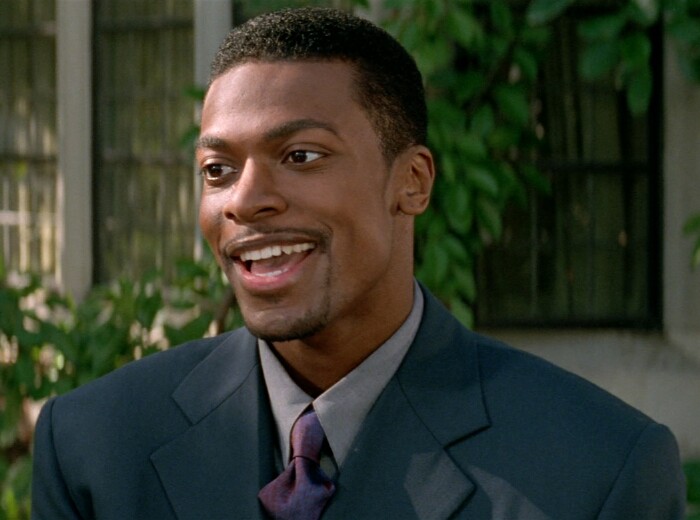
I just looked at my previous reviews of "Rush Hour 2", and I realised that I introduced all of them with a photo of Zhang Ziyi. Maybe I should do something different this time. Or maybe not. She's far more attractive than Jackie Chan or Chris Tucker. If you disagree with me I'll hit you over the head with a printing plate.

"Rush Hour 2" wasn't included in my original top 100 film list. I suspected at the time that I'd made a mistake in omitting it. Now I've made up for it. It's in 92nd place in my new list that I'll publish later today. When I compare the first two films, "Rush Hour 2" has better fight scenes, but "Rush Hour" has more comedy. I can't really say which of the two is a better film, but I've put "Rush Hour" higher in my list. For now, at least. The one thing you can never expect from me as a film blogger is consistency.

The first film was a crime thriller, but "Rush Hour 2" has more of the feeling of an international spy thriller. It begins in Hong Kong, then moves to Los Angeles and finally Las Vegas. The story is about fake money created with genuine printing plates that were stolen from the Shah of Persia. That's the only thing I'd fault in the story: why would the American government allow the Shah to print US dollars? I'll let it go, just this once. Don't bring the printing plates back in "Rush Hour 4". Better still, don't make "Rush Hour 4" at all!


What's made Chris Tucker so happy?


28 Chinese girls in a massage parlour! One for every day in February. But I think Chris is greedy. I'd be happy with Zhang Ziyi for the whole month.

While watching the film I was drinking a bottle of Rolf Willy Samtrot Spätlese, which is currently my favourite wine. I've been so fascinated by the taste that I didn't pay attention to the aroma until today. The bouquet is overpoweringly sweet, much sweeter than the taste itself. I sat smelling it for long minutes before I took my first sip. Strangely, after beginning to drink the wine the smell was no longer as strong. There must be a technical reason for that. I'll drink some more tomorrow and delay the first sip for as long as possible.

Success Rate:  + 1.9

Order from Amazon.com
Order from Amazon.co.uk
Order from Amazon.de

Monday, 20 June 2022

Rush Hour (5 Stars)


"Rush Hour" is the ultimate buddy cop movie. Two policemen come together from different sides of the world, with different styles and different attitudes, but both dedicated to fight crime. The film moves seamlessly from action to comedy and back again. When I first presented my top 100 films list it barely made the cut, down in 99th place, but I've decided to move it up a few places. It's a film I can watch again and again.

Earlier this month I said that I'd watch one of my top 100 films every week. I've adjusted that slightly. I'll watch five of my top 100 films every month. That should get me through them all once every two years.


Chris Tucker was raised as a Pentecostal, and a few years ago he founded his own church where he acts as pastor. One of the gimmicks of his church is that the church choir is made up of pregnant women. That's weird. It means that singers are sacked after giving birth, and if they want to get back in the choir they have to get pregnant again fast. But what do you expect from a man with a face as crazy as Chris Tucker?

Success Rate:  + 5.4

Order from Amazon.com
Order from Amazon.co.uk
Order from Amazon.de

Sunday, 19 June 2022

Attack of the 50 Foot Camgirl (3½ Stars)


Let's be honest. With a title like this you can't expect a deep, meaningful film that will sweep the Oscars. What you can expect is a comedy romp that will keep you entertained for an hour or two. In this case only one hour, because it only has a run time of 62 minutes.

The film is meant as an homage to "Attack of the 50 Foot Woman" and Roger Corman's "Attack of the 60 Centerfold". Those are the films to compare it with. For a while "Attack of the 60 Foot Centerfold" was my favourite film, but I've gone off it due to the poor quality of the DVD. I wrote begging for a remastered version, but I've been told that Roger Corman has lost the original tapes. Ouch! They're probably on a shelf in the cellar, hopefully not in the damp.

The camgirl in the title is Beverly Wood, a photo model who poses live on a subscription website. She also promotes products for money. A group of scientists have developed a way of ending world hunger. They've created food that automatically restores itself. If a sausage is cut in half, the other half grows back within seconds. In fact, both halves grow back, so the sausage has doubled itself. It's a miracle of Biblical proportions.


Beverly hopes she can share the Nobel Prize by posing naked with the miracle food. The scientists say that more testing is needed, but Beverly is impatient. She bites off part of the sausage, not thinking about what it might do in her stomach. How do you digest a self-replicating sausage? The effects aren't what anyone expects. She grows to 50 feet tall overnight. Fortunately – or is it unfortunately? – her bikini also grows in size.


Beverly's manager is her husband Bradley. What she doesn't know is that he spends his evenings with their maid Fuchsia.


Look who the barman is! It's the one and only Mike Gaglio! His appearance is little more than a cameo.


And talking of cameos, that's Jim Wynorski at the bar eyeing Bradley critically.


It's a tough position for any man to be in. Beverly, played by Ivy Smith in her first film role, is a beautiful woman. Most men would be glad to have a wife like her.


But just look at Fuchsia, played by the eternally young Christine Nguyen. No man can resist her.


Fuchsia also eats the miracle food to take on Beverly woman to woman.


But they can't stay angry with one another for long. They have a common enemy.


Bradley! What a pig! He deserves everything they do to him.

Summing up, the film is fun, but it's of far lesser quality than "Attack of the 60 Foot Centerfold". The film is too short. The story could have been expanded, or at the very least there could have been more gratuitous nudity to distract from the lack of story. I've always liked Jim Wynorski as a director, but this isn't one of his best films. For me as a Christine Nguyen fan it's a must-watch, but she's been in better films.

I watched the film on the Full Action channel (called Full Moon in America) with a seven-day free trial. After watching it I checked out the other films available. It's a strange channel. Most of the films are censored. It's disgraceful that films made by Fred Olen Ray should be cut from 80 minutes to 55 minutes. I shan't subscribe to the channel when the free trial is over. The channel owners need to provide better quality.