Wednesday, 16 December 2020

Die Munteren Sexspiele der Nachbarn (4 Stars)


This is a Bavarian sex comedy made in 1978, but only just. What I mean is, instead of taking place in an idyllic village in the Bavarian alps, the setting is a small shop in the suburbs of Munich. Even this setting isn't relevant to the plot. The story could take place anywhere, if not for the Bavarian accents.


Therese Gutschi sells everything needed in the neighbourhood, from fruit and vegetables to Jägermeister. Her shop is also the place women go to gossip. As a result, Therese knows everything that's going on in the neighbourhood, except what her husband is doing. He works as a plumber, and every woman in the street has had his pipe in her hand at least once. Poor naive Therese thinks that he's always been faithful.


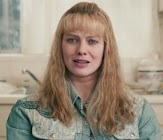
The film follows the customers as they walk home from the shop. Often it's not their own home they visit. In every house there are sexual adventures, whether the participants are young or old. By the way, don't you think that this actor, Helge Hahnenfeld, looks like a young Bob Geldof? He's seducing the daughter of his neighbours with a bottle of champagne. I've never tried that. Does it work?

It's not just the daughters who play games. Their mothers like to play just as much. That's the meaning of the film's title: "The Merry Sex Games of the Neighbours".


There are many elements of farce in the film. Schoolgirl Babsi is having sex with her boyfriend Rolf while her parents are out. Her mother comes home with her lover, one of Rolf's teachers, so they hide under the bed. Then her father comes home, so the teacher has to hide under the bed with them. Awkward situation? Babsi is the only one laughing while the other two try to cool down. All's well that ends well. Rolf blackmails his teacher to get better grades in school.

Babsi is played by the French actress Barbara Moose, who was very active in soft porn movies in the 1970's. She made 44 films in 1978 alone!


They're a very liberal family. In another scene we see Babsi exercising naked with her mother.


In walks Babsi's stepfather. I suppose that if she's only his stepdaughter, not his real daughter, he's allowed to look. I don't know what the sexual etiquette is in cases like these. 

From what I've read, this is considered to be one of the best erotic comedies of the 1970's. I can understand why. It's difficult not to laugh from beginning to end. Films like this just aren't made any more. I look back fondly to the 1970's.

The film is long out of print. If you're lucky, you might find a copy on Ebay.

Wine: Klenert Rosé

This is the fourth wine in the online wine tasting with David Klenert. It's a Rosé wine, the preferred wine for the many inexperienced wine drinkers who can't decide between white and red. It's wrong to think of it as a halfway drink between the two. Rosé is made from the same grapes that are used for making red wine.

Rosé wines are usually cuvées, even though they're not declared as such. It's a tradition in Germany that Rosé wines are simply called Rosé, nothing else. In this case, the Klenert Rosé is a mix of Spätburgunder and Lemberger. It's a reasonable tasting wine, fruity but with a playful acidity. It's not something I would drink under normal circumstances.

Many vineyards make wines that they call Weißherbst (engl. late autumn). They have a similar colour to Rosé, a light red, so they're often called Rosé. This is nothing short of ignorance. However similar the colour may be, they're different types of wines. One major difference is that a Weißherbst is never a cuvée. The grape variety is always in the name, such as the Eberbach-Schäfer Spätburgunder Weißherbst. Klenert doesn't make any Weißherbst wines.

Rosé wines are made worldwide. Weißherbst wines are exclusive to Germany and Austria. They're more common in Württemberg than in the other wine growing areas. I assume is that this is because the vineyards want to offer a sweeter tasting alternative to the typical Württemberg dry wines. I don't usually drink sweet wines, but I appreciate a good Weißherbst, because it's a natural sweetness.
David Klenert spent some time answering a viewer question on a subject that I've long been curious about: why do his bottles use screw caps instead of corks? It's not just the Klenert wines. It's something I've noticed with Württemberg wines. When I lived in Germany in the 1990's almost all wine bottles were corked. When I returned 20 years later, almost none had corks. It's evidently a myth that wine keeps better if the bottle is corked. Vineyards liked to use corks as a sign of quality, but nowadays they've given up.  The problem with corks is that the cork has a taste of its own which is added to the wine, the longer the wine is kept. Model metal caps are neutral and don't affect a wine's taste.


This is David Klenert with his family. It must be wonderful for a child to grow up surrounded by wine. It's the post-deluge drink. As the Bible tells us, Noah was the first person to make wine. He was also the first man to get drunk, and he collapsed naked. We can have sympathy with him. It was something new, and he didn't know how much to drink. I've never collapsed naked after drinking wine. Not yet.

Tuesday, 15 December 2020

The Bed Hostesses (3 Stars)


This is Ingrid Steeger's seventh Swiss film, made in 1973. Yes, I know I'm watching them out of order. The last of her Swiss films that I reviewed was the fourth, "The Stewardesses". What's my excuse? It's a blunder. Maybe I'm drinking too much wine lately.

The title makes it sound that this film is about escorts. That's not the case. The title is spurious. There's a lot of sexual activity in the film, but none of it is paid for. Ingrid's role is brief. She appears for less than five minutes, and she is a non-sexual hostess, looking after the well-being of a champion cyclist on his arrival in Zurich. None of the other girls in the film are hostesses. My suspicion is that Erwin C. Dietrich couldn't think up a name for the film, so he just picked something racy at random. The scenes look like they're leftovers from the Blutjunge Verführerinnen series, of which I've only written about the first film. My apologies once more for skipping the last two films. I'll make up for it, I promise.


The film is a series of vignettes, linked by appearances of a young man called Blumsli. In voiceover he says that his school teachers told him that he would never amount to anything, but he's proved them wrong by getting the best job of all: a window cleaner! Every day he looks through windows and sees naked women. One day he's cleaning the windows of Elite Film Studios, the company owned by Erwin C. Dietrich. He sees more than he's ever seen before, because many nude scenes are being filmed. (They're all scenes from Erwin's previously released films).


Blumsli climbs in through the window and visits Erwin in his office to suggest a partnership. He tells Erwin that he can supply beautiful women as actresses for his next films, because nobody sees as many beautiful women as a window cleaner.


Erwin C. Dietrich, playing himself in the film, invites Blumsli to tell him more over a glass of champagne. Blumsli tells his stories, which leads to the aforementioned series of vignettes. Blumsli appears in some of the vignettes, but the others are merely stories that women he knows have told him.

As you can probably tell, the stories are very weakly linked together. The whole film is a muddle of unrelated scenes. Ingrid Steeger is the only hostess in the film, and she assists Blumsli in one of his former jobs as a masseur. She massages better than him, I can assure you. Blumsli also used to rent horse-drawn carriages, so we see two lesbians travelling together. In another scene a woman exercising in the woods becomes the victim of football players who perform a Satanic ritual with her. It's all so ridiculous.

This is a film for completists, i.e. obsessive collectors like me. The rest of you can give the film a miss, unless you want to turn off your brain and enjoy a few naked bodies.

Wine: Klenert Cuvée Weiß

This is the third wine in the online wine tasting with David Klenert. The wine's name translates simply as White Cuvée, which is admittedly a very generic title. For those who don't know, a cuvée (the same word in German and English) is a wine that's made from a mix of different types of grapes. Maybe the word is uncommon in English, because it's the default. What I mean is, there's no legal requirement for a wine to be declared as a cuvée. Most French wines are cuvées, but they're not declared as such. Most German wines are made from single grapes, so the exceptions are clearly marked.

In Germany there's prejudice against cuvées. There's also prejudice against French wines, which is no coincidence. It's thought that the leftover grapes are thrown into a vat and the random resulting mixture is called a cuvée. Maybe that's how amateur vintners work, i.e. a farmer who has a few dozen grapevines and makes wine for himself, but a serious vintner like David Klenert does it differently. He creates the cuvée at the beginning of the year's wine production, not the end. He has a vision of what his cuvée should taste like, so he mixes the grapes accordingly, paying attention to the strengths and weaknesses of individual grapes. His goal was to make a wine that's "leicht, frisch, früchtig, süffig" (light, fresh, fruity and pleasant).

He's succeeded in his goal with this year's cuvée, which is a mixture of Riesling and Scheurebe. What he's created is a wine that, in my opinion, has a typical Baden taste. It's a pleasant wine, fruitier than the Riesling. It's not a wine that I would choose to drink if there are Württemberg wines available.

One thing I'd like to emphasise is that there's no consistency with cuvées. This year's cuvée might taste completely different to last year's cuvée, depending on the whim of the vintner.

Monday, 14 December 2020

2001: A Space Odyssey (4 Stars)


This is one of the most highly acclaimed films ever made. It's usually considered to be Stanley Kubrick's best film, but I prefer "Spartacus" and "The Shining". I wouldn't call it the best science fiction film ever made, but it's certainly the most influential. It's left a mark on later films like "Interstellar". Stylistically, it's influenced every film Lars Von Trier has ever made, especially "Melancholia". 

"2001" – I prefer to shorten the title – is best understood in the context of when it was made. The year was 1968, and the first Moon landing was imminent. There was optimism for further space exploration. It was feasible that there would be a trip to Jupiter in 2001. Why didn't it ever happen? The technology was probably available, especially when computers shrunk in size and increased in power in the 1980's and 1990's. The reason that bigger space trips didn't take place was probably money. The Moon trips were prestige, to prove that America was superior to Russia, so it was worth investing millions of dollars. Russia never caught up with America, so nobody wanted to throw money away on a trip to Mars or Jupiter.

"2001" assumes that computers would become more intelligent but remain large. The date of HAL's creation is given as 12th January 1992. Stanley Kubrick was too optimistic. Artificial intelligence of HAL's level is only just beginning to emerge. We need to wait another ten years before a computer can be interviewed for television broadcasts. (Yes, I know that computers can already speak in a human way, but they're still reliant on knowledge being pumped into them to be recited on demand).

The film tries to remain realistic, but it's science fiction, not science fact. It speculates that the first men were monkeys whose evolution was accelerated by the arrival of a mysterious monolith on Earth. Whoever was responsible for the monolith has been observing us ever since. Pure speculation. It may be true, but it probably isn't. The final scenes deteriorate into bursts of psychedelia. I can't help feeling that I would enjoy the end of the film more if I were under the influence of LSD.

Considering its age, the film isn't very dated. It looks like a low budget film made ten years ago.

This film has sentimental value to me, because it's one of the few films I ever watched in the cinema with my father. Possibly it was the first film I watched with him, because it was usually my mother who took me to the cinema.

Success Rate:  + 11.9

Order from Amazon.com
Order from Amazon.co.uk
Order from Amazon.de

Wine: Klenert Riesling

This was the second wine in the online wine tasting that I wrote about yesterday. It's not the first time I've drunk this wine. I tried it a year ago and enjoyed it greatly. It has a dry crisp taste, which reminds me of the Württemberg Riesling wines. Riesling is the grape most commonly grown in Germany, in every wine growing area. The vintner, David Klenert, pointed out that the Riesling grapes greatly vary from one area to another as a result of the earth they grow in.

He claims that the Riesling is more acidic than the Grauburgunder, but it seems the opposite to me. That's probably because the Riesling has less of a lasting aftertaste.

This is the Klenert wine that I enjoy the most, even if it's not the wine that won an award.

Sunday, 13 December 2020

Fargo (5 Stars)


Today is the first time I've watched "Fargo", even though it was made long ago in 1996. It was a gap in my film education. Watching it today, I was stunned. It was nothing like what I expected. Despite its low key pacing, it's very Tarantino-ish in its screenplay. There are so many random elements that have nothing to do with the story, technically speaking, but by being included the characters are stronger and the whole film is better rounded. Think of all the talk about quarter pounders in "Pulp Fiction". Not relevant, maybe, but it's part of what makes the film a masterpiece. In "Fargo" we have the painting for a postage stamp and the emotionally unstable ex-boyfriend, to name just two small details. Genius! This is a film I should have watched 24 years ago.

Have my readers all seen it already? It's a story about a simple plan that goes terribly wrong. A car salesman wants to extort a million dollars from his rich father-in-law, so he pays two crooks to kidnap his own wife and hold her for ransom. What should have been a smooth operation turns into a disaster as the body count slowly rises.

The story takes place in the snow-covered plains of Minnesota. Without the desolate white background the film would only have been half as interesting.

Success Rate:  + 6.7

Order from Amazon.com
Order from Amazon.co.uk
Order from Amazon.de

Wine: Klenert Grauburgunder

Recently I took part in an online wine tasting event. The procedure is that you order the wines in advance, and then there's a live broadcast on YouTube, in which the vintner explains the wines. Amusingly, he recommends that the participants only drink a small amount of each wine "unless you're an experienced drinker". That's a discreetly cute way of putting it.

The wines are from the Klenert vineyard in Baden. The tasting consisted of three white wines, one red wine, one rosé wine and one sparkling wine (Sekt). That's a typical mix for Baden wines, because they lean towards the production of white wines. Baden red wines are almost exclusively Spätburgunder, although there are smaller amounts of Lemberger. The white wines are mostly Riesling and Grauburgunder. This means that there's less of a variety of grapes than in Württemberg.

As I've said in the past, I'm prejudiced against Baden wines. I'm a big fan of the delicious dry taste of Württemberg wines. Nevertheless, I went into the wine tasting with an open mind.

Klenert is a new vineyard. David Klenert bought 25,000 square meters of land in 2015, which he's now increased to 140,000 square meters. This was mostly old vineyards from people who were giving up. Being a vintner is a work of love. It means long days of hard work in the harvest period, with the potential of making losses if the weather is bad. David Klenert has a passion for wine that shone through the whole wine tasting session.
The online wine tasting has come about through necessity. As a small and still unknown vineyard, the wine is sold mostly to restaurants and bars instead of being sold in supermarkets. This business was hit hard by the closures in the Coronavirus pandemic. The online wine tastings are a way to promote the wines and encourage customers to buy them directly.


David Klenert speaks passionately about his wines. That's a glass of Grauburgunder in front of him.


The Grauburgunder has won a special jury prize, finishing in the top six of 168 wines in Baden-Württemberg. (The two wine growing areas are combined). It's been named the wine of the month for February 2021.

Grauburgunder isn't my favourite wine. For me, it has a harsh taste. The judges may have liked it, I don't.


This is the line up of the wines in the tasting.

Saturday, 12 December 2020

Wine: Nunc Est Bibendum Riesling

This is the second Nunc Est Bibendum wine that I've sampled. I still don't know anything about the brand, except that the wine is bottled at the Besigheimer Felsengarten. It definitely doesn't taste like their other wines. It has the typical crisp taste of other Riesling wines, but it's not a subtle wine. It has a very brash taste, but by that I don't mean it's a bad wine. I'd call this a wine to be drunk by people who don't usually drink wine. It has a simple taste that's easy to enjoy, not sweet but not too dry. You don't have to think about it, just knock back a glass and enjoy it. Or two glasses. Or more.

I can imagine Lestat and Nicolas drinking this wine while discussing ethics and philosophy in their castle. They would have been concentrating on their talk, not the wine itself, but it would have had the desired effect as they reached their golden moment.

Friday, 11 December 2020

Professor Marston and the Wonder Women (4 Stars)

William Marston was an amazing man. He invented the first lie detector, and then he went on to create the character Wonder Woman, whose comics he wrote for six years. How can one person be responsible for two such outstanding creations of such different types?

Which was the most important of the two? Most would say the lie detector (now called a polygraph in the USA), but I would disagree. Its effectiveness is contested. In some countries it's commonly used, in others only occasionally, and in others not at all. In university my Psychology professor, Dr. John Bradshaw, was very critical of lie detectors. He gave us instructions on how to beat the machine, as he called it. I've never had to take a lie detector test, but if I did I'd deliberately lie, just to see if his methods work. He told us that the study of body language is more reliable in telling whether a person is lying.

Wonder Woman, the character and the comic, is something different. She's a powerful woman who inspires women and girls of all ages. She wasn't the first female super-hero, but she was the first to be successful. Why did she succeed when others had failed? Maybe it was her costume, which alluded to the American flag. It could be that she came from an island of women who didn't need men. It's true, Wonder Woman fell in love with a man when she came to America, but it was her choice, not because she needed a man. It could also be because the initial comics (those written by Marston) relied strongly on bondage, which was something still uncommon in the early 1940's.


Whatever the reason for the success was, Wonder Woman is still with us today. Her comics have appeared every month since 1941. She's also been featured in a television series and more recently in films.

The film concentrates on Bill Marston's relationship with the two women who inspired him: Elizabeth Marston, his wife, and Olive Byrne, their lover. The three had a true polyamorous relationship. I emphasise the word true, because polyamorous is a commonly misused word. In most cases people say they're polyamorous when they really mean that they're promiscuous. If you love someone, you put the other person and his wishes first. Those who call themselves polyamorous are thinking about themselves and their own lusts. In most cases. Bill, Elizabeth and Olive were truly polyamorous. After Bill's death, the two women lived together for another 38 years. There was no need for another third wheel on the cart. They had both loved Bill intensely, and there was no room in their hearts for a replacement.


Order from Amazon.com
Order from Amazon.co.uk
Order from Amazon.de

Once more, this is a film that has only been released on DVD in England. If you're a true film fan, you can order it on Blu-ray from Germany.


R.I.P. Barbara Windsor


I was shattered to hear about the death of Barbara Windsor yesterday. For me she's an icon, an essential part of British culture. She's known for two phases in her career. From 1964 to 1974 she was a comedy actress in the Carry On films, typecast as a dumb blonde. From 1994 to 2016 she appeared in the TV soap "Eastenders" as Peggy Mitchell, the matriarch of the Mitchell family and owner of the local pub, the Queen Vic. All British soaps are centred on a pub, so she was the main character for most of these years, until the character finally died of cancer in 2016.

In the 20 years between Carry On and Eastenders, she disappeared from the limelight. Her career was in a slump. She played minor roles on television, and she appeared in Christmas pantomimes. This is dealt with in the biopic "Babs". After hearing about her death I wanted to watch "Babs", but to my horror I found it was missing from my DVD collection. I forgot that I'd only watched it on Iplayer. Silly me. I quickly ordered it from Amazon, and I hope to receive it within a few days, if Christmas hasn't slowed the post down too much.


Since I didn't have any films starring Barbara Windsor available, I watched the 1973 Carry On Christmas Special, in which she plays a 13-year-old girl visiting Santa's grotto. If you think that Sid James looks nervous, just wait until she starts bouncing on his lap. She was actually 33 at the time, but she makes a good schoolgirl.

Barbara Windsor
6 August 1937 – 10 December 2020

Thursday, 10 December 2020

Deadlier than the Male (4 Stars)


Times change. Standards change. When this film was released in 1967 it was given an X certificate in Britain, i.e. it could only be viewed by people over 18. Its release on Blu-ray in 2015 has a 12 certificate. Are today's audiences more mature than they were 40 years ago? No, I don't think that's the reason. It's something completely different. Look at the film poster above. Two bikini clad girls with harpoon guns. In the 1960's it wasn't acceptable that women could be portrayed as cold-hearted killers. Only men were allowed to be killers. It was a case of sexism, nothing more, nothing less. Women weren't allowed to do what men could do. Women can kill their victims just as efficiently as men. In fact, they can do it even more efficiently, because men are distracted by their beauty and don't realise they have to defend themselves until it's too late.

The female of the species is more deadly than the male.

The film isn't just about female empowerment. The big baddy is a man, Carl Petersen. He's the brains behind the organisation, but he hires women as killers because they can do it better. "Deadlier than the Male" is obviously a homage to the James Bond films – it would be unfair to call it a parody – and the villain is clearly based on the Bond villains. He arrogantly invites his opponent, Hugh Drummond, to his castle to explain his plans in detail. The final showdown takes place on a giant chess board surrounded by robotic chess pieces. Carl Petersen and Hugh Drummond continue their game, calling out their moves while trying to kill one another. It's more James Bond than James Bond.

The notes on the Blu-ray cover state that this is one of Quentin Tarantino's favourite films. I didn't know that, but I believe it. It's a very Tarantino-ish film.

Hugh Drummond is a character who appeared in pulp fiction novels written by H. C. McNeile from 1920 to 1937. Only two films were made about his exploits. That's not enough. The franchise should be revived.

Order from Amazon.co.uk
Order from Amazon.de

Wednesday, 9 December 2020

Mary Shelley (4 Stars)


After watching this film a second time today I read some critical reviews, and I was surprised to find that it isn't very highly rated. That's difficult for me to understand. It's a beautiful, well-told story. What isn't to like?

The film tells the story of Mary Godwin (later Mary Shelley) in her early years, from the ages of 16 to 18, with a few final scenes when she was 21. The one criticism made by the experts that I can understand, if not completely agree with, is that we don't get inside Mary's head and fully understand her. This isn't bad story telling, in my opinion, it's because she was quiet and reserved. She was surrounded by young people who were flamboyant and debauched, but she retained her moral values. They weren't religious values, they were her own, the result of her own contemplations.

She was 18 when she wrote her famous novel "Frankenstein". She spent three years trying to get it published, but it was turned down everywhere as a book unsuitable to have been written by a woman. It was finally published anonymously and was greatly acclaimed. It was generally considered to have been written by her husband, Percy Shelley, but he denied it, and the second edition was published with her name.

Order from Amazon.com
Order from Amazon.co.uk
Order from Amazon.de

This is another film that has only been released on DVD in Britain, not Blu-ray. Shame on you!

Tuesday, 8 December 2020

Night at the Museum: Secret of the Tomb (4 Stars)


This is the third and final film in the Night At The Museum trilogy. It was made five years after the second film, and it brings the series to a close. Larry Daley (Ben Stiller) quits his job as night guard at the American Museum of Natural History and is replaced by Tilly (Rebel Wilson).

The film also offers closure in a sadder way. This is the last film made by the great Robin Williams before his suicide. He died after making the film but before it was released, so there's a brief dedication to him at the end.

The three films build a single piece of work, so I strongly advise that you watch them back to back in order. I almost watched them back to back, over a two month period, so I enjoyed them more than I did when I watched them in the past, not even in the correct order.


This is the film where Ben Stiller gets to kiss a monkey. Is that allowed on screen?


He's closing his eyes to lose himself in the passion.


Ben Stiller plays a second role as a Neanderthal called Laaa. This leads to him groping Rebel Wilson's chest. All men are animals, even if they don't show it in public. I'd like to grope Rebel Wilson as well, but I'm too much of a gentleman to give in to my urges.


You can read Rebel Wilson's mind. "That was disgusting! If I'd known what was expected of me I would have asked for more money!"

I've heard rumours that a fourth film is planned. Please don't do it. Leave it as it is.

Success Rate:  + 0.9

Order from Amazon.com
Order from Amazon.co.uk
Order from Amazon.de

Sunday, 6 December 2020

Timecrimes (5 Stars)


This is an incredible film that I've watched twice before and will probably watch again. I have the same problem as usual that I don't know what to write that I didn't write in the past. Read my first review to get an idea of what it's about. I know that's a cheap way out, but what's the alternative when I have nothing new to say? Should I just copy my original text verbatim?

Success Rate:  - 4.6

Order from Amazon.com
Order from Amazon.co.uk
Order from Amazon.de

Saturday, 5 December 2020

The Assassin (2 Stars)


I don't understand why I rated this film so highly the first time I watched it. The cinematography is beautiful, but the story is dull, plodding along at a snail's pace. Added to this, the character development is practically non-existent. By the end of the film we still know nothing about the main character, except that she's an assassin. In my first review I stated that I didn't understand everything, and nothing has changed since then. Maybe there's a review online somewhere that would explain everything to me, but I'm not interested. I doubt I'll watch the film again.

Success Rate:  - 1.2

Friday, 4 December 2020

Six Swedish Girls on Ibiza (3 Stars)


This is the third film in the Six Swedish Girls Tetralogy. Yes, I know that I watched the films in the wrong order, but it doesn't matter, because the third and fourth films are standalone works that can be watched in either order. All four films feature the six Swedish girls Astrid, Greta, Inga, Kerstin, Lil and Selma, but they're played by different actresses in this film. Despite being made only one year after "Six Swedish Girls at a Petrol Station", not one of the girls is played by the same actress. If there's a reason for this, I don't know it.

The six girls go on holiday to Ibiza by sea. Kerstin is looking after their money, but she loses it on the ship. This leaves them penniless. A local girl called Kitty is looking after a villa while the owner is away, so she offers to let them stay free of charge. They apply for jobs to make money. Astrid becomes a saleswoman in a clothing store. Kerstin becomes a croupier in a casino. Selma becomes a travel guide. Lil wants to become a disc jockey, but she's given a job as a go-go girl. Greta works briefly as a waitress, but she quits because the owner keeps groping her. Inga can't find a job.

The film is directed by Gérard Loubeau and produced by Erwin C. Dietrich. Erwin should have directed the film himself. There are careless mistakes. As usual, the girls wear shirts with their names on them, but when they get into Kitty's car there are two girls wearing a Selma shirt, There's no Greta. When they get out of the car, Greta is wearing her own shirt.

There's a film called "Hot Sex on Ibiza" which stars the same six actresses playing different characters. They obviously wanted to save money by making two films at the same location with the same cast.

This is the weakest of the Six Swedish Girls films. It's only for completists.

Thursday, 3 December 2020

The Land that Time Forgot (4 Stars)


Is this the film that time forgot? It was released in 1975, but it wasn't released on Blu-ray until 2015, 40 years later. To be fair, Blu-ray discs weren't marketed until 2006, so it only had to wait 19 years. The Blu-ray editions are now out of print in England and America, but you can still buy the film on Blu-ray in various European countries, including Germany, which is fortunate for me. Don't worry, the menus are in English and it can be played in English.

Critics don't seem to like the film much, but it's a fan favourite among people who fondly remember the days before CGI when dinosaurs were rubber toys filmed in close up. The dinosaurs don't appear until the second half. The film begins on 3rd June 1916 with a German submarine sinking a British ship in the Atlantic Ocean. It's a civilian ship, but the Germans have received intelligence that weapons are being transported below deck. Did the British really use human shields? I'm curious how accurate this is.

There are only a few survivors. A dozen British sailors and two American passengers escape in lifeboats. They aren't seen in the thick fog, so when the submarine surfaces they board it and take control. They head for America, but the German captain sabotages the compass and they sail due South. They arrive at an island called Caprona, which is inhabited by dinosaurs and primitive men.


The Germans and the British form a truce on the island. The German captain is obviously a man of learning. He recognises that the animals come from many different periods of prehistory. There are qualities in the water that accelerate evolution, so that men are born primitive, then intellectually develop while they age. Men belong to the Balu tribe when they're born, as their intelligence develops they move into the Galu tribe, and eventually they join the Stolu tribe. Weird. Maybe this is made more credible in the novel on which this film was developed.


This is the Galu tribe. The women are bathing in the evolutionary waters while the men prefer to remain stupid. There must be a message in that. Also, this is an example of the improvement of the Blu-ray over the DVD edition. It's true, the women are only seen from a distance, but on the DVD I didn't even notice that they're topless. Praise be remastering! There are also disadvantages to the higher definition. On the Blu-ray it's obvious that the background in some of the scenes is a painting. This isn't clear on the DVD.

The remastered film is beautiful, even if it's not as miraculous as the remastering of "Planet of the Apes". From what I understand, there's an automatic process to remaster old films for Blu-ray, but the true quality comes from manual retouching of individual scenes. Sometimes there's damage in the original that would make repair too expensive, so it's left as it is. The best restoration of old material that I've seen is the Star Trek original series. The technicians claim to have examined every frame of every episode individually. That's about five million frames, which is incredible! An example of poor HD remastering is "Faster Pussycat Kill Kill" (1966), the worst Blu-ray that I know. There's no menu; there are no subtitles; the director's commentary from the DVD isn't included; the film starts when the the disc is inserted, and the disc freezes at the end of the film. In addition, the picture quality shows no improvement over the DVD played on an upscaling Blu-ray player. "Hollywood Chainsaw Hookers" (1988) looks good on Blu-ray, apart from a scratch on the original tape, which would have cost a small fortune to repair.

Summing up, when you watch an old film (pre-1996) on Blu-ray, you can see from the quality how much loving care was put into the remastering. As already mentioned, "Planet of the Apes" (1968) is a beautiful piece of art. In contrast, "Monster" (2003) is a recent film that looks awful on Blu-ray.

Order from Amazon.com
Order from Amazon.co.uk
Order from Amazon.de

I've added links to the American and English DVD releases, but true film lovers will prefer the German Blu-ray.

Wednesday, 2 December 2020

Housewife Report 6 (2 Stars)


After watching "Housewife Report 5" two days ago I was eager to watch the sixth and final film in the series. I was disappointed. Rather than being an original film, it's a compilation of scenes from "Housewife Report 2" and "Housewife Report 3". As if this weren't bad enough in itself, the scenes have been shortened by editing out a lot of the conversations. This leaves more nudity, but the stories suffer. Apart from that, some of the names have been changed, probably to avoid duplicates in the compilation. We see the following couples:
  1. Gudula and Paul from Housewife Report #2.
  2. Sabine and Bruno from Housewife Report #3.
  3. Agnes and Albert from Housewife Report #3.
  4. Steffi and Oskar from Housewife Report #2.
  5. Uschi and Eugen from Housewife Report #3. Their family name has been changed from Fendt to Tremp.
  6. Irene and Milan from Housewife Report #3.
  7. Beate and Herbert from Housewife Report #3.
  8. Kati and Josef from from Housewife Report #2. Kati has been renamed Anna, and Josef has been edited out completely.
  9. Loni and Anton from Housewife Report #2. Their family name has been changed from Leming to Lanski.
  10. Gretel and Gottlieb from Housewife Report #2. This has been shortened so much that it hardly makes sense.
  11. Anna from Housewife Report #2. This was only a brief scene within a segment in the original film that I didn't bother mentioning in my review. Anna's name has been changed to Nelly.
  12. Margit and Otto from Housewife Report #3.
  13. Elisabeth and Kuno from Housewife Report #3.
  14. Erika and Klement from Housewife Report #2.
I've saved the worst till last. The scenes of Bernd and Brigitte Mittler from the two films have been included between the segments, but Brigitte has been renamed Birgit. Ugh! What's wrong with this film?

Tuesday, 1 December 2020

I, Tonya (5 Stars)


After having been a member of various film groups I'm used to being asked what sort of films I like. That's an awkward question which I've never been able to answer. The only honest answer I can give is "I like good films", which must be frustrating for anyone who takes the trouble to ask me the question. It sounds like I'm evading the answer, which I'm not. It sounds like I've never given any thought to what sort of films I like, which definitely isn't true. Worst of all, that answer makes it sound like I know nothing about films. It's the sort of answer my father would have given, and he really did know nothing about films.

Some people say they like horror films. That makes it easy to pigeonhole them. It's a statement that I've heard from group members so often that it sounds trite. It's even more common for people to say they don't like horror films, although people who say that usually have a limited idea of what horror films are.

If you want to know what sort of films I like, go through my blog and look for films with a five star rating. But I'll try to generalise anyway. I'll start with the negative terms. I can't say in general terms that I dislike any particular film genre, although there are certain types of films that I don't usually watch. I don't watch sports films, especially boxing films. I don't usually watch children's films. I don't usually watch period films, by which I mean films set in previous centuries in which rich people wear extravagant clothing. On the positive side. I do like to watch horror films and sci-fi films, although there are many films in both genres that I dislike after seeing them once. I have a particular leaning towards true stories.

These positive and negative guidelines only determine whether I give a film a chance and watch it in the first place. They don't say what I really like. To be good, a film has to have an interesting plot. It doesn't have to be original. In recent years a lot of emphasis has been put on plot twists (which usually happen near the end of a film), but it doesn't bother me at all if a film has a predictable ending. To be good, a film has to have well defined characters that I feel I know intimately by half way through the film. Maybe the supporting characters can remain vague, but the main characters, especially the bad guy, have to be well described by their words and actions. To be good, a film has to be logical, i.e. it has to make sense within the parameters of its genre.


Normally, I would never have watched a film about ice skating. It's not a sport that appeals to me. I only watched "I, Tonya" for two reasons: (1) it's a true story, and (2) it stars Margot Robbie, one of my favourite actresses.

I'm glad I watched it. I still remember when I first saw it in the cinema. It drew me in straight away. Margot Robbie made me fall in love with Tonya Harding. I wanted to take her in my arms and hug her. The film's style also won me over. It's a mixture of narrative and fake interviews, which aren't always clearly separated. Frequently, in the middle of a scene a character will turn to the camera and address the viewer. I'm sure that this is something film school students are told not to do, but any rule can be broken if it's done well.

The film is based on eye witness reports, but the leading characters have contradicted one another about what happened 20 to 30 years ago. Maybe they've forgotten, maybe they're lying. The film doesn't judge them. When something happens that is disputed, one of the characters jumps in and says "That never happened". This makes the film a lot more realistic.

"I, Tonya" is a film I like. I call on all of my friends to have an open mind when it comes to films. I know that each year too many films are made for you to possibly watch them all, especially if you want to go back and watch your favourite films repeatedly. Don't limit yourself to one genre. You can find good films anywhere, even in unexpected places. 

Order from Amazon.com
Order from Amazon.co.uk
Order from Amazon.de